It took tonkatsu chain Matsunoya one day to go from “sweet summer promotion” to an unexpectedly heated debate about gender discrimination.
On July 29, the store announced a “Mom Support Campaign” aimed at easing the burden of feeding children during summer vacation. Mothers accompanied by children 15 or younger could buy its ¥690 pork cutlet set for ¥500, alongside several other discounted meals and takeout options. The company added that a “Dad Support Campaign” was also in the works.
By the next morning, however, concern had shifted elsewhere: to the plight of the ojisan, or middle-aged man, and his full-price tonkatsu.
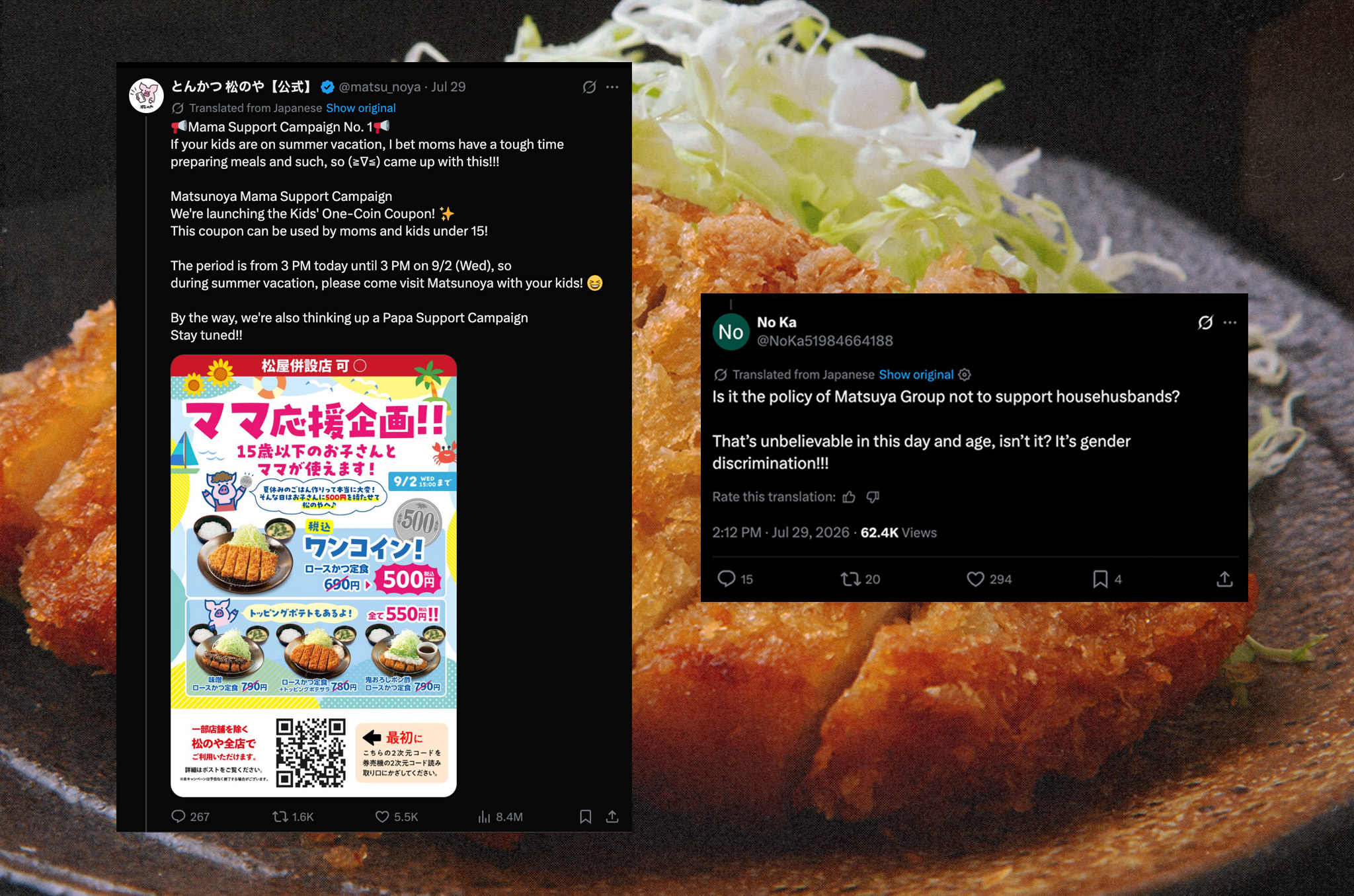
What About the Ojisan?
Some criticism came from people questioning the campaign’s underlying assumption: Why, in 2026, was summer-break meal prep still being framed as a mother’s job?
But another strain quickly emerged. What about fathers who cook every night? Single dads? Men working outside in the August heat? Why should being an ojisan disqualify someone from ¥190 off a pork cutlet?
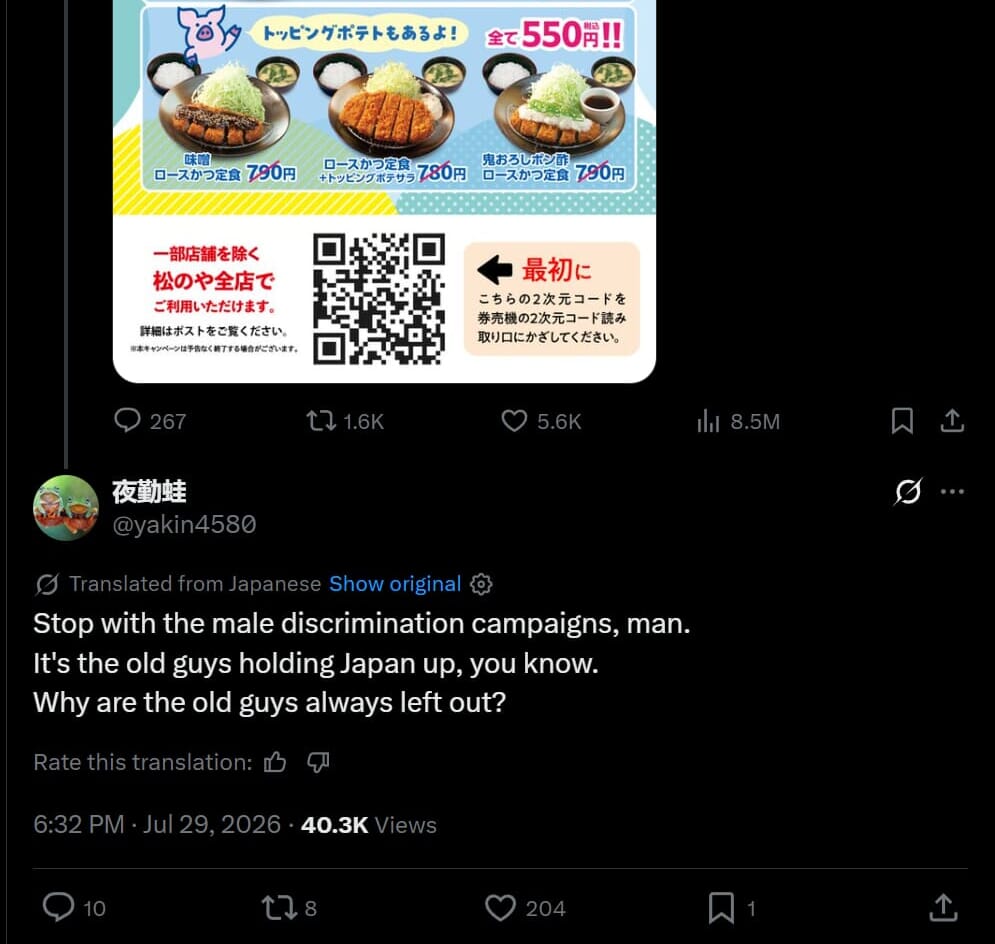
Some called the promotion discriminatory against men. Others argued that fathers’ domestic labor was being overlooked. Matsunoya apologized that same day, saying they had read the comments and realized the campaign had not been sufficiently considerate.
There was a practical problem, too: Critics pointed out that Matsunoya’s ticket vending machines had no way of verifying whether someone buying the discounted meal was actually a mother.
By July 30, “Mom Support” had become the gender-neutral “Summer Vacation Campaign,” and the discount was opened to everyone. Because Matsunoya had only secured a limited quantity of ingredients at prices that made the promotion possible, it warned that expanding eligibility would probably make the campaign end much earlier than planned.
When “For Women” Becomes “What About Men?”
There is something familiar about the speed with which a promotion for mothers became a discussion about fathers.
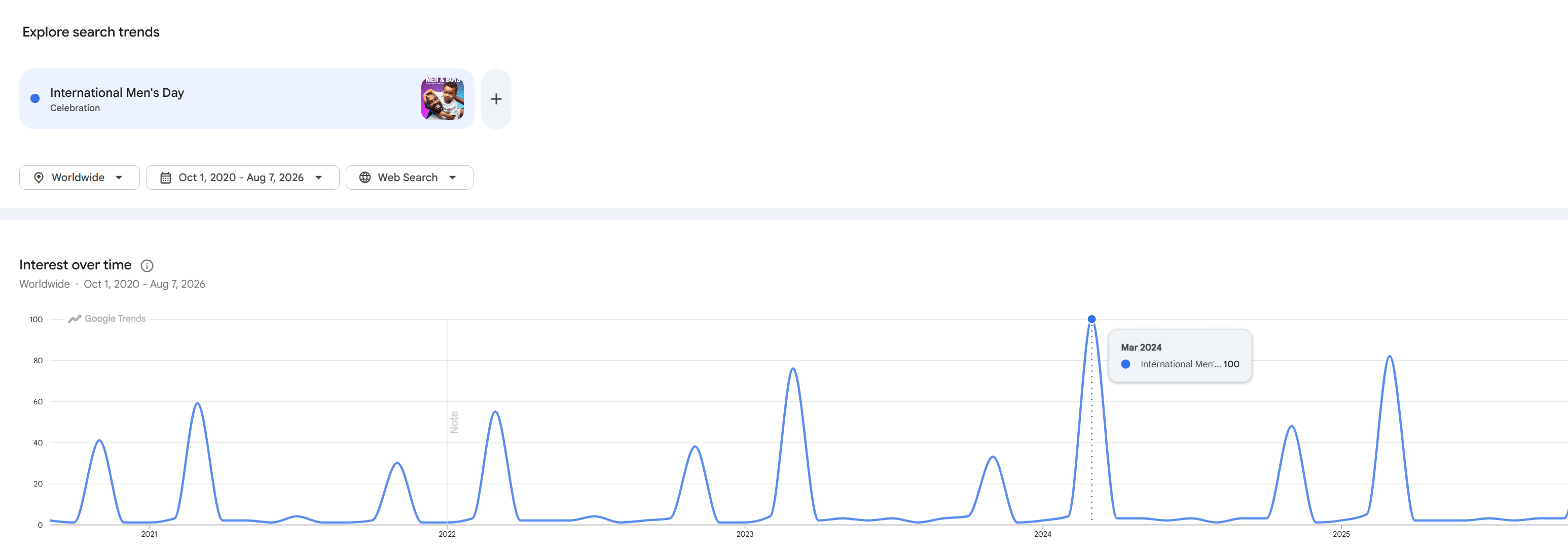
Every March 8, for example, Google searches for “International Men’s Day” surge as International Women’s Day prompts people to ask why there is no equivalent celebration for men. International Men’s Day does, of course, exist: it is November 19. Google Trends data has repeatedly shown interest in it spiking around Women’s Day, more sharply than around Men’s Day itself.
The Matsunoya controversy follows a similar pattern. A benefit directed at one group becomes interesting, or objectionable, partly because of the group it excludes.
That does not make every complaint frivolous. Fathers prepare meals too, and describing summer-break cooking as something “moms” struggle with reproduces precisely the gender division Japan has spent years trying to change. Matsunoya itself acknowledged that the wording lacked consideration — but the premise behind the campaign wasn’t invented by an advertising department.
Tokyo’s latest survey of 5,000 parents found that women spend an average of 7 hours and 48 minutes a day on housework, childcare and caregiving, compared with 3 hours and 29 minutes for men. The gap has narrowed considerably since 2023, but women still report doing well over twice as much.
Which leaves Matsunoya in a peculiar bind: Target mothers because they still disproportionately carry the burden, and you risk reinforcing the stereotype that domestic work belongs to women. Remove gender from the equation, and you ignore the measurable inequality that made mothers seem like a group worth supporting in the first place.
There was another casualty, too. The original announcement had promised that a “Dad Support Campaign” was under consideration. After the backlash, Matsunoya did not introduce one.
Perhaps that is the neatest ending to a controversy over who was being recognized. Mothers lost their campaign. Fathers lost theirs before it existed. The ojisan got ¥190 off his tonkatsu.