Odori dances at Japan’s festivals represent many things: a bridge to ancestors, a celebration of local spirit and a communal surge of midsummer energy. While Bon odori — dances done in remembrance of ancestors — occur across the archipelago every summer, a handful of grand festivals stand out for their scale, history and distinct artistic styles.
Read on for a look at five of Japan’s most famous odori festivals, ranging from centuries-old night dances to modern, high-energy parade spectacles.
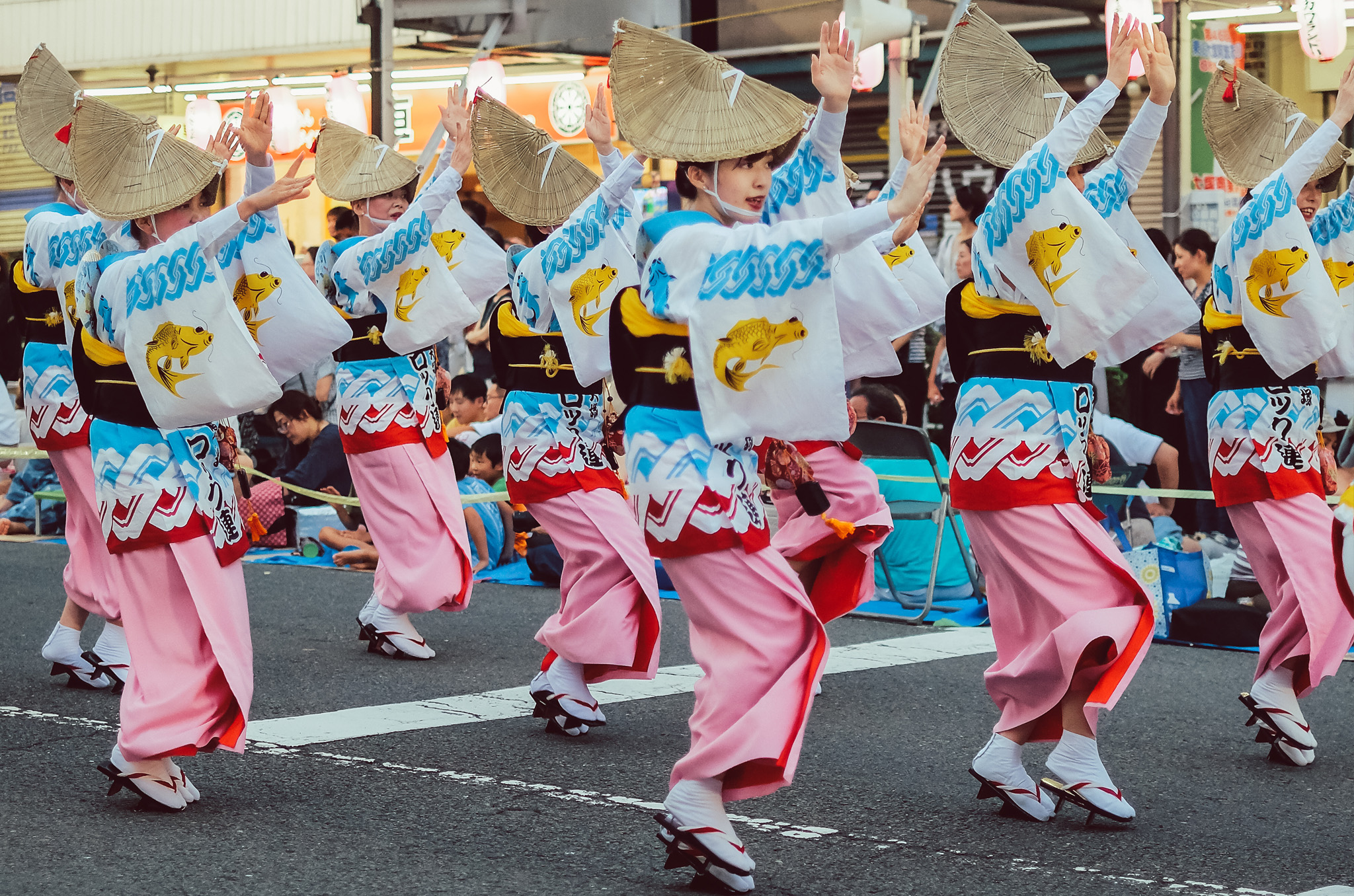
Image: Shutterstock
Awa Odori (Tokushima, Tokushima Prefecture)
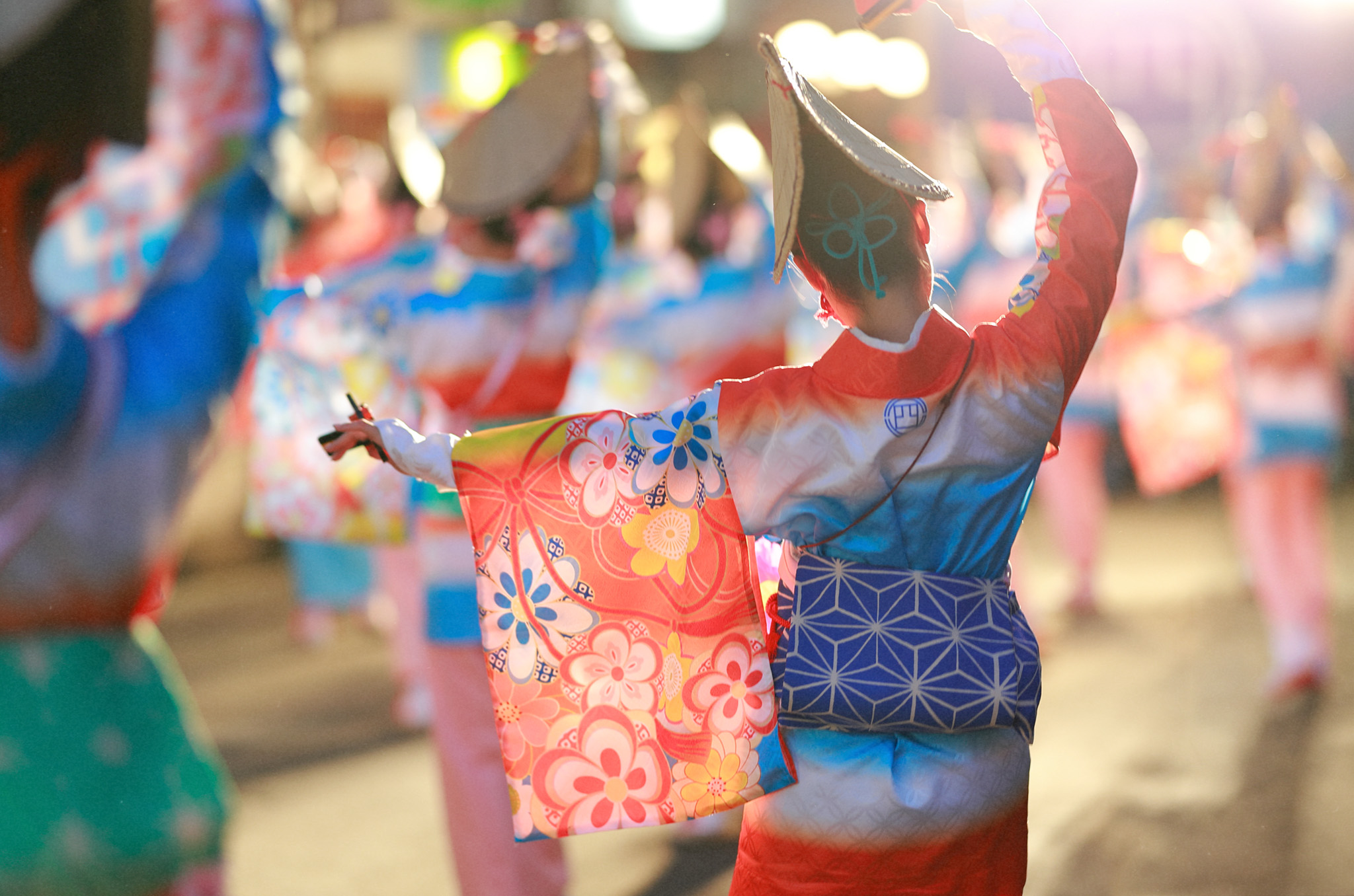
Known affectionately as the “Fools’ Dance,” the Awa Odori is Japan’s largest and most famous dance festival, drawing over a million spectators to the city of Tokushima every summer. The festival’s famous chant sets the mood: “Fools dance and fools watch; if both are fools, you might as well dance!”
Teams of dancers called ren make their way down the streets, accompanied by live shamisen, taiko drums, flutes and hand-held gongs. Women dancers wear distinctive folded woven straw hats called amigasa and high wooden geta sandals with two “teeth,” stepping delicately with their weight pitched forward onto the front tooth and the tip of the geta; the men, meanwhile — joined by an increasing number of women — perform low-slung, energetic moves while flourishing paper lanterns or fans.
- When: August 12–15
- Vibe: Wild, rhythmic and infectious energy
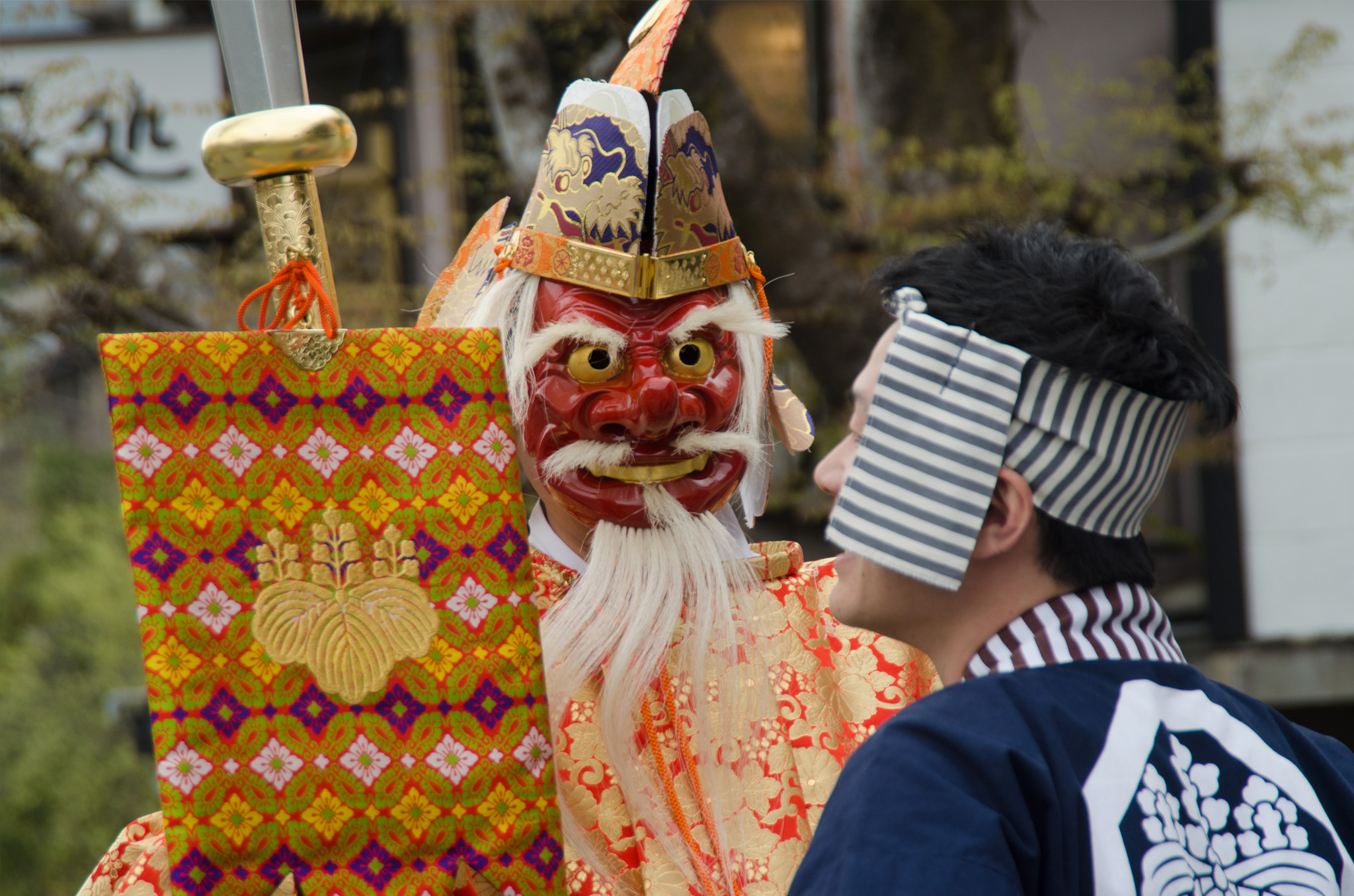
Image: Shutterstock
Gujo Odori (Gujo, Gifu Prefecture)
Added to the UNESCO Intangible Cultural Heritage List in 2022, the Gujo Odori spans 30 nights over the summer, making it the longest-running Bon odori festival in Japan. During the peak tetsuya odori (all-night dancing) period in mid-August, festivalgoers dance continuously from 8 p.m. until around 5 a.m. the following morning.
Unlike parade festivals where spectators watch from the sidelines, the Gujo Odori invites everyone into the ring. Dancers move in a circle around a raised wooden yagura stage, dancing to 10 traditional songs accompanied by rhythmic clapping and the clatter of wooden geta hitting the streets.
- When: Mid-July to early September (Peak: August 13–16)
- Vibe: Traditional and endurance-driven
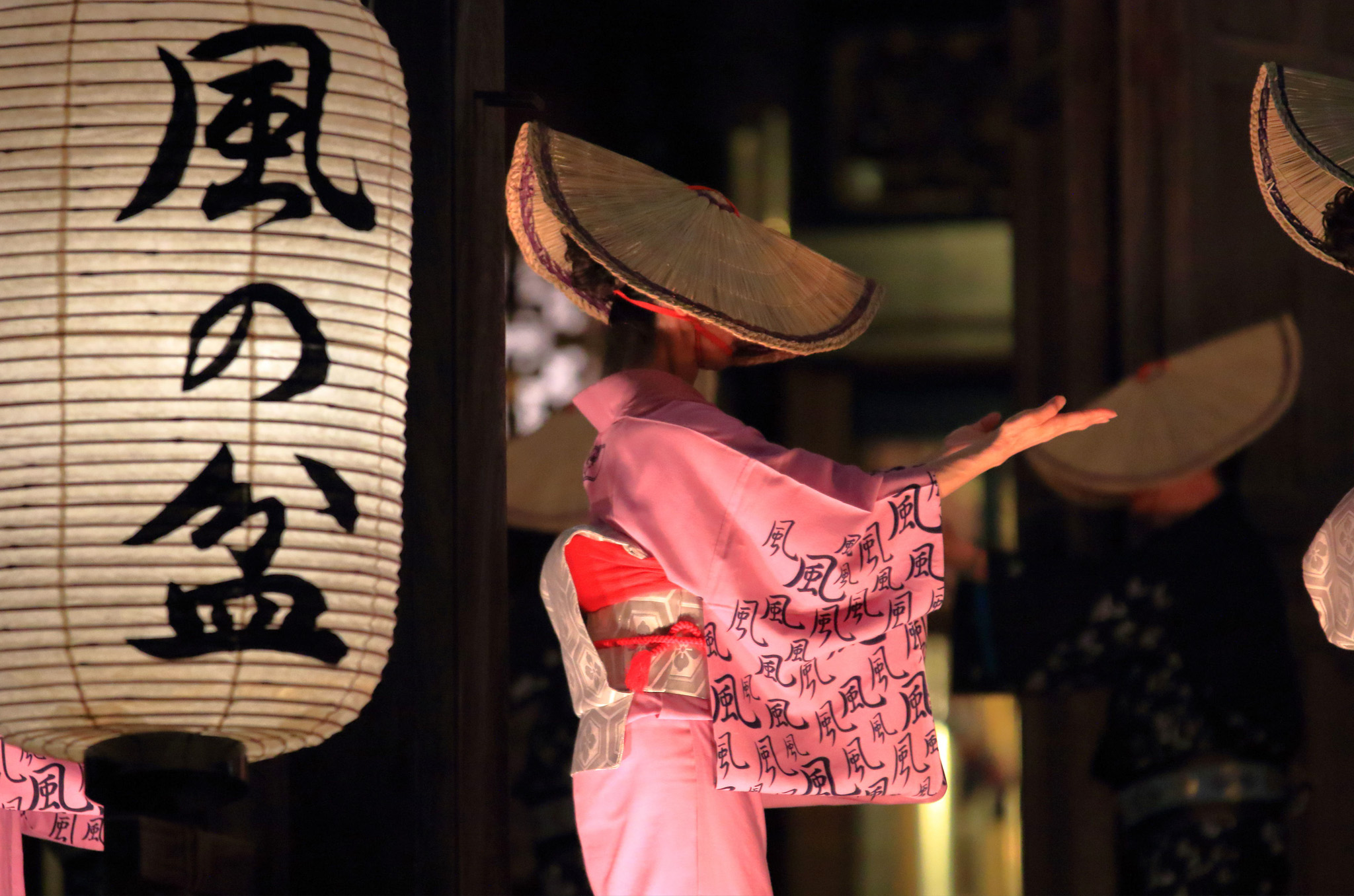
Image: Pixta
Owara Kaze no Bon (Yatsuo, Toyama Prefecture)
Held in the historic hillside town of Yatsuo, Owara Kaze no Bon has a quieter approach compared to other odori. Performed to appease the wind god and pray for a good harvest, the festival takes place along narrow, lantern-lit streets lined with traditional wooden houses.
Dancers wear matching kimono and braided straw hats pushed low to conceal their faces, adding an eeriness to their movements. The music is led by sweet shamisen melodies and the plaintive notes of the kokyu, a traditional bowed instrument, alongside folk singing.
- When: September 1–3
- Vibe: Melancholic, elegant and atmospheric
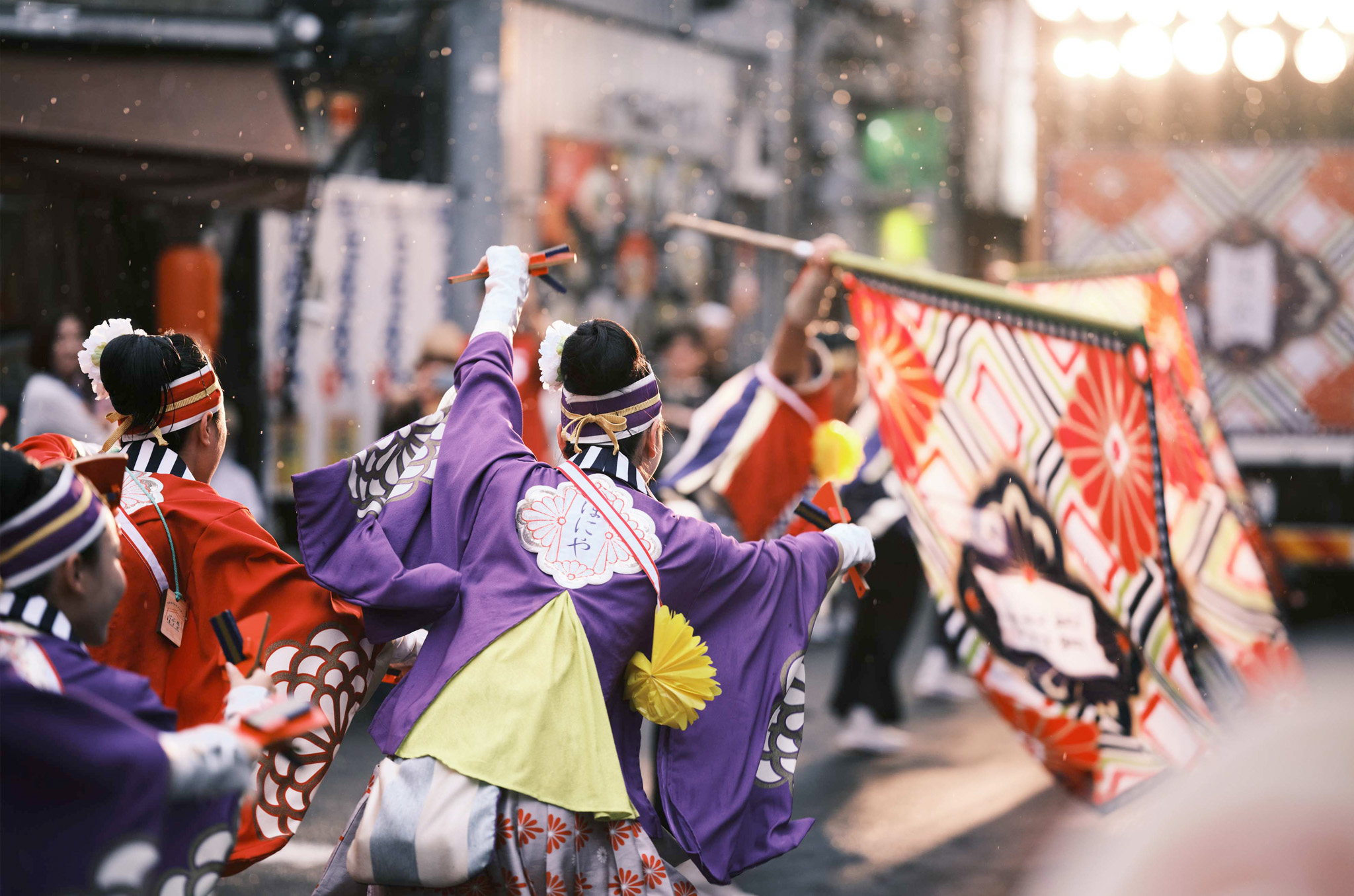
Image: Pixta
Yosakoi Matsuri (Kochi, Kochi Prefecture)
Created in 1954 to boost morale and economic vitality, the Yosakoi is a dynamic evolution of traditional Japanese dance. Teams design their own costumes, music and choreography, blending traditional motifs with rock, hip-hop, samba and jazz.
Two main rules unify every performance: Dancers must hold wooden clappers called naruko (originally used to scare birds away from rice fields), and the music must incorporate a snippet of the original Yosakoi Naruko Odori song. The result is a loud, colorful street festival filled with synchronized energy.
- When: August 9–12
- Vibe: High-octane, creative and modern
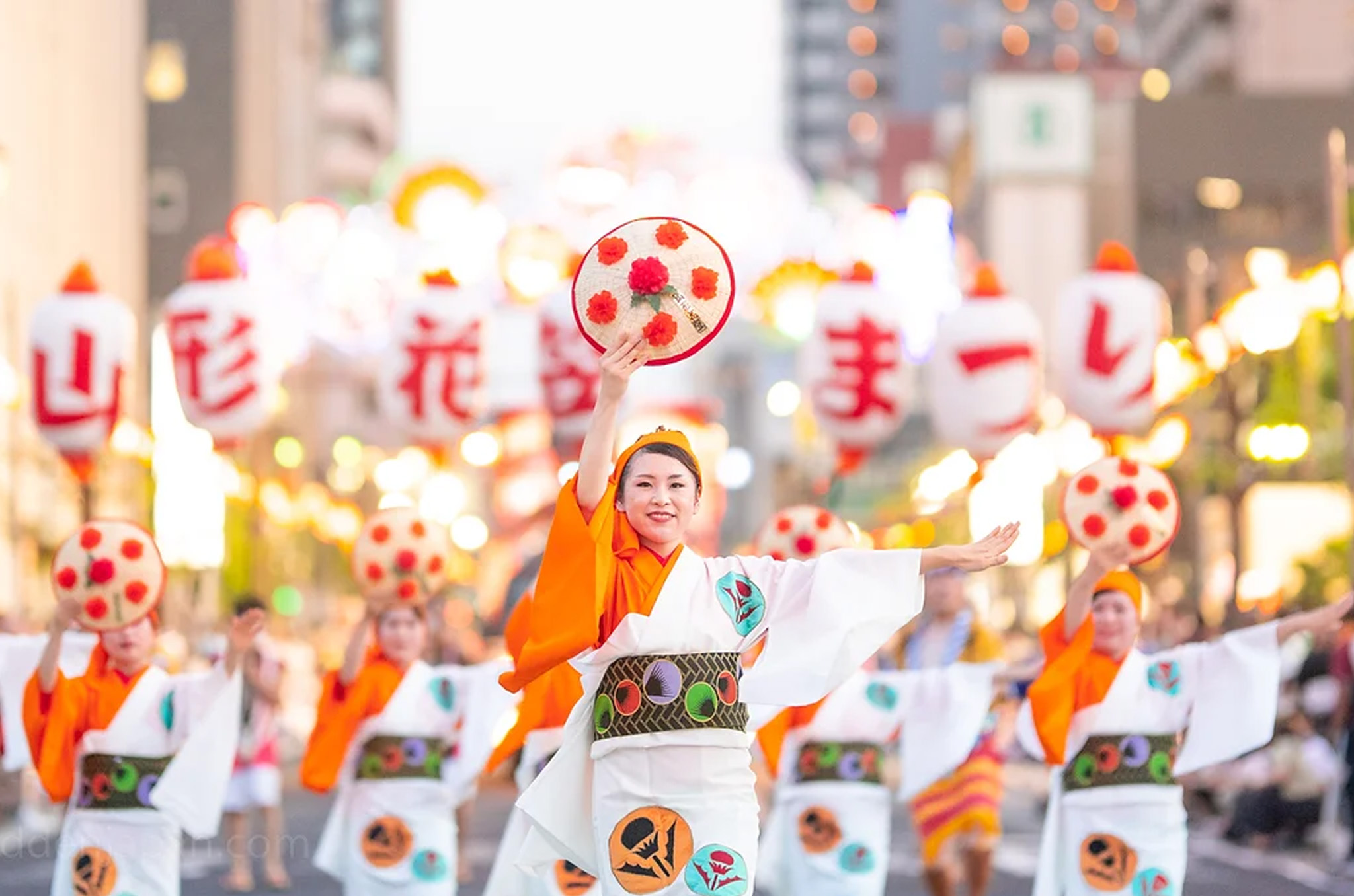
Image c/o Yamagata Prefecture Hanagasa Association
Yamagata Hanagasa Matsuri (Yamagata, Yamagata Prefecture)
One of the Four Great Festivals of Tohoku, the Yamagata Hanagasa Matsuri features over 10,000 dancers sweeping through the city’s streets. Dancers carry hanagasa, or straw hats adorned with artificial red safflowers — the official flower of Yamagata Prefecture.
To the rhythm of taiko drums and the spirited call of “Yassho, Makasho,“ dancers spin and wave their decorated hats in unison, creating swirling waves of red and gold along the parade route.
- When: August 5–7
- Vibe: Graceful, synchronized and colorful
Related Posts
- The Best Summer Festivals in Tokyo This Month: August 2026
- Awa-Odori: The Story Behind Japan’s Biggest Dance Festival
- How Kagura Dance Influenced the Story of Demon Slayer
Updated On August 5, 2026