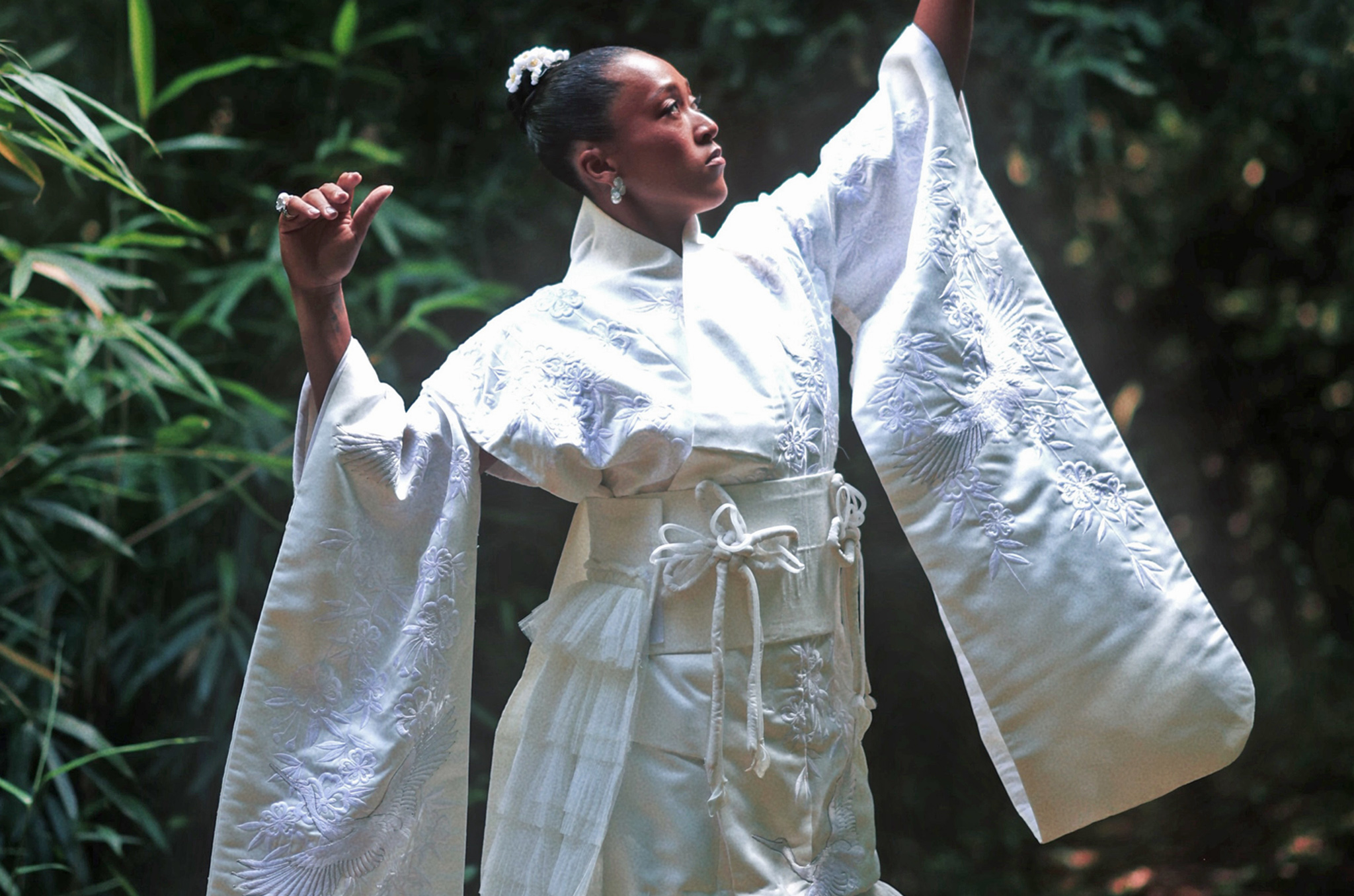
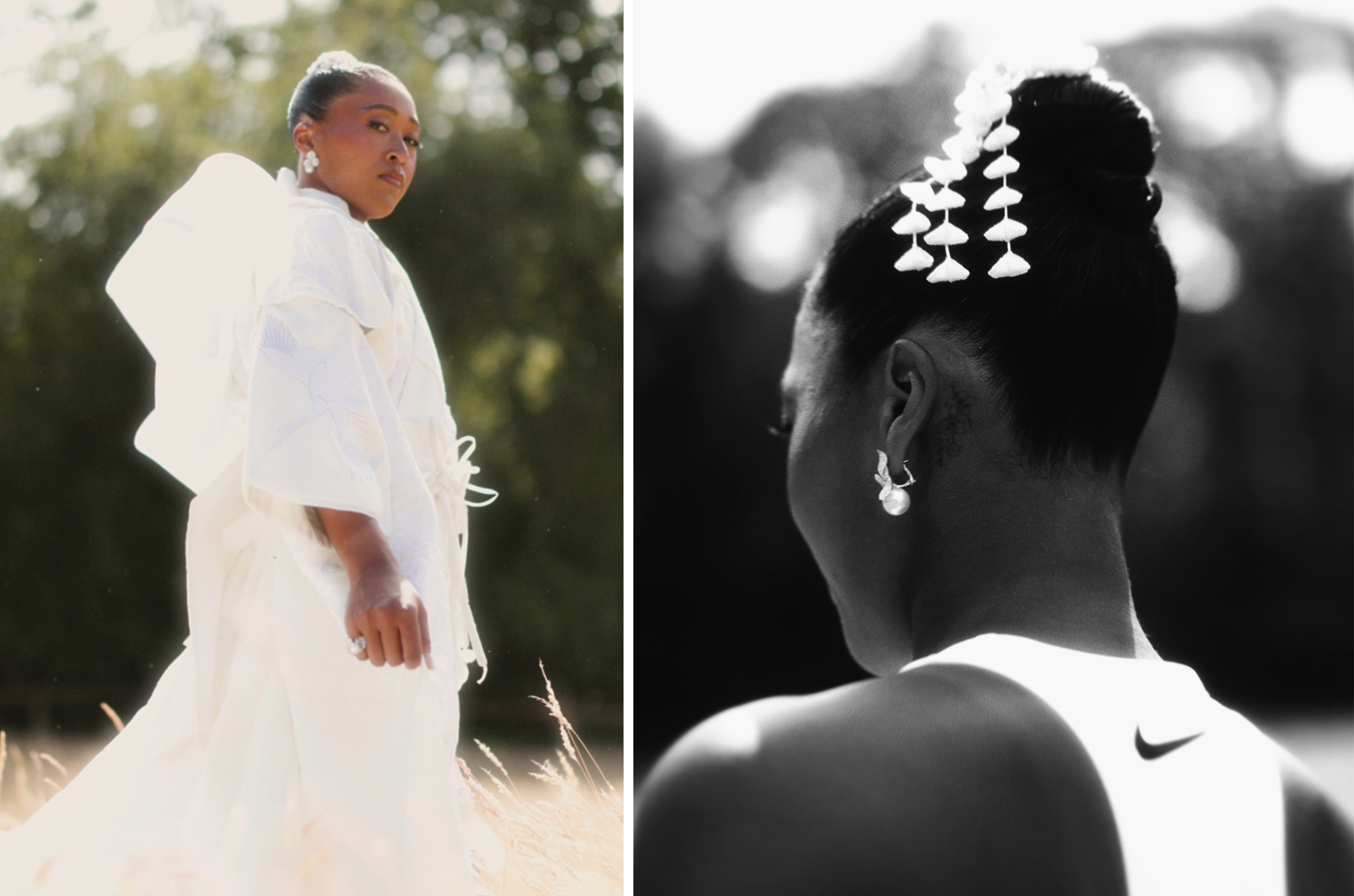
Naomi Osaka is known for her bold on-court fashion, and when she walked onto Court 3 for her Wimbledon opener in a custom white kimono-style look by Tokyo-based designer Hana Yagi, she once again made headlines. The tennis star’s floor-length gown was heavily inspired by Japanese ceremonial dress, embroidered with cranes and cherry blossoms and accessorized with a traditional kanzashi hair ornament.
TW recently spoke with Yagi about her creative vision and process. The 26-year old designer is best known for reimagining traditional wedding gowns, reworking the silhouettes and symbolism of classic bridalwear into something distinctly her own — like her “Sanguine Bride” collection, which sees all-white garments splashed with shades of crimson and black.
Now, that same eye for tradition reborn has landed her one of the most visible commissions in sports fashion. “I feel truly honored to have been part of this project,” she tells TW over email. “Watching Naomi actually walk onto the court in this look moved me more than I expected.”
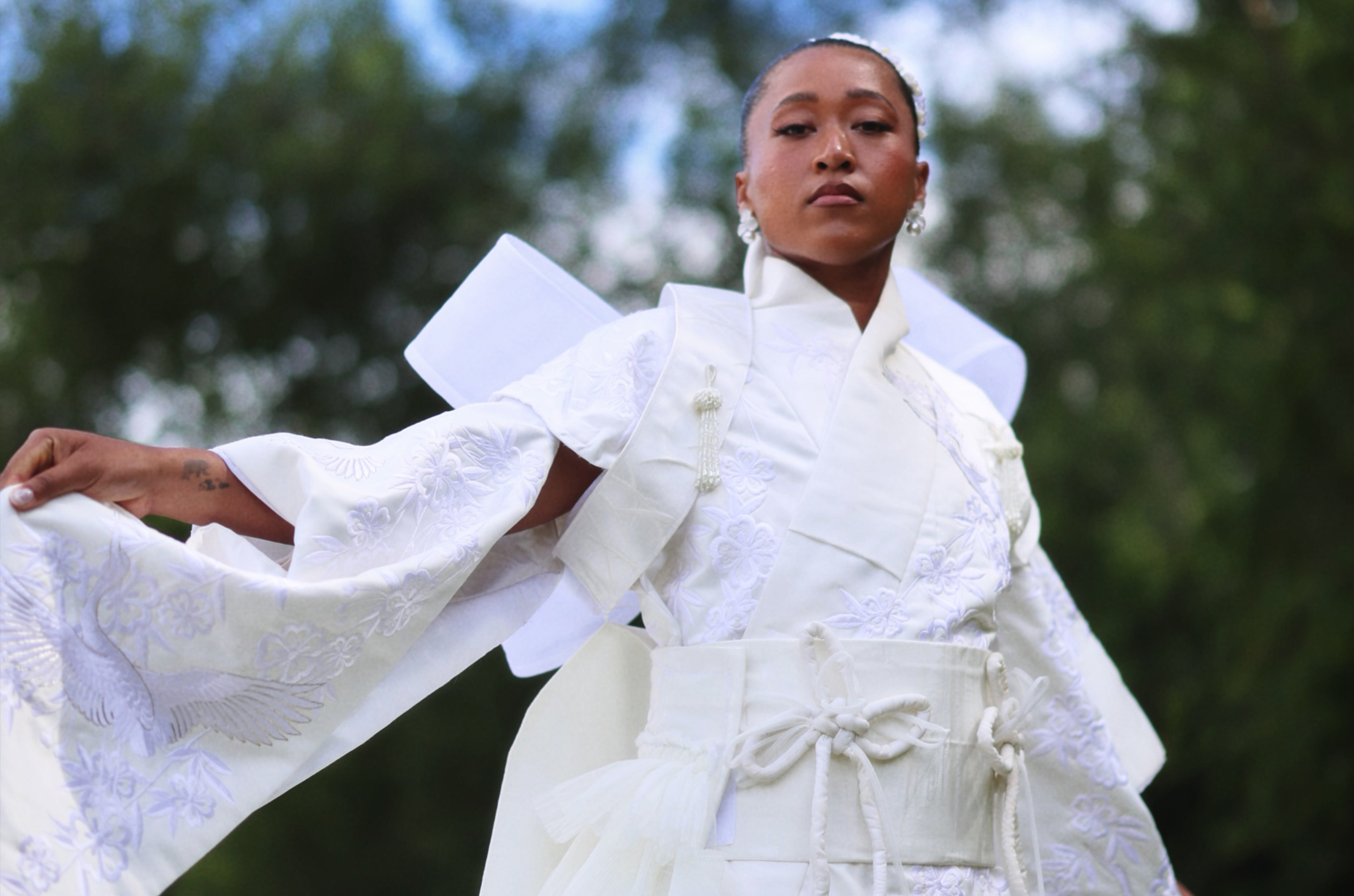
Images c/o @naomiosaka via Instagram | Designer: Hana Yagi, Photographer: Sebastian Arriagada
Curatorial Director: Marty Harper
Pure White Subversion
Like much of her work, Yagi’s custom Wimbledon gown draws clear inspiration from Japanese ceremonial dress, evoking a traditional shiromuku — the all-white wedding kimono traditionally worn by Japanese brides as a symbol of purity and new beginnings.
The piece features billowing furisode-style sleeves, a thick obi sash cinched at the waist with a decorative cord, embroidered cranes and cherry blossom motifs and a ruffled, semi-sheer tulle skirt that trailed behind Osaka as she walked. Underneath, the athlete wore a sleeveless Nike competition dress with matching floral details and a scalloped hem.
Wimbledon’s all-white dress code is one of the most rigid in sport. Dating back to the Victorian era, when white was favored because it concealed sweat — considered improper to display in mixed company — the rule has only grown stricter over time. Since 2014, the All England Club has even regulated the shade and amount of trim allowed, mandating “predominantly white” attire with only narrow exceptions.
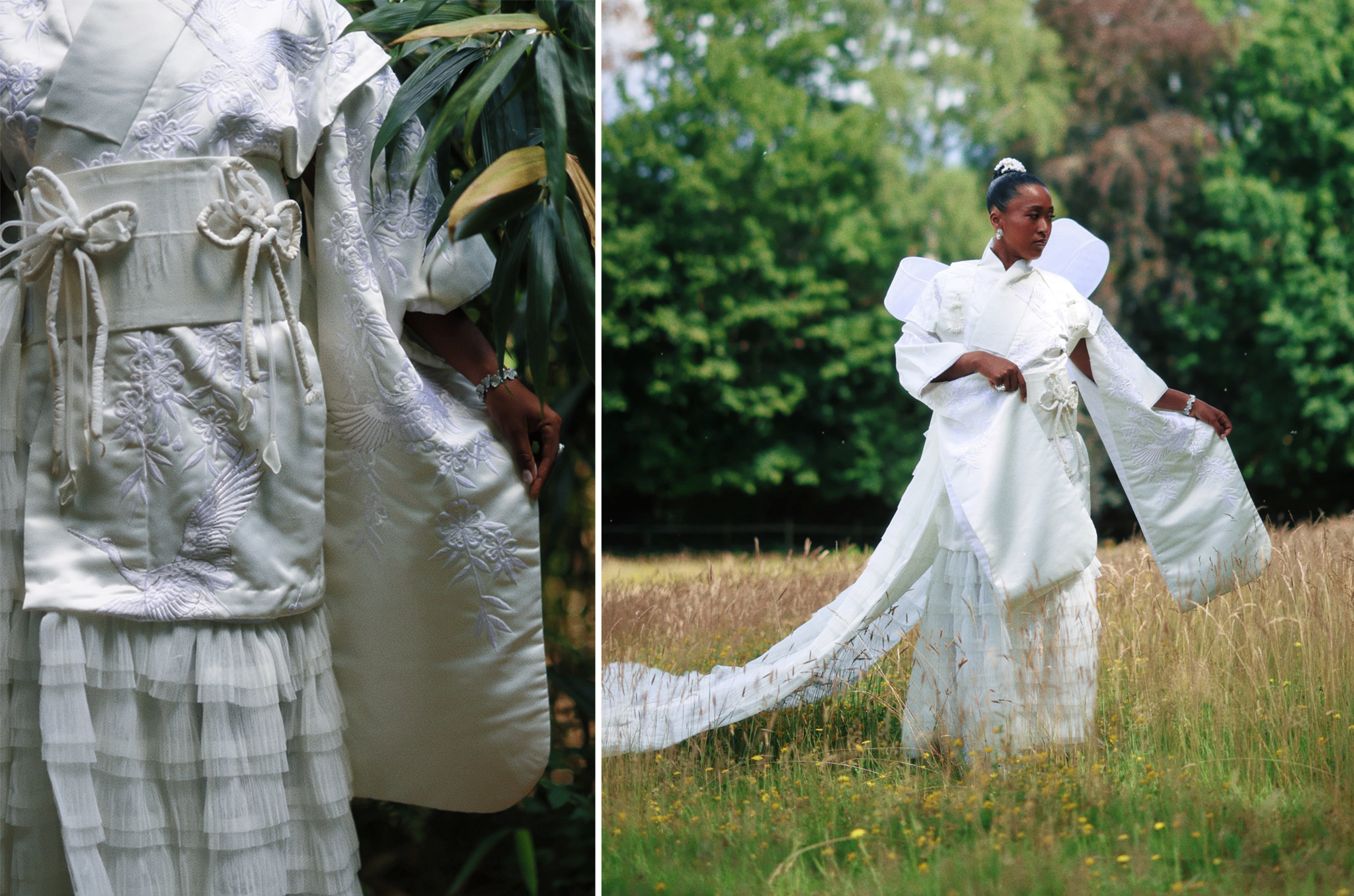
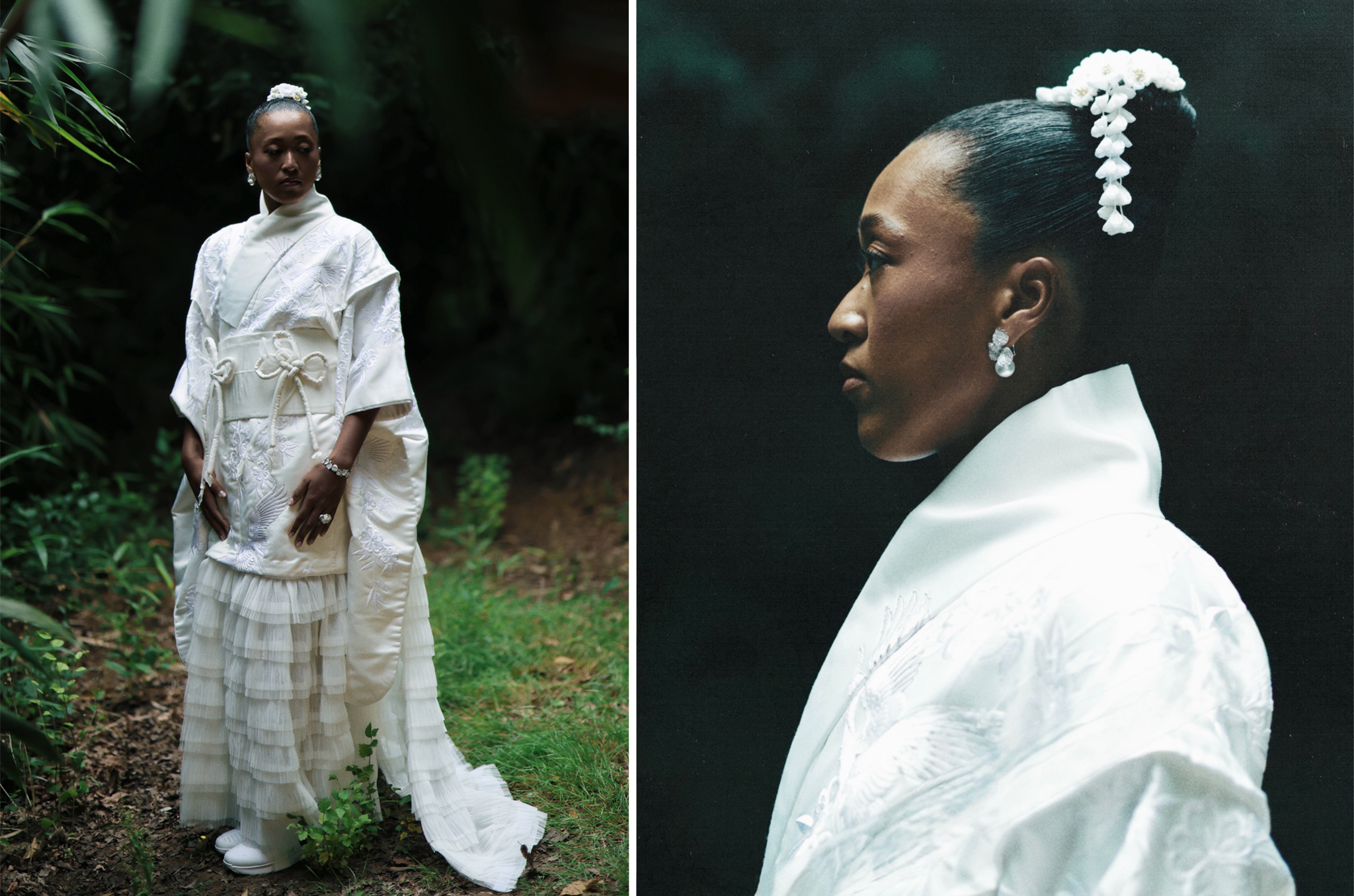
Osaka has made something of a game out of working within those narrow exceptions. “Obviously, the outfit has to be white,” she told British Vogue, “but aside from that, you can play with a lot of different design elements.”
This look is a continuation of the 28-year-old’s adventurous and dazzling Grand Slam fashion run, which has also featured a jellyfish-inspired Australian Open look and an Eiffel tower-themed ensemble for the French Open.
Wimbledon’s emphasis on tradition caused Osaka to reflect on her own heritage, she told reporters. “For me, my Japanese heritage means a lot,” she explained in an on-court interview. “They say all white at Wimbledon, and I thought it would be really cool to come out in a kimono.”
View this post on Instagram
In Yagi’s Own Words
We caught up with Yagi right after the look’s reveal, and she offered some additional comments on the project.
Asked about her inspiration, Yagi pointed to junihitoe — the elaborate twelve-layered robes of the Heian court — and other traditional formal Japanese dress. “While maintaining a deep respect for these historic garments, I wanted to deconstruct their visual language and reinterpret it through a contemporary lens, creating a new aesthetic expression,” she says.
Yagi still seems a little in awe of the whole experience, and is quick to credit Osaka herself as a source of inspiration. “I’ve always admired Naomi’s willingness to take on new challenges, and her attitude has given me courage over the years,” she tells TW. “Having the opportunity to collaborate with someone like her is an experience I’ll never forget.”
The overwhelming response both in Japan and abroad has clearly meant a lot to her, too. “I’m so happy this look has resonated with so many people,” Yagi says. “It’s been a truly precious experience, and I’m deeply grateful for it.”
Related Posts
- Hana Yagi: The Designer Turning Discarded Wedding Dresses Into Art
- The Seven Masks of Naomi Osaka
- A Complete Guide to Japanese Kimono
Updated On June 30, 2026