
Minyo Crusaders are reimagining Japanese folk music. The group’s sound is experimental, influenced by various dance music styles including calypso, reggae and Latin beats, creating an electric blend of global cultures.
Minyo, or traditional folk songs, are the soul of Japanese music, sung and passed down for centuries. Over the generations, these songs have served as children’s lullabies and as essential accompaniments for festivals and manual labor, providing a steady rhythm for the laying of rice fields and hauling of fishing nets.
As social influences and trends have evolved, however, and pushed preferences toward more modern pop and rock styles, minyo have slowly faded from the mainstream consciousness. But in 2011, guitarist Katsumi Tanaka and folk singer Freddie Tsukamoto invited various musicians for a jam session at a studio in an old US military house in their hometown of Fussa, and the ensemble Minyo Crusaders was born.
Since the debut of the band’s first album, 2017’s Echoes of Japan, Minyo Crusaders have received high praise both domestically and internationally for shining a spotlight back on folk music and reinventing the “sound of Japan” for a new generation.
Building on that momentum, the group has entertained audiences around Japan and the world, with 2025 seeing the musicians complete their fifth tour of Europe. In Japan, you’ll find the group playing at festivals and live houses across the archipelago, including Tokyo’s Cotton Club, a premier jazz venue.
Minyo Crusaders’ new album, From Japan With Love, will be released under the prestigious Blue Note label in June. Ahead of their latest release, guitarist Katsumi Tanaka and saxophonist Koichiro Osawa share their creative ethos and vision for minyo in the modern day.
Minyo Crusaders Interview
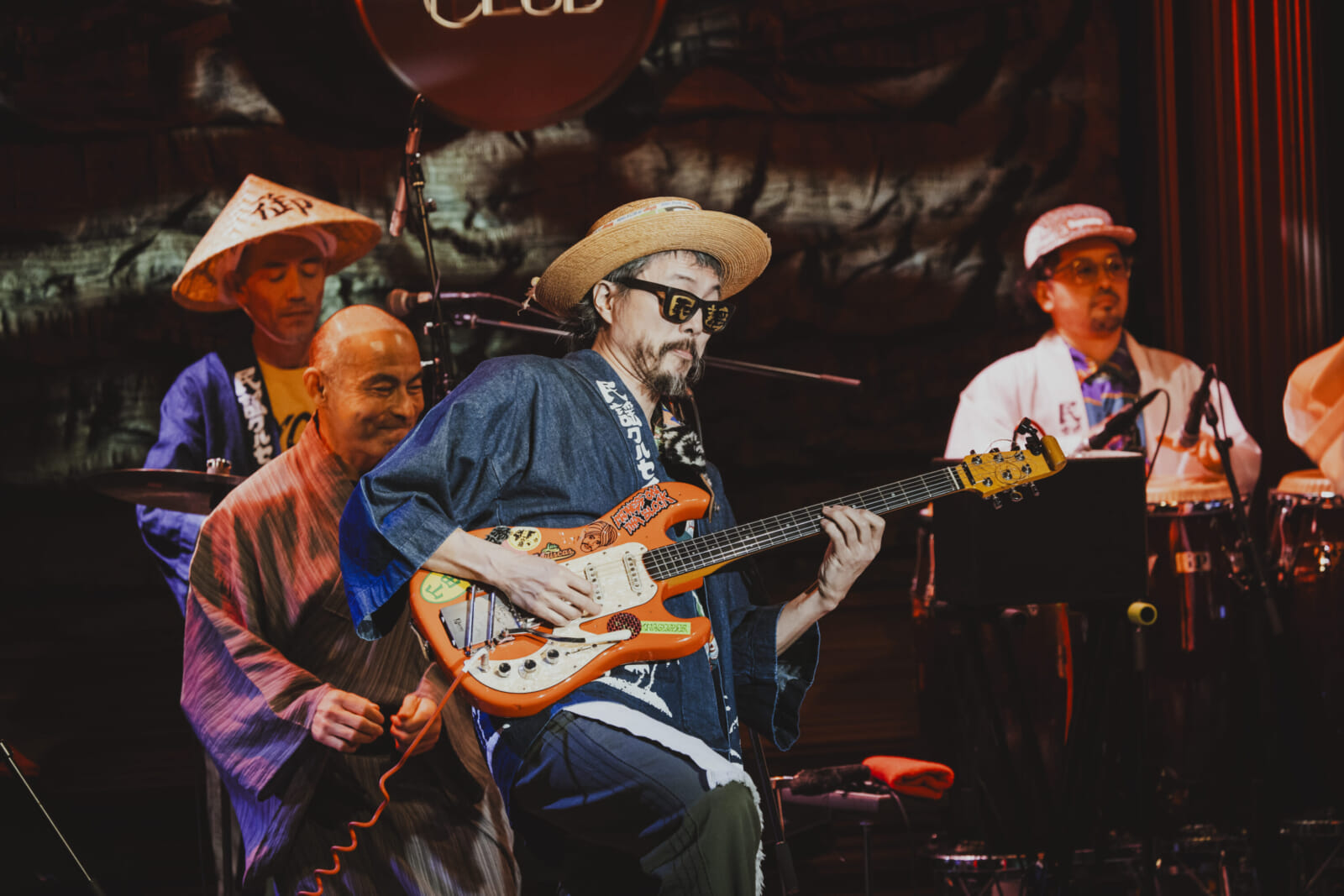
PHOTO BY TSUNEO KOGA
On your website, there’s a quote from co-founder Kat-Sumi Tanaka: “Following the Tohoku earthquake of 2011, I reflected on my life, work and identity … I began searching for Japanese roots music I could identify with.” What inspired the band to draw inspiration not just from your hometowns, but from international cultures as well?
Tanaka: I used to think of minyo songs as something rigid and stagnant music that had become fixed and no longer evolved. But then I realized that, like the vibrant popular music of the Caribbean, Latin America and Africa, they share the same essential feeling of being “songs of the people.” By bringing these traditions together, I felt they could be transformed into something that truly lives in the present.
That idea became a source of hope for my creative work at a time when, in the aftermath of the disaster, everything felt drained and I was struggling with a sense of helplessness. My reference points were the records released by postwar pop superstars like Hibari Misora and Chiemi Eri, who blended minyo with jazz and Latin music. Those recordings are filled with the vitality of Japan’s postwar recovery.
I never get tired of the joy of discovering music from around the world, music that carries the unique accents and grooves of where it comes from. Through those encounters, we can understand each other beyond language and find endless inspiration. I’d love for people around the world to discover minyo in the same way.
What do you think makes minyo stand out from other styles of Japanese music?
Osawa: I think what makes minyo so unique is that it’s music whose creator is unknown. There isn’t a single author behind it; rather, it has been nurtured over long periods of time within the everyday lives of people in each region.
It has always been tied to specific contexts — festivals, labor, prayer — existing as something with a kind of function. Because of that, the climate and emotions of a place are reflected in it very directly. To me, it’s this primitive yet universal quality that really stands out in contrast with contemporary music.
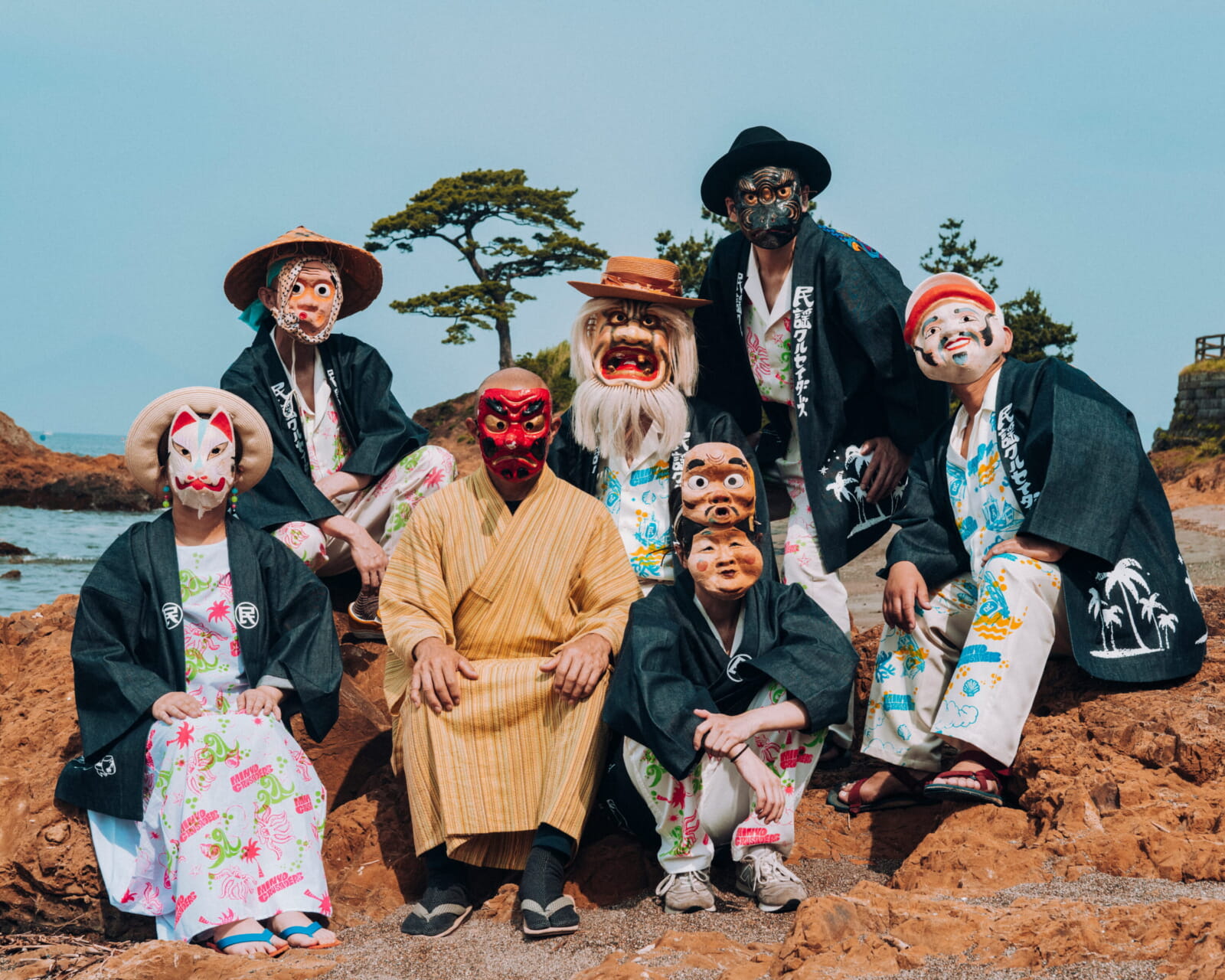
Global interest in Japanese culture has grown exponentially in recent years. What kind of image of Japan do you think Minyo Crusaders projects to its global audience?
Osawa: When performing for international audiences, we’re conscious of presenting the music not as “traditional music from a distant country,” but in a way that people can enjoy as something of their own.
Minyo itself was originally born through a blending of outside influences within the everyday lives of each region. So rather than seeing “Japanese culture” as something fixed and unchanging, we think of it as something diverse — something that has naturally mixed with outside cultures over time.
Because music itself carries universal rhythms and emotions, combining it with elements of world music allows it to resonate across borders. I hope people can feel that sense of flexibility, and the fact that this is something alive and evolving in the present.
It’s often said that music is an international language. What message do you hope to communicate through your songs?
Osawa: I believe music is something that allows us to share a sense of feeling beyond language. Minyo songs carry the history and daily life of each place, but the joy and sorrow within them — the rhythms of the body — are things that resonate with people from any country. Rather than trying to deliver a specific message, we want to offer the experience itself: the idea that even different cultures can resonate with one another.
And beyond just the music of Minyo Crusaders, I feel that music as a whole is something that adds something positive to everyday life. I’d be happy if those who engage with it can take away even a small sense of something uplifting.
More Info
To learn more about Minyo Crusaders, please visit the band’s official website.
Minyo Crusaders will perform a two-night special at Cotton Club on July 26 and 27. To book a reservation, please click here.
Updated On May 29, 2026