
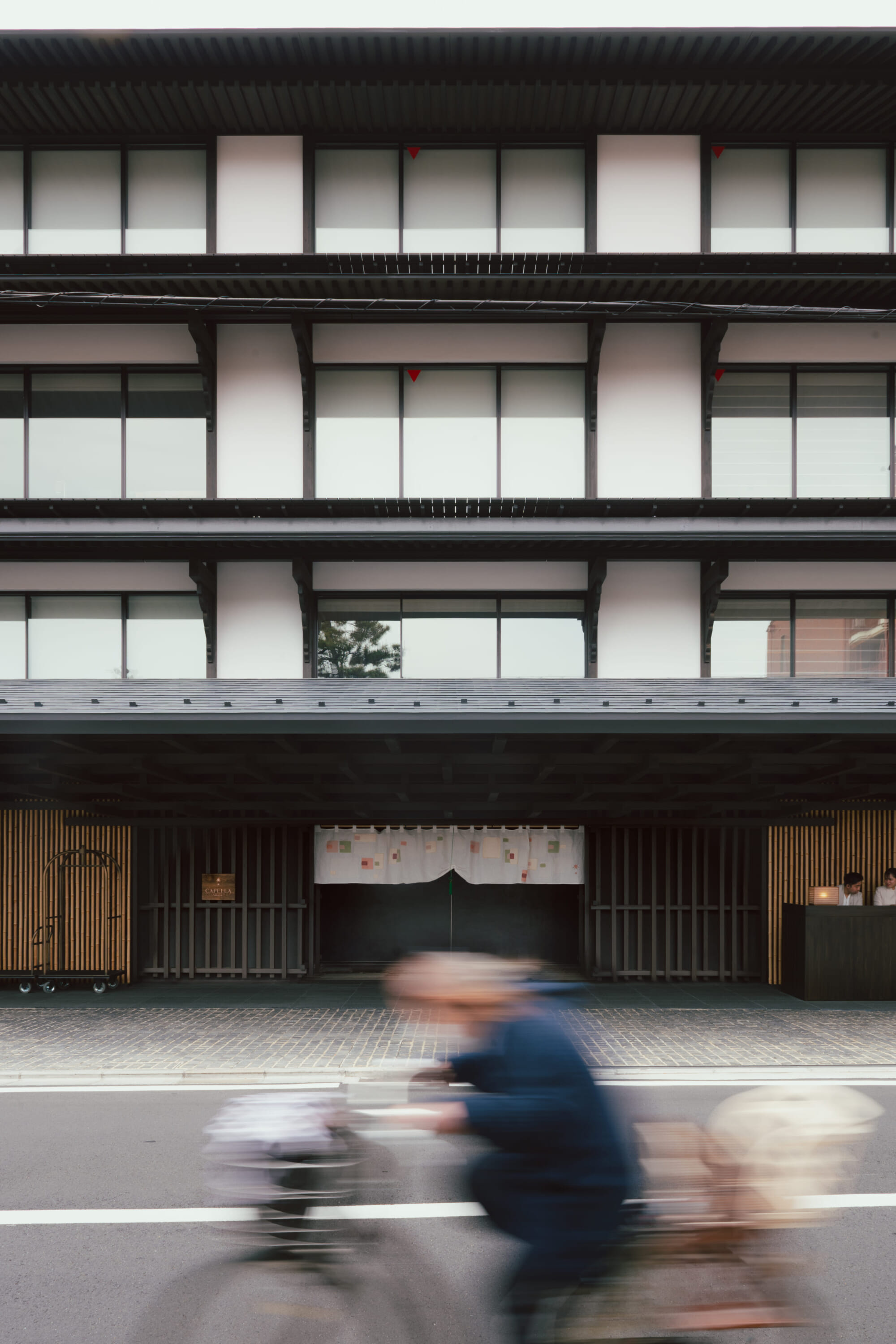
There is a lane in Kyoto where very little happens. Named Shinmichi-dori, it runs through Miyagawacho, a geisha district still home to a cluster of teahouses and practicing geiko and maiko. Composed of wooden townhouses, narrow side streets and unassuming shopfronts, the area is primarily residential; on a given afternoon, the lane sees a few locals cycling by with groceries, maybe the occasional cat. But a few minutes’ walk in any direction would lead you to some of the city’s most iconic and picturesque spots — the Kamo River, Gion, Pontocho Alley.
Capella Kyoto, which opened this March as the highly anticipated Japan debut of the Singapore-based Capella Hotel Group, occupies a corner of this lane. That a hotel of its scale and reputation exists here at all is the first surprising thing; that it does so without disturbing the block is the second.
In a city overflowing with hotels, Capella has carved out a specific position — both in its physical location and within the city’s hospitality landscape. The development is part of a broader effort to rebuild this stretch of Miyagawacho, alongside the block’s restored Kaburenjo Theatre and a new community center, stitching the quiet district into the bustling paths of Gion. Conceptually, Capella sits between two well-established models: less intimidating than a traditional ryokan, more grounded than a showpiece luxury hotel. What it offers is a thoughtful entry point — an elevated introduction to the neighborhood, the city and the crafts and rituals that define both.
Something Borrowed, Something New
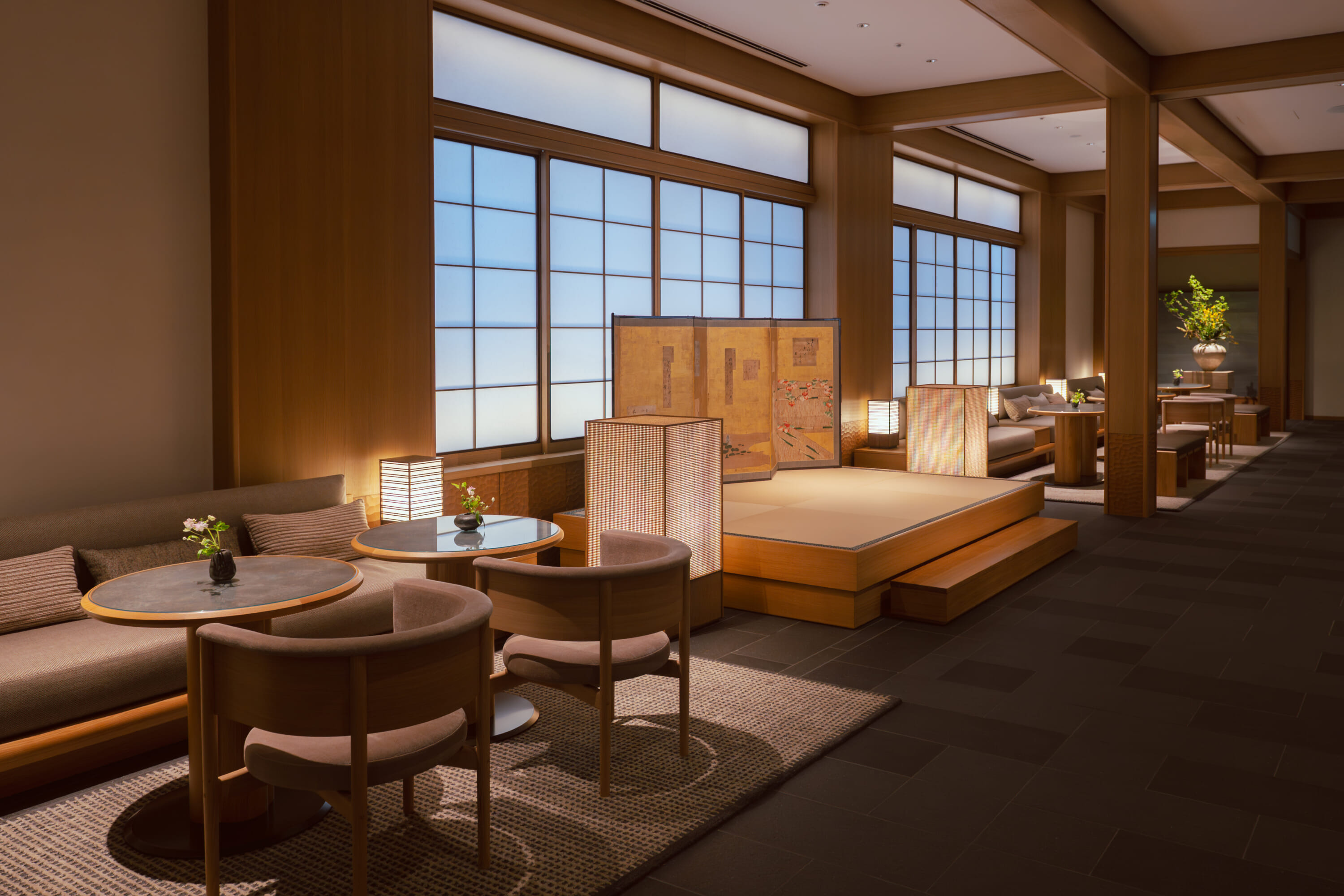
We arrived on a sunny afternoon, not through a grand entrance, but through a sequence of reveals: quiet, shoji-lined alleys, the sound of a waterfall rising from the atrium below and, finally, the Living Room lounge, which doubles as reception. This is Kengo Kuma’s signature at work — an interplay of natural materials, light and human scale perspective. Combined with interiors by Singapore’s Brewin Design Office, the structure is a contemporary translation of the Kyoto machiya, rather than a strict recreation.
The hotel sits on what used to be a schoolyard. Shinmichi Elementary closed some years back, and pieces of the original — reclaimed timber, as well as lighting — appear throughout Yoi, an atmospheric, city pop-infused bar serving late-night eats and handcrafted cocktails.
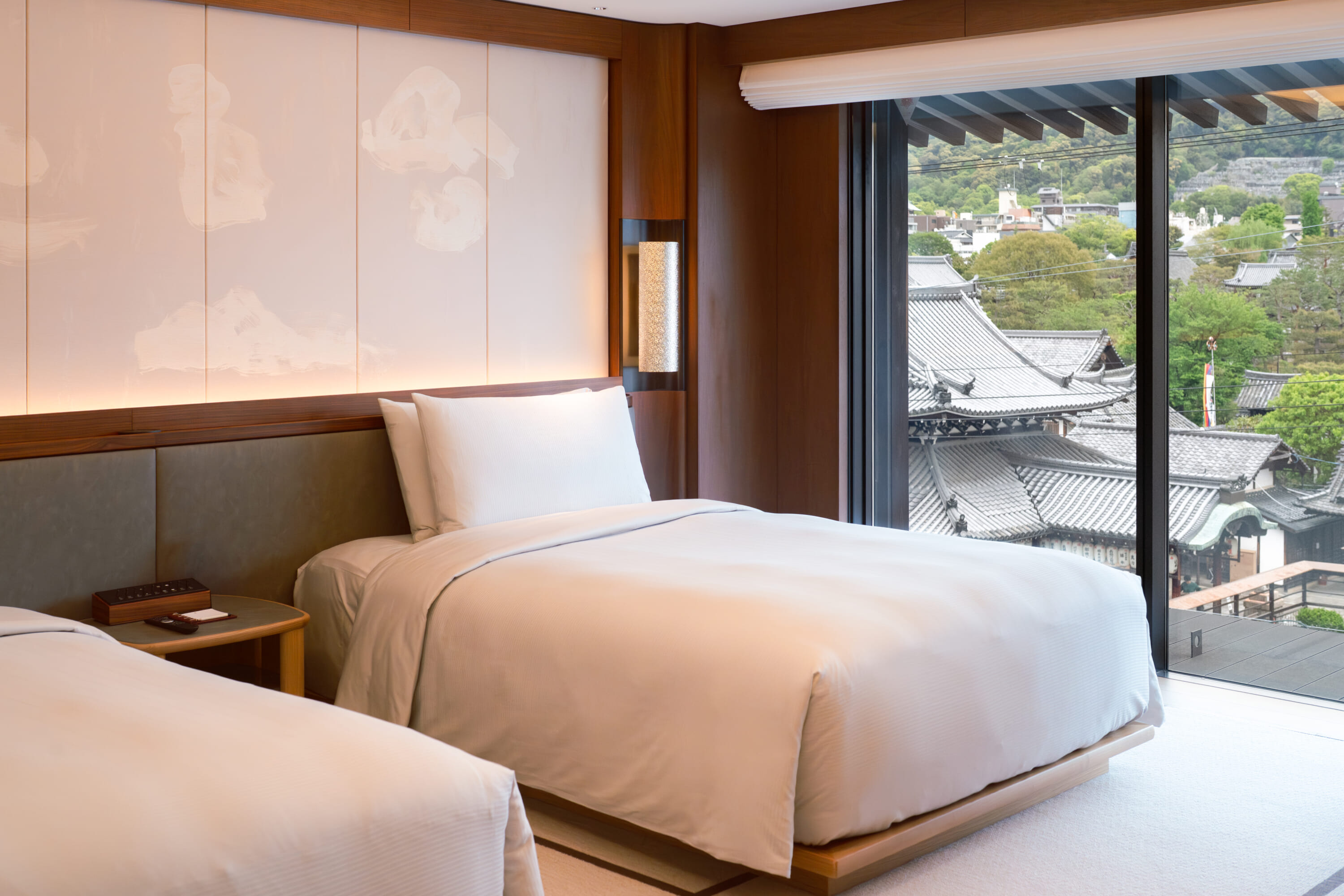
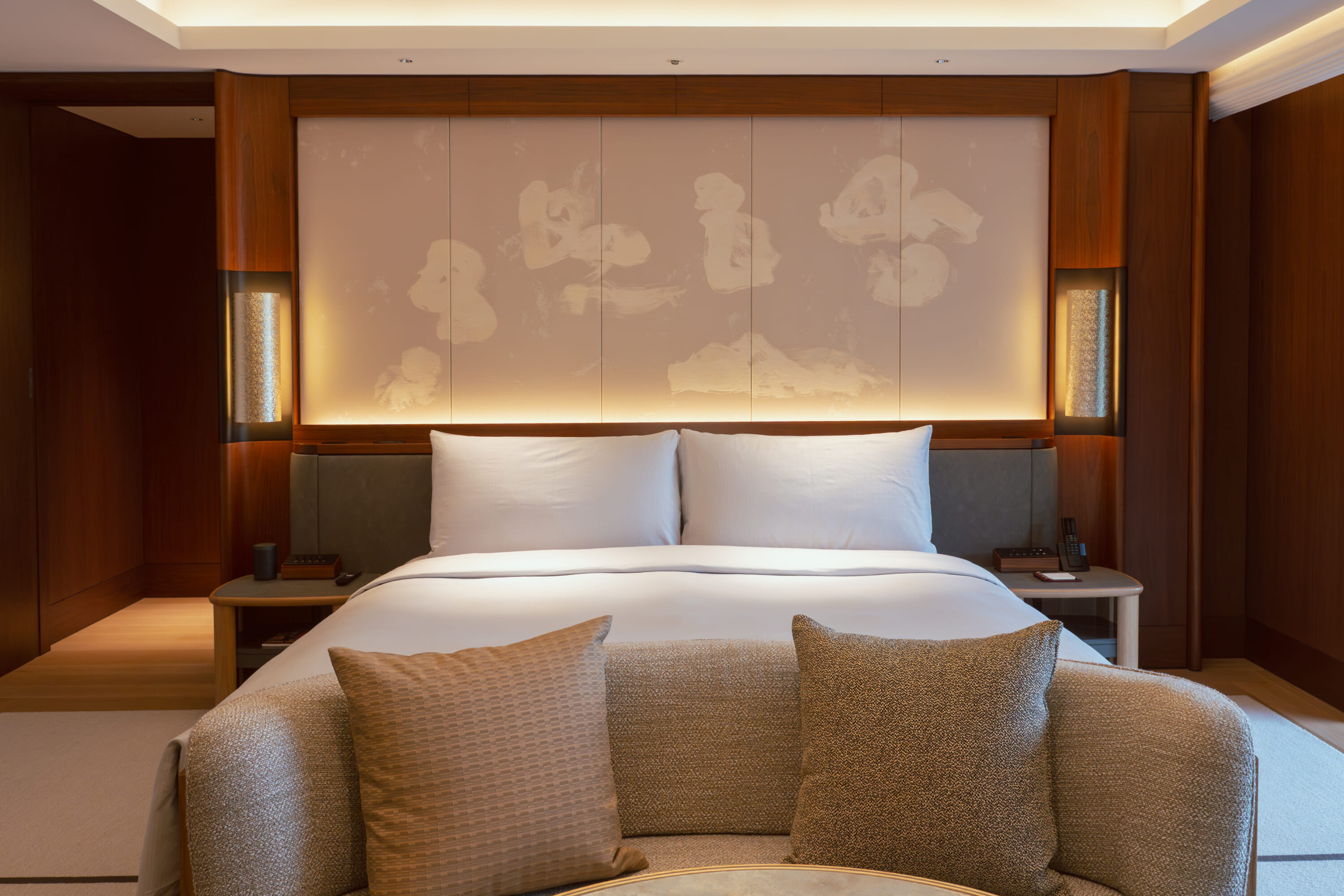
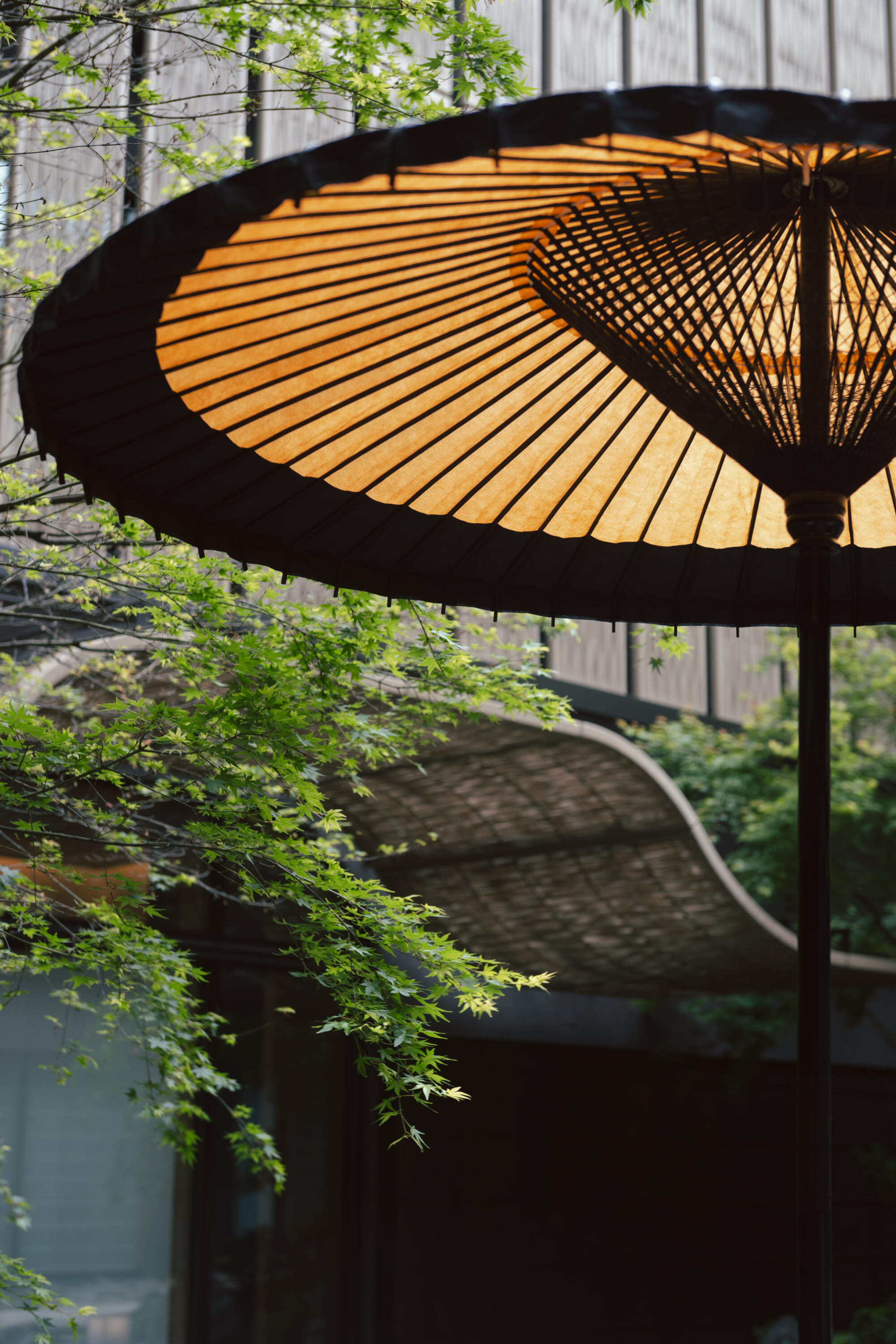
In harmony with the surrounding lane, Capella Kyoto rises only four stories. One of its defining features is the undulating karahafu roof — a style usually reserved for temple gates and kabuki theaters — that crowns the central courtyard. Surrounding it are 89 rooms, elegantly spare in the Kyoto manner and rendered in cypress, washi and stone. Each is oriented toward a distinct view: the Higashiyama skyline, Kenninji Temple, the Kaburenjo or the hotel’s Japanese garden. Downstairs, Auriga Spa offers treatment rooms, saunas and private onsen rooms.
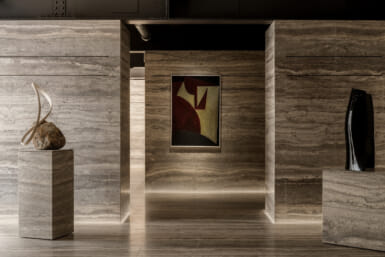
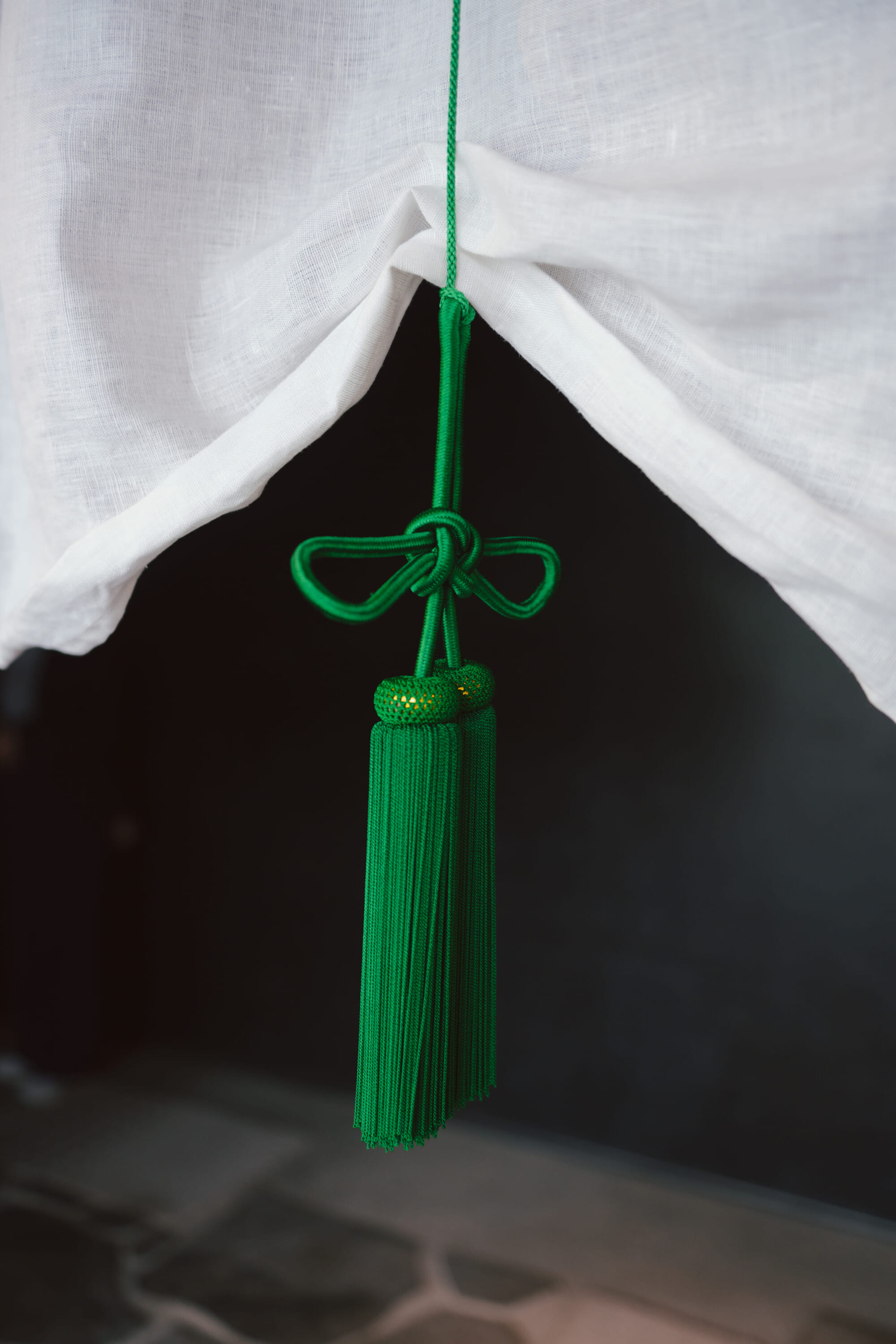
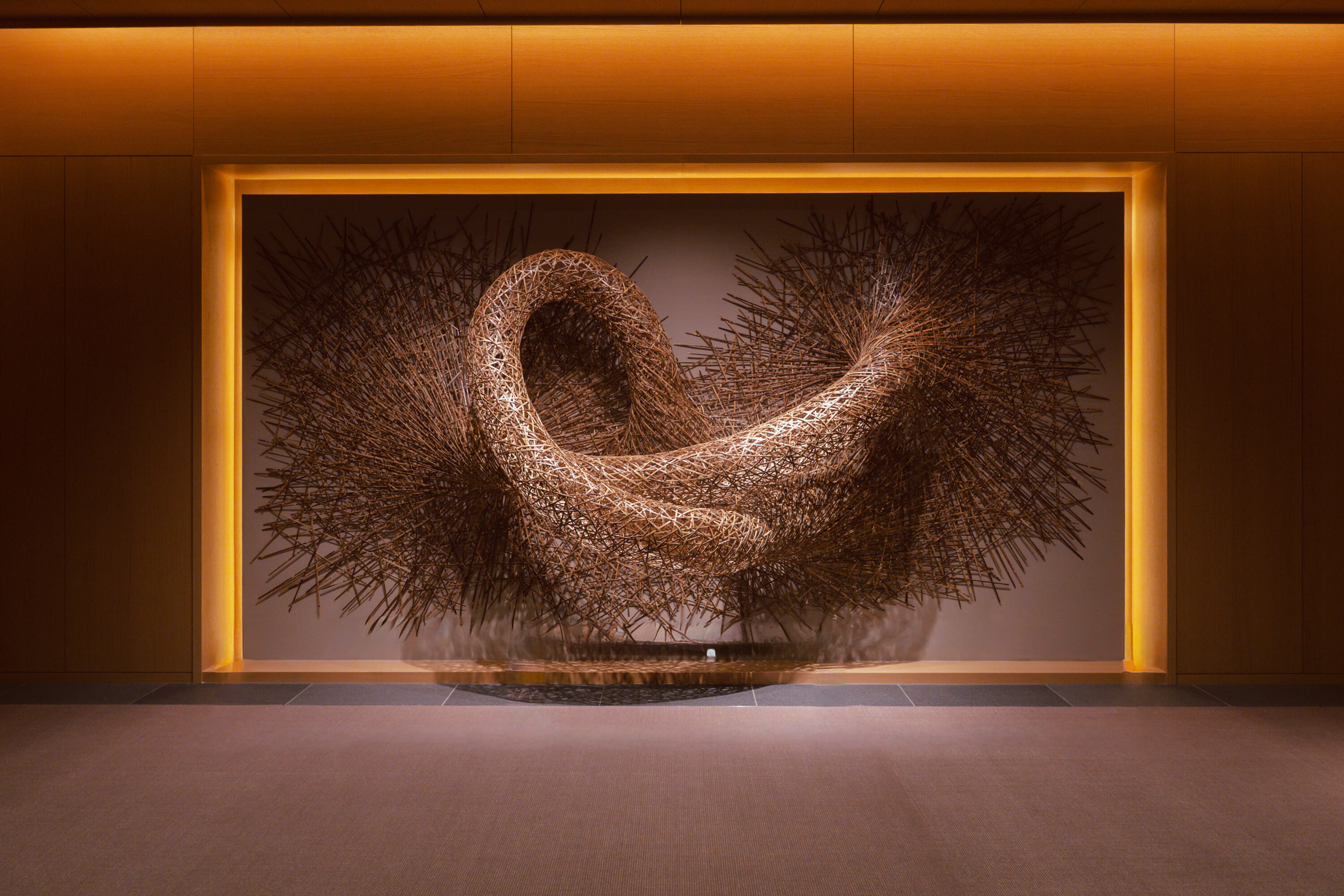
In the elevator lobby, a looping bamboo sculpture by fourth-generation master Tanabe Chikuunsai IV unfurls, while at each hotel entrance, seasonal noren curtains by Dutch textile artist Mae Engelgeer piece together locally sourced kimono fabric. Like the architecture, the property’s artworks carry tradition forward rather than replicating it — each installation, in its own way, evolving heritage forms.
A Table Between Two Coasts
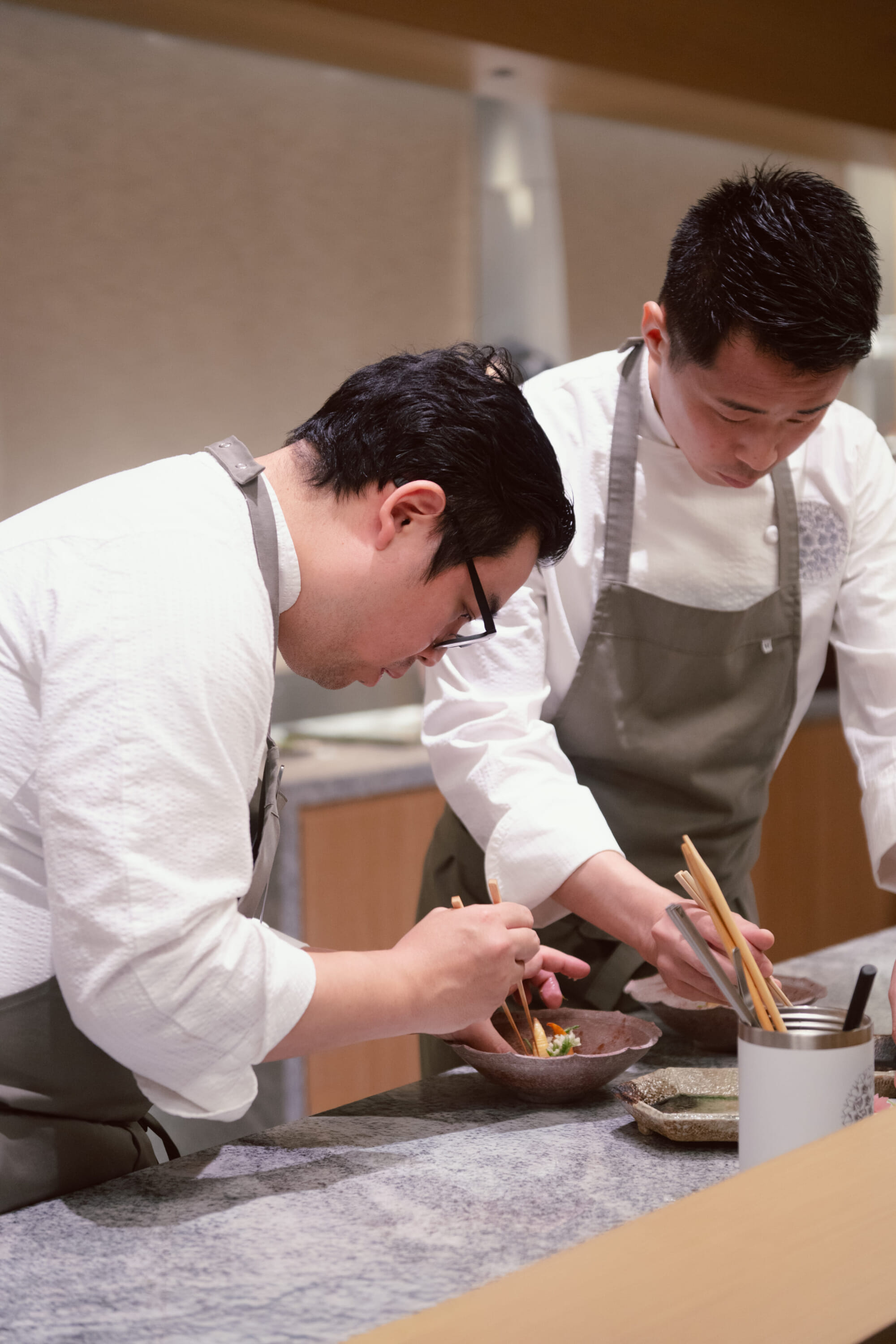
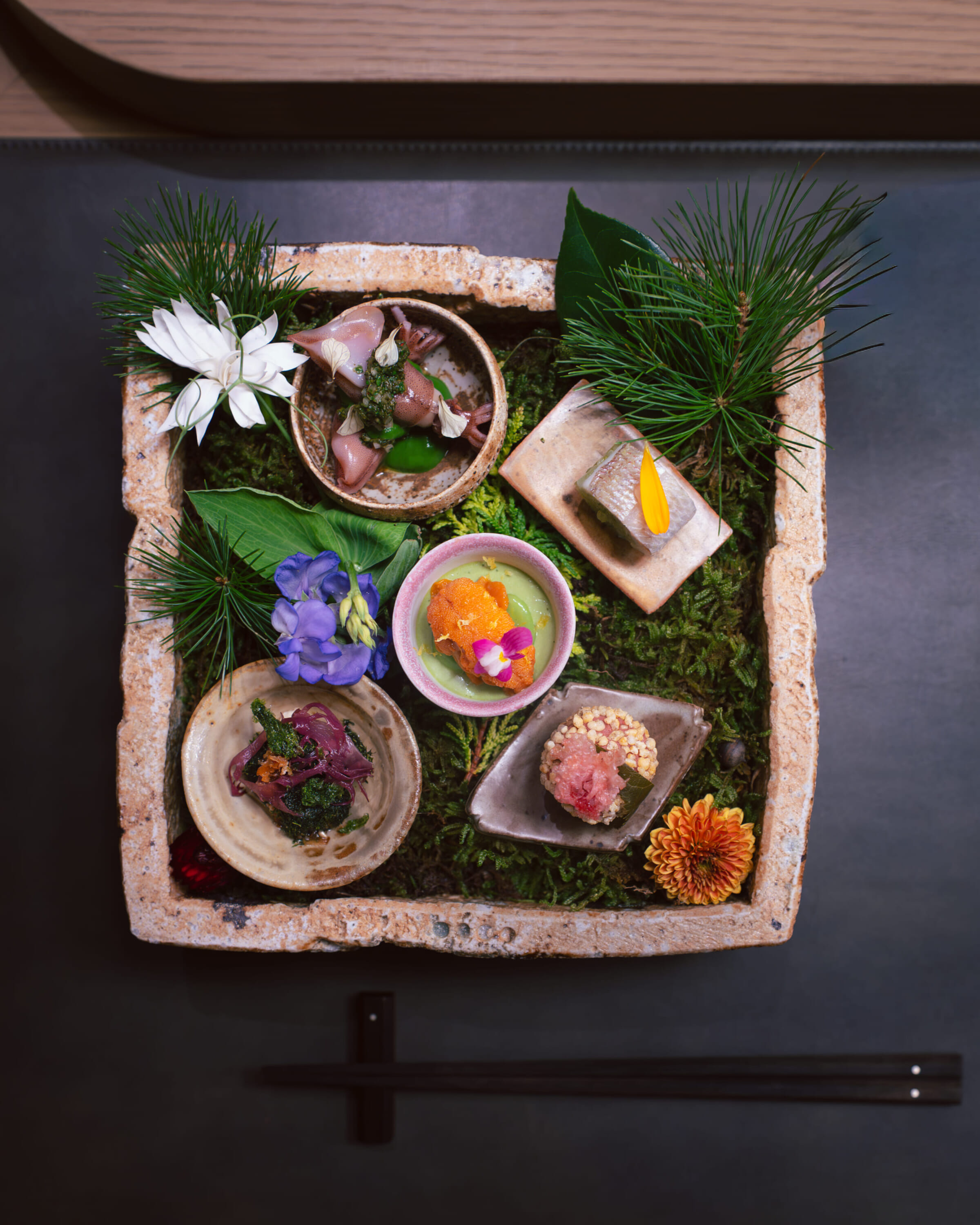
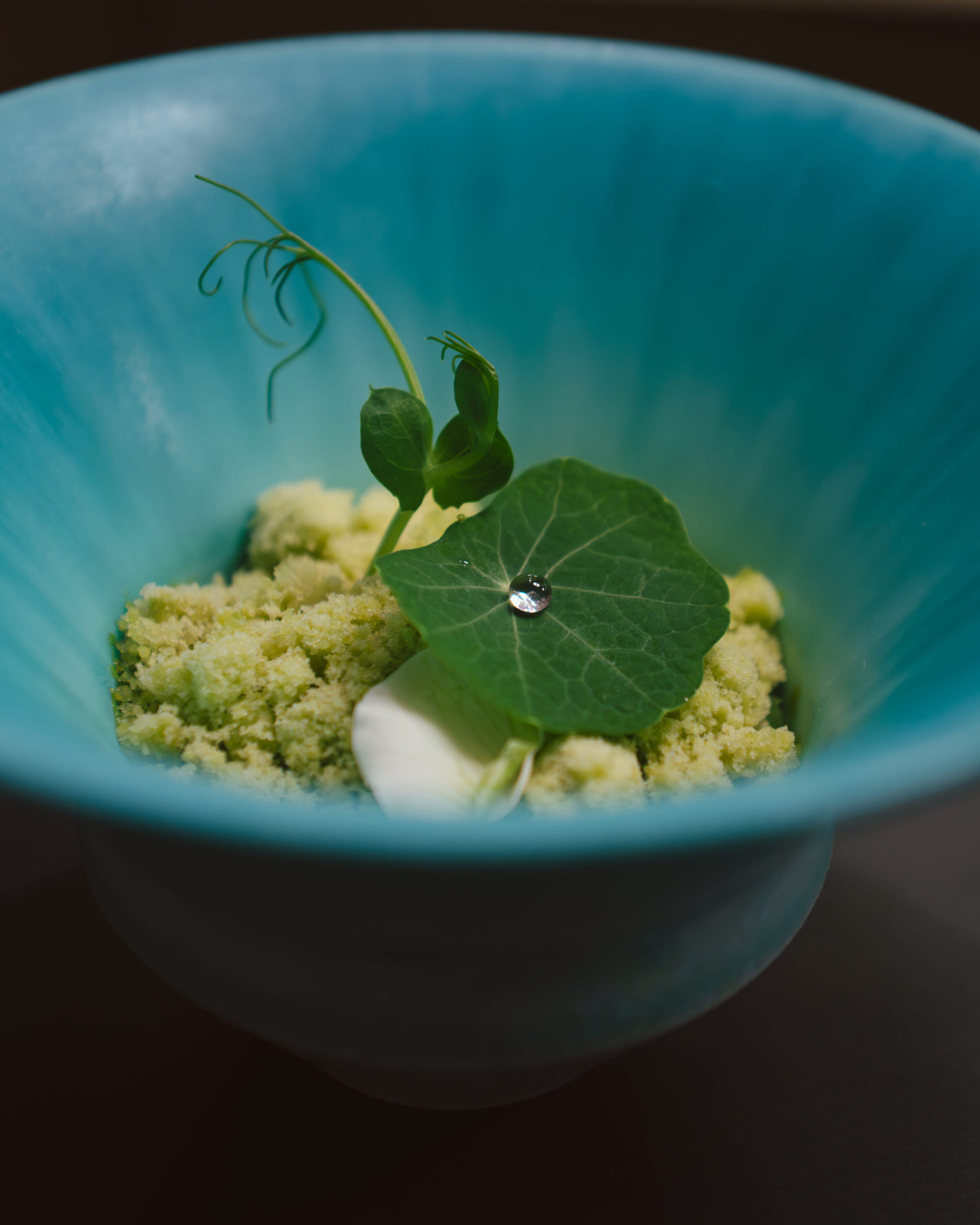
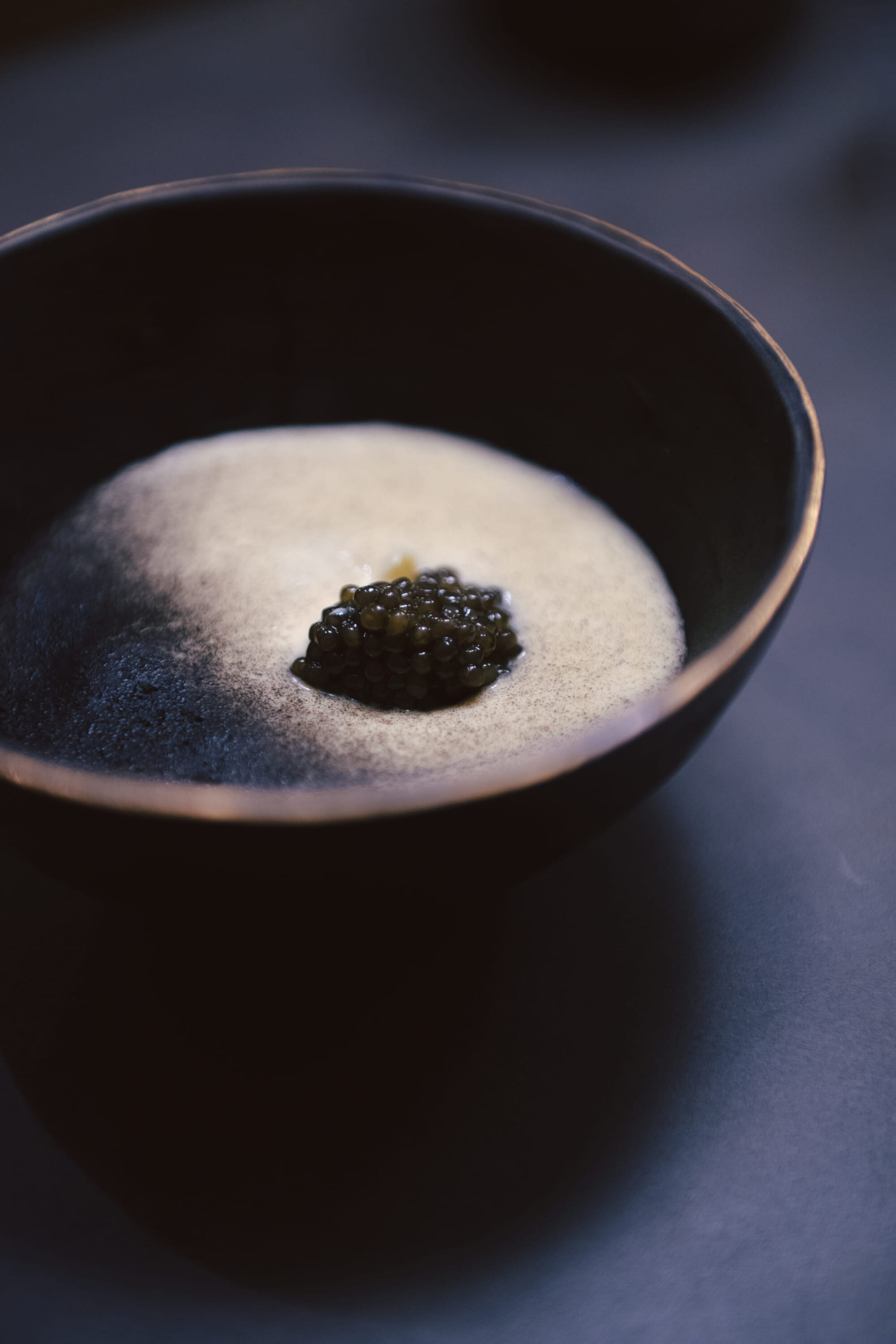
For food-minded travelers, the hotel’s biggest draw is its restaurant. SoNoMa by SingleThread is the first international project from Kyle and Katina Connaughton’s three-Michelin-starred restaurant in Sonoma County, California. When written in Japanese, the restaurant’s name takes on special meaning — translating to “space of imagination.”
Here, Japanese-American chef Keita Tominaga presents a seasonal tasting menu drawing on produce from both Kyoto and the surrounding Kansai region and the Connaughtons’ Dry Creek Valley farm in Sonoma. Cross-Pacific sourcing of this kind is unusual for a Kyoto kitchen, but it works beautifully, as illustrated by the opening course this April: Hokkaido uni with fava bean, hotaru ika squid with a chimichurri of edible chrysanthemum, and yurine (Japanese lily bulb) with duck liver.
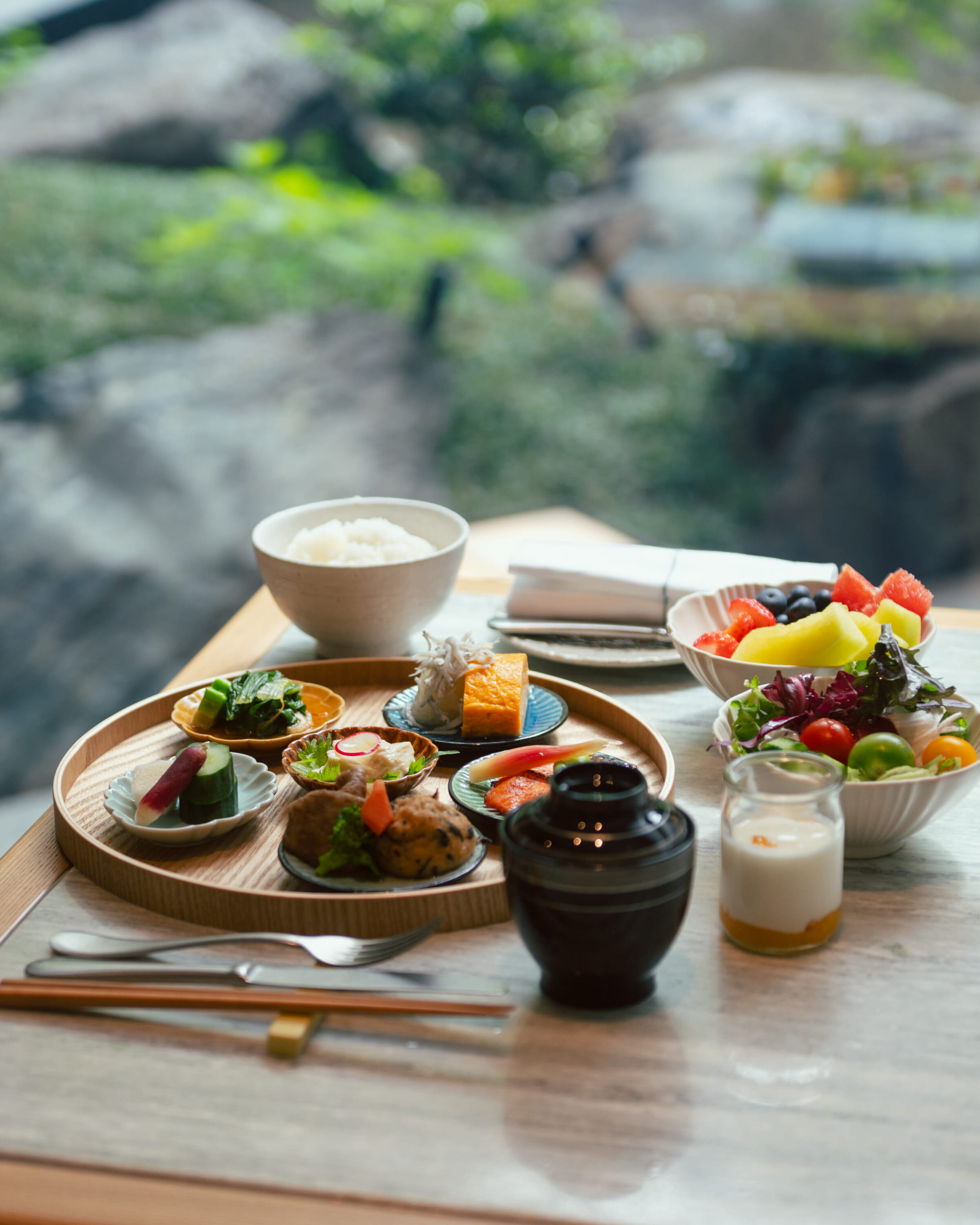
If SoNoMa served a meal worth scheduling our trip around, Lanterne, the hotel’s all-day French brasserie, became a steady anchor for the rest of our stay. The space handles mornings with a generous spread, ranging from fresh pastries and buttery omelets to a full Japanese breakfast. Later, the brasserie becomes a place to drift in for a glass of wine or a light dinner.
Kyoto, Up Close
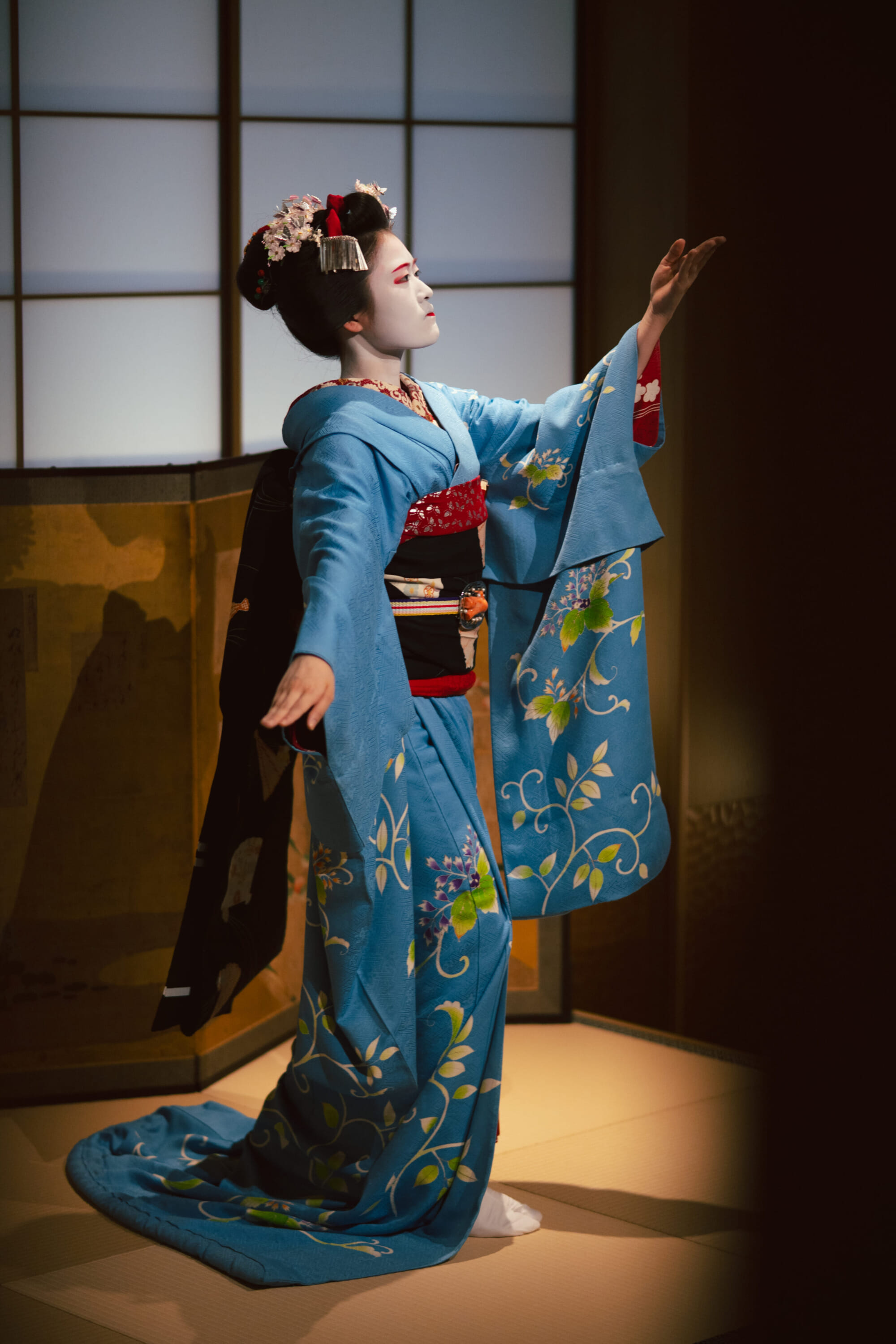
Tying the architecture, art and food together is a bouquet of cultural experiences — varied, well paced, neither precious nor overwhelming. Each evening at a quarter to 5, the Living Room lounge fills for a rotating classical performance — a maiko dance one night, shamisen or perhaps koto the next — held over tea or drinks.
Further immersion comes from hands-on encounters that enliven each day, including guided sake tastings, bonsai shaping and omamori-making. The hotel’s “Capella Curates” programming — dedicated cultural outings unique to the locale — ranges from a fitting for handmade sandals at a 150-year-old geta atelier nearby to an afternoon of kintsugi.
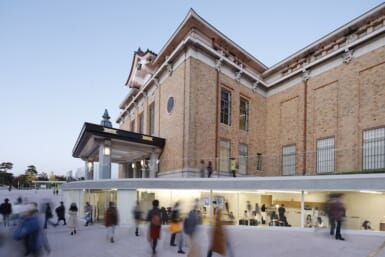
What you notice walking back to the hotel after each outing is how seamlessly the building blends into the lane. Compared to the stately facades and extravagant lobbies of most luxury hotels in its category, Capella Kyoto’s exterior — which deliberately mirrors that of the Kaburenjo Theatre directly across from it — and low-lit Living Room seem inconspicuous, even deferential. This is not understatement for its own sake, but perhaps a gentle proposal that luxury, in a city like this, is best spent on access rather than on display.
More Info
Head to Capella Kyoto’s website to book your stay, and find out more on Instagram at @capellakyoto and @sonoma.by.singlethread.
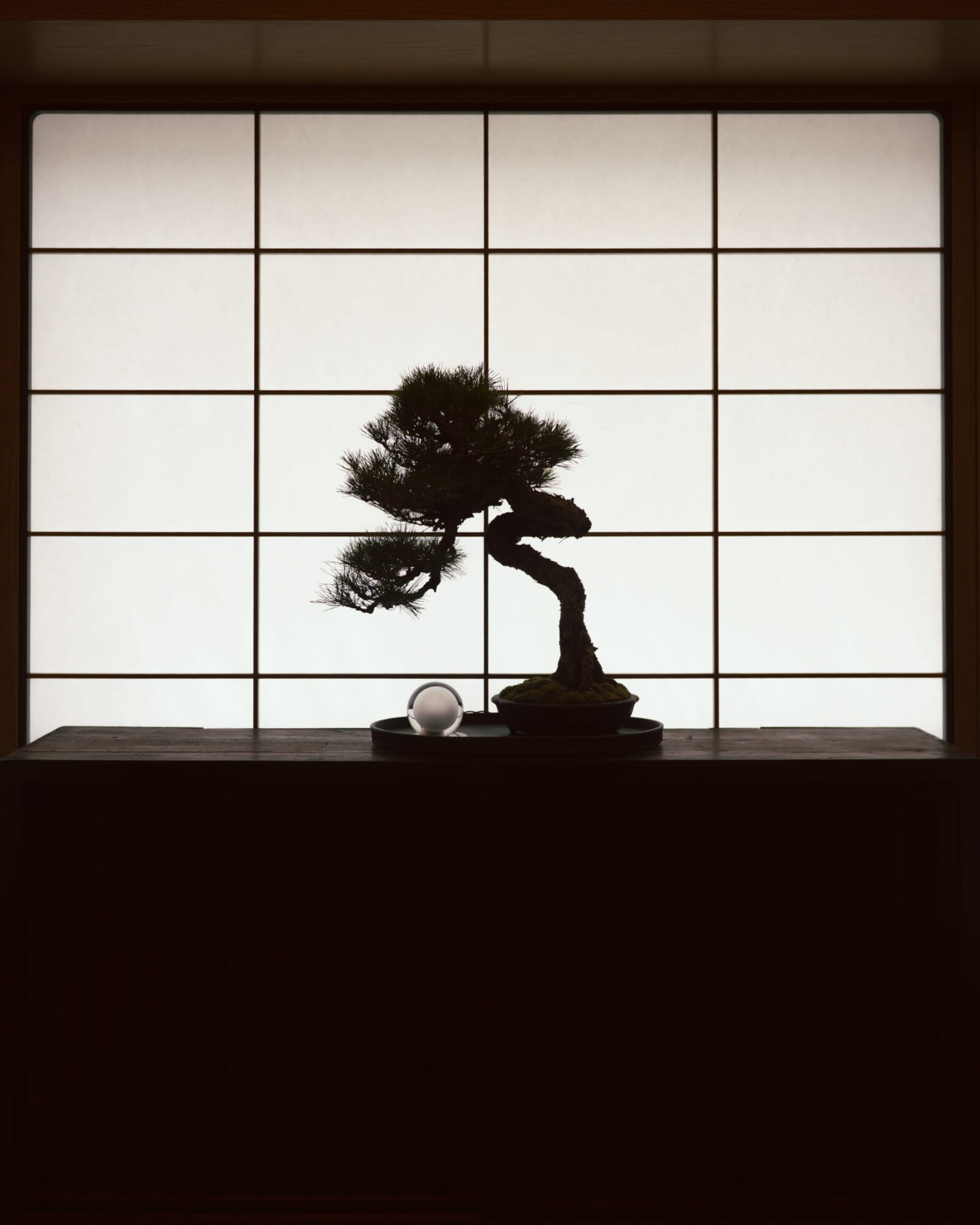
installation by The Etora Bonsai