

On Saturday, the United States and Israel launched coordinated military strikes against multiple targets across Iran, marking a major escalation in Middle East tensions. Iranian state media confirmed that Supreme Leader Ali Khamenei and several members of his family were killed in the initial wave of attacks. Iran responded swiftly by firing drones and ballistic missiles at Israeli territory and US military bases across the Gulf, including in Bahrain, Qatar and the UAE. The developments have prompted cautious responses worldwide, including in Japan, where Prime Minister Sanae Takaichi’s administration has taken a measured approach.
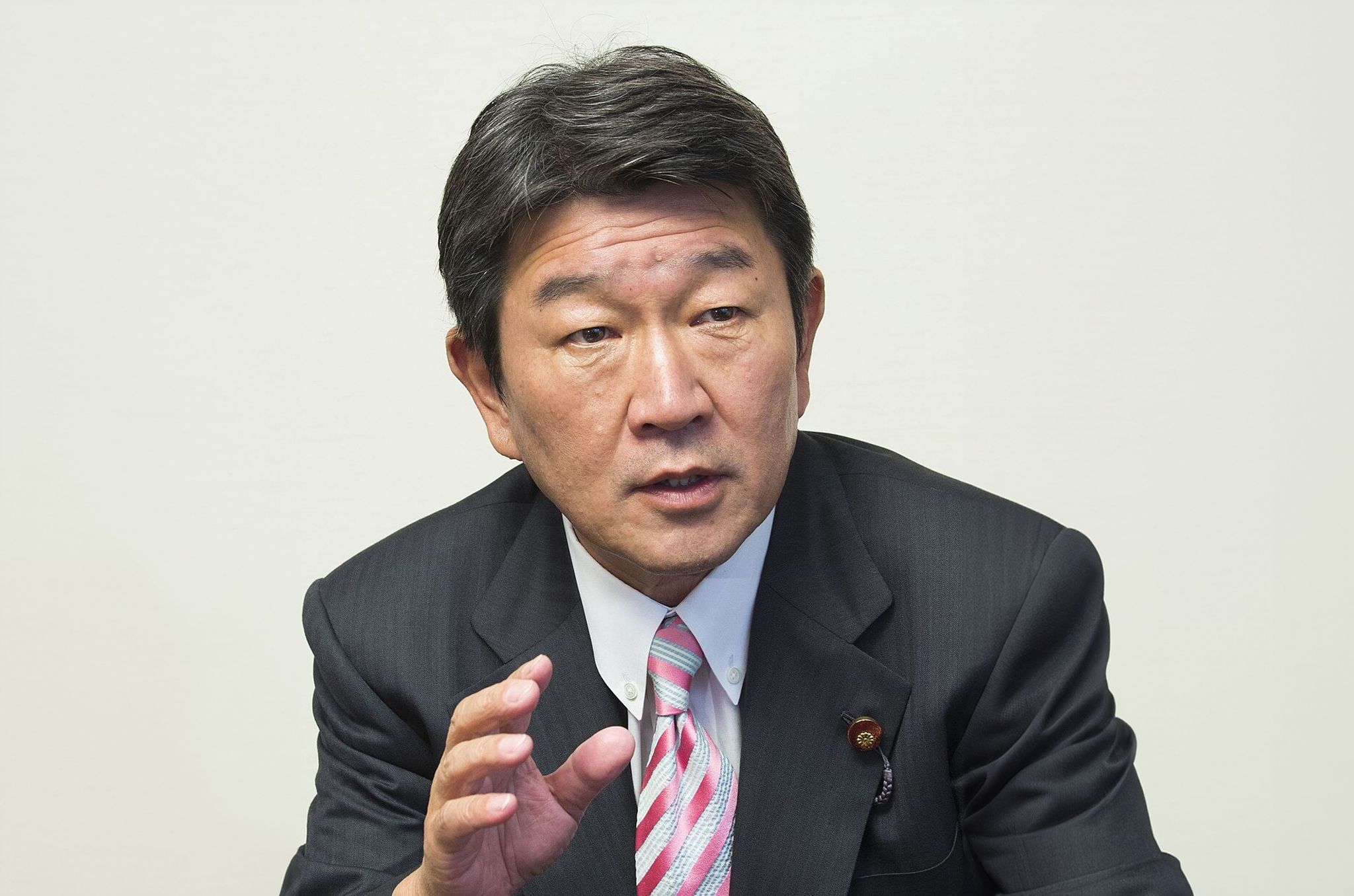
Foreign Minister Toshimitsu Motegi | Wikimedia
Japan’s Diplomatic Stance on the Iran Conflict
The government here has not expressed support for or criticized the coordinated attack on Iran by the US and Israel. It has reiterated its longstanding position that Iran’s development of nuclear weapons must not be allowed, consistent with its long-standing commitment to nonproliferation. However, officials have framed this in diplomatic terms rather than as an endorsement of the strikes. Japan and Iran have maintained long‑standing diplomatic and economic ties since Tokyo established its first legation in Tehran in 1929. Japan has often sought to balance criticism of Iran’s nuclear ambitions with continued dialogue and engagement.
“Iran’s development of nuclear weapons must never be allowed for the sake of maintaining the international nuclear non-proliferation regime,” said Foreign Minister Toshimitsu Motegi. “Japan has consistently respected fundamental values and principles such as freedom, democracy, and the rule of law. We have pursued diplomatic efforts to resolve Iran’s nuclear issue in coordination with relevant countries. Talks between the United States and Iran are extremely important for resolving this issue, and Japan has strongly supported them. Iran must stop its development of nuclear weapons and actions that destabilize the region.”
Impact on Global Oil Supplies
Japan has also been closely monitoring the potential impact of the conflict on global oil supplies, given the Middle East’s central role in global energy markets. Chief Cabinet Secretary Minoru Kihara reassured the public, stating, “I’ve not received any reports that there has been an immediate impact on Japan’s oil supply and demand.” He added that “crude oil supply and prices are ultimately determined by the market, based on a comprehensive assessment of various factors such as the situation in the Middle East and trends in global energy supply and demand.”
Beyond energy concerns, the Takaichi administration is prioritizing the safety of Japanese citizens in the region. Government sources say most of the roughly 200 Japanese residents in Iran have been reached, and some have left the country. Authorities have urged Japanese nationals traveling in or near the Middle East to remain vigilant and follow guidance issued by local embassies. While no deployment of the Self-Defense Forces (SDF) to Iran has been announced, the government has prepared contingency measures for potential evacuations. Officials are also closely monitoring developments in neighboring countries like Bahrain, Qatar and the UAE.