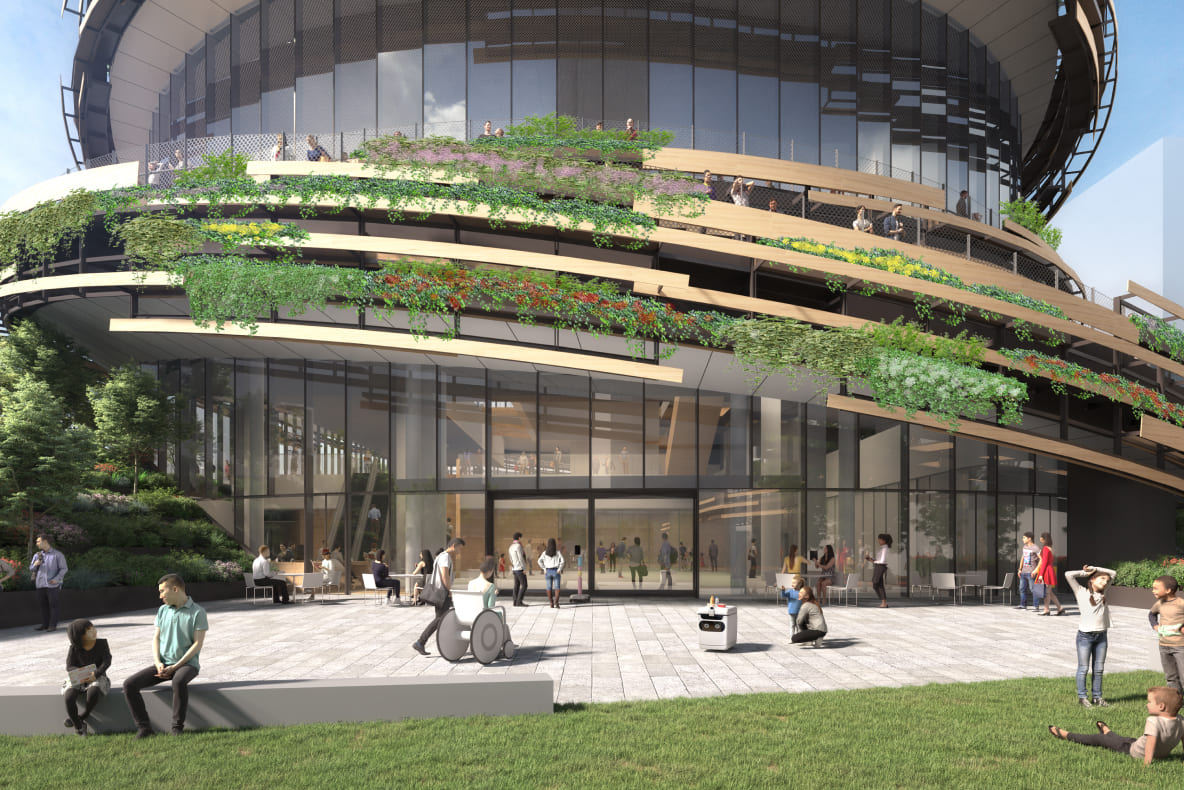
Takanawa Gateway City — a sprawling, multi-use complex near Shinagawa — is set to have its full opening in spring 2026, and one of its most anticipated additions is MoN Takanawa: The Museum of Narratives. Located next to Takanawa Gateway Station, the new cultural complex is envisioned as a gathering place for exhibitions, performances and creative experimentation.
Built on the historic site where Japan’s first railway once ran, MoN Takanawa draws on Takanawa’s long-standing role as a point of connection — between Tokyo and the rest of Japan, and between past and future. With expansive exhibition spaces, its own theater, restaurants and cafes and outdoor space with ample greenery, it will present biannual programs centered on a specific theme.
Brand Concept: Culture Told Through Narratives
MoN Takanawa is organized around the theme of narratives. The name “MoN” has a double-meaning: a “gate” that opens to new perspectives, and a “question” about where culture is heading.
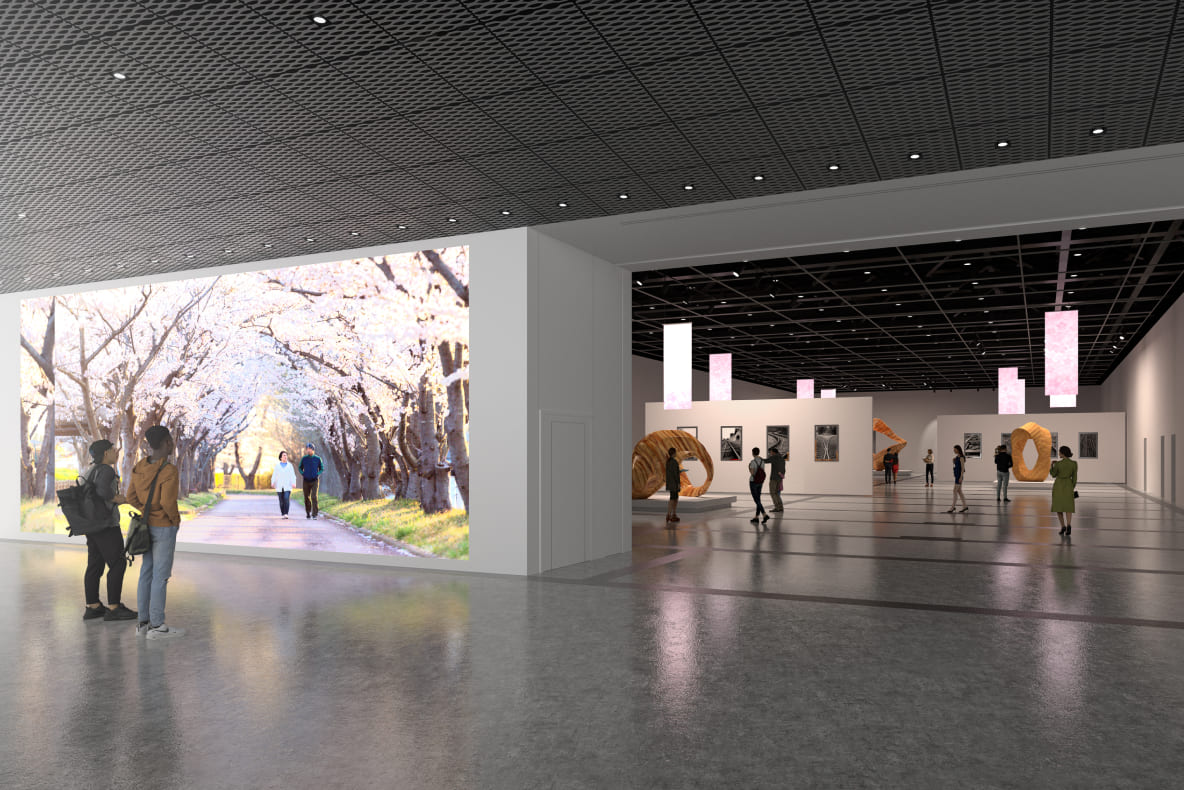
Programming of MoN Takanawa will be structured around biannual themes each year, with the kick-off theme being “Life as Culture.” Exhibitions, live performances, workshops and talks are connected through these themes, creating a sense of continuity across the space. Traditional performing arts, music, manga, food culture and digital media are presented together, allowing different forms of Japanese culture to inform and respond to one another.
The museum’s visual identity, developed by international design studio Pentagram, draws on a spiral motif that reflects continuity and change over time. It’s also closely integrated with the surrounding natural environment, with terraces on which guests can enjoy foot baths, moon viewing and cherry blossom viewing.
MoN Takanawa Highlights
A Multi-Level Cultural Complex
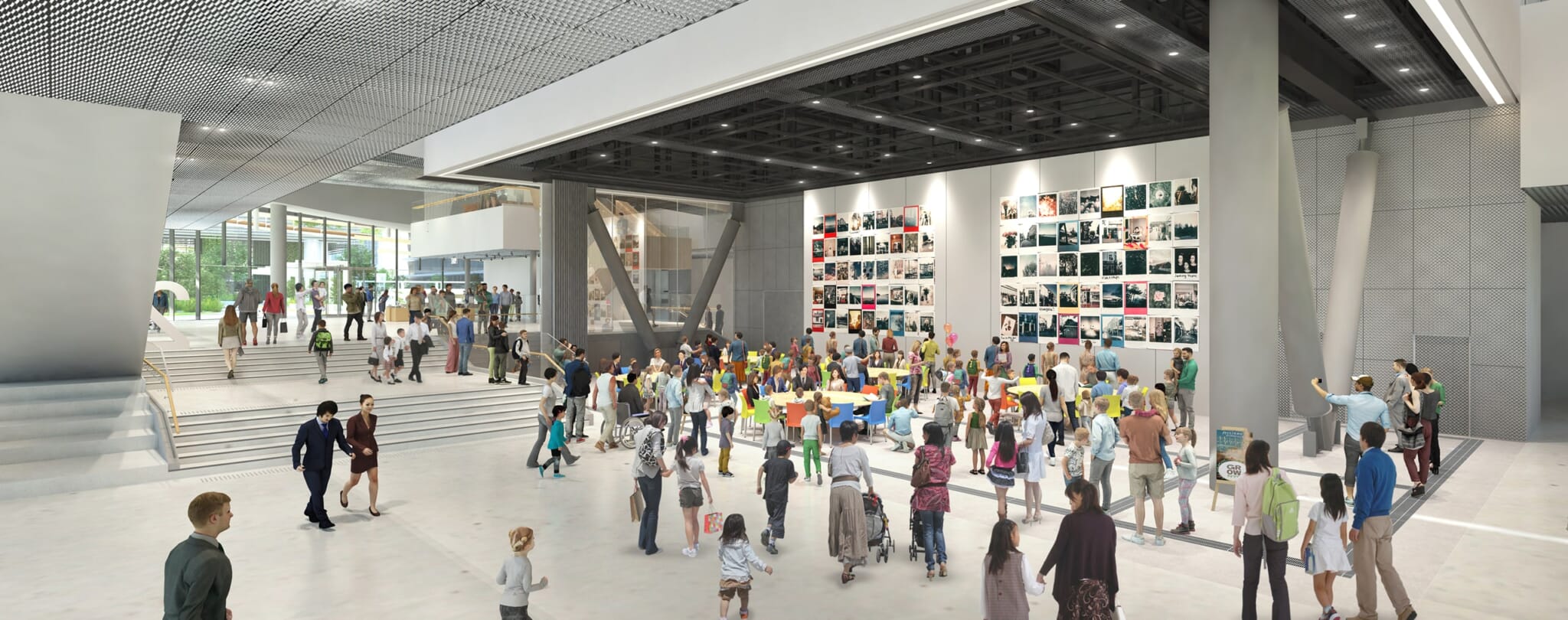
Designed by Kengo Kuma & Associates, MoN Takanawa spans six floors above ground and three below. The building is made up of adaptable spaces intended to support a wide range of cultural activities, from exhibitions and talks to live performances and workshops.
Major Performance and Exhibition Spaces
The complex includes BOX1000, a live performance venue equipped with large-scale LED stage panels; it has a capacity of 1,048 seats and 2,000 people standing. BOX1500, a 1,500-square-meter exhibition space, is designed for large installations and events, while BOX300 provides a smaller setting for DJ events, screenings and experimental programs.
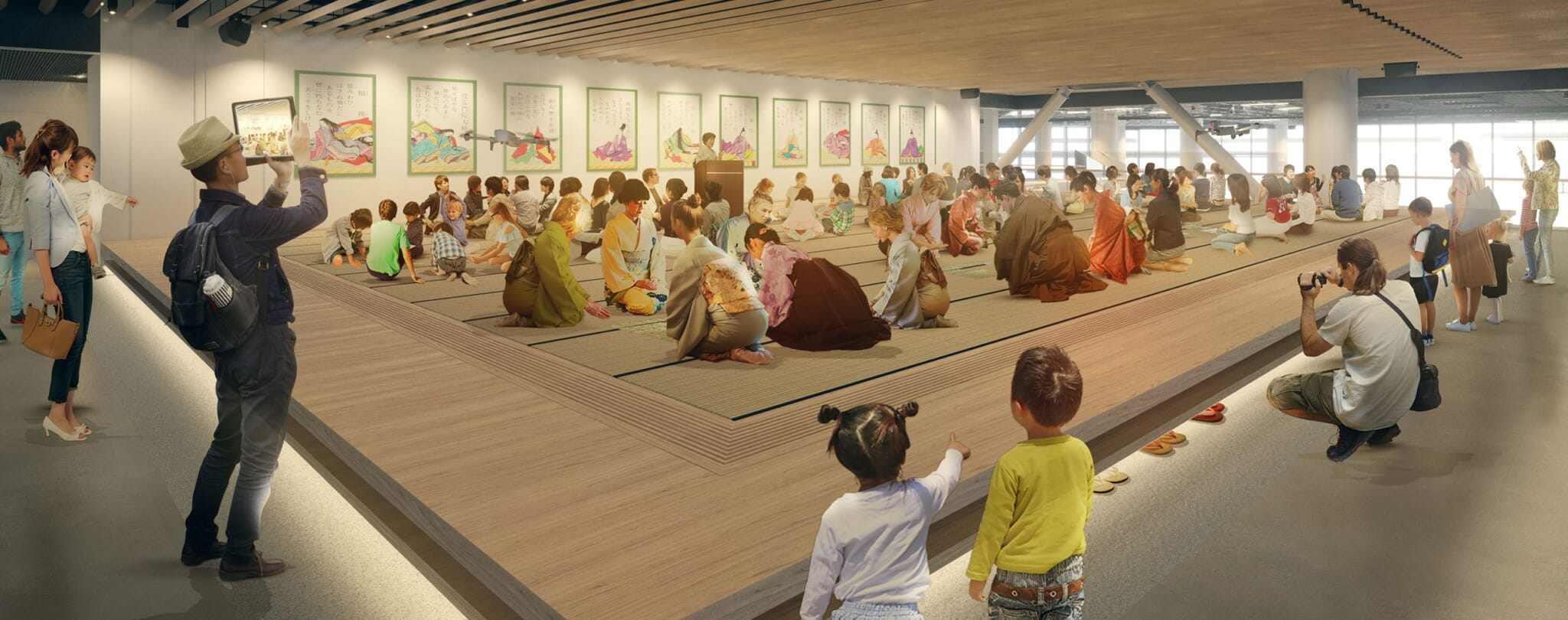
Contemporary Uses of Traditional Space
TATAMI, a 200-square-meter tatami space, can be used for performances, events and as a socializing space. The space is intended to support both traditional performance art and contemporary use of tatami flooring.
Experience-Led Programming and Archives
Rather than focusing on physical collections, MoN Takanawa places emphasis on performances and digital archival. With digital programs, works presented at MoN Takanawa can be revisited and re-presented over time. Visitor experiences and responses are also treated as part of the museum’s evolving record.
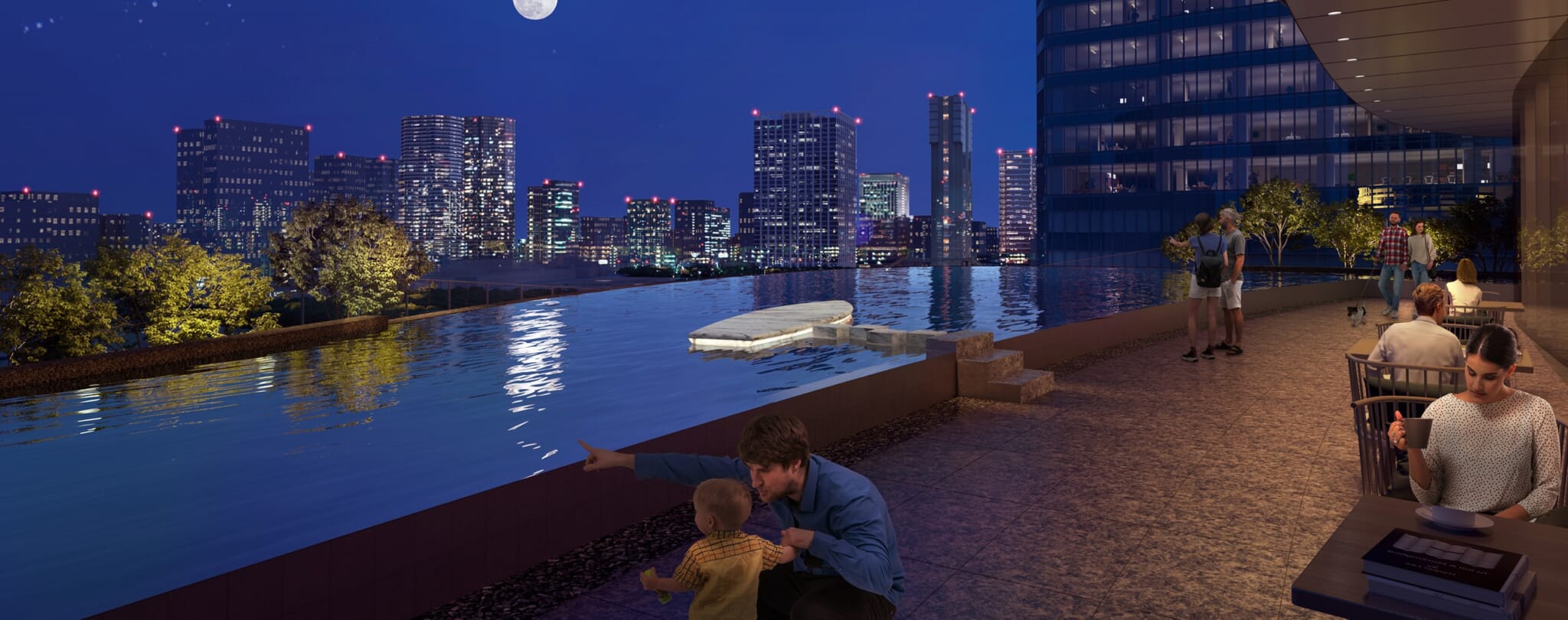
Outdoor Areas and Public Spaces
The building includes rooftop gardens, terraces designed for seasonal viewing, a library and a semi-outdoor footbath. Cafes, restaurants and open seating areas are integrated throughout, making the complex a place to spend time between events.
Connecting Tokyo With Regional Culture
With support from JR East’s rail network, MoN Takanawa works with cultural institutions and creative communities across Japan. Touring programs, regional collaborations and partnerships with international organizations are intended to extend the museum’s reach beyond Tokyo.