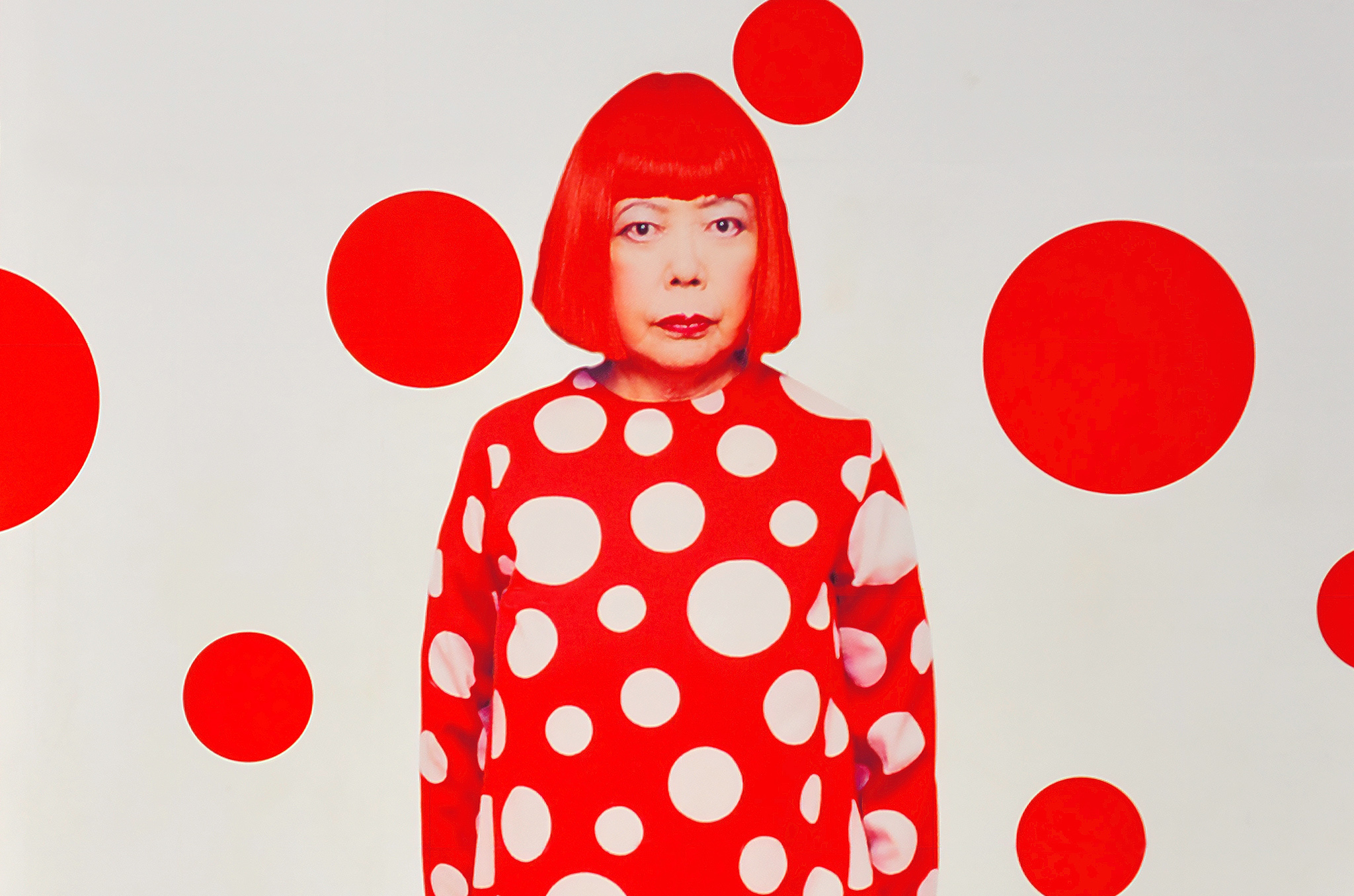
Renowned Japanese avant-garde artist Yayoi Kusama, who rose to international fame with her polka-dot-covered paintings, mirrored installations and phallic sculptures, has died of multiple organ failure. She was 97. Her studio announced that she passed away in a Tokyo hospital on 14 August.
“Throughout an extraordinary lifetime devoted entirely to artistic creation, Kusama pursued an internationally acclaimed career as a pioneering avant-garde artist whose creative practice encompassed visual art, performance, fiction, and poetry,” the statement read. “She continued to paint until her final days, never setting aside her brush, and continued exploration of forever love and eternal soul.”
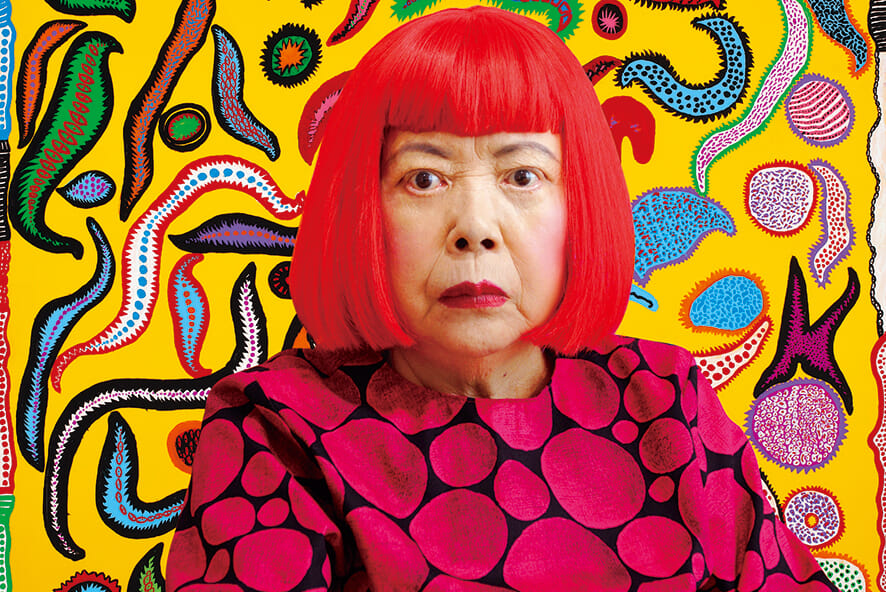
Yayoi Kusama: An Extraordinary Life
Born on March 22, 1929, in Matsumoto, in Japan’s Nagano Prefecture, Kusama was the youngest of four children in a wealthy family that ran a plant nursery and seed farm. Her childhood was troubled: She later said her mother was physically abusive and would send her to spy on her father during his extramarital affairs.
Kusama began experiencing vivid hallucinations as a child, seeing dots, nets, flowers and other patterns that seemed to cover the world around her. She turned to drawing and painting as a way of confronting those visions, laying the foundation for the obsessive repetition that would become the defining feature of her work.
Despite her parents’ opposition to her ambitions, Kusama studied traditional Japanese painting in Kyoto in the late 1940s before returning to Matsumoto, where she held her first solo exhibition in 1952. In 1957, at 27, she left Japan for the United States, eventually settling in New York, where she plunged into the city’s avant-garde art scene.
Moving to New York
Her work put her in the orbit of artists including Andy Warhol, Donald Judd and Claes Oldenburg, though Kusama later accused Warhol of appropriating her ideas. Her life in New York was marked by both artistic ambition and personal struggle. She staged provocative performances, covered naked bodies in polka dots and became involved in anti-war activism.
In 1968, she famously sent President Richard Nixon an audacious open letter offering herself to him in exchange for an end to the Vietnam War. After returning to Japan in 1973, Kusama increasingly focused on writing and visual art. In 1977, she voluntarily entered a psychiatric hospital in Tokyo, where she would spend the rest of her life while continuing to work from a nearby studio.
Her reputation grew dramatically in later decades, as museums around the world embraced her immersive installations and her Infinity Mirror Rooms drew enormous crowds. Her art, once associated with the counterculture of 1960s New York, eventually became a global phenomenon, extending into fashion, design and popular culture.
In 2016, she received Japan’s Order of Culture, one of the country’s highest honors. By 2025, Kusama ranked as the world’s top-selling female artist at auction, according to Artprice, a measure of how far she had come from the struggling young artist who arrived in New York in the 1950s.
Related Posts
- Yayoi Kusama, Onsen and Stargazing in Towada City, Aomori Prefecture
- Where To Find Yayoi Kusama Art Across Japan
- Who Is the Greatest Japanese Woman, Ever?
Updated On August 27, 2026