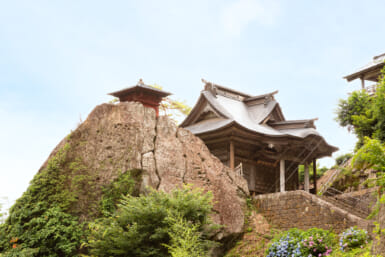
Situated on the Sea of Japan coast in the Tohoku region of northern Honshu, Yamagata Prefecture is one of Japan’s most rewarding yet undervisited destinations. Its very name — written with characters meaning “mountain shape” — hints at the terrain that defines it: a landscape of soaring peaks, deep river valleys, and dense forest covering more than 70% of its land. Traversed by the Mogami River and stunning summits including Mount Zao and the Three Sacred Mountains of Dewa (Dewa Sanzan), Yamagata offers visitors a rare blend of natural beauty, ancient spirituality and deeply rooted local culture.
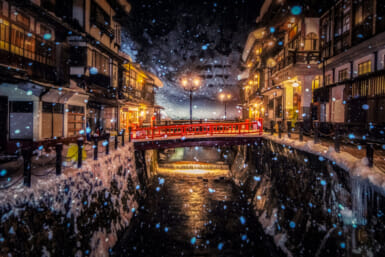
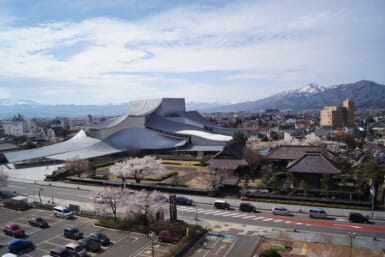
The prefecture is divided into four distinct areas — Shonai, Mogami, Okitama and Murayama — each with its own character, dialect and local traditions. The prefectural capital, Yamagata city, sits in the Murayama region and serves as the main gateway for most visitors. To the west, the Shonai area is home to the sacred Dewa Sanzan pilgrimage complex and the foodie city of Tsuruoka, designated a UNESCO Creative City of Gastronomy. Ginzan Onsen, a lantern-lit hot spring village that looks straight out of an earlier era, lies in the Mogami area and is one of Japan’s most atmospheric inn towns.
Yamagata is also known as Japan’s top cherry-producing prefecture, accounting for roughly 70% of the country’s total output. It is celebrated equally for Yonezawa beef, one of Japan’s most prized wagyu brands and for a regional ramen culture that produced hiyashi ramen — a chilled noodle dish served cold even in the middle of winter. Yamagata was also the first prefecture in Japan to receive a geographical indication for its sake, in 2016.