
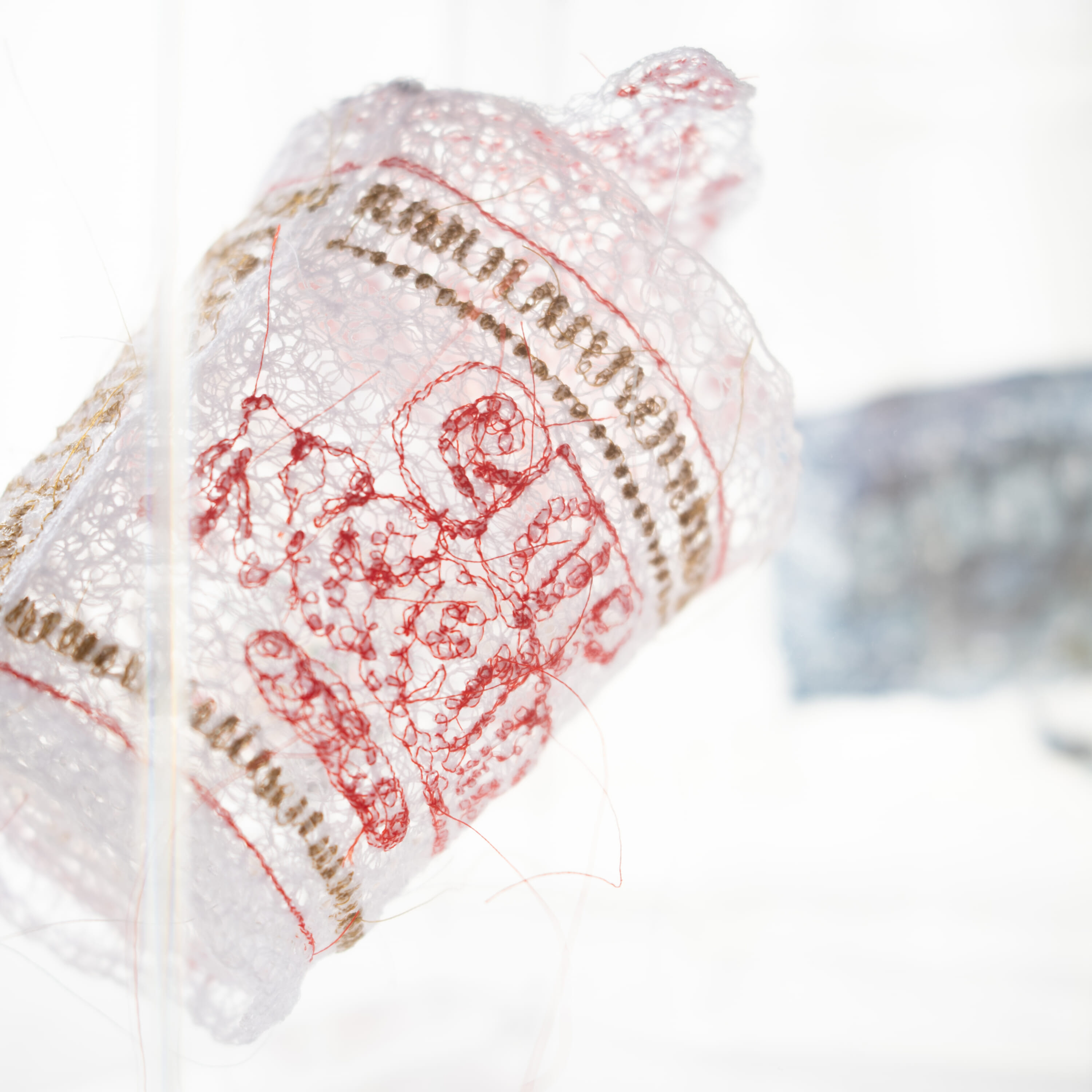
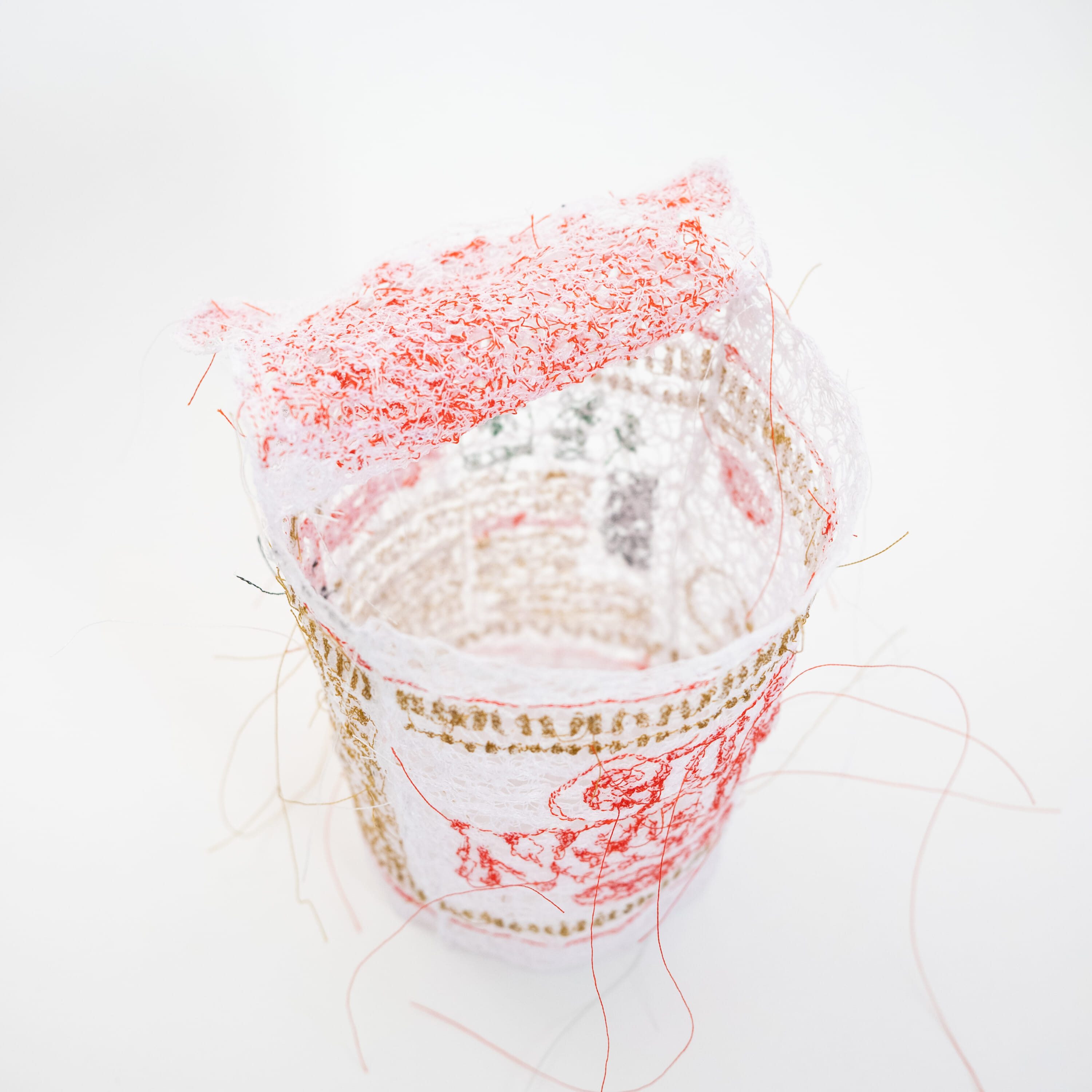
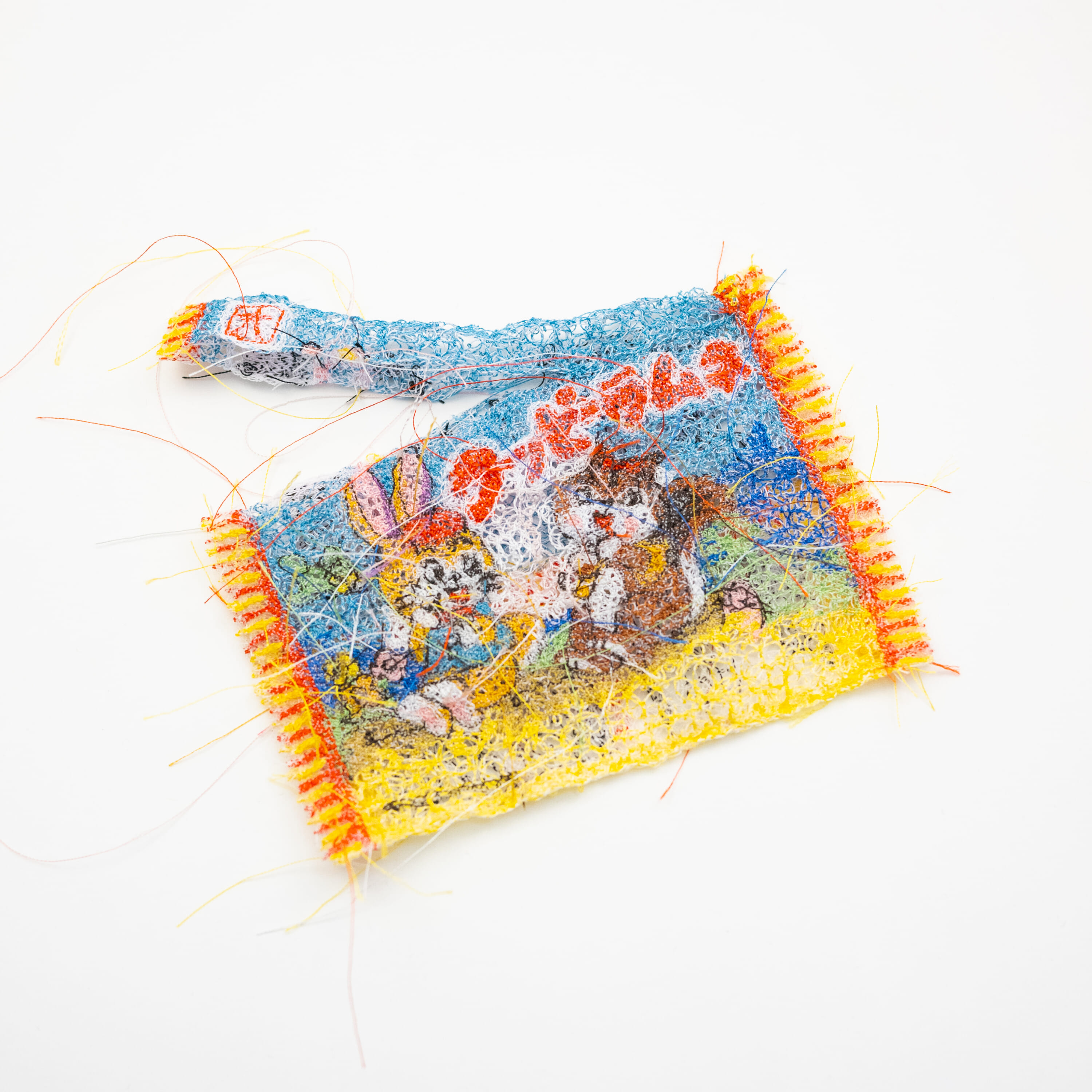
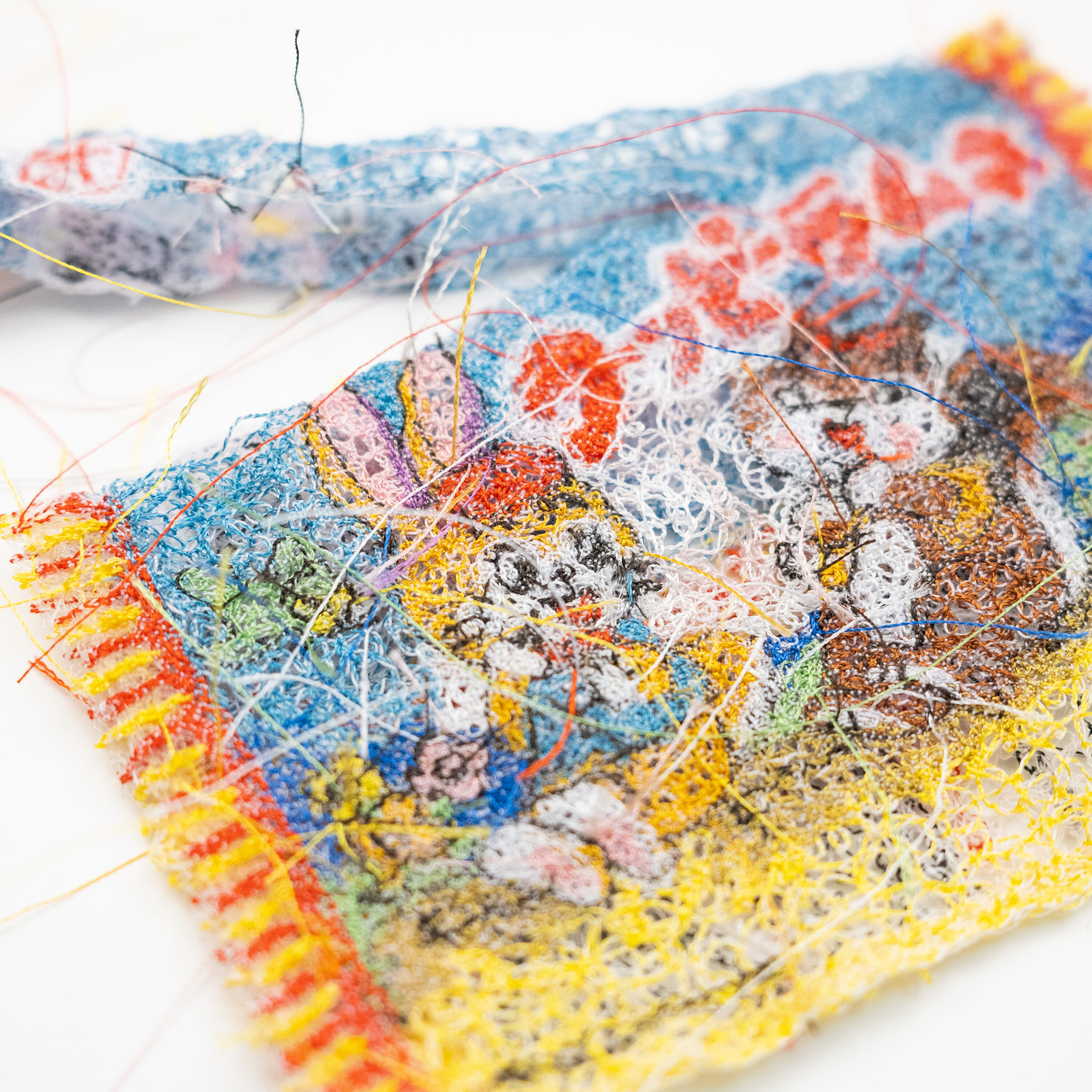
At first glance, the artist Wakumi Kanno’s Instagram grid looks like a soft archive of the everyday — a series of faint, almost fuzzy outlines depicting familiar Japanese objects: a ripped-open Garigari-kun popsicle wrapper, a half-peeled Cup Noodles container, a flattened energy drink pack and a crumpled-up can of Coca-Cola. But look closer, and something unexpected reveals itself: Every surface, every crease and every shimmer of foil has been meticulously stitched together with thread, with some stray threads intentionally left uncut like whiskers reaching out.
These aren’t photographs, but delicate embroidered recreations of disposable things, rendered with precision in a way that makes them feel almost uncanny. Each piece by the 23-year-old artist, a student at Tokyo University of the Arts, transforms what is meant to be consumed and discarded into something enduring. Through embroidery, he restores weight and tenderness to the things the world has chosen to forget.
The Everyday, Reimagined in Thread
Born in Tokyo in 2002, Kanno belongs to a generation fluent in the immediacy of digital culture. However, he was drawn to the tactility of slow, hand-driven processes, the way he could create something physical that endures. He’s fascinated by consumption and ephemerality, and his work often focuses on disposable goods. “I choose things that are used in daily life and quickly thrown away,” he explains. “Snack wrappers, drinks, everyday items — all of them lose their meaning the moment they’re discarded. Yet in their forms, I feel traces of their structures and personal memory gently overlapping. I want to touch that shape again with my hands and see what still remains.”
The resulting embroideries appear almost spectral. They capture a kind of memory that is not documented but felt: the crease of a wrapper, the smudge of a thumbprint, the intimacy of use. In these traces, Kanno finds what he calls the “presence of unrecorded memories.”
Embroidery is both Kanno’s medium and a metaphor he uses. “Tracing a used package with thread is, to me, an act of touching what has been forgotten once more,” he says. “In the folds and scuffs of a used wrapper, there are faint traces of life and touch. By stitching those, I try to find the quiet moment that exists between what disappears and what remains.”
The Slowness of Making
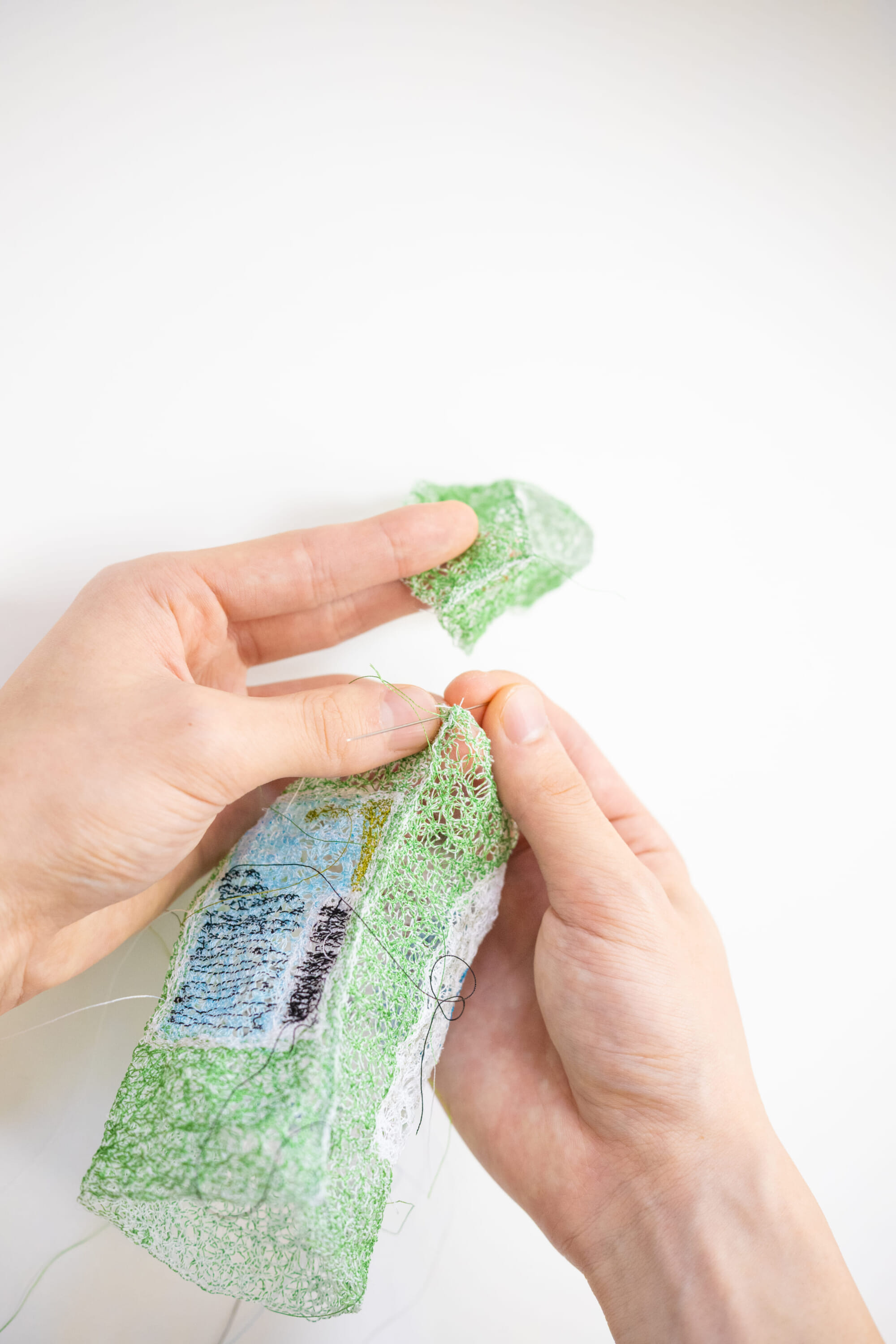
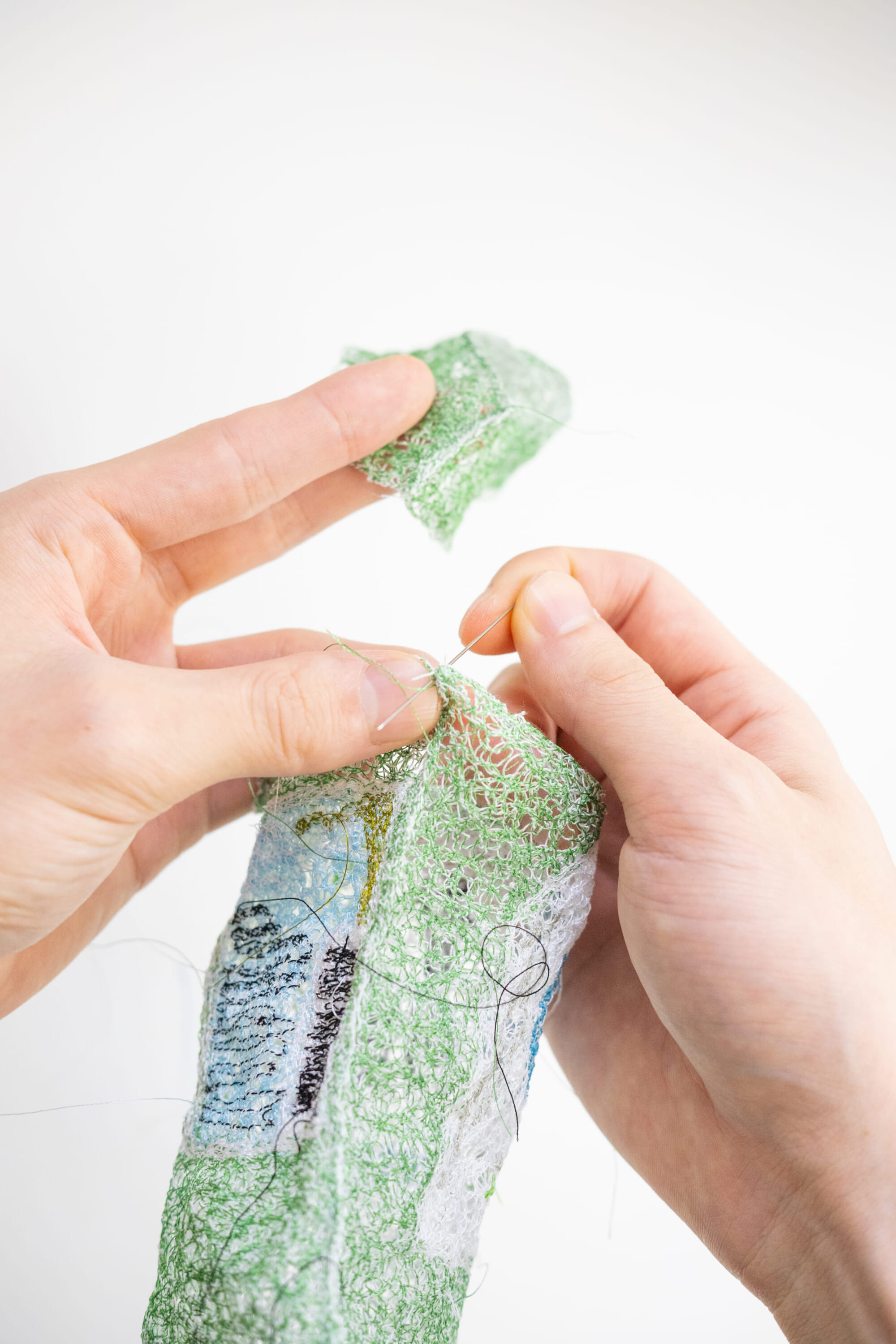
Kanno’s process begins quietly. He places the discarded object before him and observes it closely. He recalls how it once felt in his hand before picking up the needle.
“For certain parts — like a logo, a word or something that stands out in memory — I stitch densely,” he says. “Other areas, like the ingredients label on the back, I leave loose and airy. That variation in thread density creates a structure that stays true to the ‘presence of memory.’ What you see isn’t a complete reproduction, but something like the boundary of memory itself, or the moment before it fades.”
What makes Kanno’s practice especially compelling is the contrast between his medium and his motifs: embroidery, a time-consuming and intimate craft set against mass-produced, disposable packaging. “Embroidery and packaging breathe at different rhythms,” he says. “When I slowly stitch what was meant to be consumed in an instant, the difference in tempo naturally appears. I don’t try to highlight that contrast because it just seeps out as I move my hands. There’s another kind of time flowing outside systems and efficiency, and embroidery allows me to sense that.”
The Paradox of Visibility
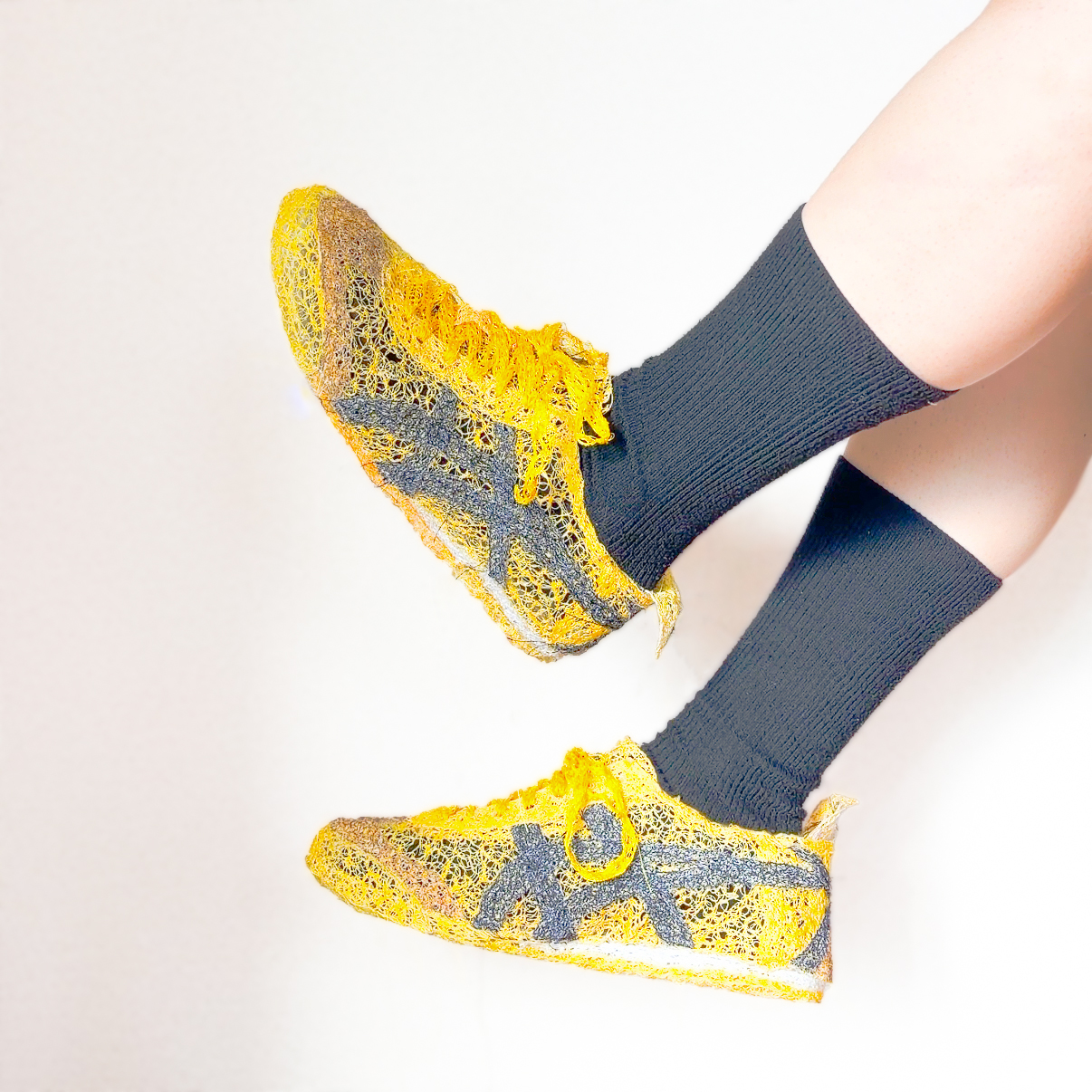
Ironically, it was the speed of social media that brought his delicate works into wider view. When images of his embroidered snack packages and Onitsuka Tiger sneakers began circulating on Instagram and X (previously Twitter), Kanno found himself at the center of unexpected viral attention.
“The reaction on social media made me more conscious of how my works ‘arrive’ to people,” he admits. “But my attitude hasn’t changed. I’m still stitching the presences that lie outside systems and archives. Because my works deal with what’s easily overlooked, there’s a strange affinity with how images flow through social media — fleetingly, as if to be forgotten again. That’s why I hope my work can quietly stay with someone, wherever they appear.”
At Tokyo University of the Arts, Kanno continues to refine this craft in what he calls his “breathing in making.” “At university, no one tells you what to make or how to exist,” he says. “You have to keep asking yourself what you want to create. Within that instability, I’ve learned to find my own rhythm, which has led me to this attitude of preserving what is being forgotten.”
Looking forward, he hopes to move beyond tangible objects, toward thoughts and sensations that can’t easily be represented. “Alongside my current motifs, I want to turn more toward formless memories. Beyond the concrete shapes of candy wrappers or labels, I want to depict — through layers of thread — the very process of memory dissolving. For instance, the color that suddenly surfaces when remembering something, or the subtle tremor of a feeling that cannot become words. I want to quietly stitch those shapeless presences.”
More Info
Follow Wakumi Kanno on his Instagram and at his website.