When the doors slide open, she is always there, waiting — white gloves, perfectly pressed uniform, hair pinned neatly beneath a small cap. To me, she is the most magical part of the department store. Hiding behind my mother, I watch her gloved hands moving gracefully over the elevator buttons and her unwavering, lipsticked smile naming each floor, mesmerized by the choreography of it all. As we step out onto the brightly lit toy floor, she stays behind, rising and descending, rising and descending.
For much of the 20th century, the elevator girl was a fixture of the department store. The job emerged in the United States, where elevators were first mechanically operated by men, but as the role softened into one of greeting and announcing, it was handed to women — and Japan was no exception. After Matsuzakaya’s Ueno branch hired women to run its elevators in 1929, elevator operation quickly became a coveted entry point into the workforce.
Everywhere and nowhere at once, elevator girls were looked at daily but never really seen — and by the 1990s, in the economic slump that followed Japan’s burst bubble, they were slipping away. Just as the figure was vanishing, Miwa Yanagi pulled her out of the background and into the center of the frame — in one of the most arresting, surreal photo series of the decade.
Created between 1994 and 1999, Yanagi’s Elevator Girls is a series of large-scale, digitally composited photographs that have attained near-legendary status over the years. Recently, it’s been brought back into the spotlight by a photobook titled I’m So Happy You Are Here: Japanese Women Photographers from the 1950s to Now, which surveys the works of 30 artists. An exhibition of the same name will be held in Tokyo this July at Hikarie Hall in Shibuya. Ahead of the show’s opening, the artist reflects on how the Elevator Girls series began, and what she makes of the work now, decades on.
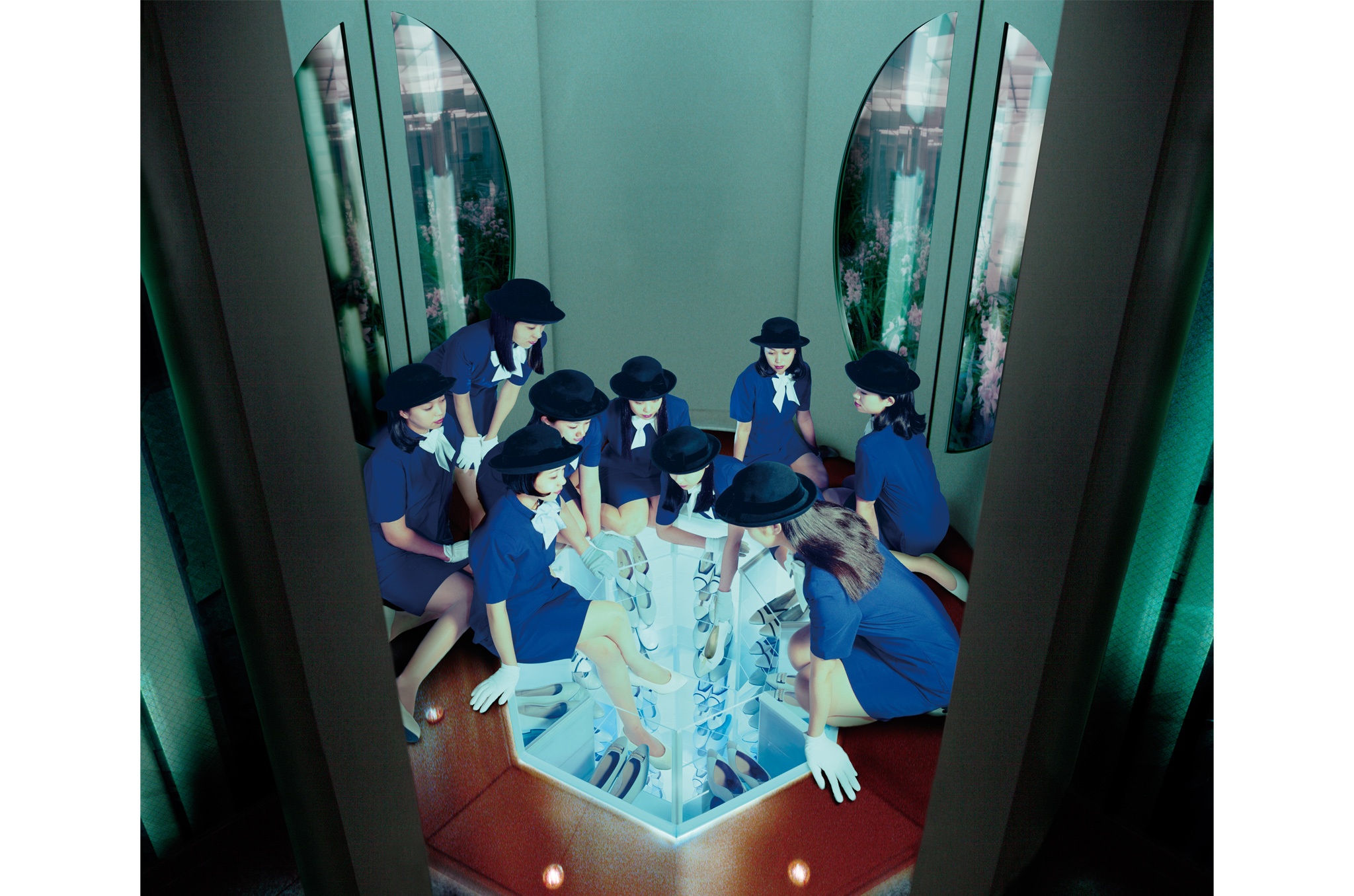
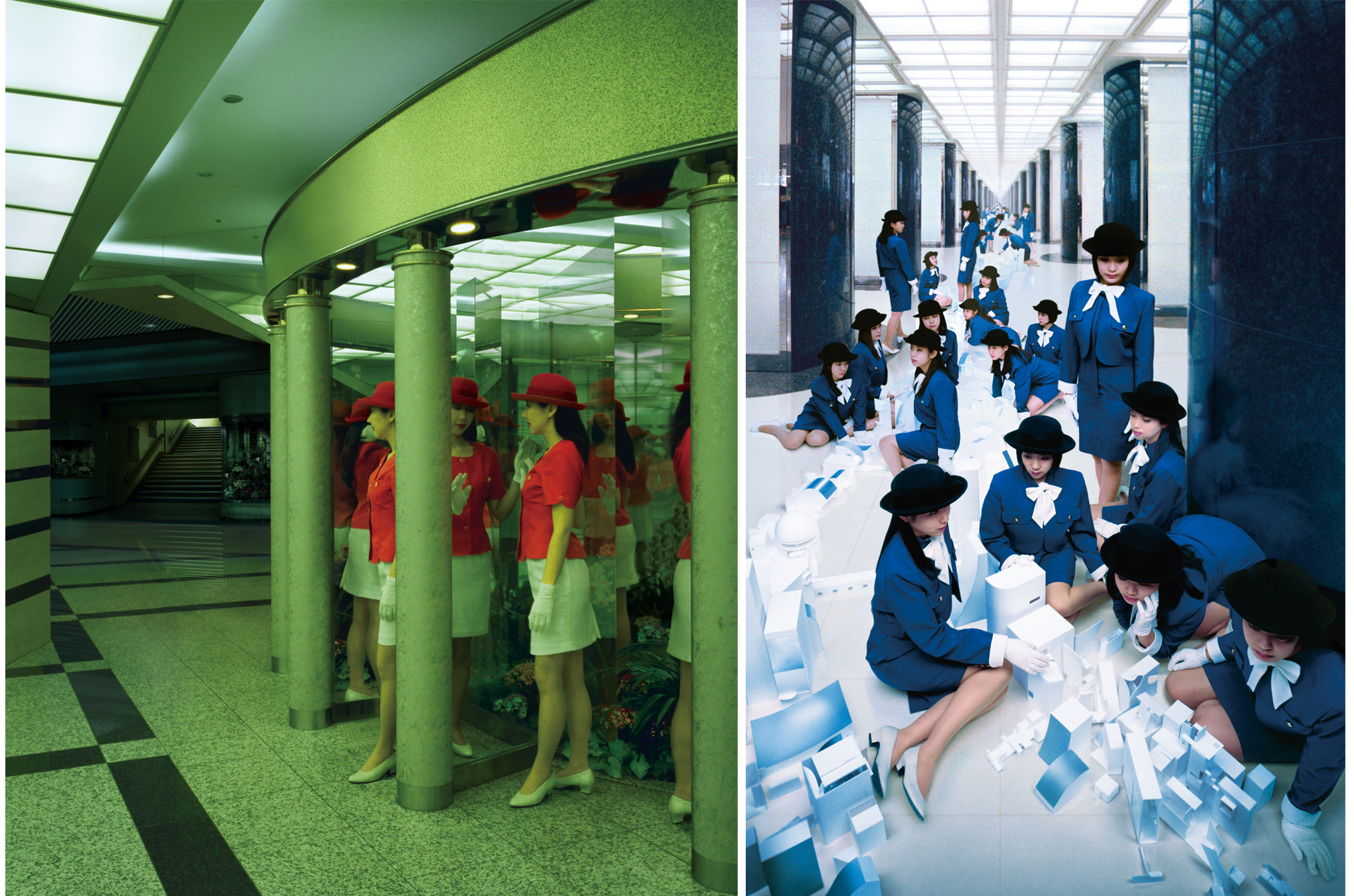
A Box of One’s Own
The idea came to Yanagi on her commute, watching women she’d seen a hundred times. In the early 90s, fresh out of a master’s at Kyoto City University of Arts and uncertain about her future, she took a job teaching art history as a part-time instructor — and felt herself disappearing into the role. Each morning, she would pass a department store and see the uniformed elevator girls lined up to start their day, bowing in unison. She began to feel an odd kinship with these women.
“My motivation [for the series] came from empathizing with elevator girls,” she recounts. She wasn’t necessarily equating her role with theirs so much as recognizing a shared claustrophobia. “I felt I could relate to the feeling of performing for society, confined within a small box.” She was also drawn to the setting itself — the way a shopping floor seems to stage and choreograph the people moving through it, which she calls its “strong directorial power.”
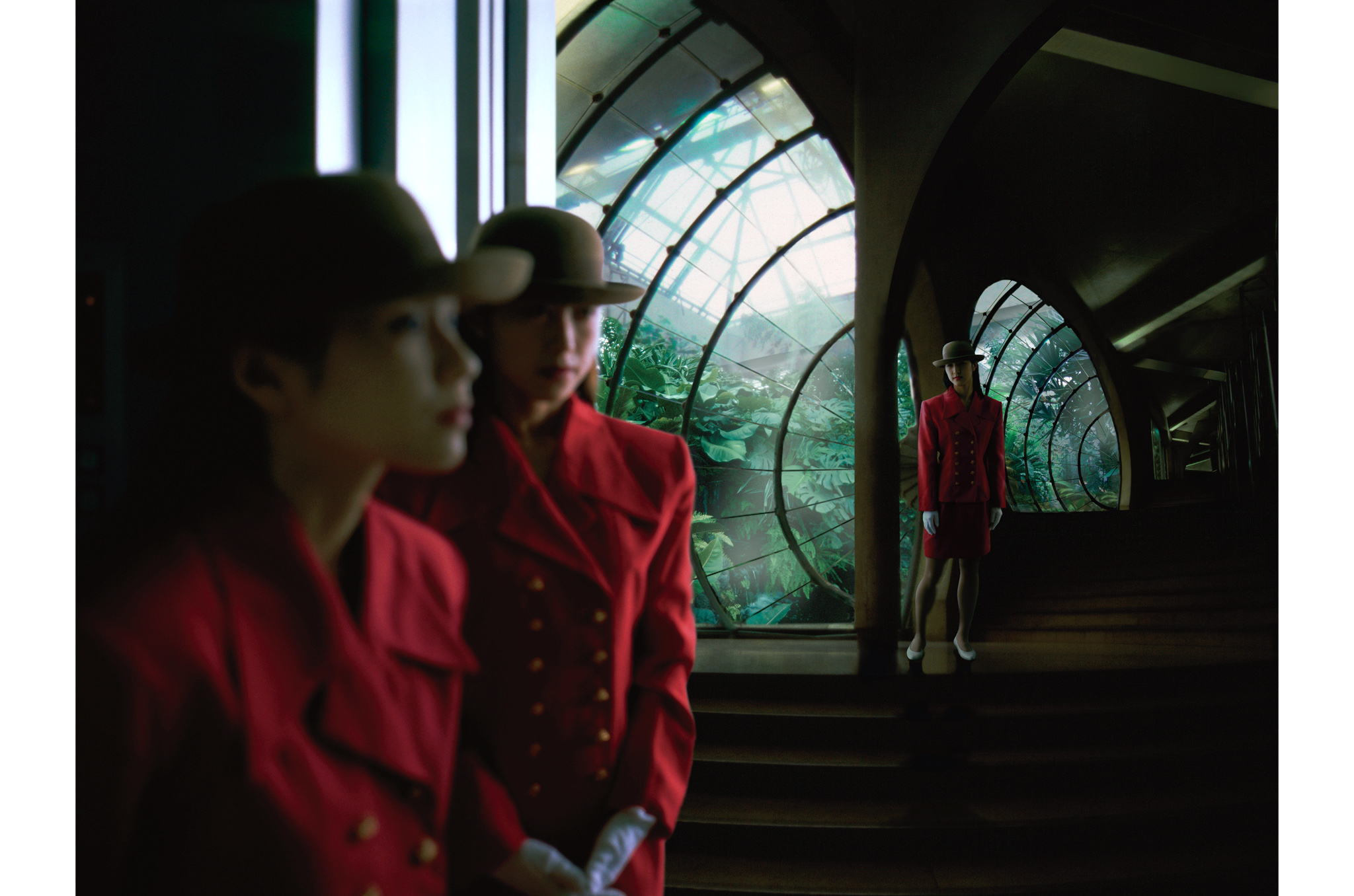
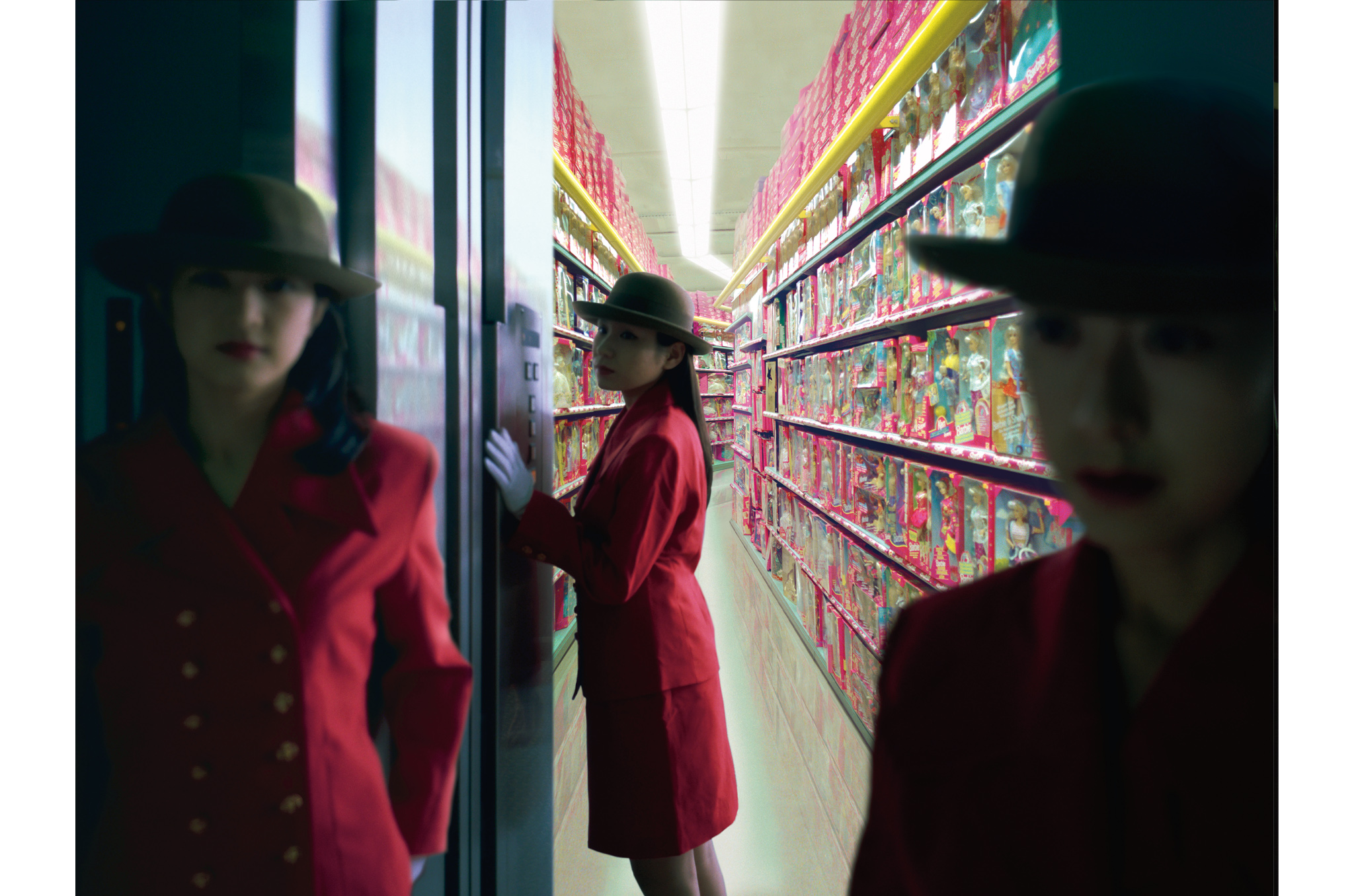
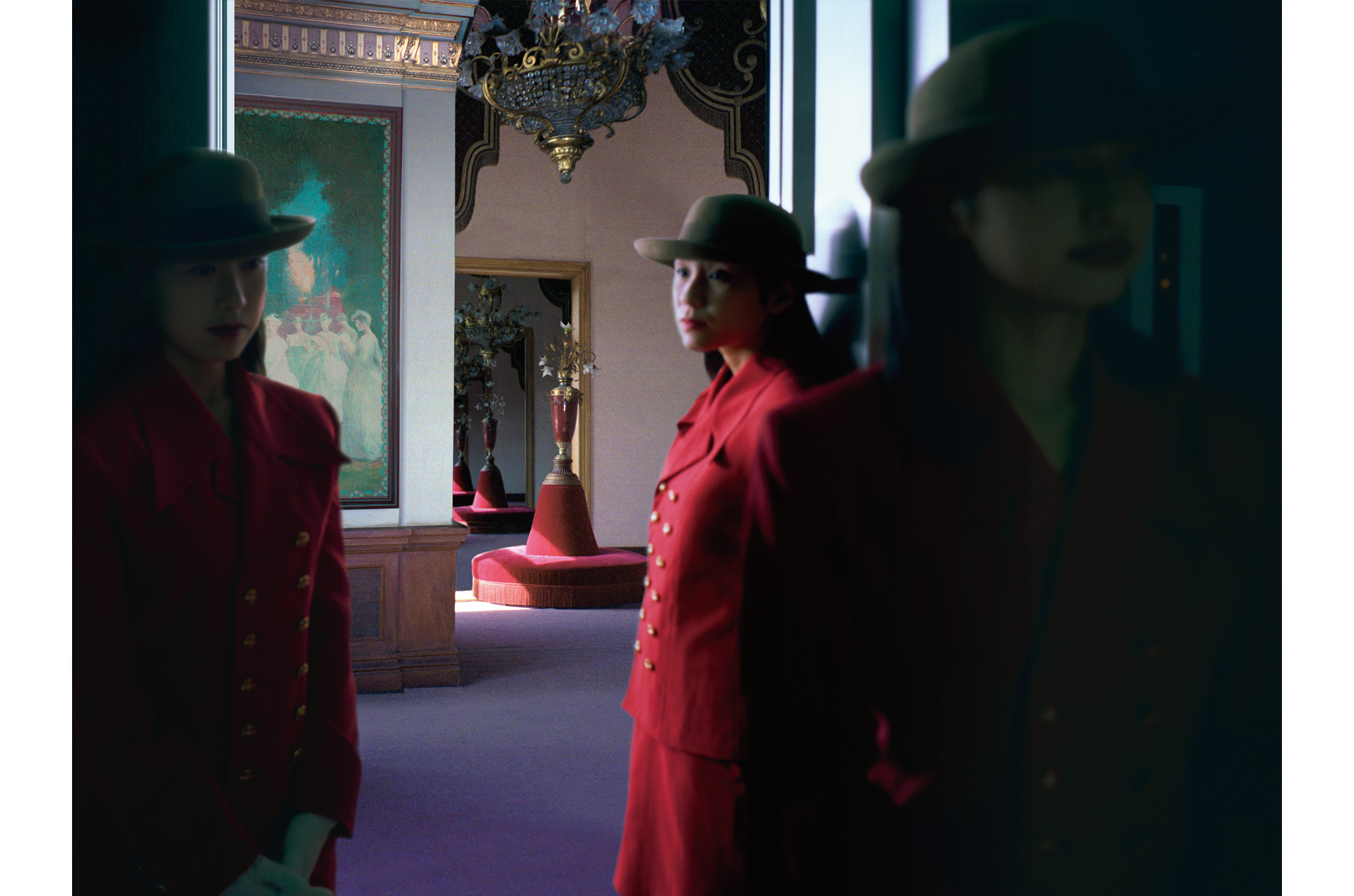
It’s the theater that occupies Yanagi most now — writing, directing, producing and stage design, leading productions that range from Taiwanese opera to noh — but Elevator Girls was her breakthrough project. By 1996, it had landed her in a group show in Frankfurt alongside Cindy Sherman and Jeff Wall, and an international career followed. She went on to create other striking, women-centered series — among them My Grandmothers, which portrays young women as the older selves they imagine becoming — before representing Japan at the 2009 Venice Biennale. Through it all, she’s kept returning to the same subject: how women are seen and how they see themselves.
But Yanagi has never been entirely comfortable being called a photographer. From the very start, she notes, her work has relied on a “combination technique” of intricate sets, staged figures and digital compositing. “The reality of everyday life is also staged to a certain degree, and all photographs involve direction and editing,” she says. “I like taking time to build elaborately crafted, dramatic spaces — it’s why I ended up in performing arts.”
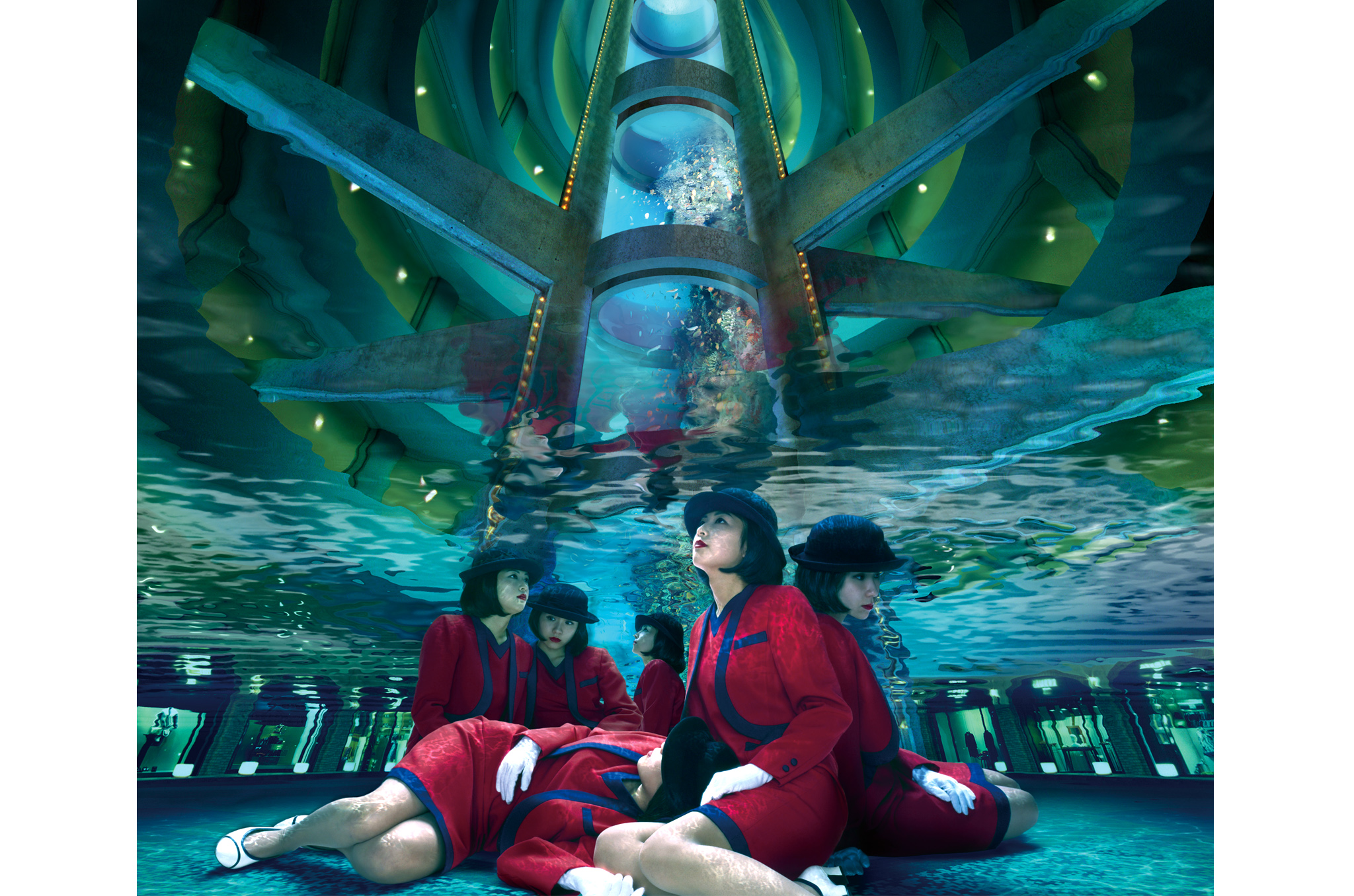
Elevator Girl House B4, 1997 © Miwa Yanagi
Through the Looking Glass
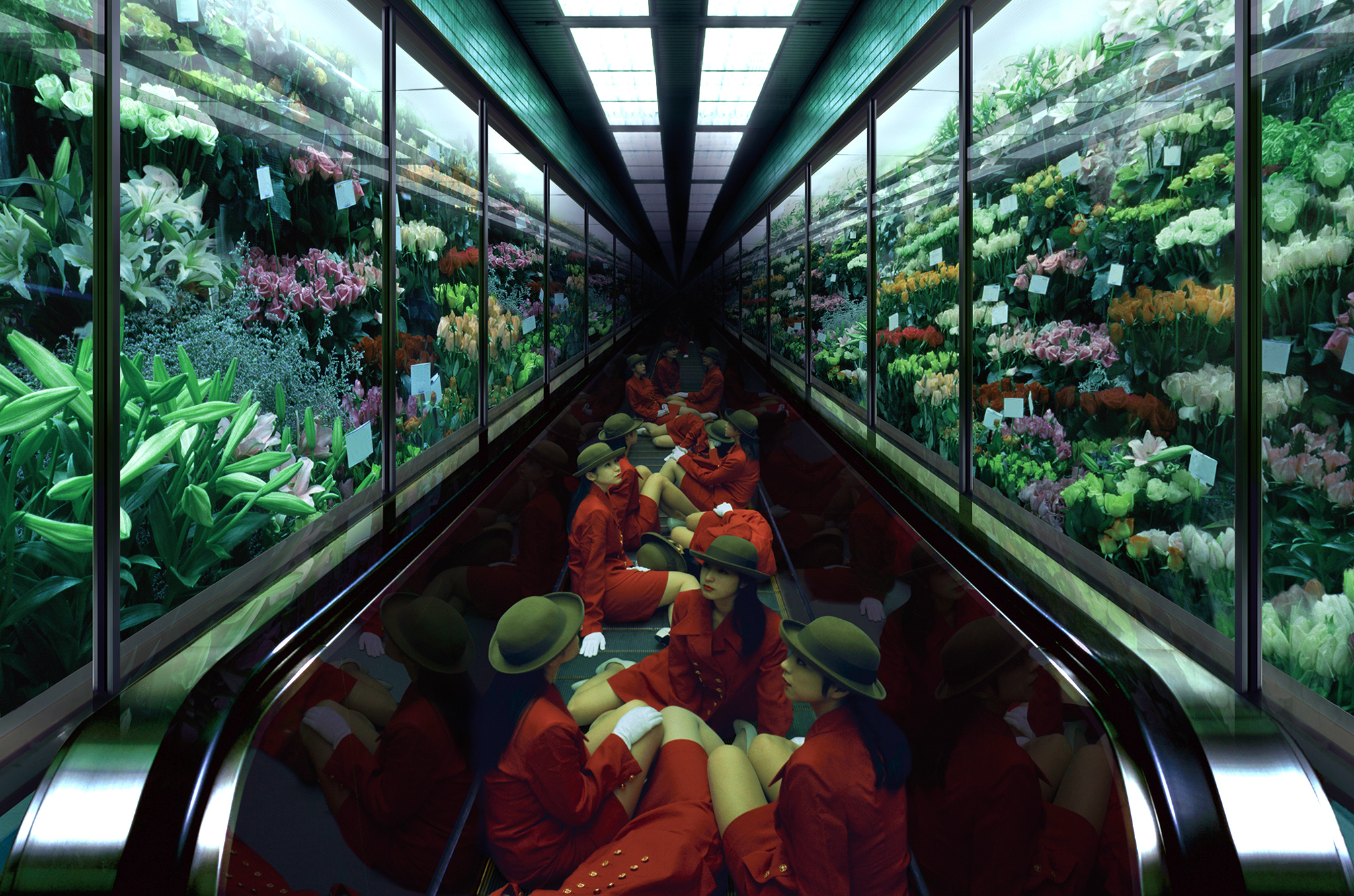
That instinct is clear in the spaces she built for Elevator Girls — cavernous halls, endless corridors, moving walkways that seem to lead nowhere. They could be any department store at all, yet feel strangely otherworldly. The lights are on but the shoppers are gone; it’s impossible to tell whether it’s midnight, twilight or some alternate timeline. Whatever the hour, the elevator girls remain tethered to the scene, as much a fixture as the polished marble and the glass displays.
“I was trying to create a labyrinthine, dystopian commercial space,” the artist explains. Shooting uniform-clad models repeatedly in studios and at real stores, Yanagi stitched the results together painstakingly, using a combination of large-format film, scans and computer graphics. “The CG work required more labor than the shooting itself,” she remembers. For something made in the late 90s, during the transition to digital photography, the illusion is remarkably seamless.
The women themselves are harder to read. In some iterations, they’re lined up like Barbie dolls or arranged in sprawling, Renaissance-esque tableaux. In others, they’re slumped across floors and walkways, even collapsed in artful disarray. Across every frame, they appear to be in a trance, hypnotized. This is especially true in closer-up shots, where the elevator girls wear indiscernible expressions, as though caught in limbo with nowhere to go and no one to greet.
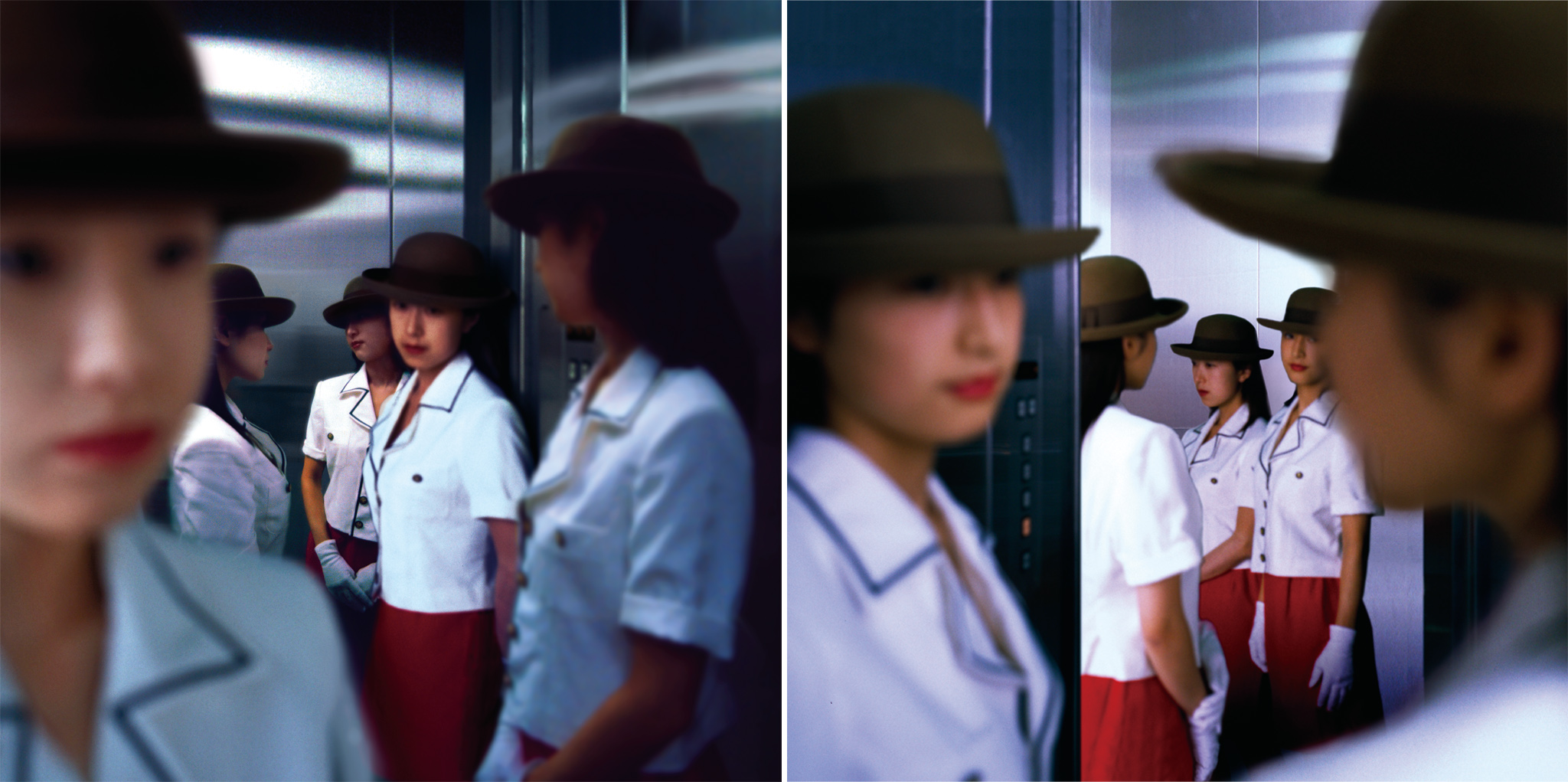
Before And After A Dream (parts), 1998 © Miwa Yanagi
For all their dreamlike beauty, these liminal scenes are saturated with the same unease that inspired them — a feeling of constriction and anonymity. “For many, Elevator Girls represents the pressure from society to fit into a specific group or hierarchy,” Yanagi explains. “Some might see [this pressure] as a relic of the past; others might still feel its friction.”
The job itself is obsolete in Japan now, but the model of labor — feminized, standardized and scripted down to each gesture — still resonates. After all, plenty of women in Japan, from the boardroom to the fitting room, practice versions of this choreography daily. Yanagi herself sees her elevator girls as belonging to the past, the present and the future at once. “They’re a retro sci-fi landscape of identical robots standing quietly in place,” she says.
Looking at Yanagi’s spellbound elevator girls, I keep thinking about the woman in the mirrored car from my childhood. I don’t remember her face, but I vividly remember the melodic cadence of her voice, the careful angle of her pointed hands and the way her smile reset between each floor — the part she’d rehearsed a thousand times that day.
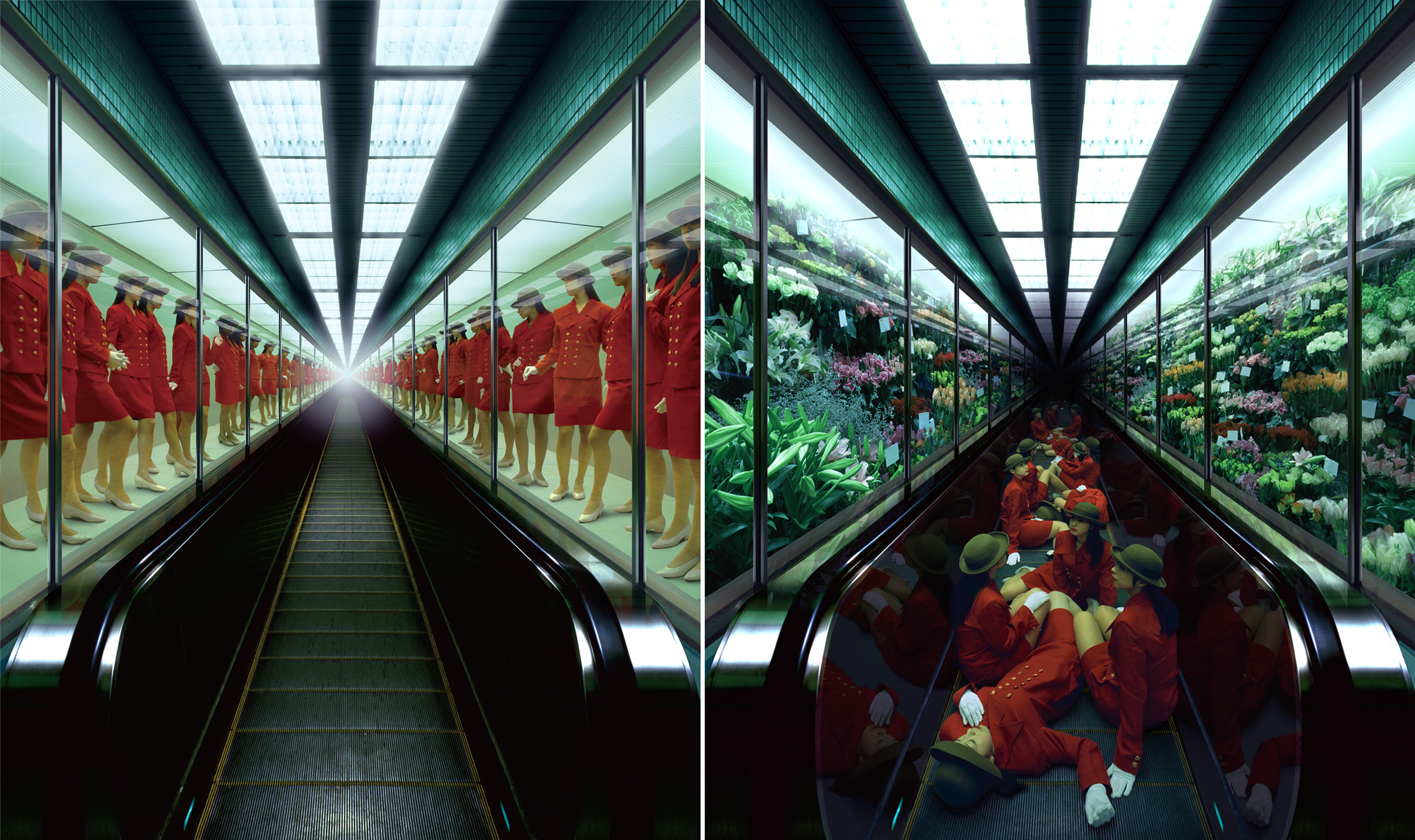
Elevator Girl House 1F, 1997 © Miwa Yanagi. On Display at “I’m So Happy You Are Here” Exhibition.
More Info
“I’m So Happy You Are Here: Japanese Women Photographers from the 1950s to Now” runs from July 4 to August 26 at Hikarie Hall in Shibuya. Learn more here.
Related Posts
- Mika Ninagawa on Life, Death and Desire Through a Saturated Lens
- Happy Victims: Inside the Homes of Tokyo’s Fashion Obsessed
- The Japanese Designer Turning Discarded Wedding Dresses Into Art
Updated On June 30, 2026