
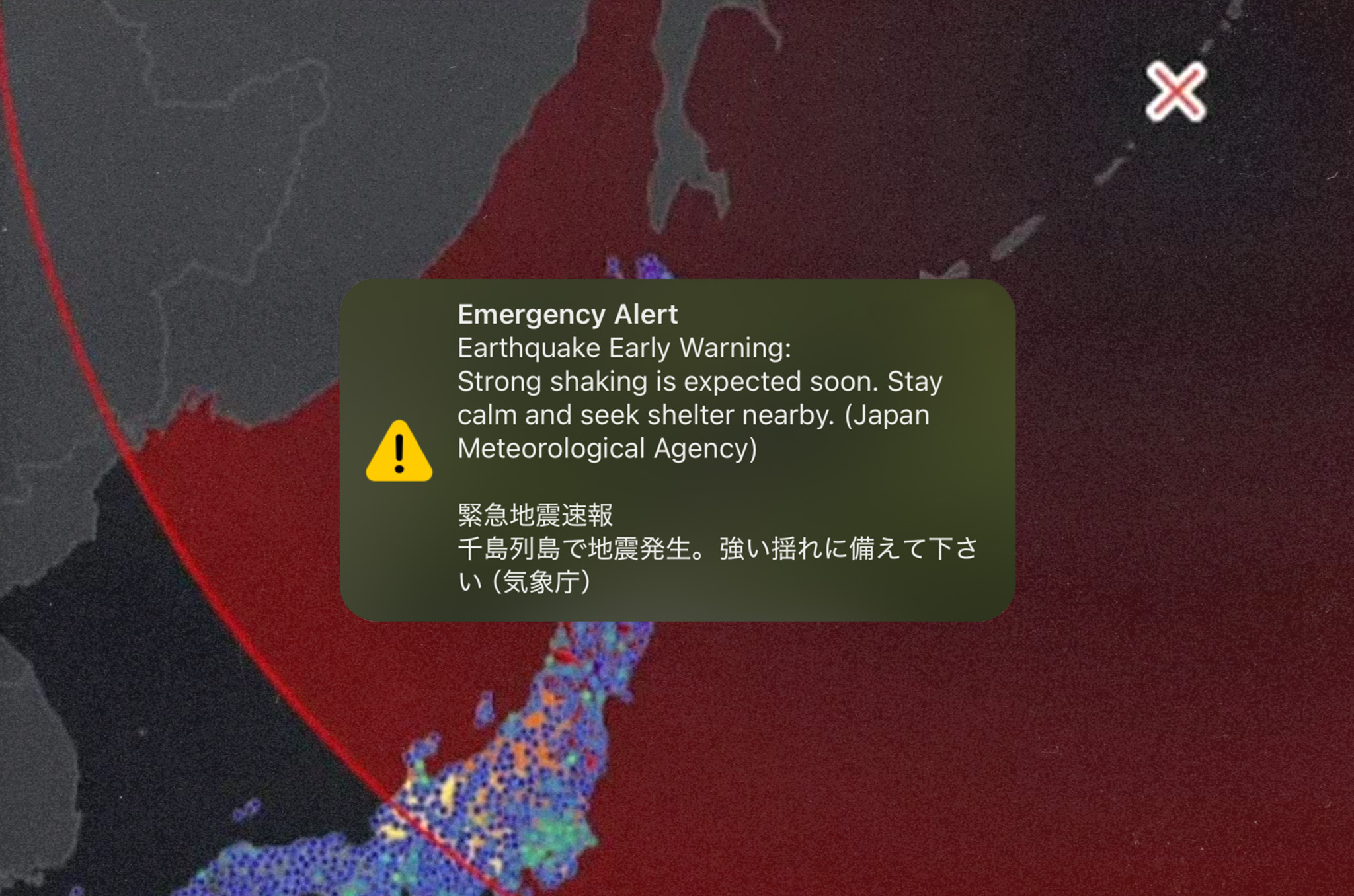
Japan’s Meteorological Agency issued an emergency earthquake warning at 12:36 p.m. JST after initial automated data suggested a potentially catastrophic magnitude 9.9 earthquake near the Kuril Islands. The alert warned of possible maximum seismic intensity 7 shaking across parts of Hokkaido, Tohoku and Kanto, prompting concern among residents who received the sudden warning.
The actual earthquake, however, registered magnitude 6.9 and struck near Russia’s Kamchatka Peninsula at a depth of approximately 140 to 160 kilometers. Shaking in Japan was far weaker than initially feared, with a maximum seismic intensity of just 1 reported in areas including Hakodate. Officials quickly canceled the warning after further analysis showed that the initial estimates had significantly overstated the earthquake’s magnitude. No tsunami threat or damage was reported.
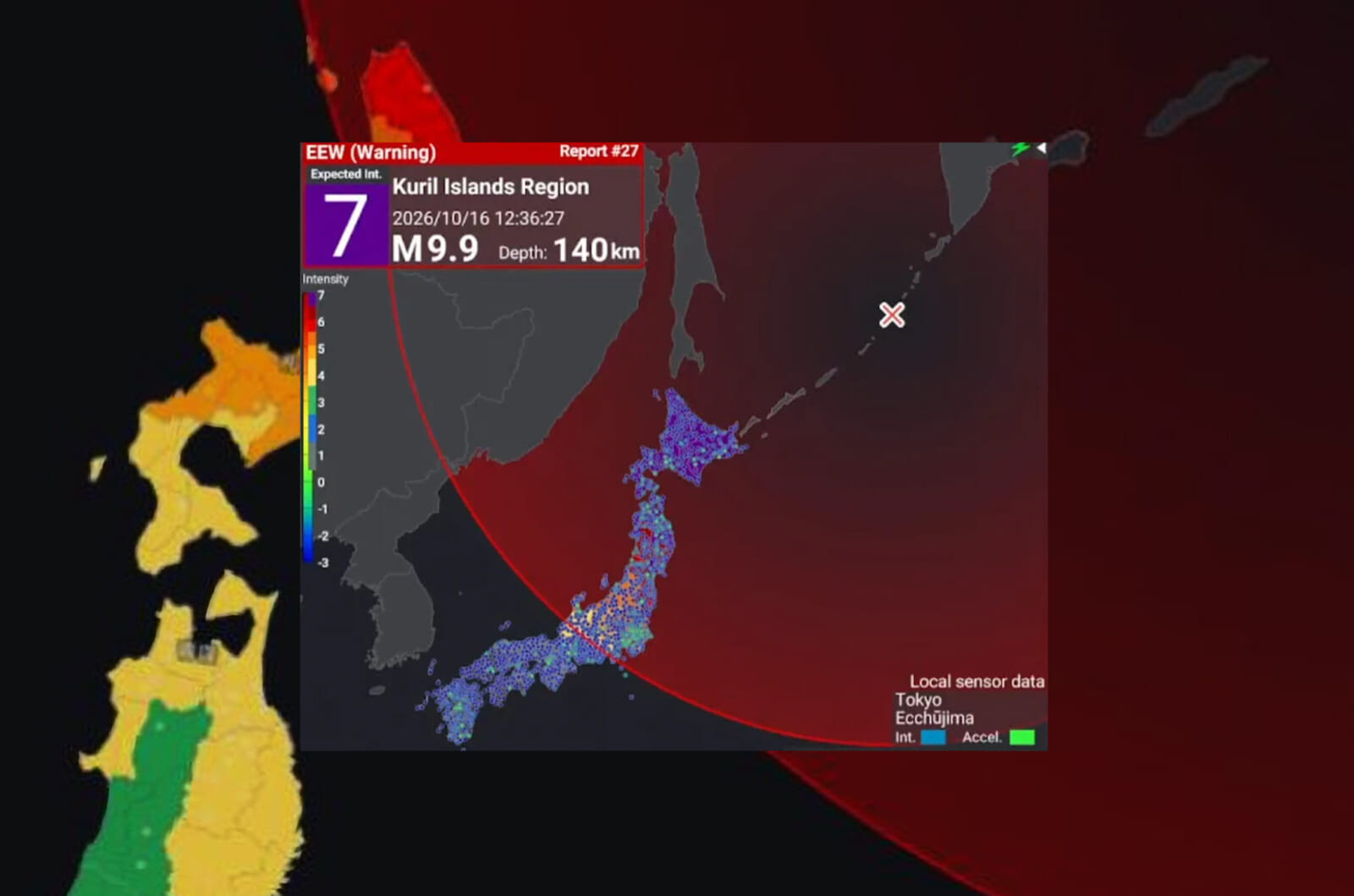
Authorities Investigate Dramatic Magnitude Miscalculation
The incident has raised questions about the reliability of Japan’s automated earthquake warning system and the reasons behind such a dramatic discrepancy between the initial estimate and the actual earthquake. Authorities are investigating why the preliminary data produced an erroneous magnitude estimate. For residents who received the alert, the sudden warning of a potentially devastating earthquake was followed almost immediately by relief as it became clear that the actual shaking posed far less danger than initially anticipated.
Related Posts
- An Essential Earthquake Survival Guide: How To Be Prepared for Japan’s Megaquake
- Magnitude 7.2 Earthquake Strikes Northern Japan
Updated On October 16, 2026