Kogei is a Japanese word usually translated as “craft,” though the translation doesn’t quite do it justice. In English, “craft” tends to suggest something a rung below fine art: skilled handwork; decorative or functional everyday objects; something well made but not necessarily expressive or vanguard. But kogei embraces a broader, more intuitive approach to making.
In craftsmanship, skill is often measured by the ability to control raw materials and produce clean, uniform results. Kogei, in contrast, treats them as active participants in the process. Many kogei artisans spend years learning how their materials behave — how clay cracks as it dries, how molten glass pulls and sags — and rather than smoothing these tendencies away, let them remain visible and central to the finished work.
Given their strong association with tradition, crafts are often relegated to the past. Go for Kogei is a new project that puts focus on the art form’s future. Founded in 2020 by a citizen-led nonprofit in Kanazawa — a city long hailed for its craft traditions — the project gives kogei new visibility by staging exhibitions, events and symposiums across the Hokuriku region and beyond.
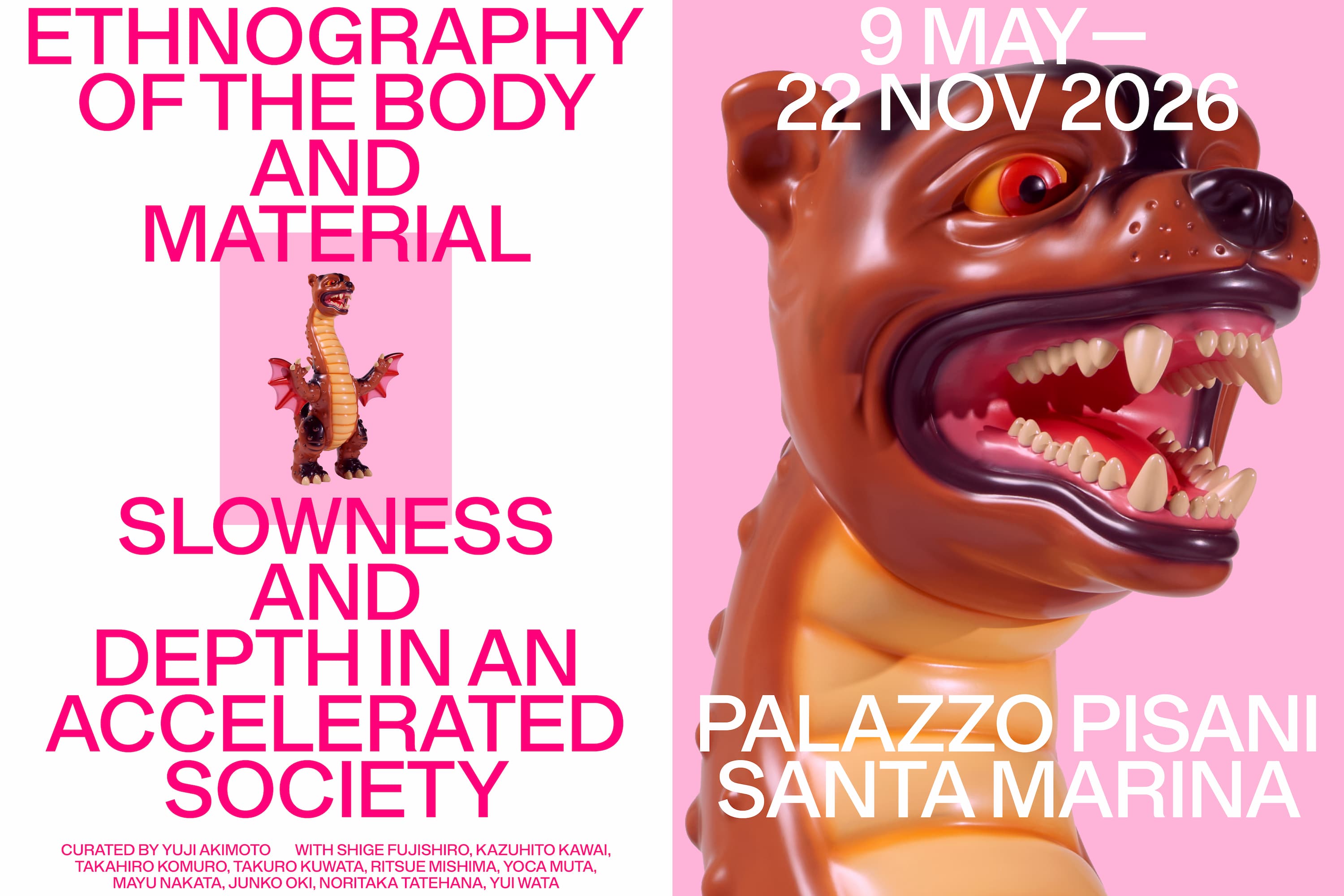
This year, Go for Kogei has traveled across the world to Venice, Italy, for its most ambitious iteration yet: an exhibition called “Ethnography of the Body and Material — Slowness and Depth in an Accelerated Society,” curated by art world veteran Yuji Akimoto. It features roughly 100 works by 10 Japanese artists, and runs from May 9 to November 22, in parallel with the Venice Biennale.
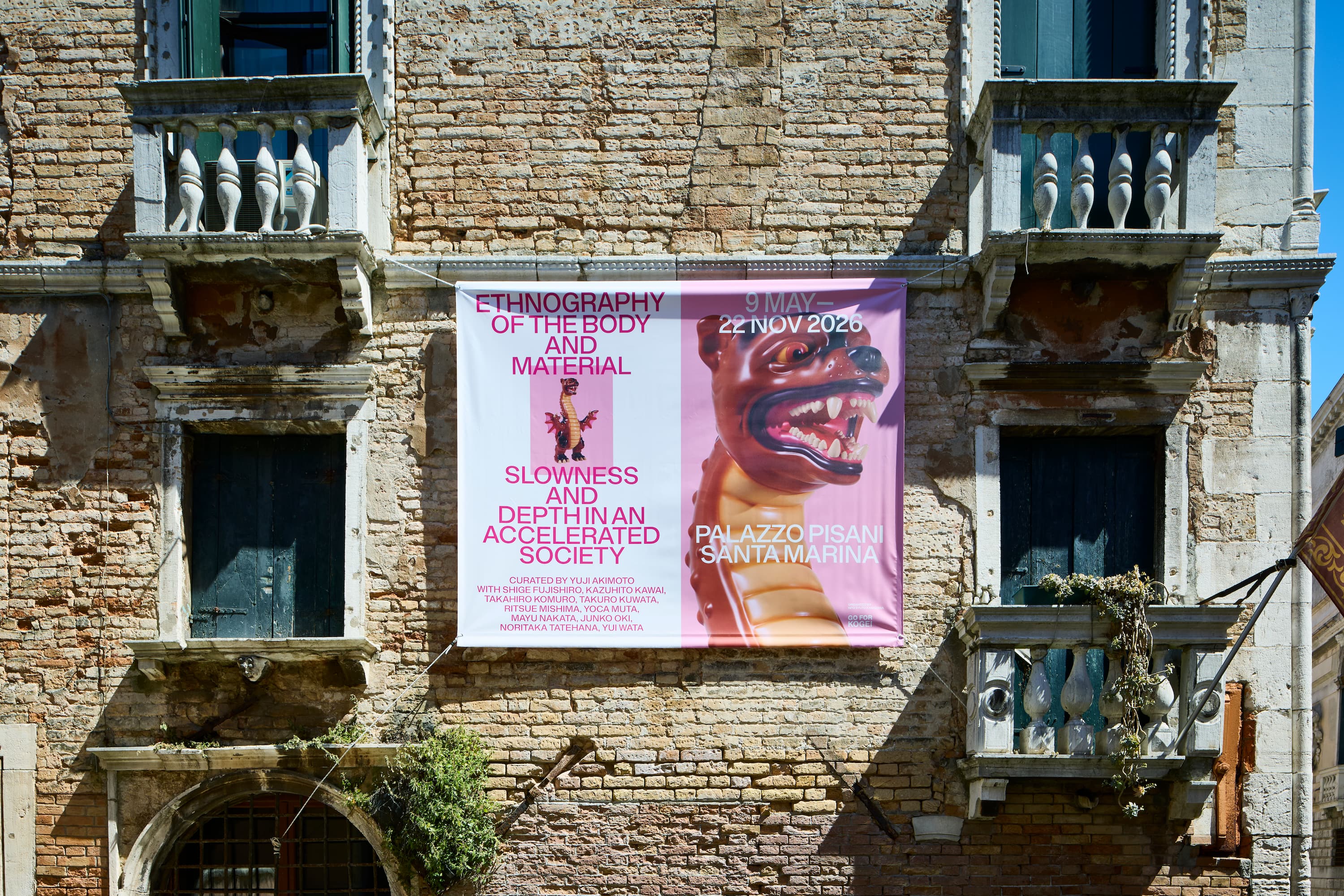
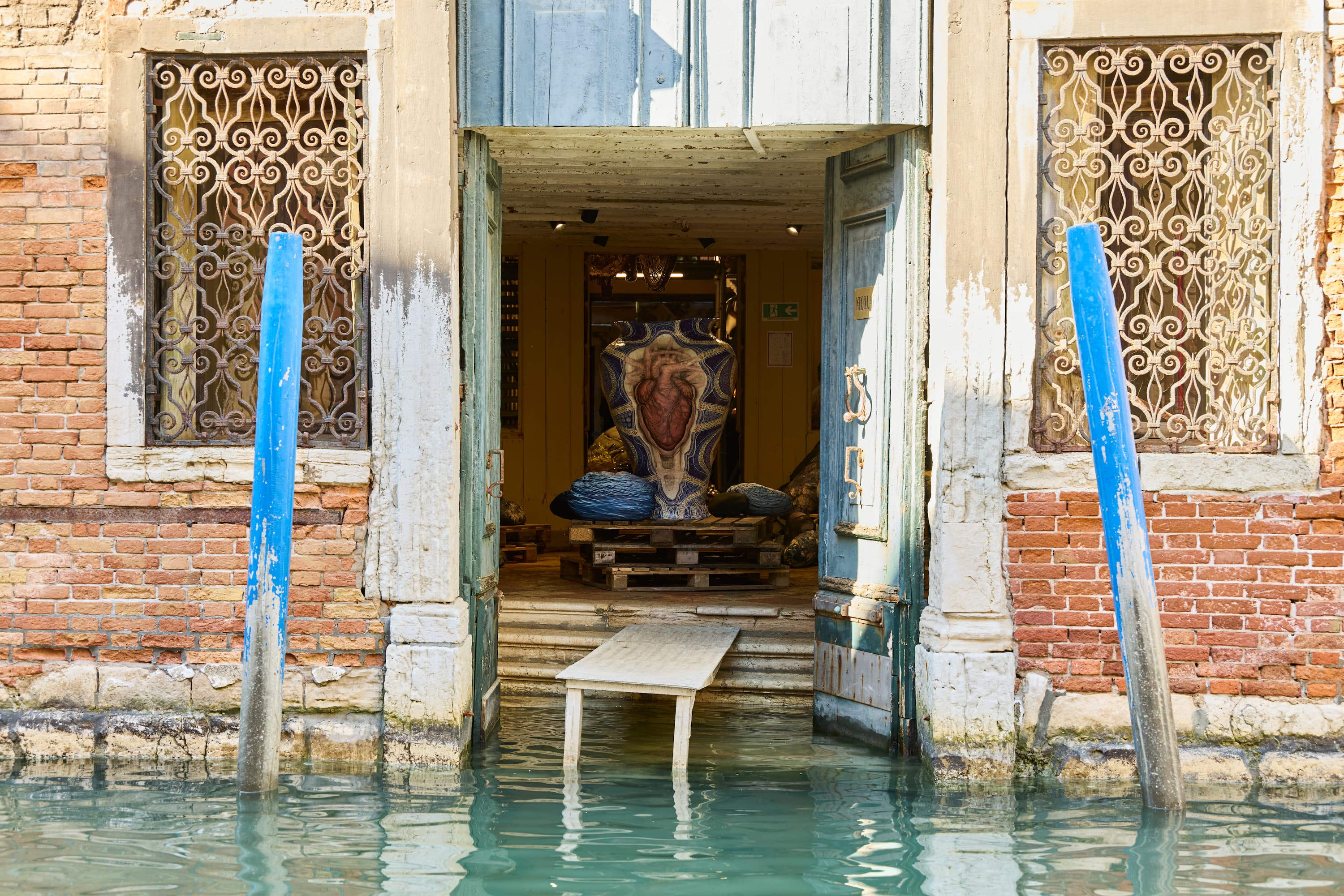
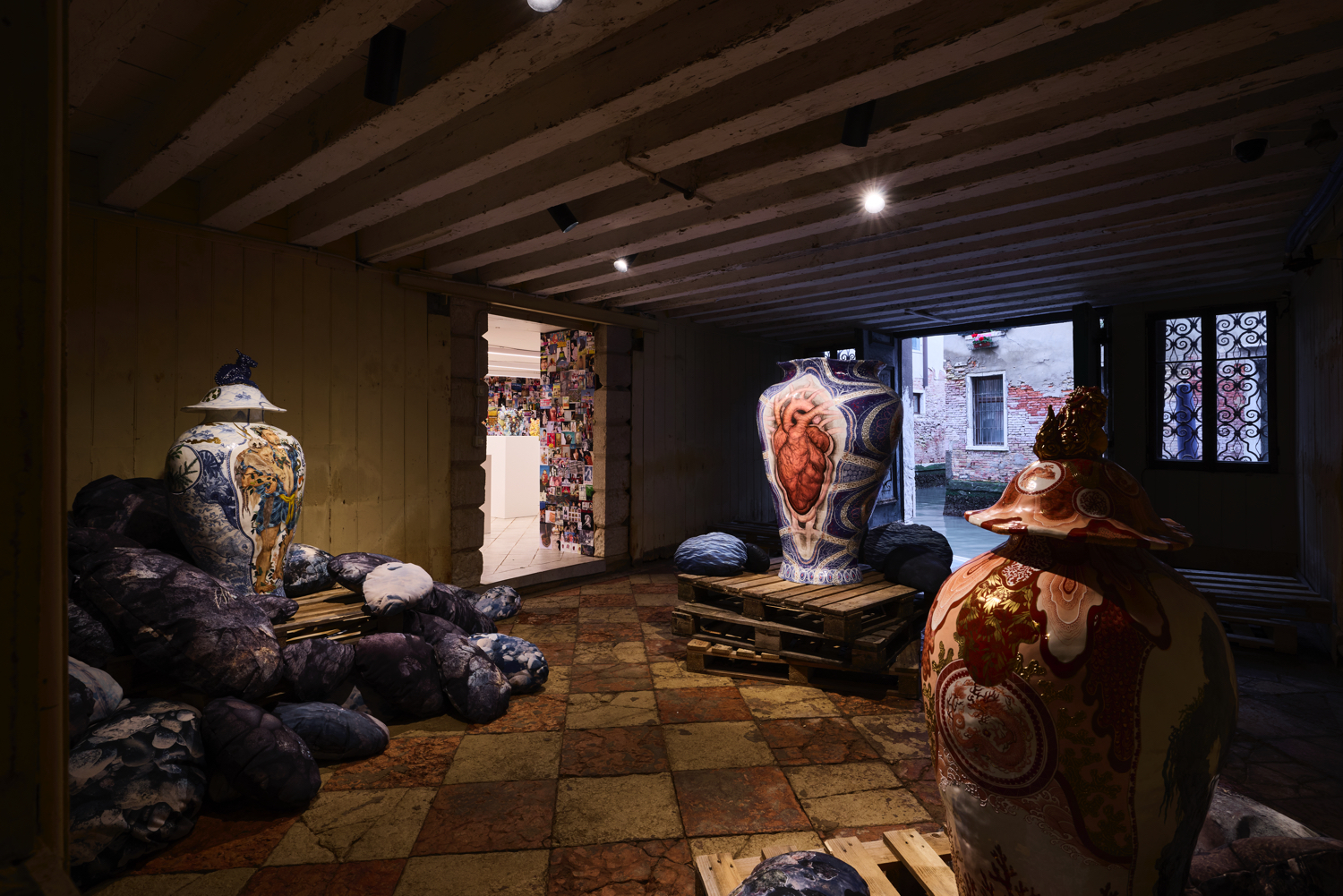
The choice of Venice, though, is about more than just good timing. Improbably built on a cluster of lagoon islands over more than a thousand years, Venice is itself a city made by hand — where craft remains embedded in ordinary life, most famously among the glassblowers of Murano. The exhibition leans into the city’s textured heritage, taking place in the Palazzo Pisani Santa Marina, a historic residence near the Rialto Bridge that wears its age openly.
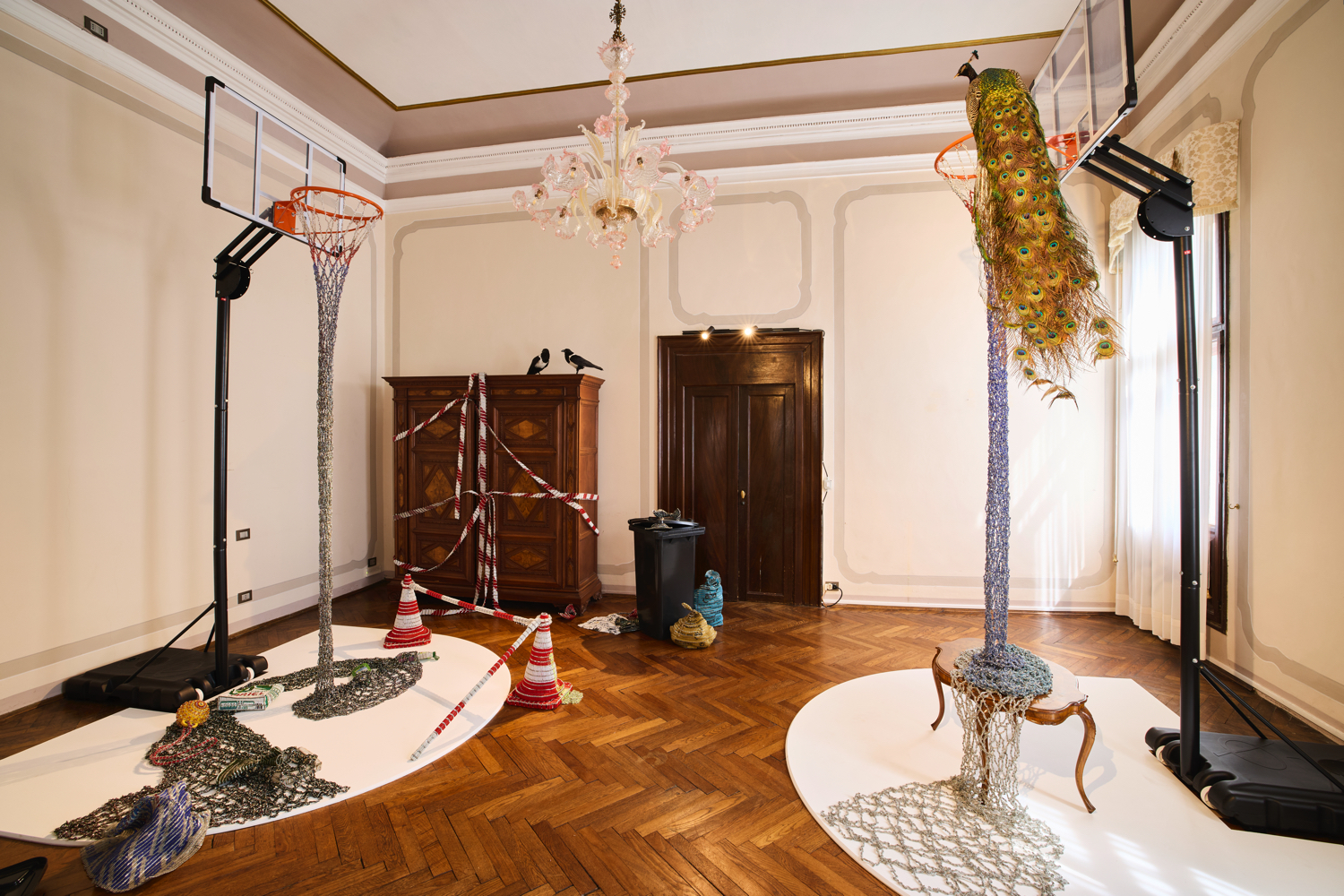
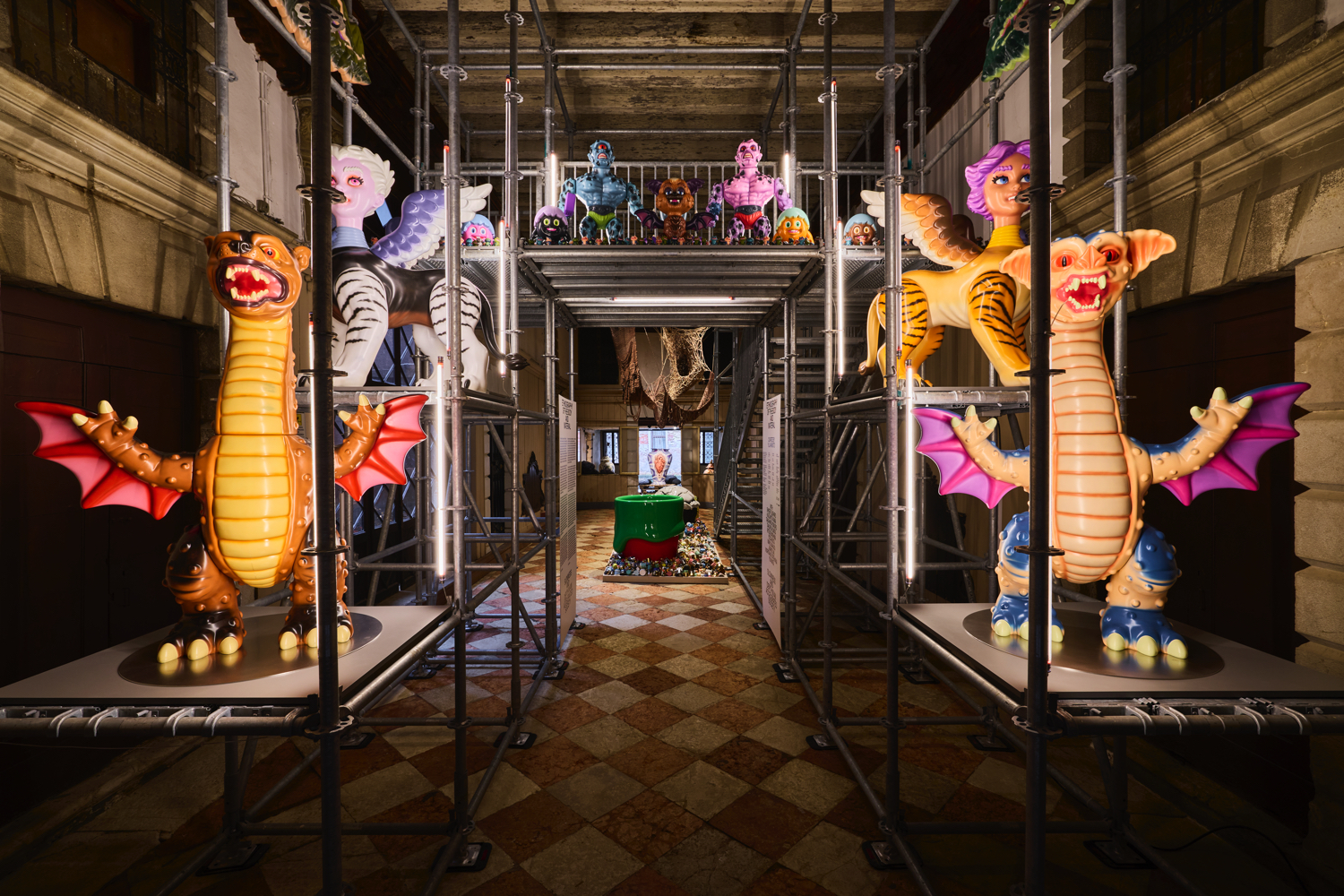
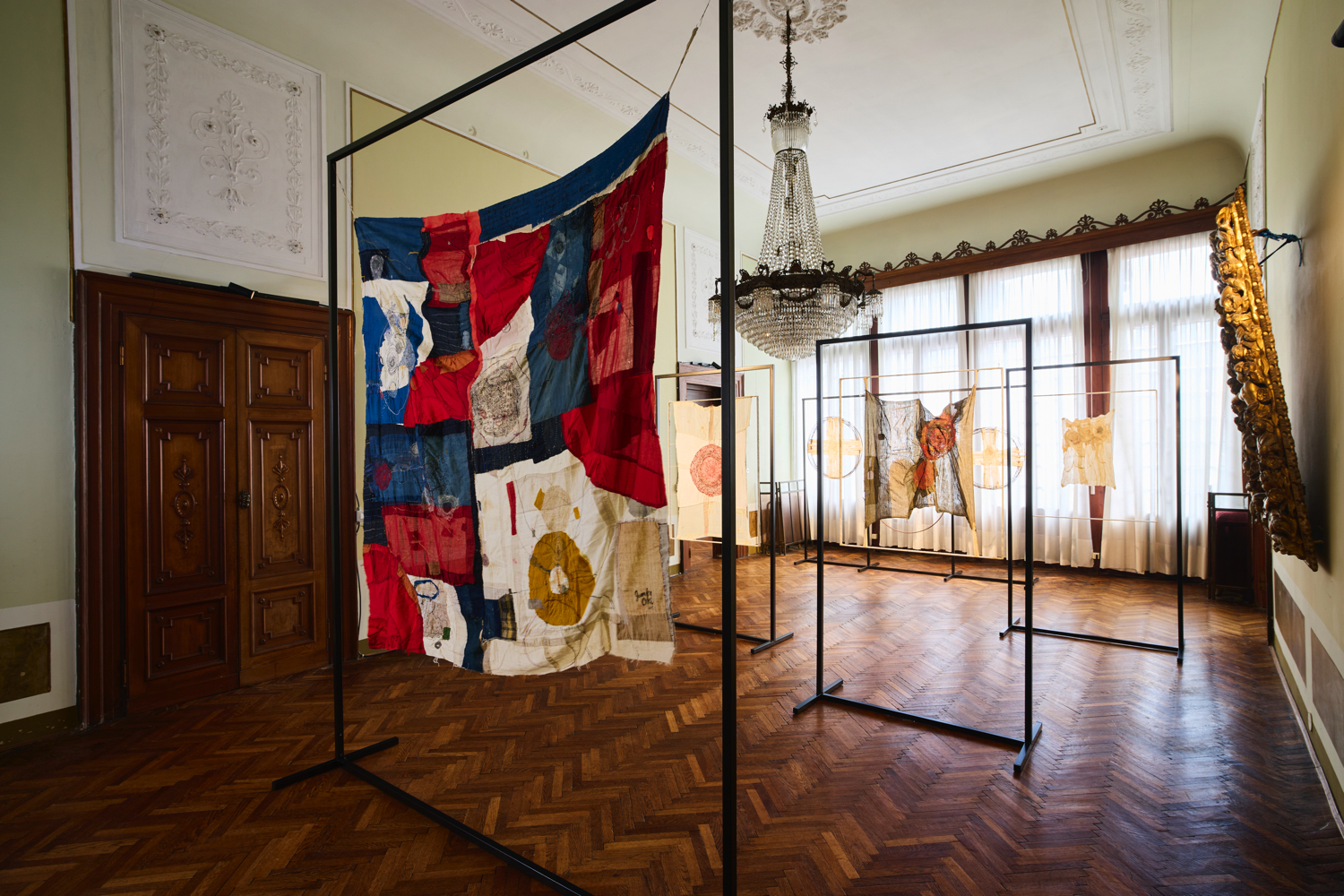
Inside, 10 artists fill the Palazzo’s rooms with creations in clay, glass, lacquer, thread and wood. Among them are a glassmaker who shapes her undulating sculptures in the furnaces of Murano, a ceramicist whose cracked, candy-colored vessels upend what pottery is supposed to look like and an embroiderer who threads new life into old fabric steeped in memories.
Ritsue Mishima
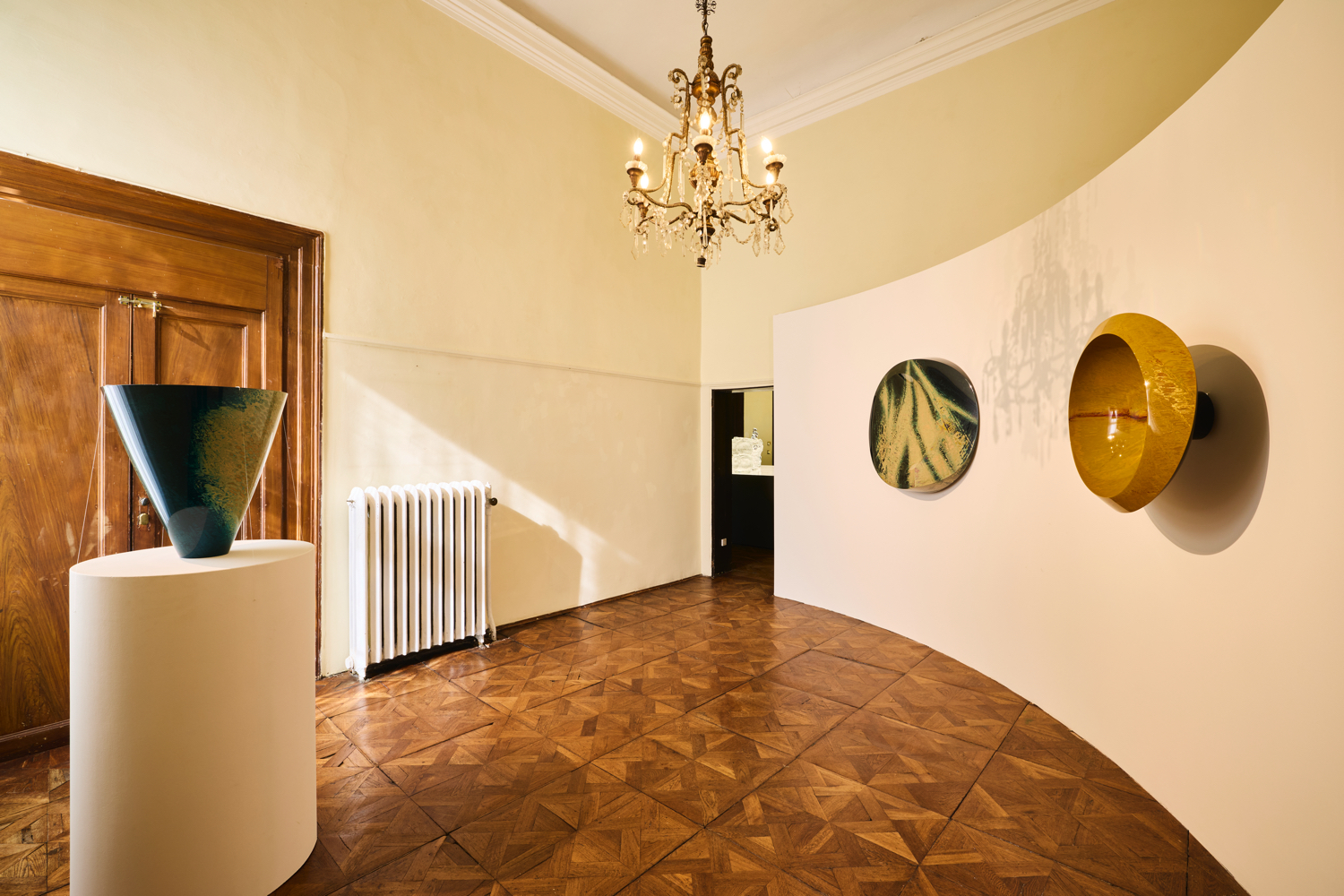
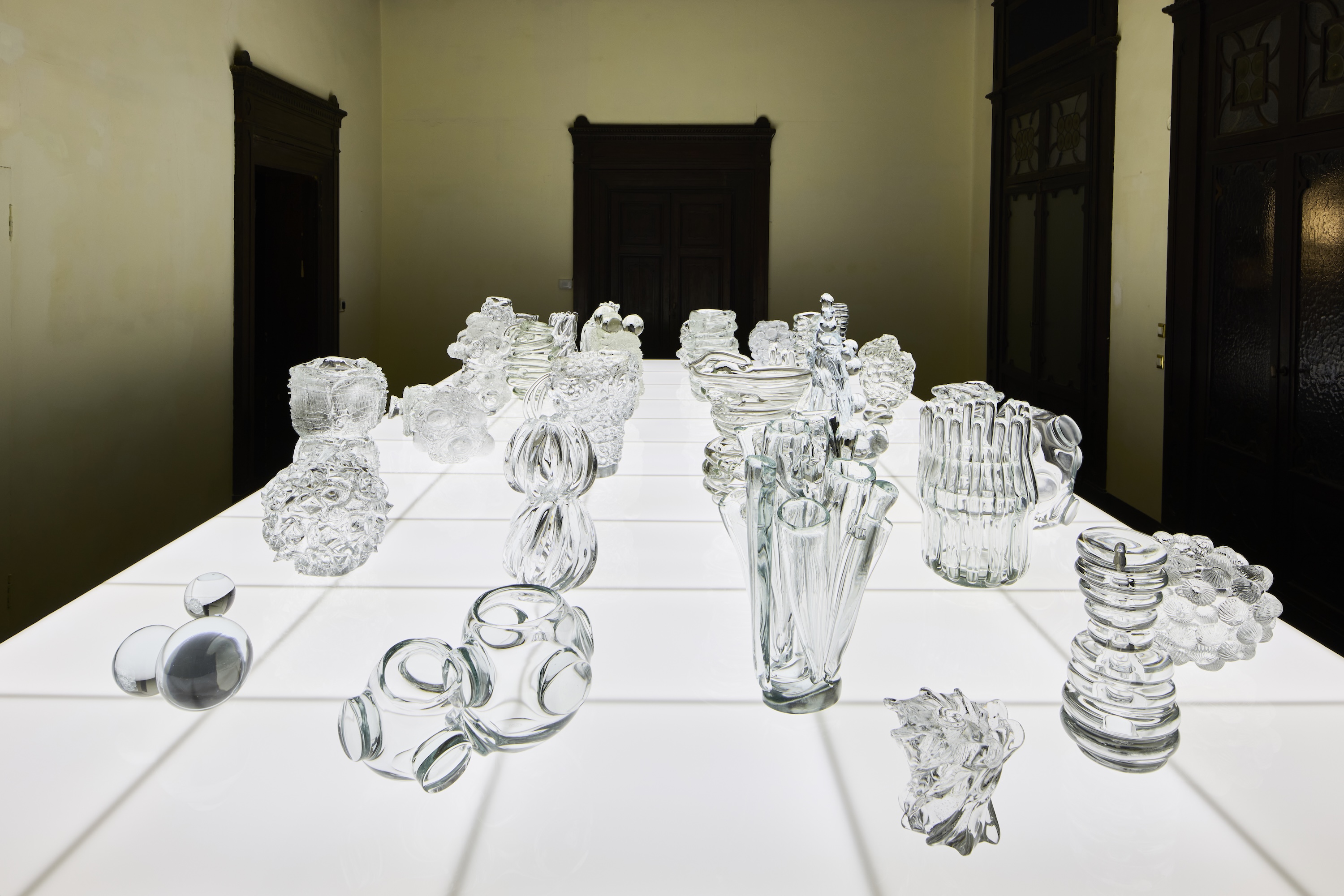
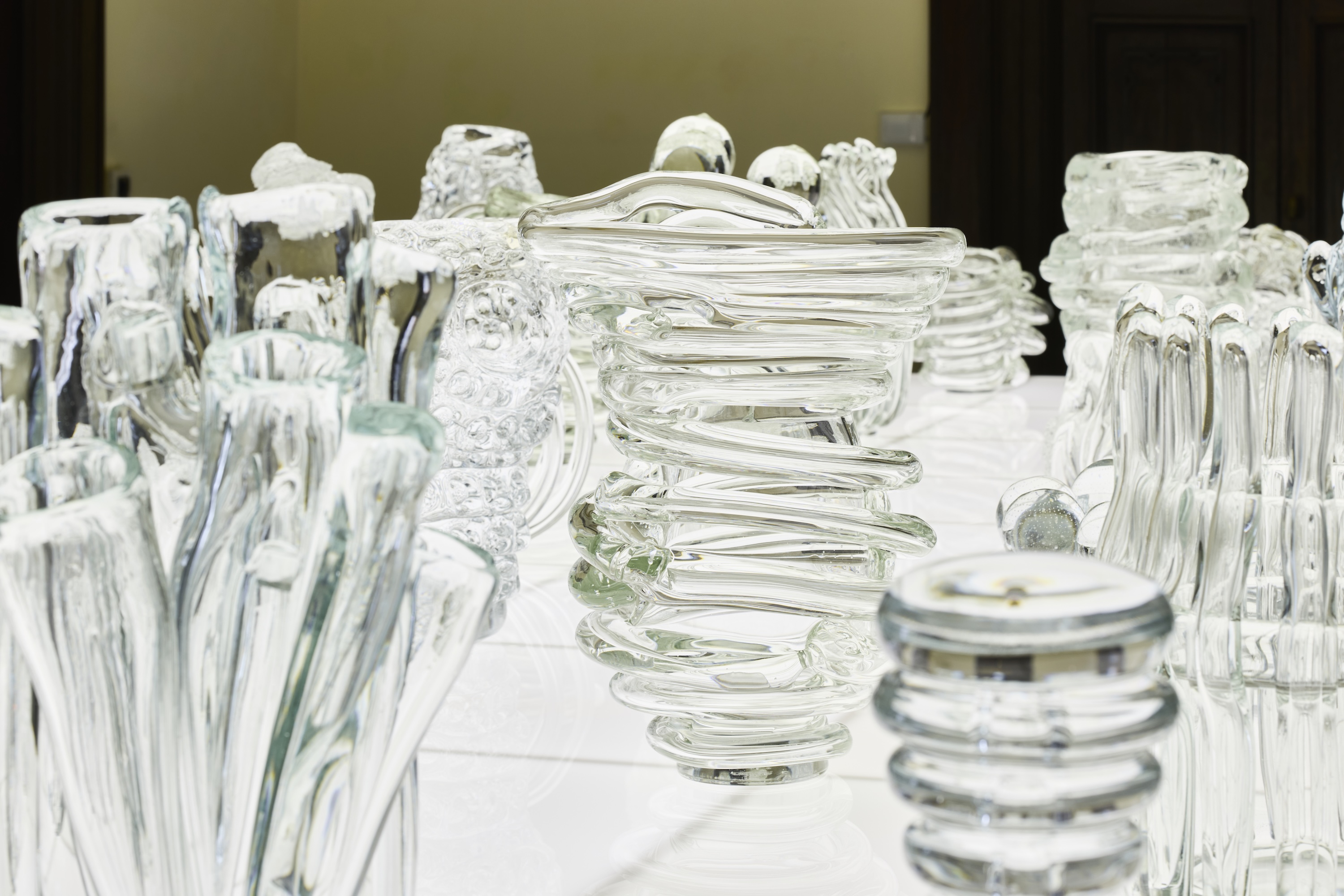
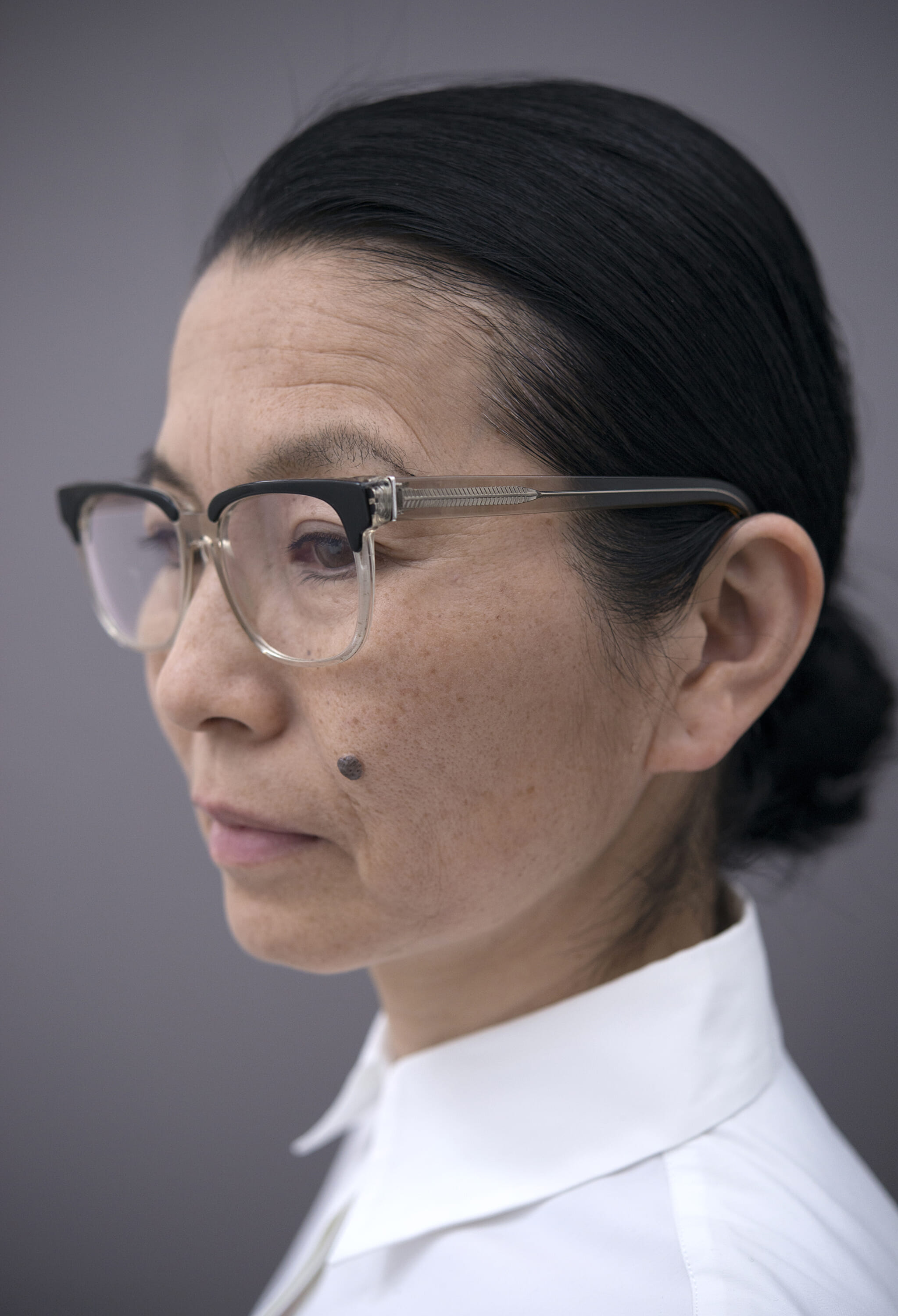
Ritsue Mishima is one of the most renowned glass artists working today, celebrated for luminous, transparent glass sculptures made alongside the master artisans of Murano. No one could be a more fitting figure for an exhibition fusing two craft cultures: She divides her days almost evenly between Kyoto and Venice, transiting between the two about once a month.
“My path to glass began in this city — Venice,” she tells TW. She moved to the city in 1989 and began working at a glass factory on Murano Island in 1996 after learning about it from a stranger she met at a water-bus station. Using techniques passed down for centuries, she continues to create side by side with Venetian maestros and glass smiths today. Her sculptures evoke the organic and the cosmic alike: marine life, tree trunks, meteorites. The pieces are formed without a mold, and must be coaxed into being in the narrow window before the molten glass cools.

Her signature medium of pure, colorless glass is an unusual choice in Murano’s furnaces, which are known for their kaleidoscopic mastery of color. But for Mishima, the material is most alive when it fully absorbs the particular light of the room it sits in — when it “transmits light, radiates light and connects that light to the hearts of those who see it.”
It is this transcendent quality — glass as a vessel for light — that Mishima hopes a visitor carries away from the exhibition. “As everything becomes digitized, I think we want to spend the time granted to us experiencing beauty, whether it’s gathering in nature or collecting beautiful objects,” she suggests. “It’s wonderful that these forms carry permanence; I believe it’s something deeply meaningful for human beings.”
Takuro Kuwata
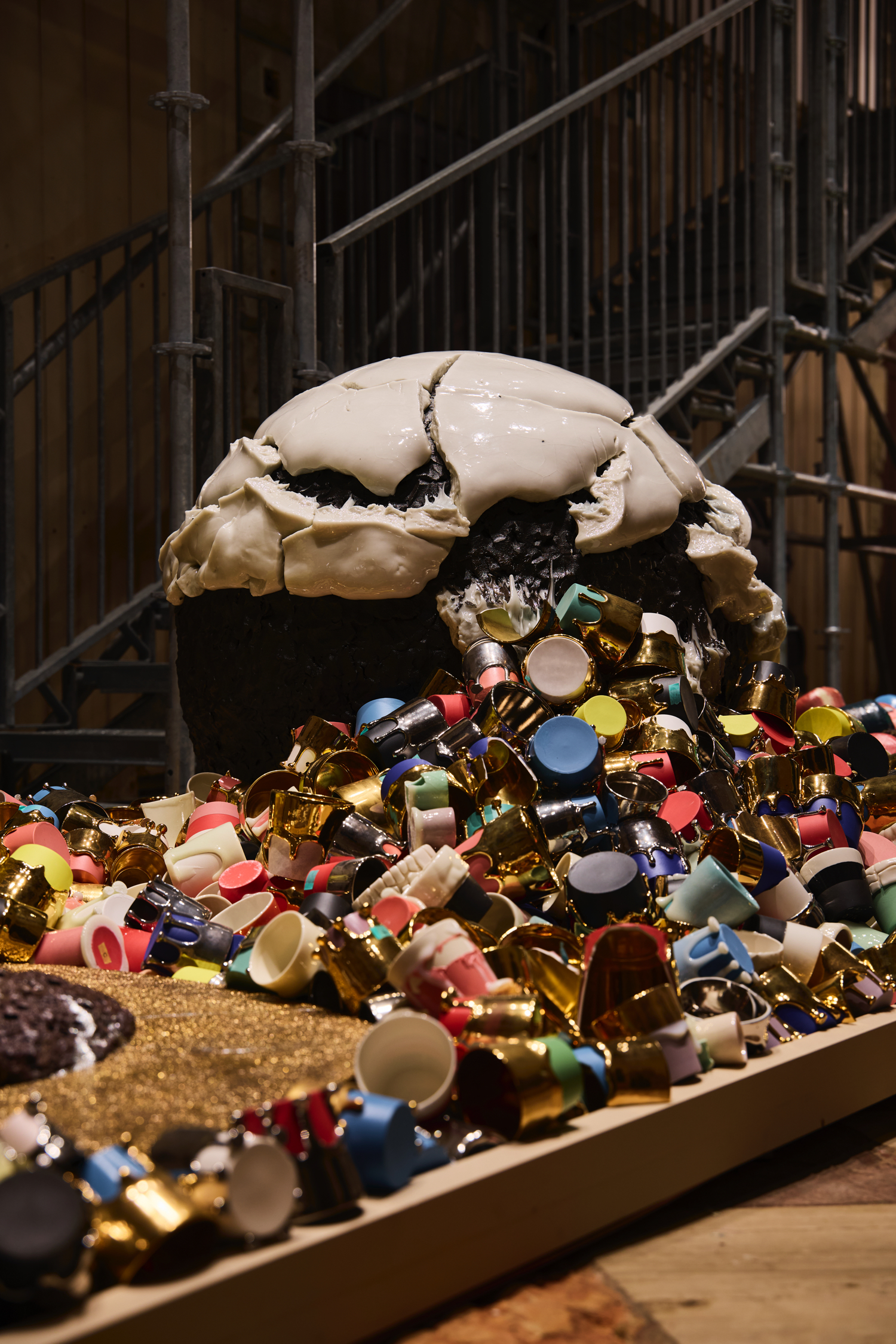
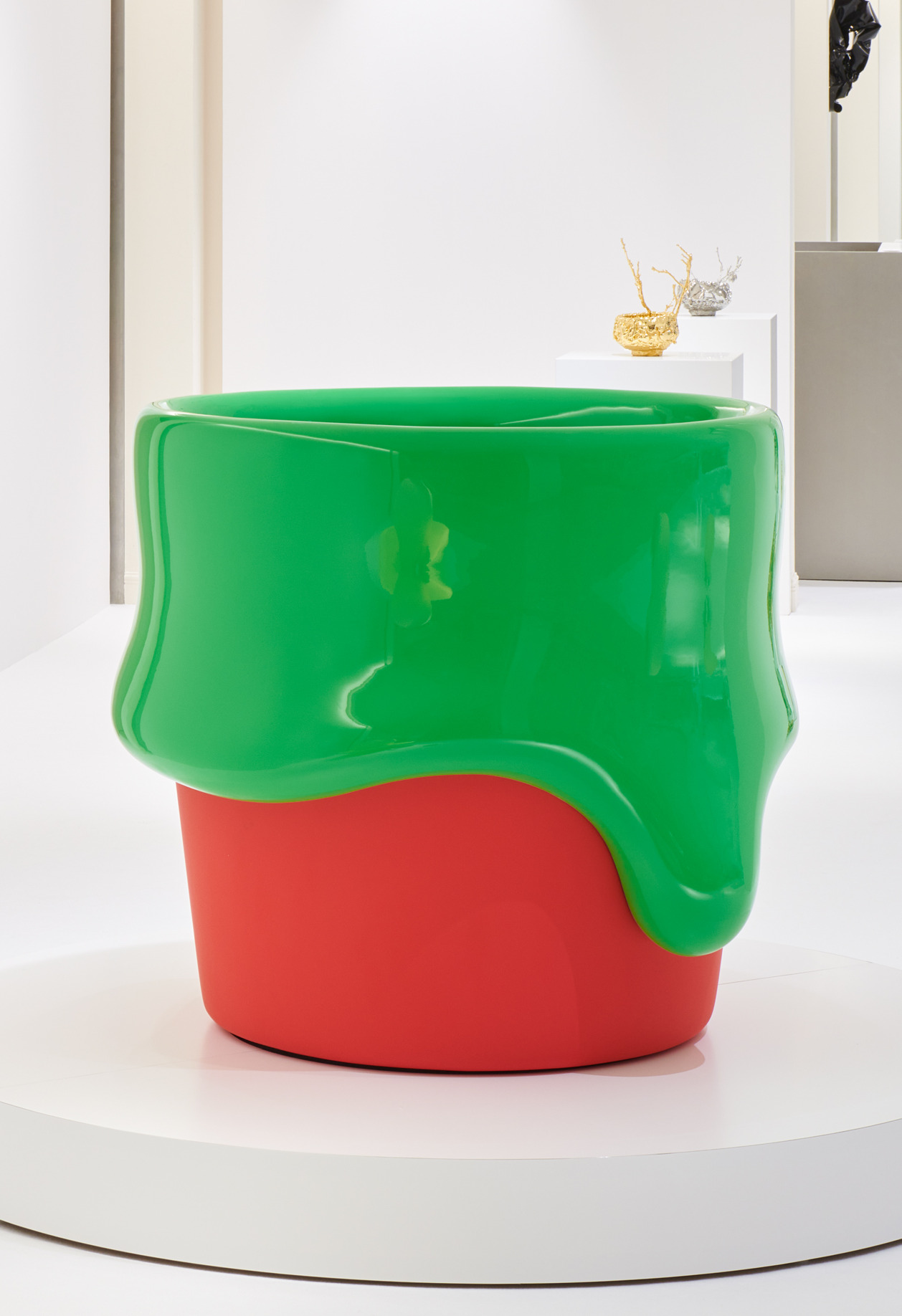
Of the works presented in Venice, Takuro Kuwata’s pieces may be the most familiar to someone who doesn’t follow art closely. The ceramic artist’s reach extends well beyond the gallery: He received a special mention from the prestigious Loewe Foundation Craft Prize in 2018 and has worked alongside brands like Comme des Garçons and Acne Studios.
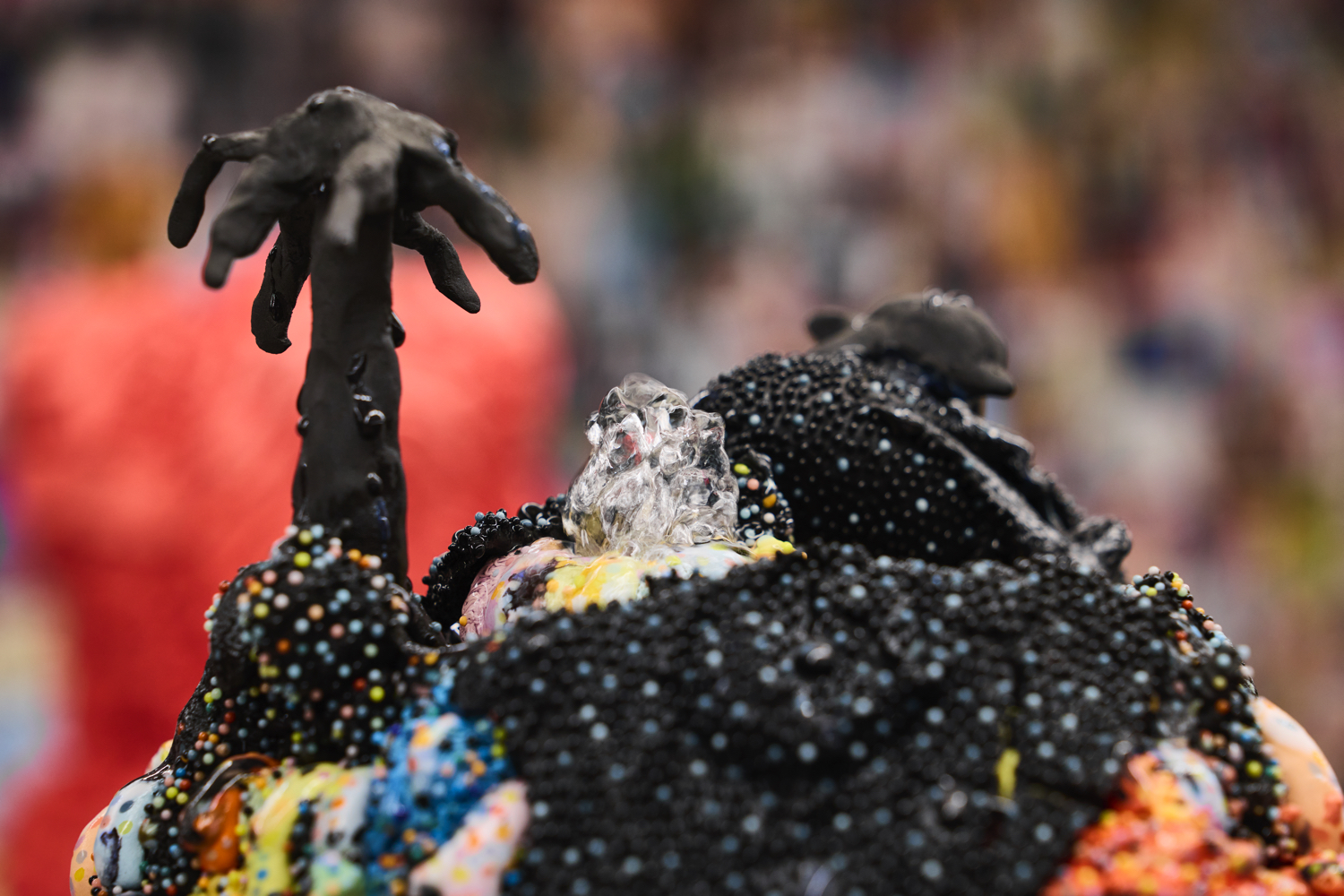
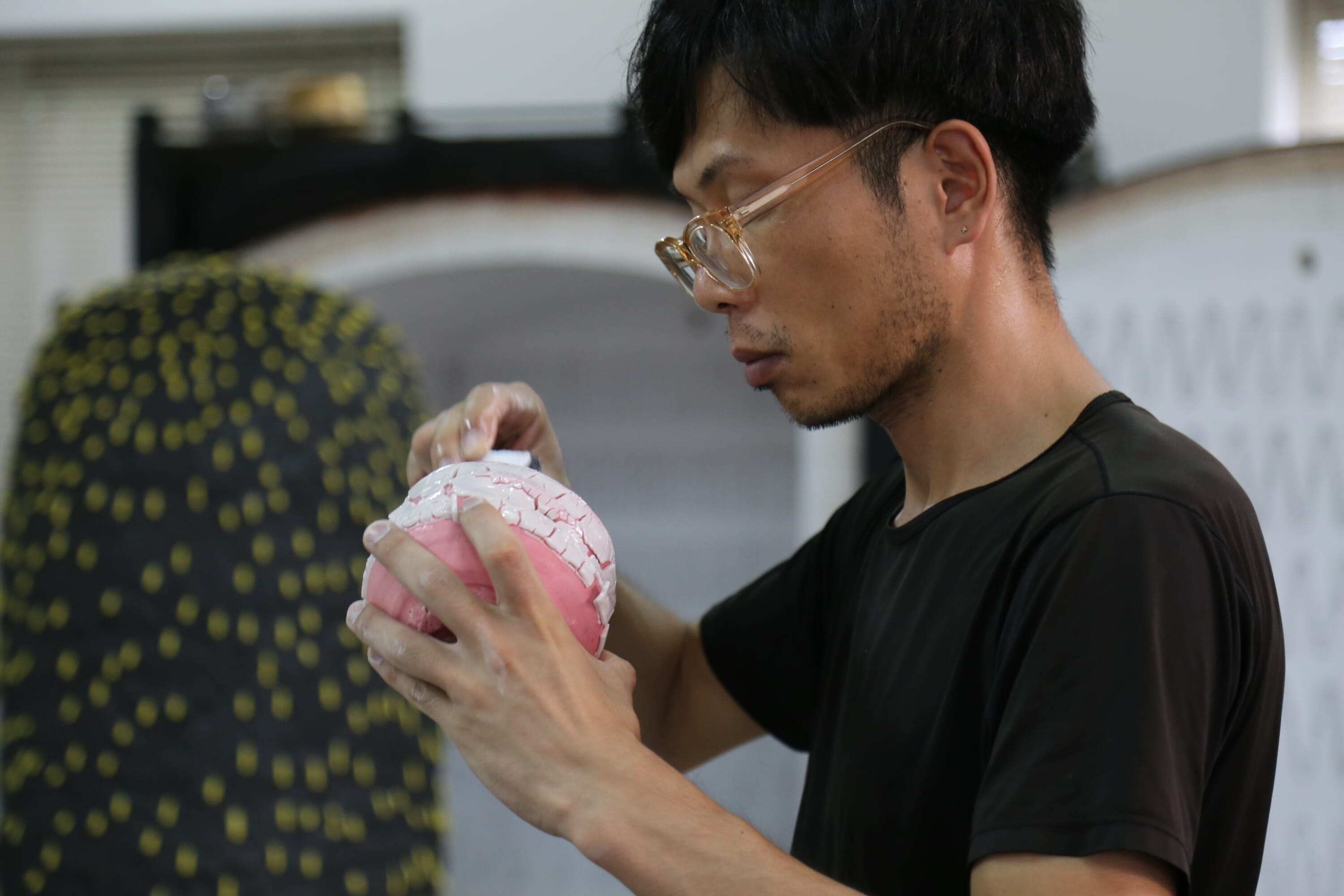
Lumpen, boulder-like and finished in jolts of neon and metallic crusts, Kuwata’s forms are impossible to walk past — but originally, his approach was far from loud. “I started out making a lot of tea bowls within a very craft-oriented context,” Kuwata recounts, referring to his traditional apprenticeship with the ceramic artist Susumu Zaima. “Along the way, I began to question the idea of continuing to make the same thing repeatedly, and gradually my pieces became more abstract.”
Takuro Kuwata
He still uses traditional methods — among them kairagi, which makes a glaze crack and shrink as it sets — but pushes them well past the point tradition intended. “I really love looking at old techniques and works, but I don’t feel a strong urge to reproduce them as they are,” he states.
Instead, he studies the thinking behind the old work — why certain aesthetics and techniques emerged when they did, how their makers approached the medium — and with the same spirit, aims to respond to the conditions of our time. “In that sense, I don’t see the past and the present as separate things,” he continues. “I see them as existing within the same continuous flow.”
Junko Oki
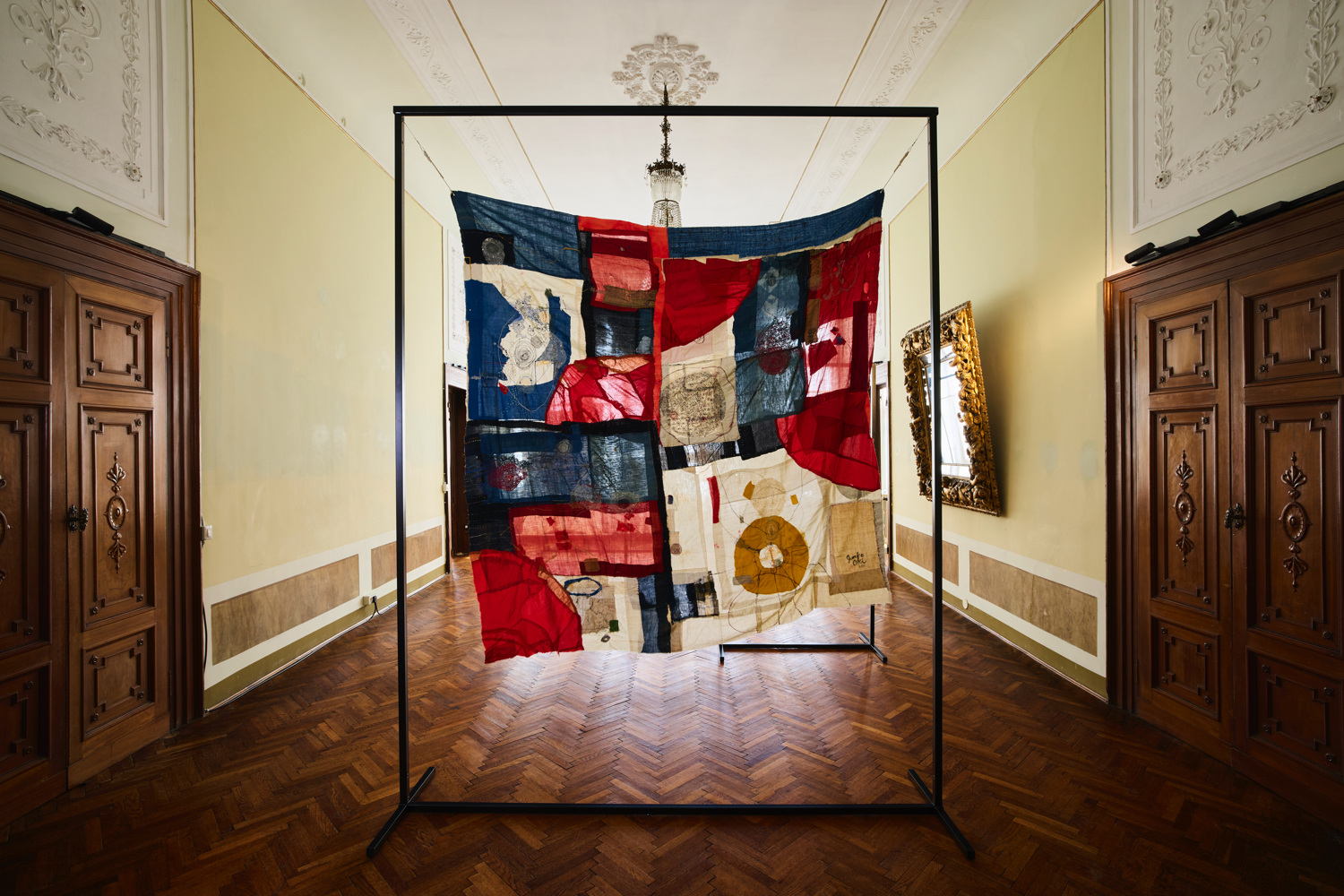
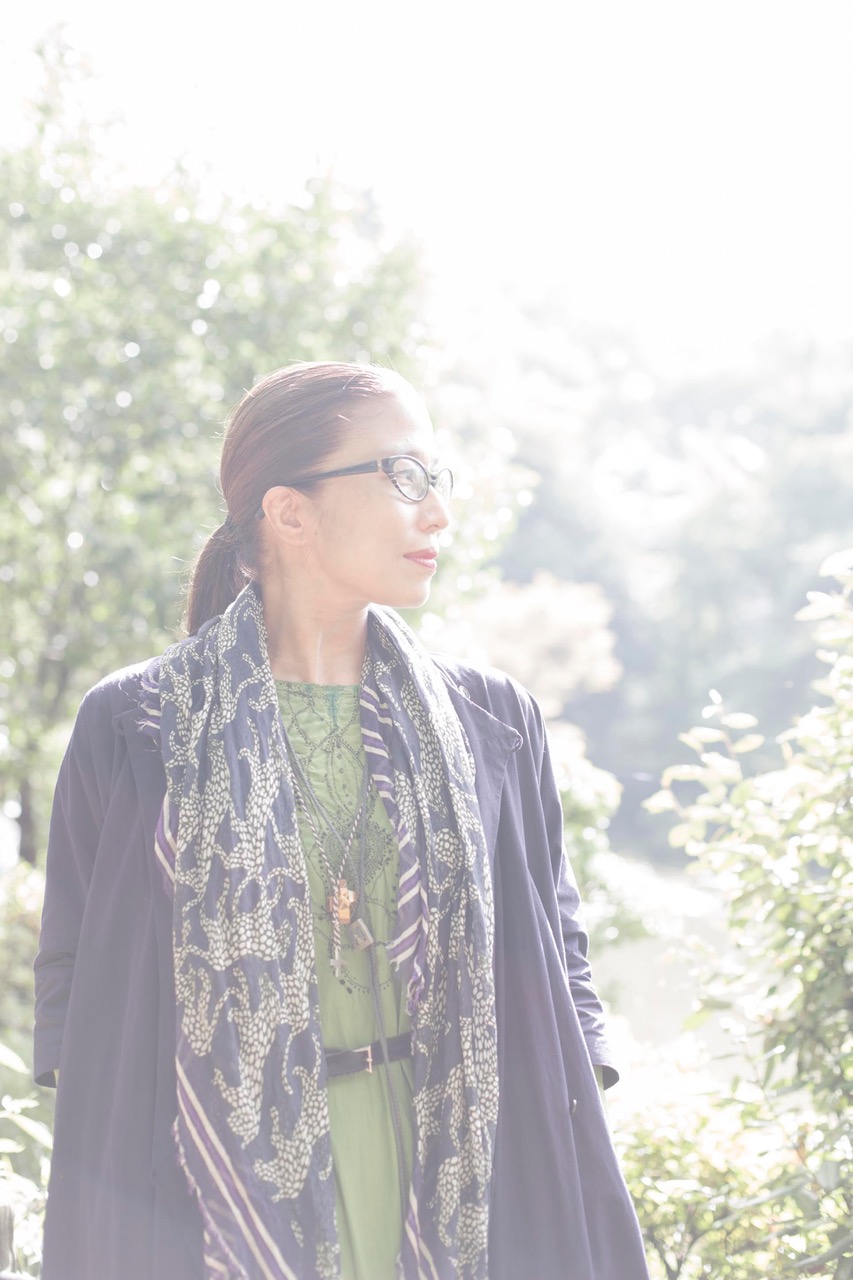
Embroidery artist Junko Oki didn’t find her personal calling until just before turning 40. In her youth, she admits, she wasn’t any good at needlework. “My late mother had left behind some fabric and thread; they felt too precious for me to touch, and I kept them in a box,” she remembers. “One day, my daughter, who was in middle school at the time, took scissors to the fabric, stitched it up roughly and surprised me with a tote bag for my birthday.”
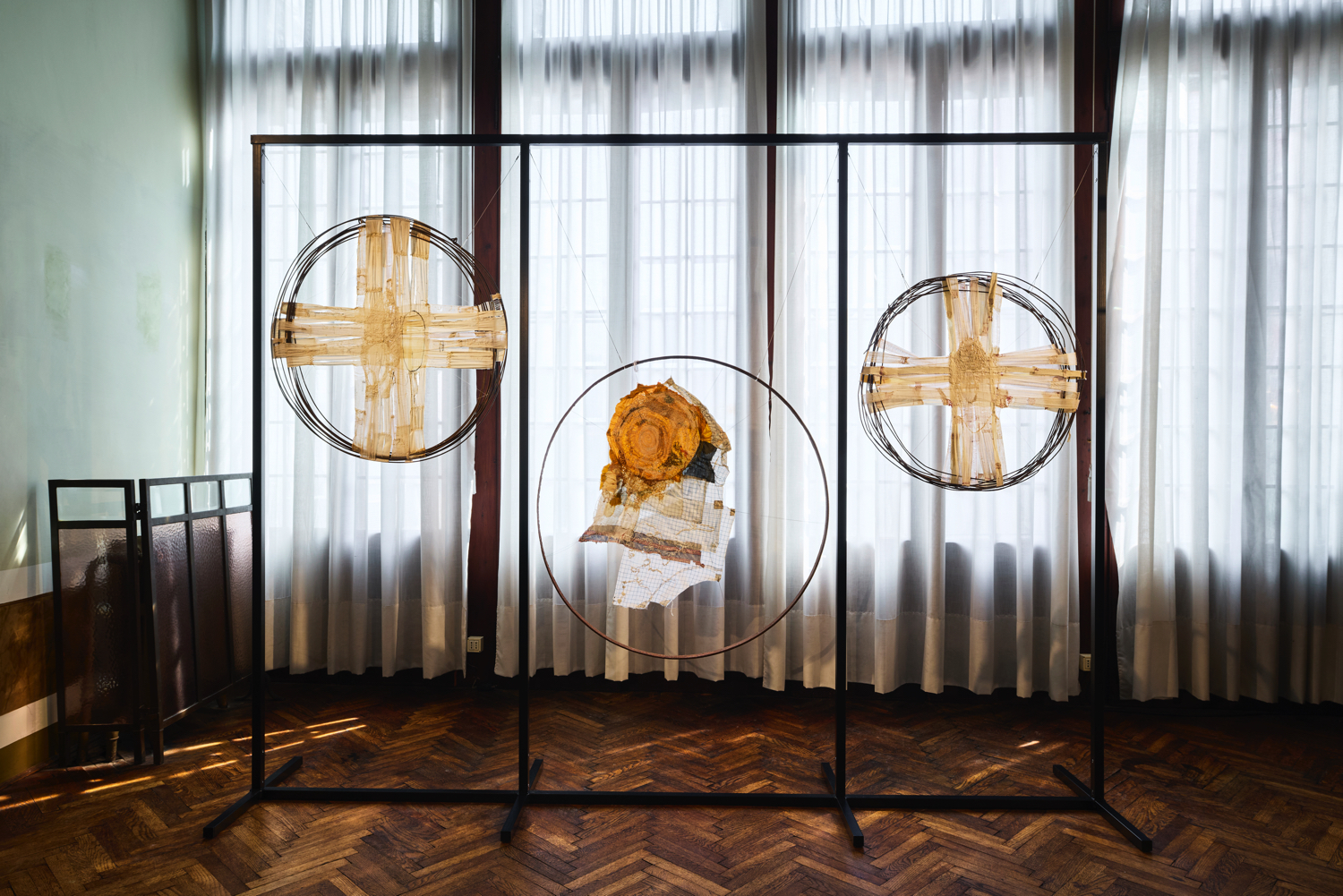
Although initially alarmed, Oki was deeply touched by her daughter’s gesture, and indelibly changed. Afterward, she says, “I picked up the needle as though I had made a promise” — and she has not put it down since. In the past two decades, Oki’s magnetic, densely stitched tapestries have made her one of Japan’s most singular textile artists. The pieces are embroidered on lengths of antique cloth, without any preliminary sketch. “Old cloth already has time dwelling in its fibers,” she explains. “The presence of people who existed within it, their lives, their memories.”
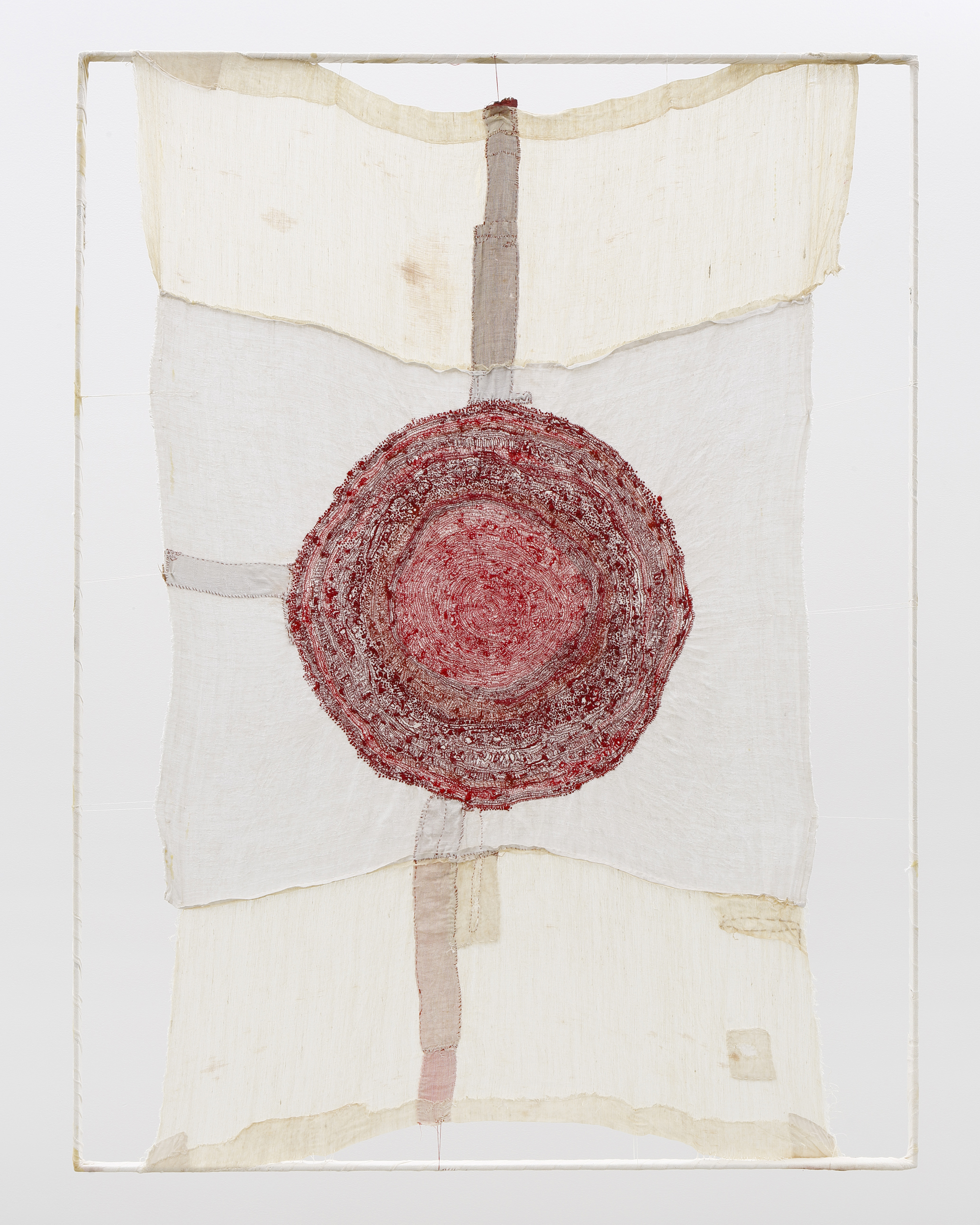
The craft has shaped her sense of time, too. “Before I started embroidering, time was something that chased me. Now, I feel as though I am walking through time,” she reflects. “Making something by hand means your body enters into direct negotiation with the material. Within that negotiation lives something only human beings can produce: chance, hesitation, warmth and something close to prayer. To let go of that is to let go of the very roots of expression.”
This is a conviction that runs, across various mediums, through the whole exhibition. While it’s certainly crucial that traditional techniques be passed down unbroken, what matters most — as Oki puts it — is “the spirit that the technique has carried.” In her view, kogei does not advance by leaning on the past or chasing the present; rather, it persists by “continuing to answer honestly — through the hands — the questions that exist right here, right now.”
More Info
“Ethnography of the Body and Material — Slowness and Depth in an Accelerated Society” runs from May 9 to November 22 at the Palazzo Pisani Santa Marina.
For more information, head to venice.goforkogei.com or @goforkogei on Instagram.
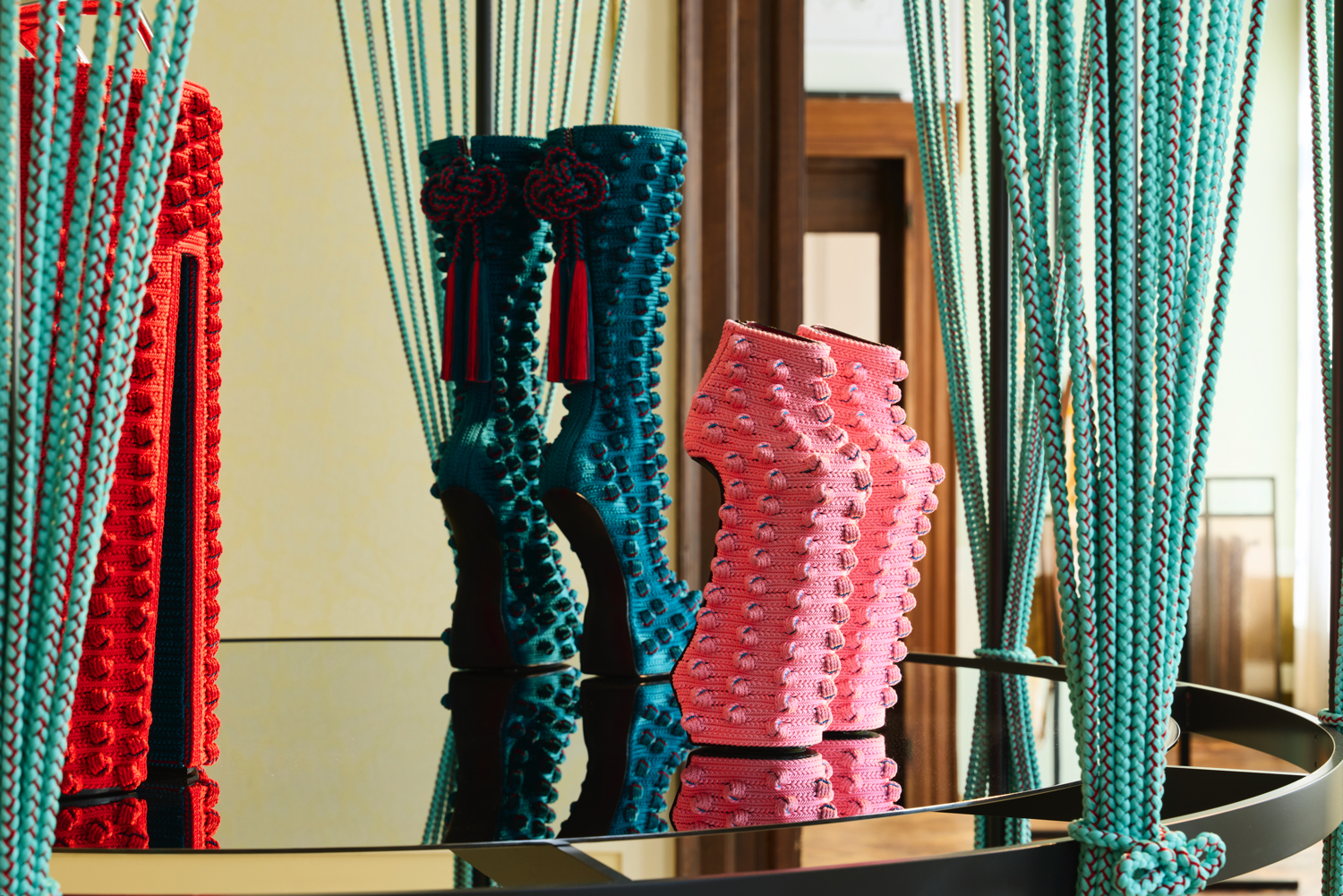
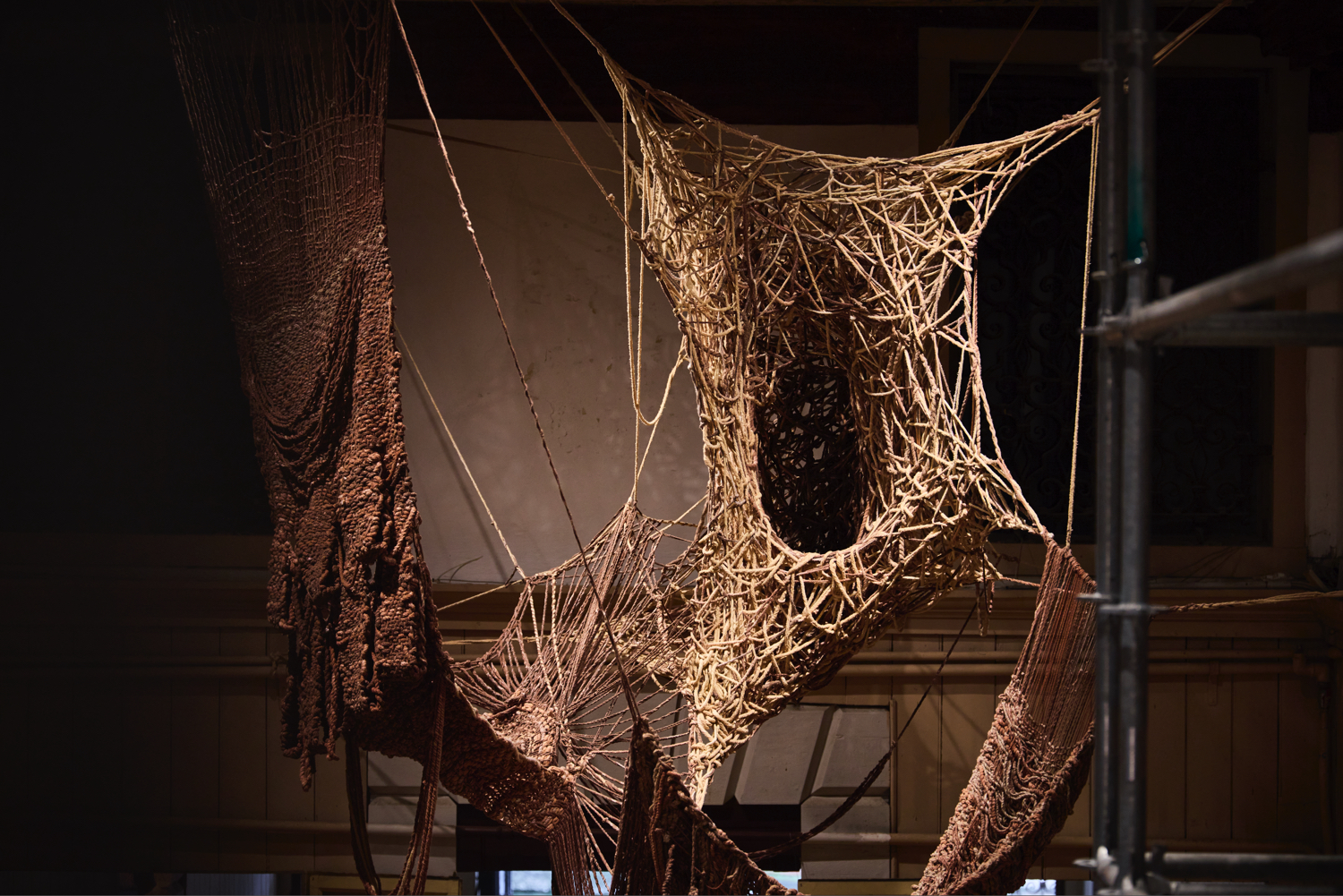
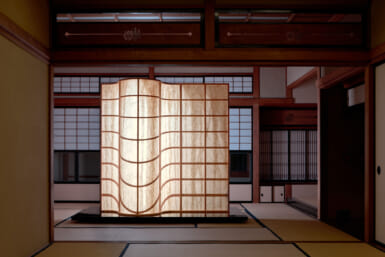
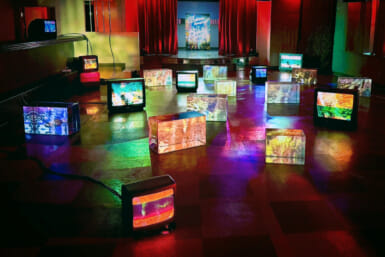
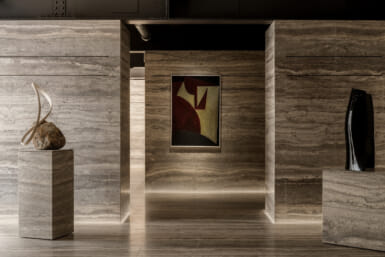
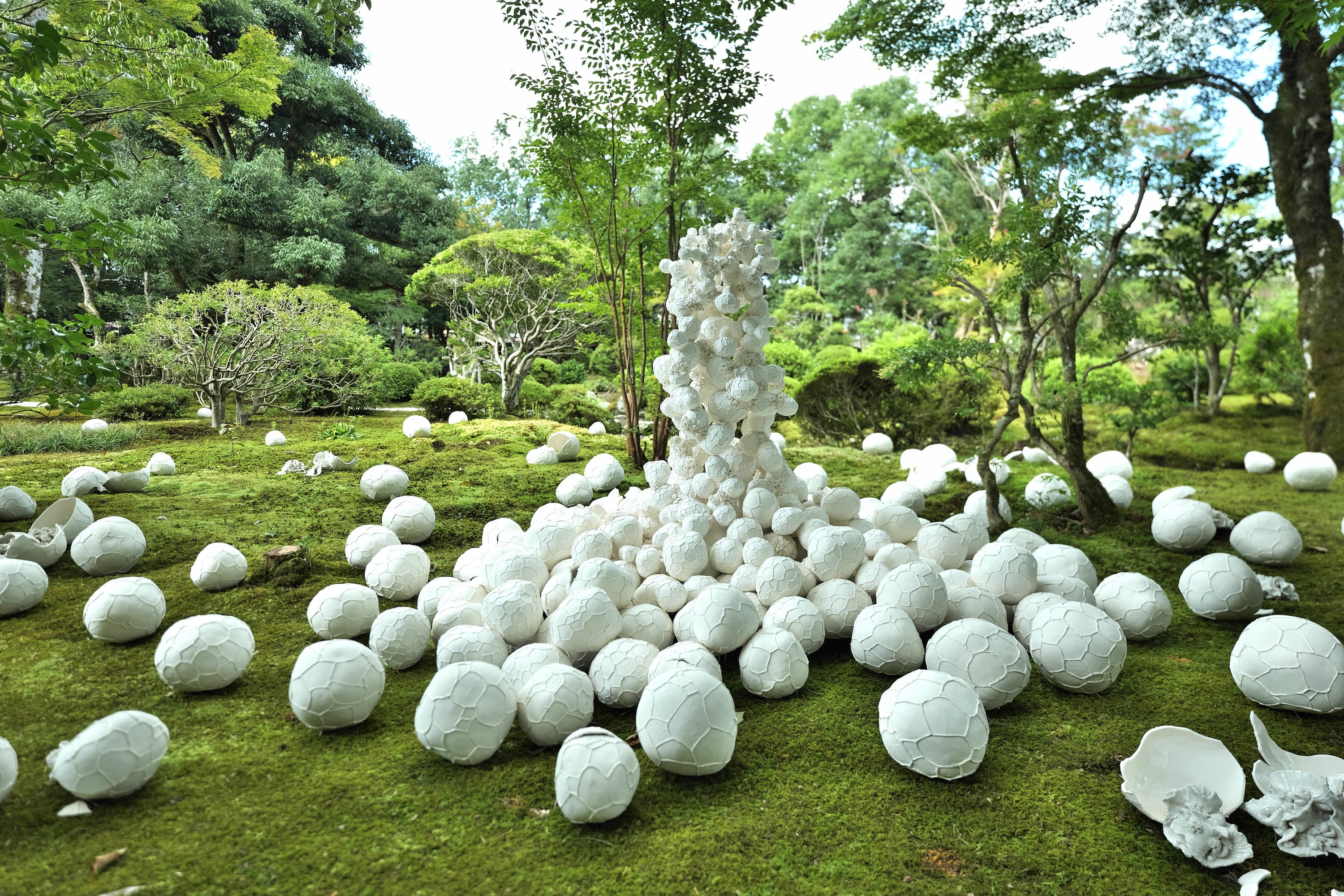
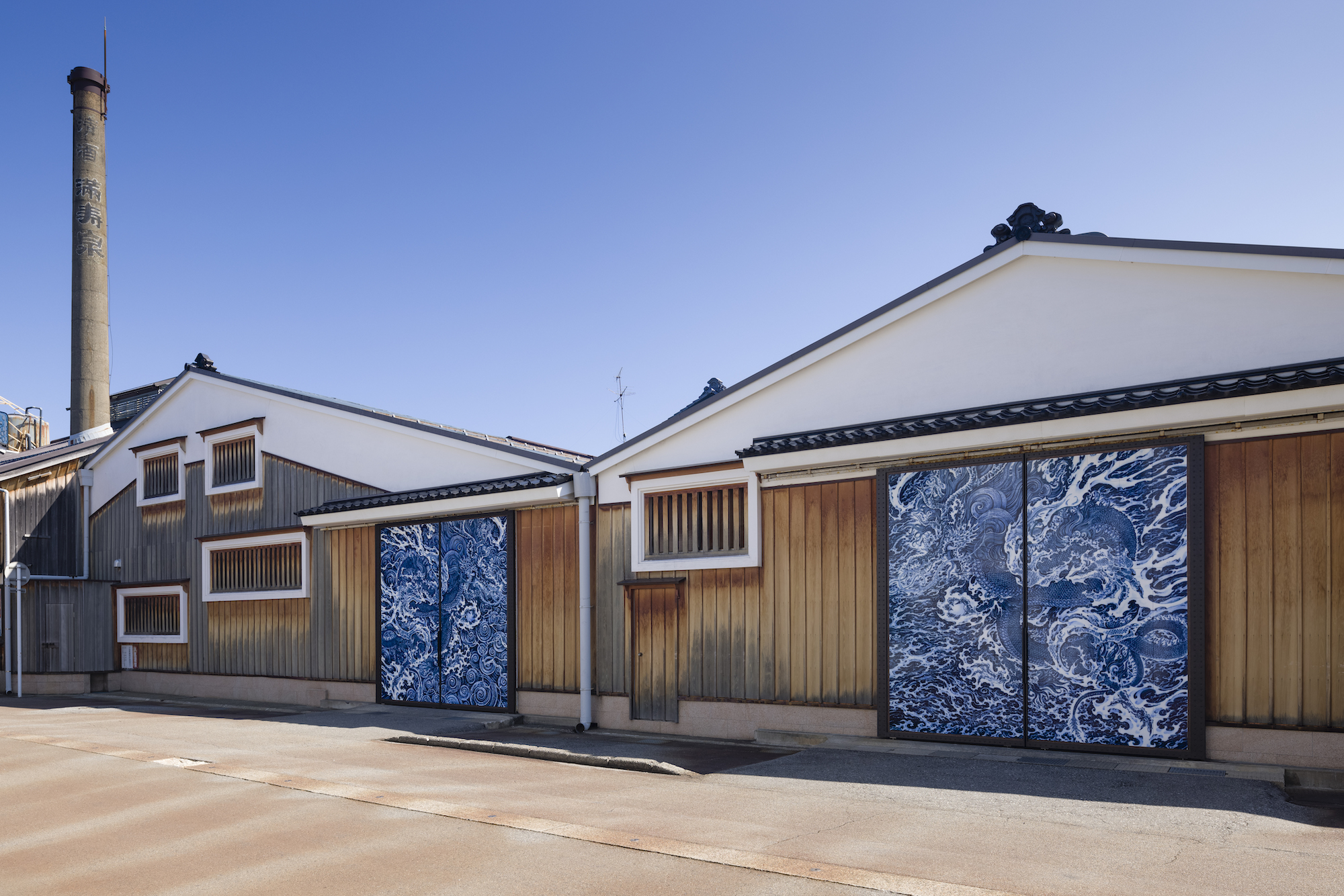
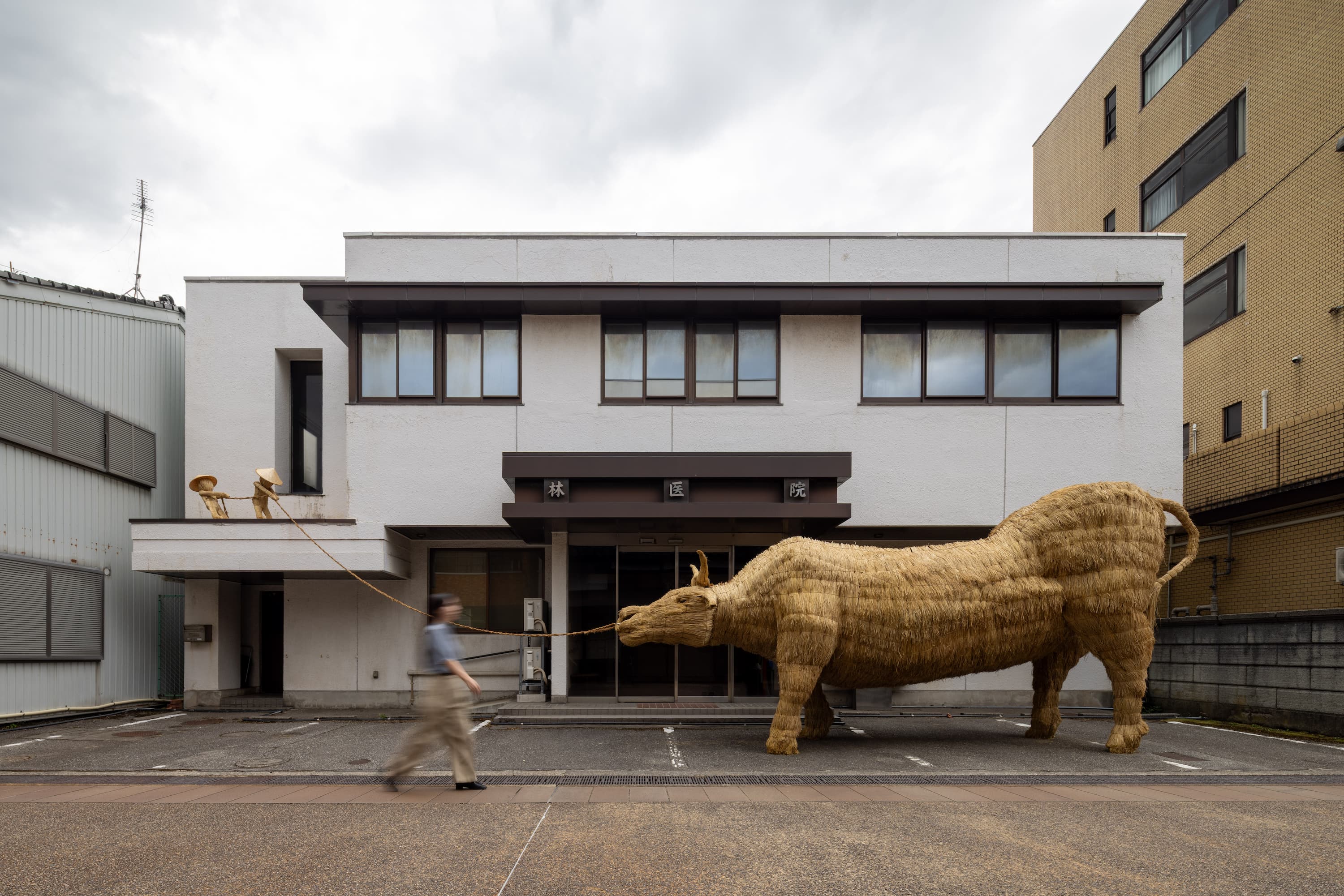
Other participating artists include Noritaka Tatehana, Yui Wata, Kazuhito Kawai, Yoca Muta, Shige Fujishiro, Takahiro Komuro and Mayu Nakata, whose installations are pictured below.