Each year, dealers and art lovers from around the world head to Art Fair Tokyo to experience the pulse of Japan’s art scene. As one of the country’s largest and most prestigious art fairs, it draws together many of Japan’s most prominent galleries — including heavyweights like Tomio Koyama Gallery, ShugoArts and Taro Nasu — alongside a vibrant mix of international exhibitors. It’s a rare opportunity to browse antiques and contemporary installations all at once.
This year’s fair — taking place between March 13 to 15 — welcomes 141 participating galleries, with a lineup that feels more diverse than ever. Among the highlights are works that push the boundaries of their respective mediums, from Momoko Fujii’s breathtaking straw creations that combine modern sculpture and heritage craft, to Motohide Takami’s surrealistic dioramas that challenge our perspective on disaster and emotional distance.
Read on to learn about some of the standout artists from Art Fair Tokyo’s 20th iteration.
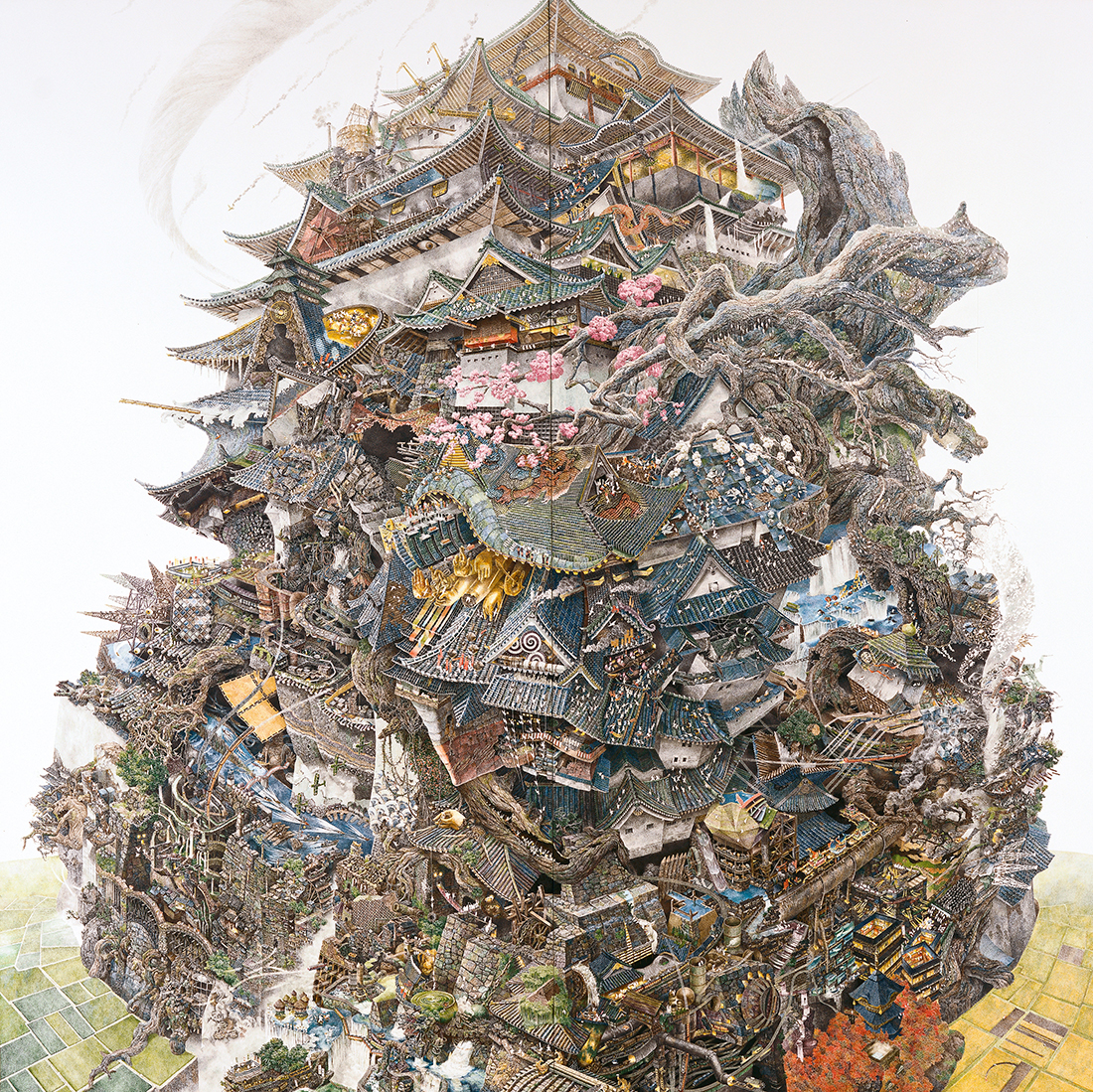
Manabu Ikeda, “History of Rise and Fall” (2006). Courtesy of Mizuma Art Gallery.
Manabu Ikeda
A master of maximalism, Manabu Ikeda is celebrated for his vast, intricate dreamworlds that demand awe from a distance and careful inspection up close. These beautifully chaotic compositions even inspired Daniel Kwan, one of the writers of the film Everything Everywhere All At Once (2022). Ikeda works with a level of patience that’s almost superhuman, using a less-than-one-millimeter-thick pen to create fine lines on the canvas for hours on end at a time. This painstaking approach continued even when Ikeda dislocated his dominant shoulder; the artist spent months training himself to draw with his left hand to complete his masterpiece, Rebirth.
Scenes are found within scenes in Ikeda’s works. Often, a giant central image — like a massive wave inspired by Hokusai’s iconic motif — reveals endless tiny stories when you step closer. Inspired by the vast nature he encountered while living in Canada and the resilience he witnessed after the 2011 Great East Japan Earthquake, Ikeda explores the tension between human civilization and the natural world. For instance, “History of Rise and Fall” (2006) blends elements like shrines, moats, roots and rivers into one hypnotic, mythical conglomeration. You can find it on display at Mizuma Art Gallery’s booth.
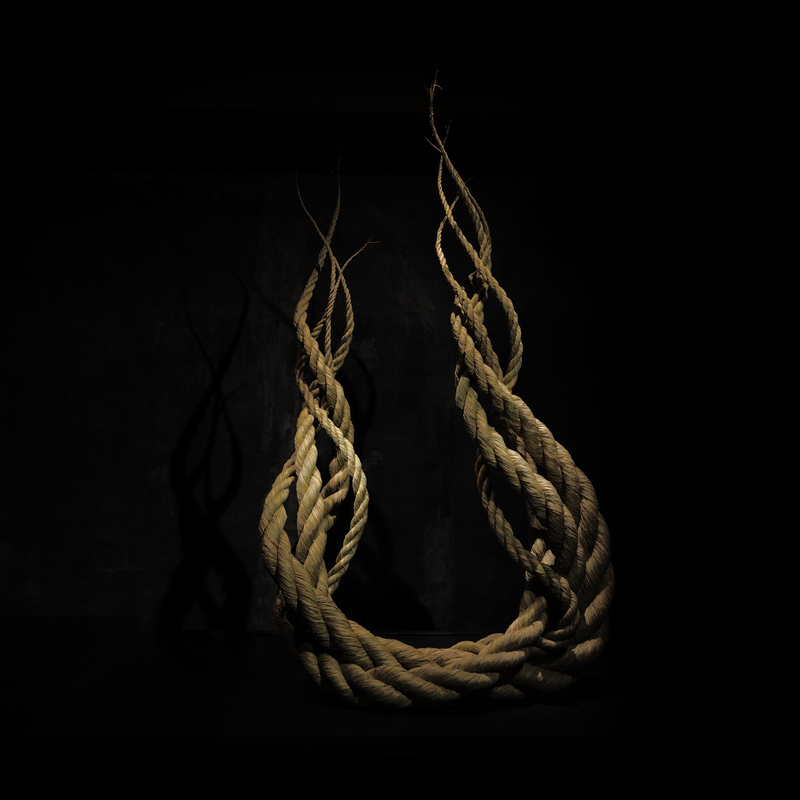
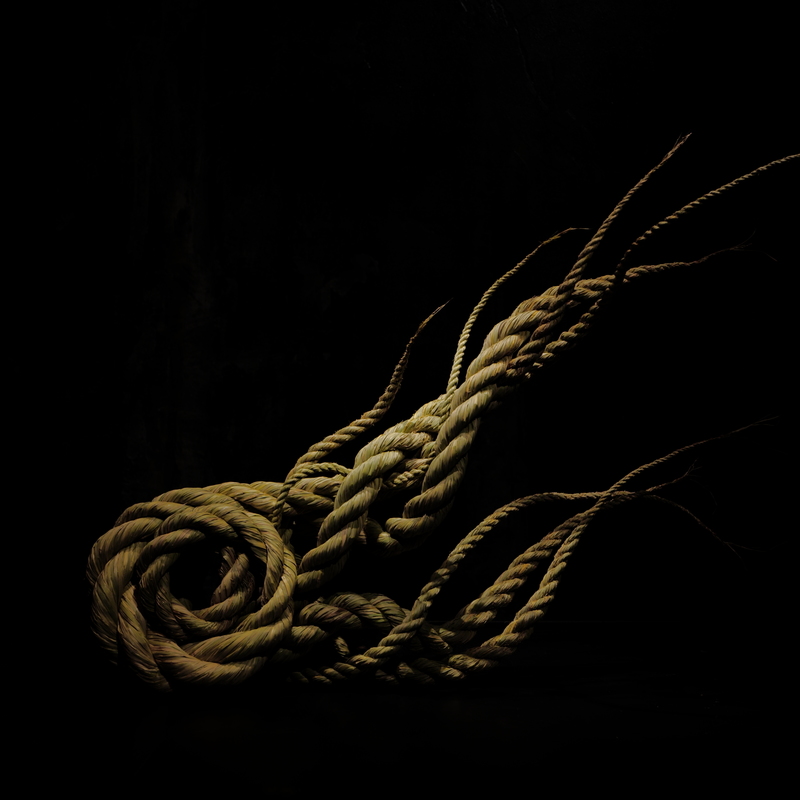
Momoko Fujii
Momoko Fujii is a Kyoto-based artist breathing new life into the ancient Japanese craft of straw weaving. She is represented by Osaka’s Wa Gallery. Although she is widely known for her intricate jewelry pieces, the works on display at this year’s fair showcase a much more ambitious, sculptural side of her oeuvre. Born and raised in the mountain district of Hanase, Fujii grew up with straw as a functional staple of daily life and eventually found herself returning to the medium.
Her dedication to the medium is total; she personally cultivates and harvests a specific variety of rice called asahi mochi, which grows over 120 cm tall to provide the thick, firm stems necessary for her large-scale works. These installations explore the boundary between the mundane and the divine, inspired by traditional forms such as shimenawa (sacred straw ropes) and bales. Beyond holding exhibitions, Fujii leads workshops in Kyoto to preserve the heritage of straw crafts, and even supplies shimenawa for the Gion Festival, one of Japan’s largest and most famous festivals.
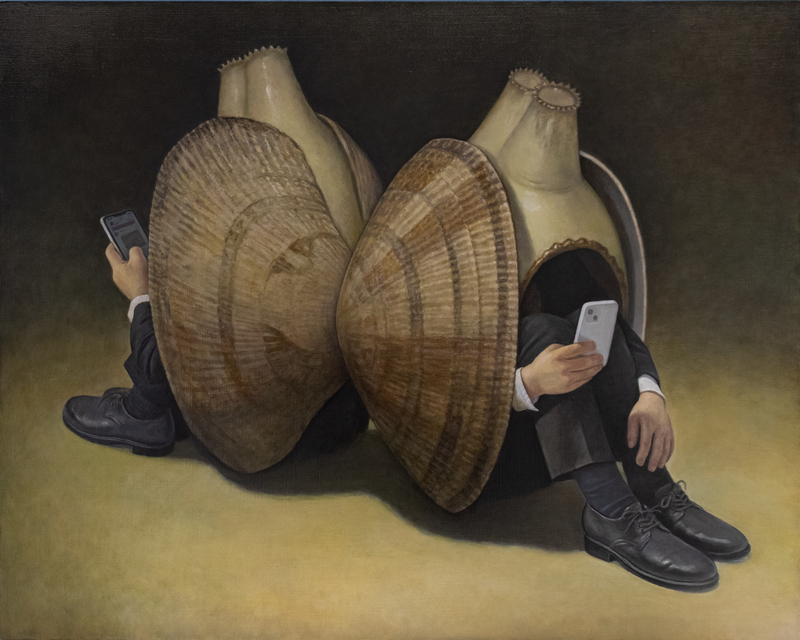
Tomoaki Ichikawa, “Two Clam Heads” (2026), Courtesy of K Contemporary and Art Fair Tokyo.
Tomoaki Ichikawa
Tomoaki Ichikawa has built a singular reputation for blending the unsettling with the familiar, most well-known for his Kaijin (humanoid monster) series and children’s book illustrations. He is represented by K Contemporary at the fair. One of the most frequently featured figures in his works is the “Asariman” — a surreal fusion of clam (asari) and the Japanese salaryman. Sandwiched between calcified shells, these faceless suits evoke the haunting, faceless enigmas of René Magritte, transforming the corporate uniform into a literal exoskeleton of survival.
Representing a generation often reduced to their productivity, the headless, suit-clad creatures were partly inspired by the artist’s own experience of Japan’s “Lost Decades” following the collapse of the bubble economy. The metaphor also stems from the kanji character for “shell,” which forms the root of Japanese words for wealth, debt and commerce. “In today’s neoliberal society, my feelings are extremely similar to those of Asariman,” Ichikawa states. “Rather than simply being a self-portrait, I personally believe that Asariman could become a symbol of our generation.”
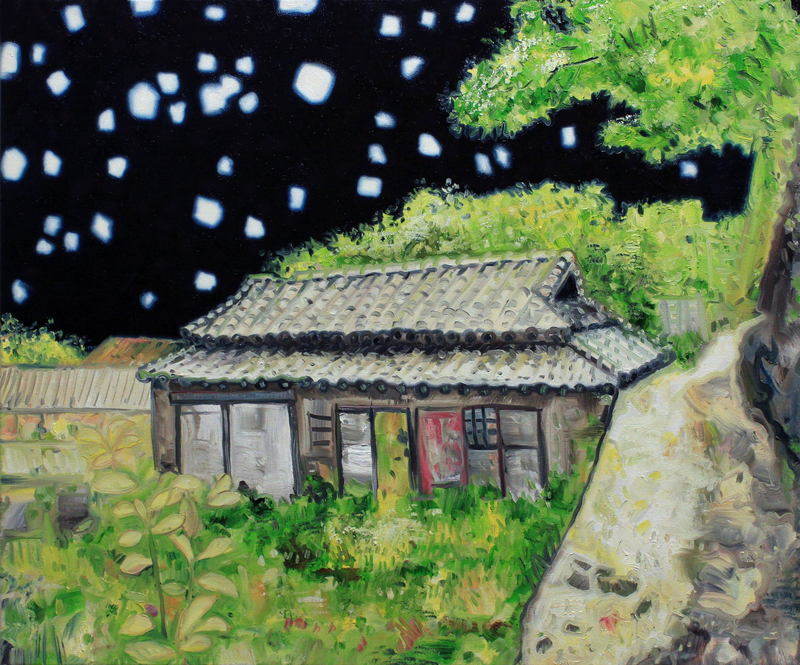
Oscar Oiwa
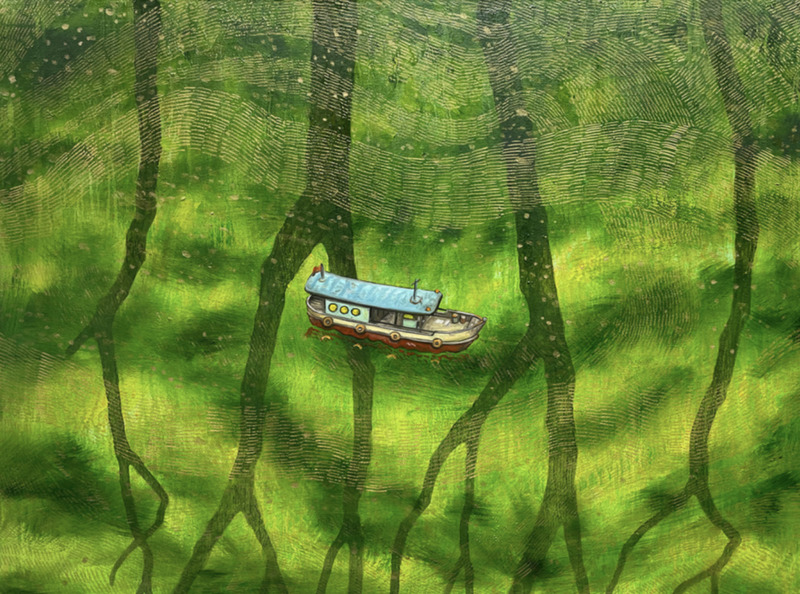
Oscar Oiwa is a Brazilian-born Japanese artist whose expansive practice is defined by his unique perspective as someone living in the “world in between.” He is represented by Lurf Gallery and New York’s Goca by Garde at the fair. Born in São Paulo to Japanese immigrants and currently based in New York, Oiwa draws from his experience moving between cultures to create immersive, large-scale paintings and installations that blur the lines between reality and imagination. Many of his works revolve around a fusion of urban and natural landscapes, enveloped by bursts of light.
These magnetic paintings function as narrative landscapes, where issues such as environmental change and urban density are rendered with a sense of whimsy and swirling energy. Colorful, animated and mythical at once, his visual language is singularly striking. “I treat the landscapes as a living, unstable space, where city, nature and memory intersect,” he states. “[My approach] opens an opportunity to reflect on how we exist in this fragile and ever-changing world.”
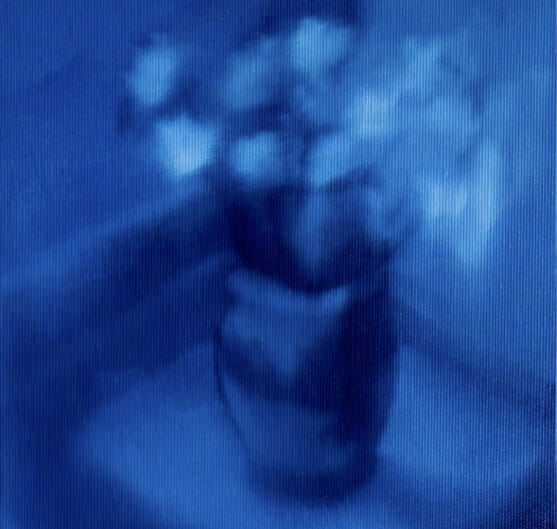
Madeleine Skrzynecka, “Full Moon Night” (2025). Courtesy of Loww Gallery and Art Fair Tokyo.
Madeleine Skrzynecka
Haunting, melancholic and dreamlike, Madrid-based artist Madeleine Skrzynecka’s paintings are instantly memorable. Originally from Poland, Skrzynecka uses a distinct palette of blue and yellow to explore the delicate boundary between longing and loss. Rather than capturing specific events, her paintings focus on the soft, lingering sensations of moments that have passed. For Skrzynecka, color is a language of time: Yellow represents the warmth and light of a lived moment, while blue embodies the same moment as it fades into a memory.
Her works often show silhouettes and suspended figures caught between the past and present. “My work is a fleeting moment, an attempt to return to something that has undergone an inevitable transformation, but still remains deep within us,” she states. “It is an exploration of pain, loneliness, bonds, but above all our soul.” At the fair, Skrzynecka is represented by Loww Gallery.
Motohide Takami
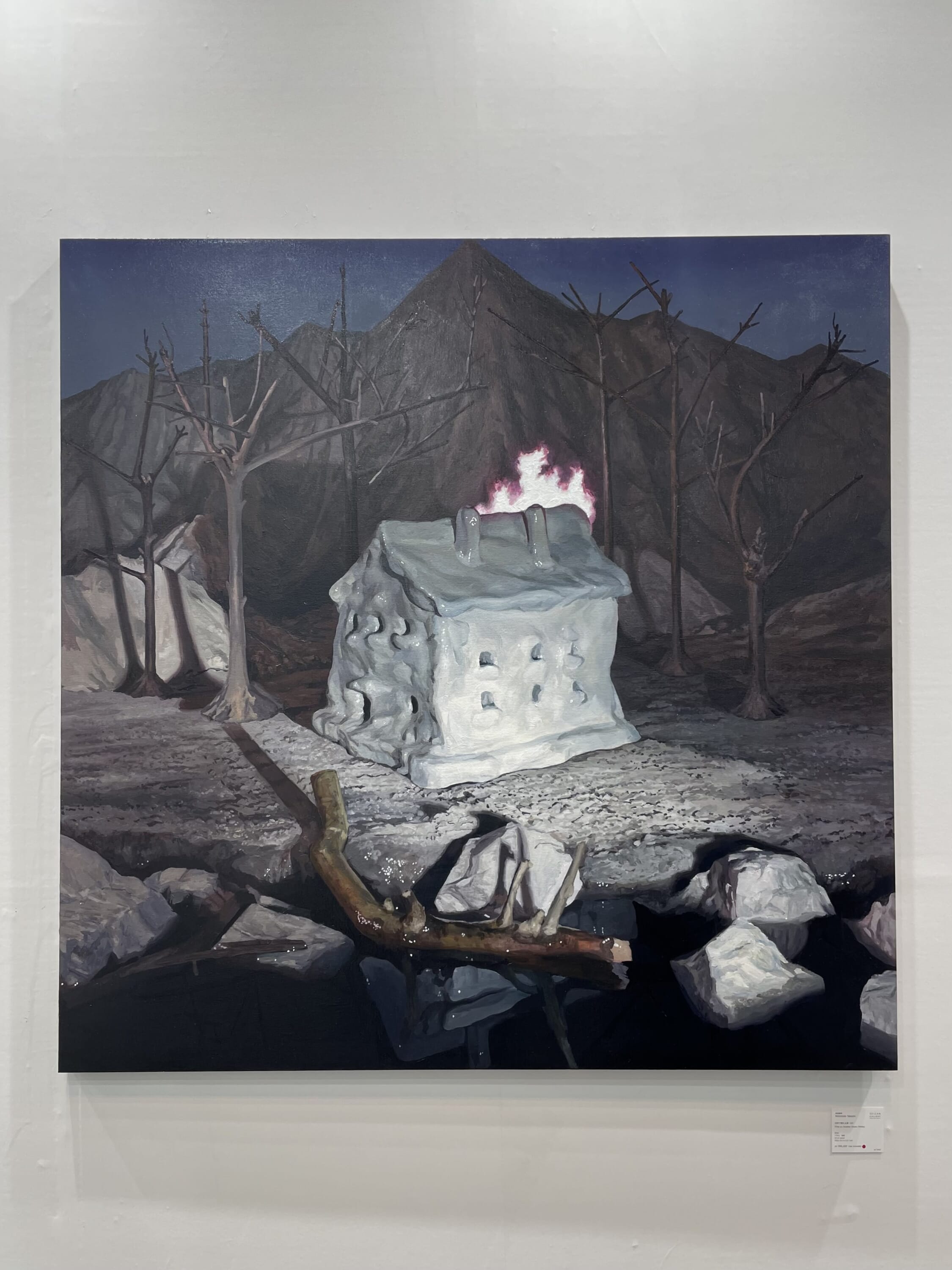
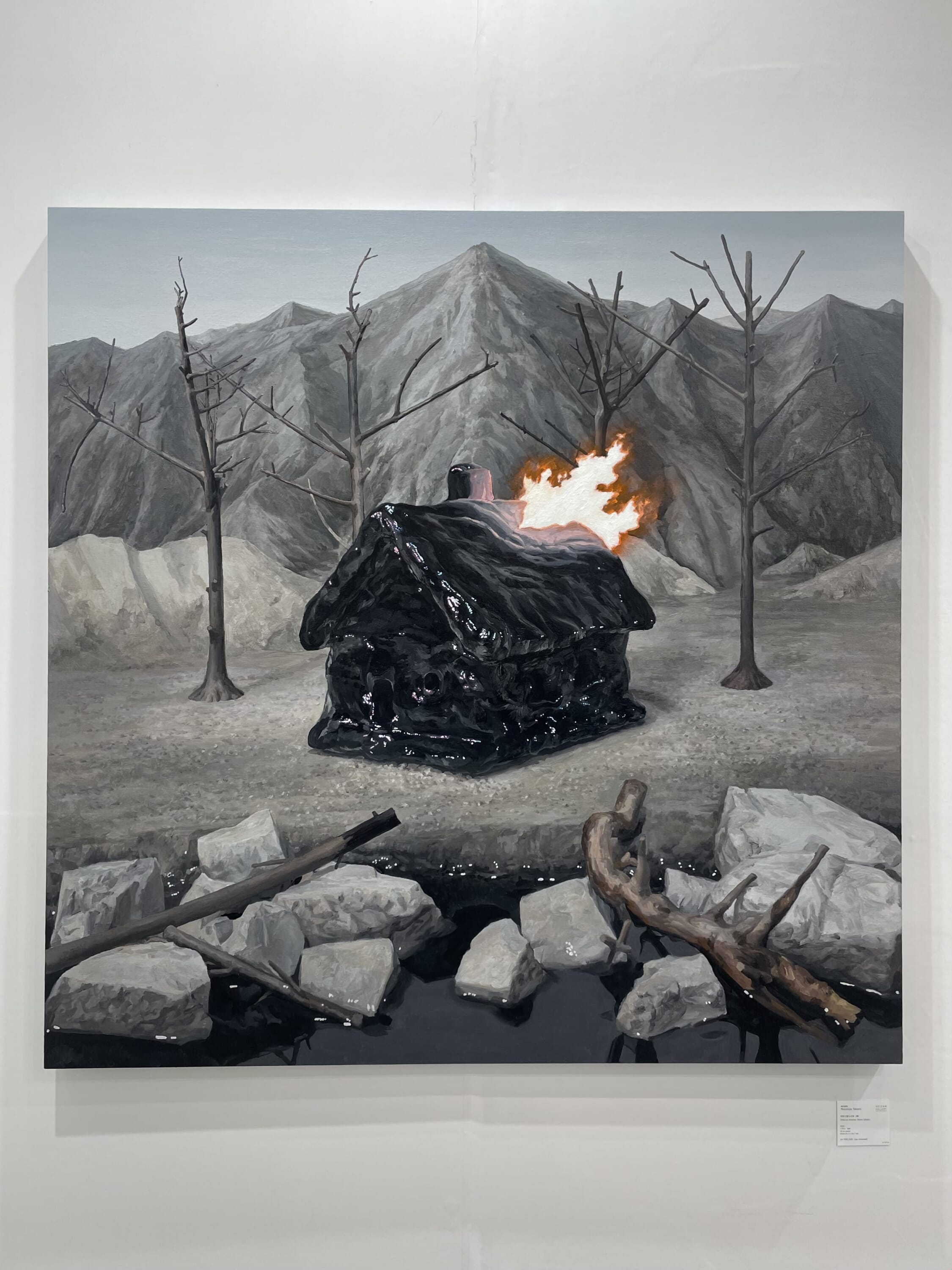
The visual intrigue of Motohide Takami’s darkly whimsical compositions lies in its distinct staged quality — which is fitting, because he actually builds miniature models and dioramas in his studio before he ever touches a canvas. Upon photographing these dioramas, Takami recreates the images using oil and chalk. The result feels stiff, eerily silent and detached.
With these dollhouse-esque works, Takami explores the uncomfortable gap between seeing a tragedy and actually feeling its impact. He was a student during the 2011 Great East Japan Earthquake, and the aftermath led him to investigate human disinterest — specifically, our tendency to watch terrible events from a safe distance. His Fires on Another Shore series embodies this notion, the title gesturing to the Japanese expression for “somebody else’s business.” Takami is represented by Seizan Gallery at the fair.
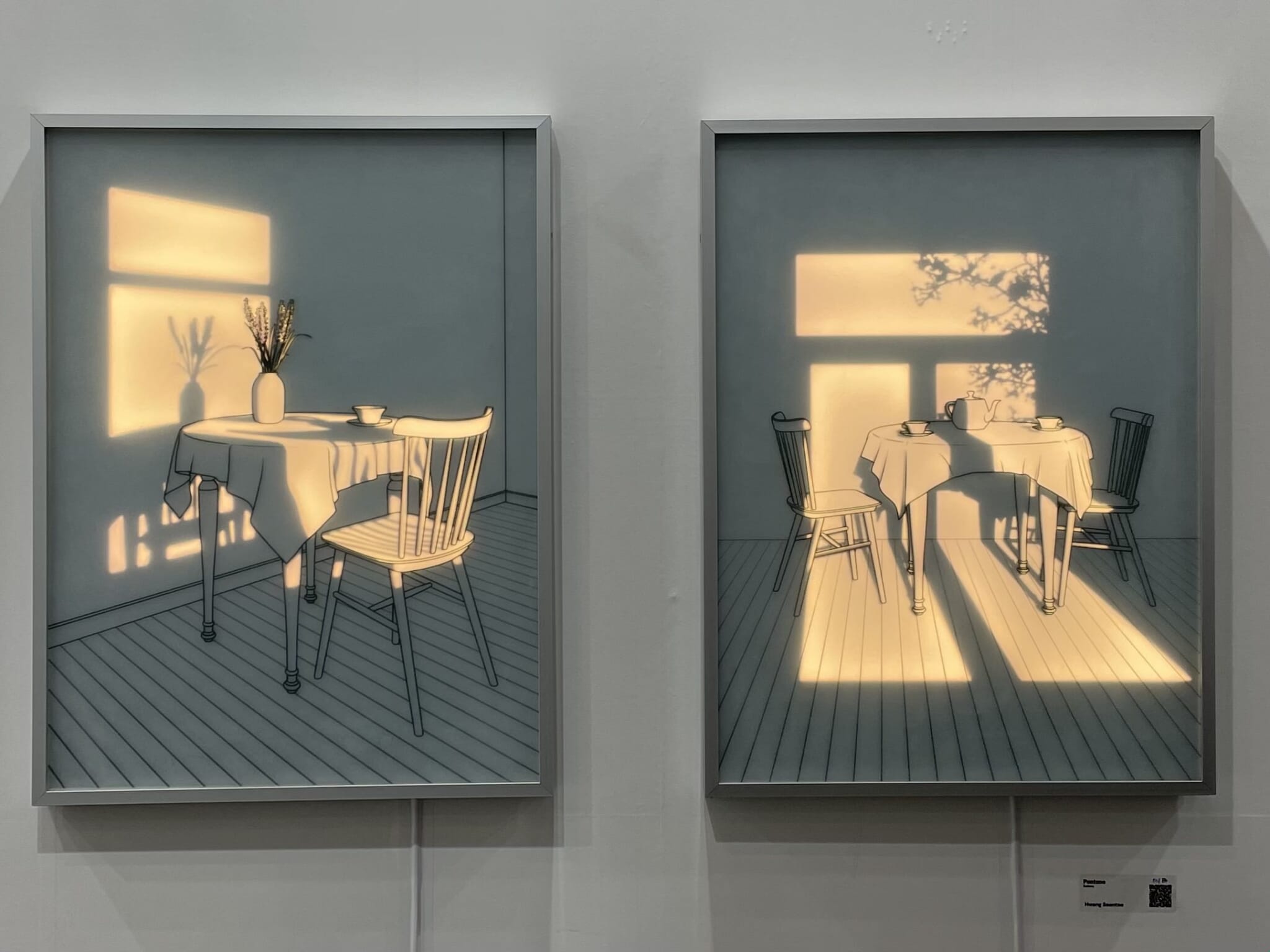
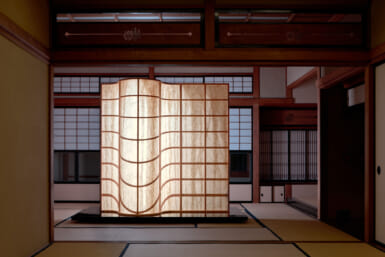
Hwang Seontae, Left: “The Space with Sunshine IV” (2025) Right: “The Space with Sunshine III” (2025). Installation View at Art Fair Tokyo. Photo by Tokyo Weekender.
Seontae Hwang
Seontae Hwang is a South Korean artist who explores the quiet drama of domestic spaces through his signature light boxes. Constructed from layers of printed and etched glass, these glowing canvases can be switched on or off like a lamp. Each box has its own light source that mimics sunlight streaming through a window, casting long shadows and soft patches of illumination across monochromatic rooms that are deserted but meticulously maintained.
The real magic of these pieces is in their feeling of stillness and anticipation; they’re peaceful and unoccupied, but awaiting the owner’s return. Transforming a simple interior into a stage for the sun, Hwang captures a fleeting sense of comfort and beauty that is perhaps only found in our most familiar, mundane environments. He is represented by London’s Pontone Gallery at the fair.
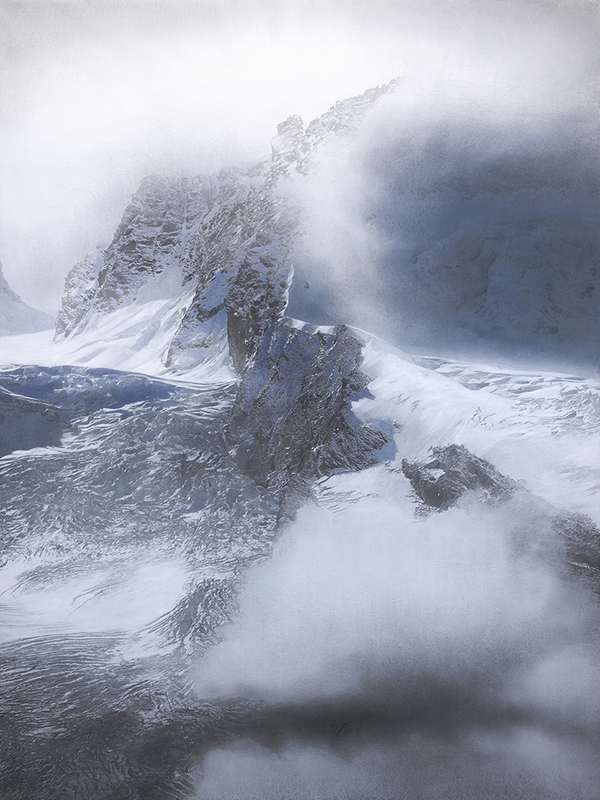
Akira Kugimachi, “Snowscape” (2025). Courtesy of Yukikomizutani and Art Fair Tokyo.
Akira Kugimachi
Using traditional Japanese materials like washi paper, sumi ink and unrefined mineral pigments, Paris-based Akira Kugimachi crafts jaw-dropping landscape paintings. His snowscapes are particularly cinematic, characterized by their sense of stillness and absence. Born in Yokohama, Kugimachi spent much of his childhood in Belgium, where his earliest creative memories involve playing in a large sandbox. This early tactile connection to nature evolved into a desire to portray landscapes that feel ancient and enduring.
Inspired by a winter journey through the Swiss-Italian border, Kugimachi aims to capture the primordial beauty of a world that feels untouched by humans. To achieve this effect, he uses a technique he calls the “aesthetics of withdrawal.” Instead of painting sharp objects or busy details, he spends 90% of his process layering white pigments to create an opaque, airy depth. The result is a landscape that feels like a silhouette or a memory. He is represented by Yukikomizutani at the fair.
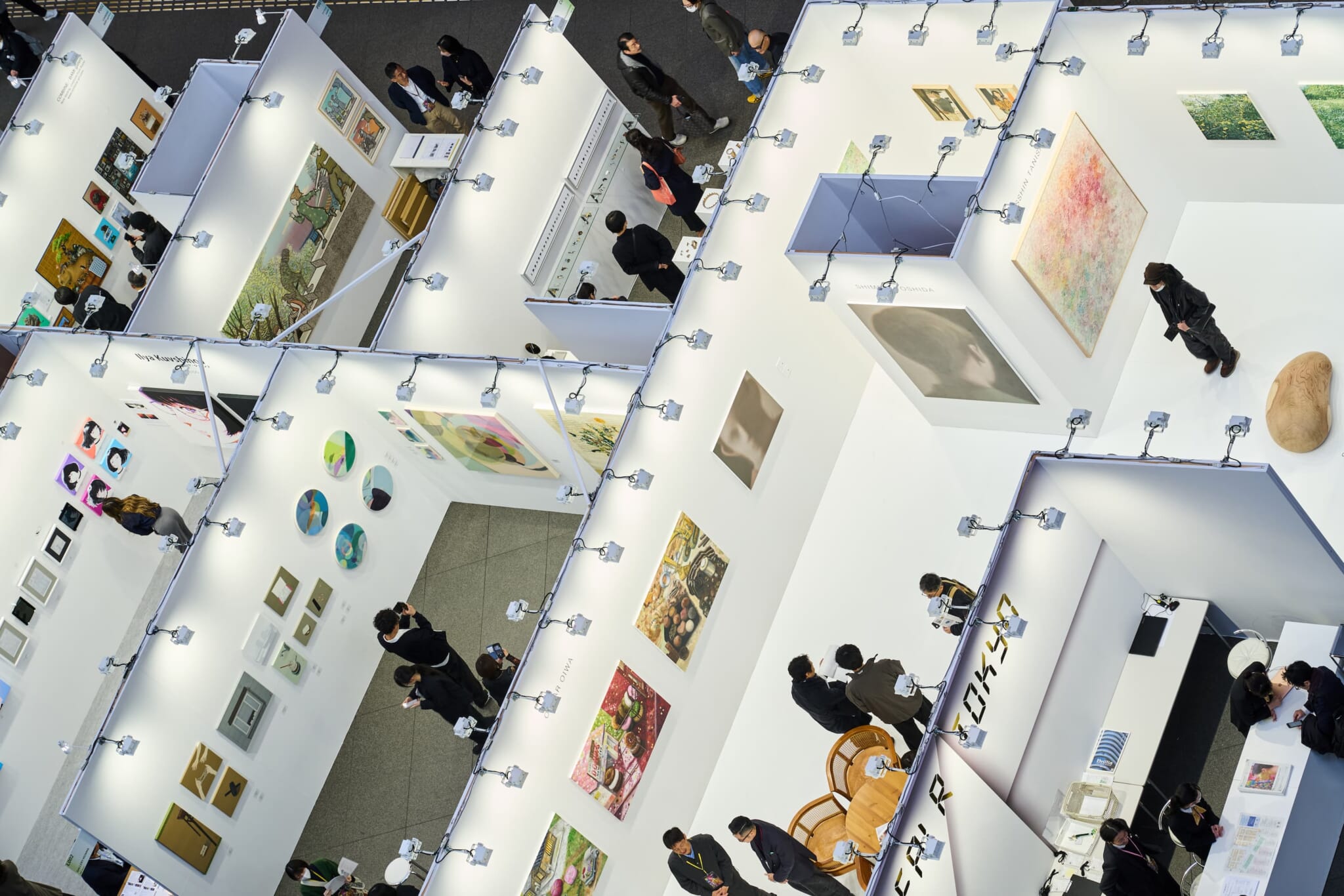
courtesy of art fair tokyo
Related Posts
- Contemporary Artists To Watch in 2025 From Art Fair Tokyo
- 7 Must-See Tokyo Art Exhibitions This March
- Lesser-Known Art Museums in Tokyo
Updated On April 22, 2026