The first sound is always the same. Before the sun hits the ridgeline, before the hikers begin tightening their pack straps, a metal ladle knocks against an industrial pot in a dark kitchen. It’s 4:30 a.m. at Enzanso, and the staff are already awake, preparing miso soup for 200 people who slept inside the hut’s wooden dormitories the night before.
Outside, the sky is a thin blade of silver. Inside, steam rolls across the dining hall as hikers shuffle in, still half-asleep, still wearing headlamps. They sit at long communal tables, eating grilled fish and rice, their boots waiting patiently by the entrance in neat lines. This is the choreography of the Japanese alpine hut, practiced for more than a century.
Japan’s sanso, or mountain huts, are part of the infrastructure that makes the Northern and Southern Alps accessible. They are not hotels, nor are they basic shelters; they are a rare hybrid — part refuge, part cultural artifact — maintained by families and staff who spend entire summers living at nearly 3,000 meters. Each hut is different, with its own history, architecture, food culture and responsibilities. Together, they form one of the most distinctive mountain traditions anywhere in the world.
Yarigatake Sanso
Yarigatake Sanso: A Lodge on Japan’s Matterhorn
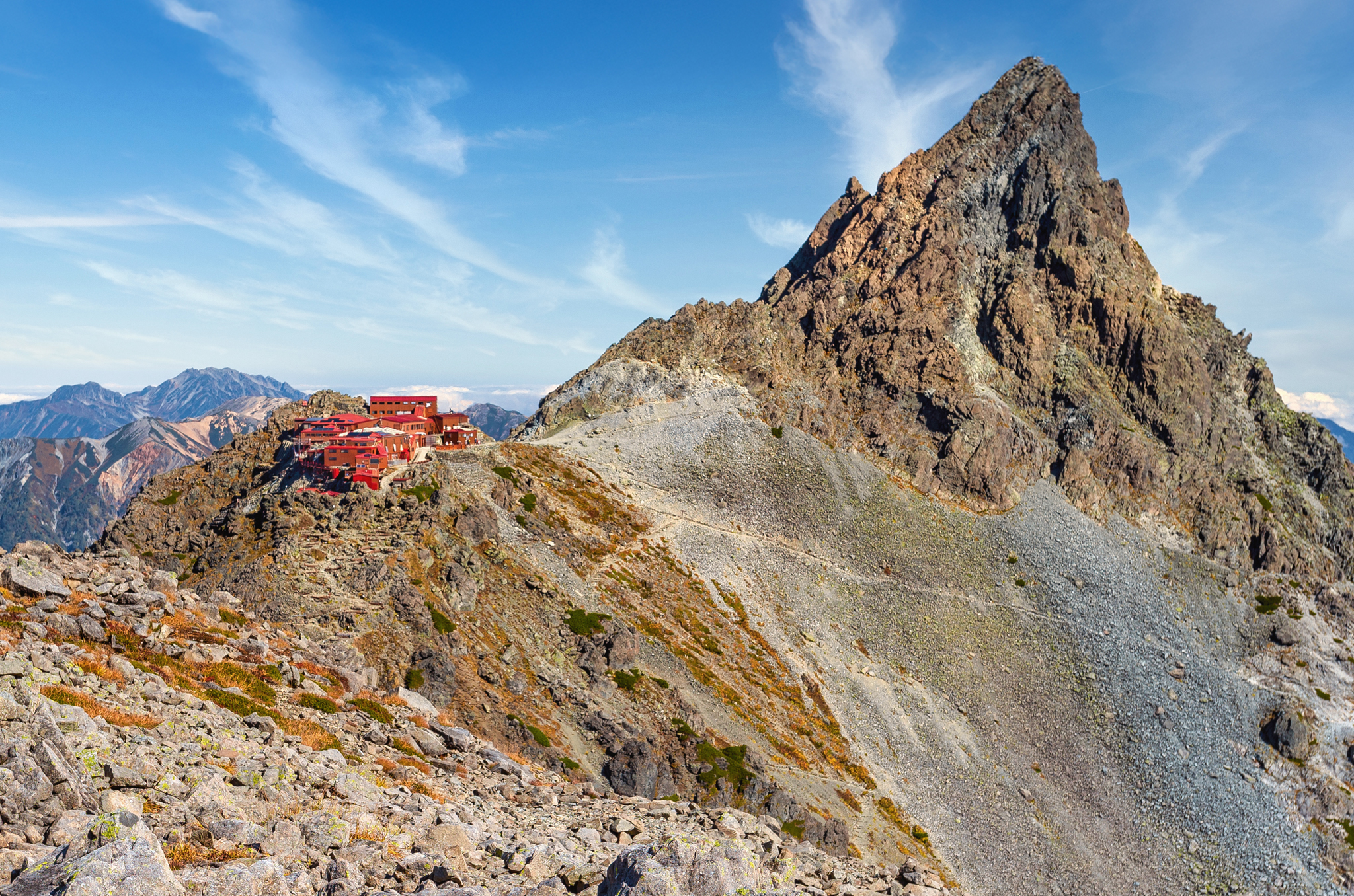
From Kamikochi — a tranquil valley in Nagano Prefecture — the classic route to Mount Yarigatake climbs past riverside lodges and up the long Yarisawa Valley. Finally, the mountain appears, a thin spear of rock breaking away from the skyline. The peak, 3,180 meters high, has been romanticized for decades as Japan’s Matterhorn for its sharply tapered summit.
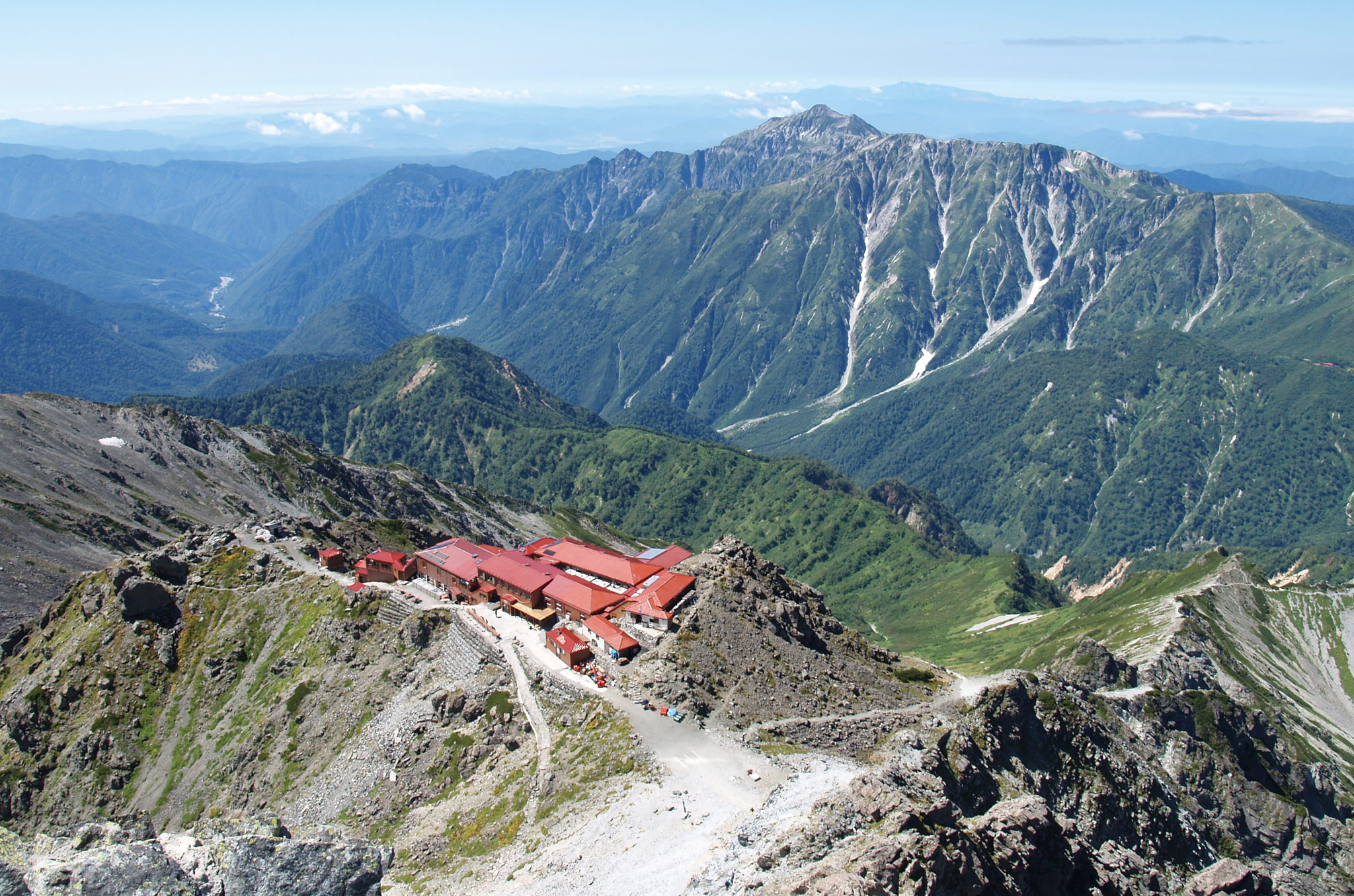
Just under a hundred vertical meters below the top, at 3,080 meters, sits Yarigatake Sanso. Officially founded in 1926, it is now one of the flagship huts of the range, with capacity for around 400 people and a business season that runs from late April to early November. Helicopters bring in bulk supplies before the main summer season. After that, everything from gas canisters to onions comes up on staff shoulders.
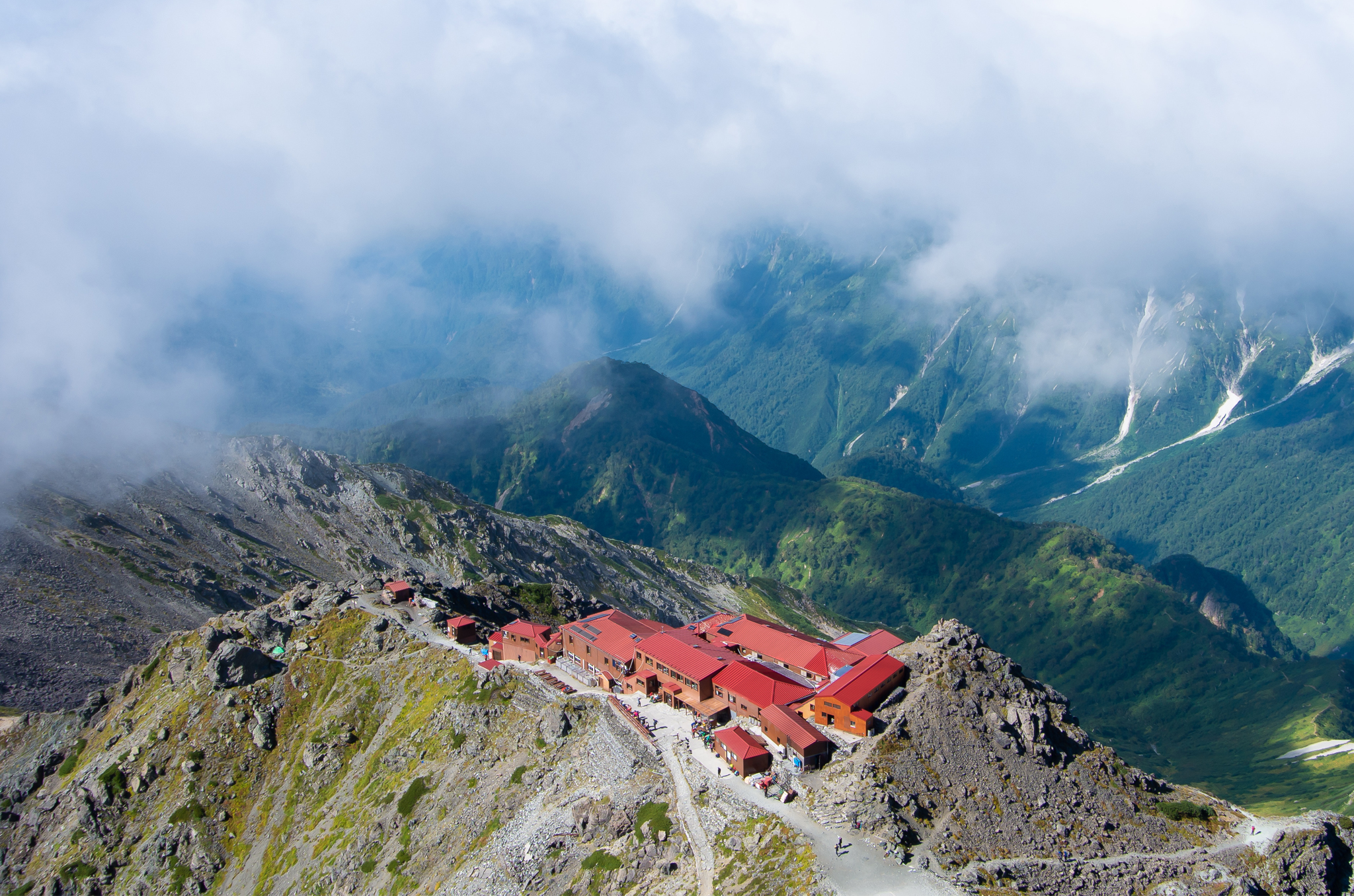
Seen from the approach, the hut looks improbably exposed: a long, low complex of red-roofed buildings clinging to the ridge just below the summit rocks. It has been expanded and rebuilt several times, but its basic function has not changed since the early Showa years. A century-story documentary made about the hut, At the Top of the Sky, follows one full season of its operations, from snowmelt to closure in November.
Inside, the experience is structured. Hikers shed boots at the threshold, check in at the front desk and are shown to communal sleeping rooms partitioned by low wooden dividers and curtains. Dinner is served at set times, typically a tray with rice, miso soup, pickles and a main dish — often a thick, Western-style curry or hayashi rice that reflects how these huts evolved alongside early 20th-century alpinism and its fascination with the European Alps. Prices for a night with two meals now sit in the mid-¥13,000 range.
On clear evenings, you step out from the dining hall and suddenly understand why Yarigatake Sanso became the anchor of a whole lodge group. The view sweeps across the entire Hotaka range, the Tateyama massif, the Central and Southern Alps and, on the best days, all the way to Mount Fuji.
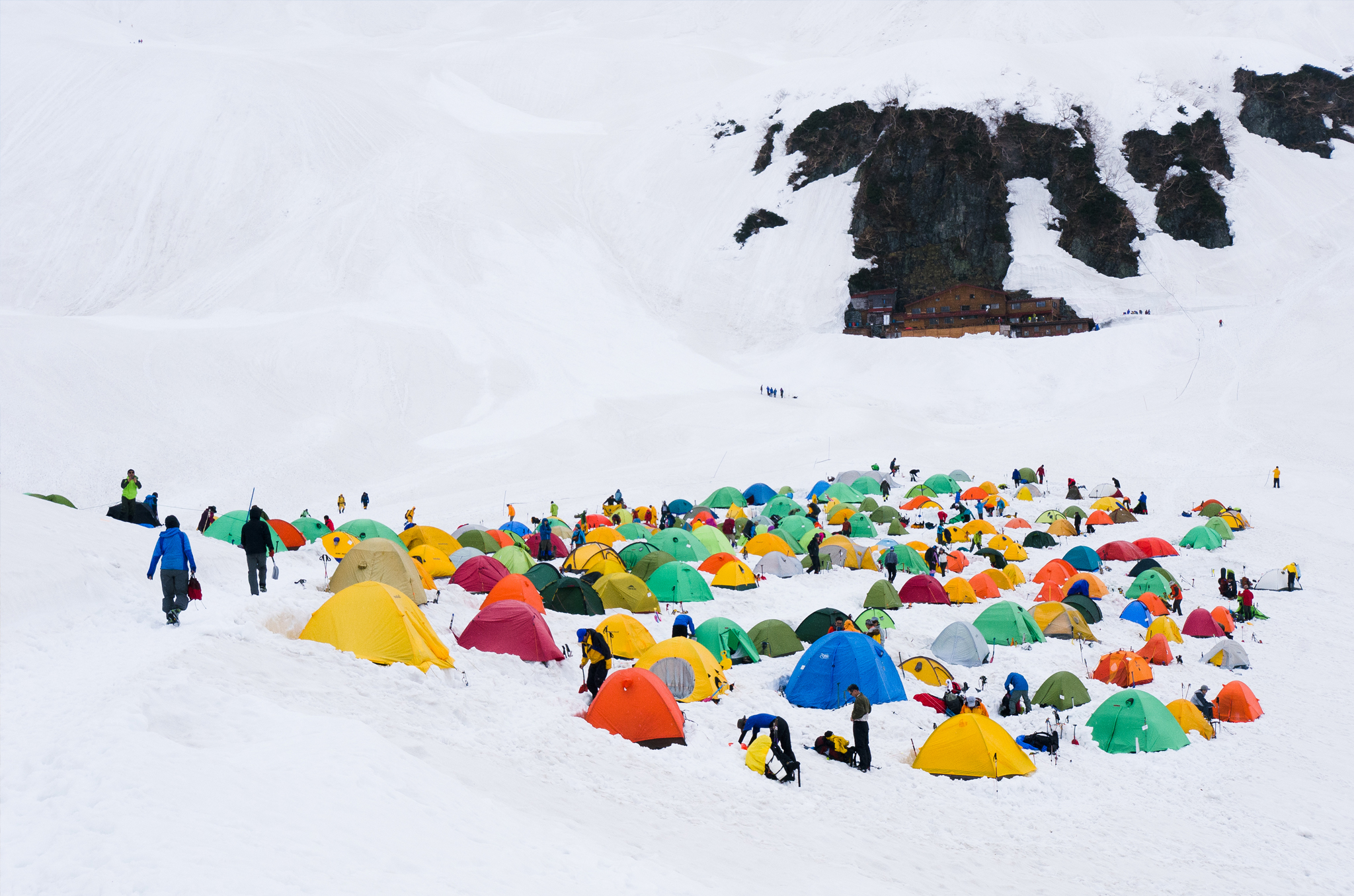
Karasawa Hütte
Karasawa Hütte: Autumn at the Bottom of a Bowl
Several valleys away, the Karasawa Cirque holds a different kind of drama. This is one of the major glacial basins of the Northern Alps, hemmed in by some of the country’s highest peaks. The cirque’s floor sits at roughly 2,300 meters, almost 900 meters below the ridgeline, and measures about 2 kilometers across. Snow clings to the rock walls late into summer; meltwater streams form the headwaters of the Azusa River that runs down through Kamikochi.
The standard approach from Kamikochi is a two-day, 30-kilometer round trip with around 800 meters of elevation gain. Once they reach the cirque, hikers don’t find a vast expanse of wilderness, but rather two substantial huts — Karasawa Hütte and Karasawa Goya — and a wide gravel bench that turns into “tent city” in high season, with hundreds of brightly colored tents.
Karasawa Hütte itself dates back to the mid-1920s, when huts began appearing in the Hotaka range in response to growing numbers of climbers. It operates as a seasonal hostel, typically from late April to early November, serving as both a base for Hotaka ascents and a destination in its own right for foliage hunters. Inside, you get the familiar mountain-hut choreography: rows of futons, low ceilings and a canteen serving hot meals. A curry plate or ramen here will run around ¥1,200 for non-staying guests; an overnight stay with two meals is usually priced in the ¥14,000 range, in line with other full-service lodges in the Alps.
One detail makes the place feel almost surreal: You can sit on the roof terrace, surrounded by vertical walls of rock, eating beef curry and oden and drinking draft beer — the kegs flown in by helicopter — while the entire cirque burns red and gold below the first October snowline.
At night, the bowl traps cold air. The sky turns brutally clear. When dawn comes, the ridges rinse through pink into yellow, a phenomenon the German-speaking staff and early European visitors once called Morgenröte, morning red.
Enzanso
Enzanso on Mount Tsubakuro: Queen of the Northern Alps
If Yarigatake is a spear and Hotaka is an amphitheatre, Mount Tsubakuro is an invitation. The mountain, rising to about 2,763 meters in the city of Azumino, is known for pale granite ridges, white sand and sweeping views in all directions. Local tourism boards market it as the “Queen of the Northern Alps,” a counterpart to the more severe “king” peaks around it.
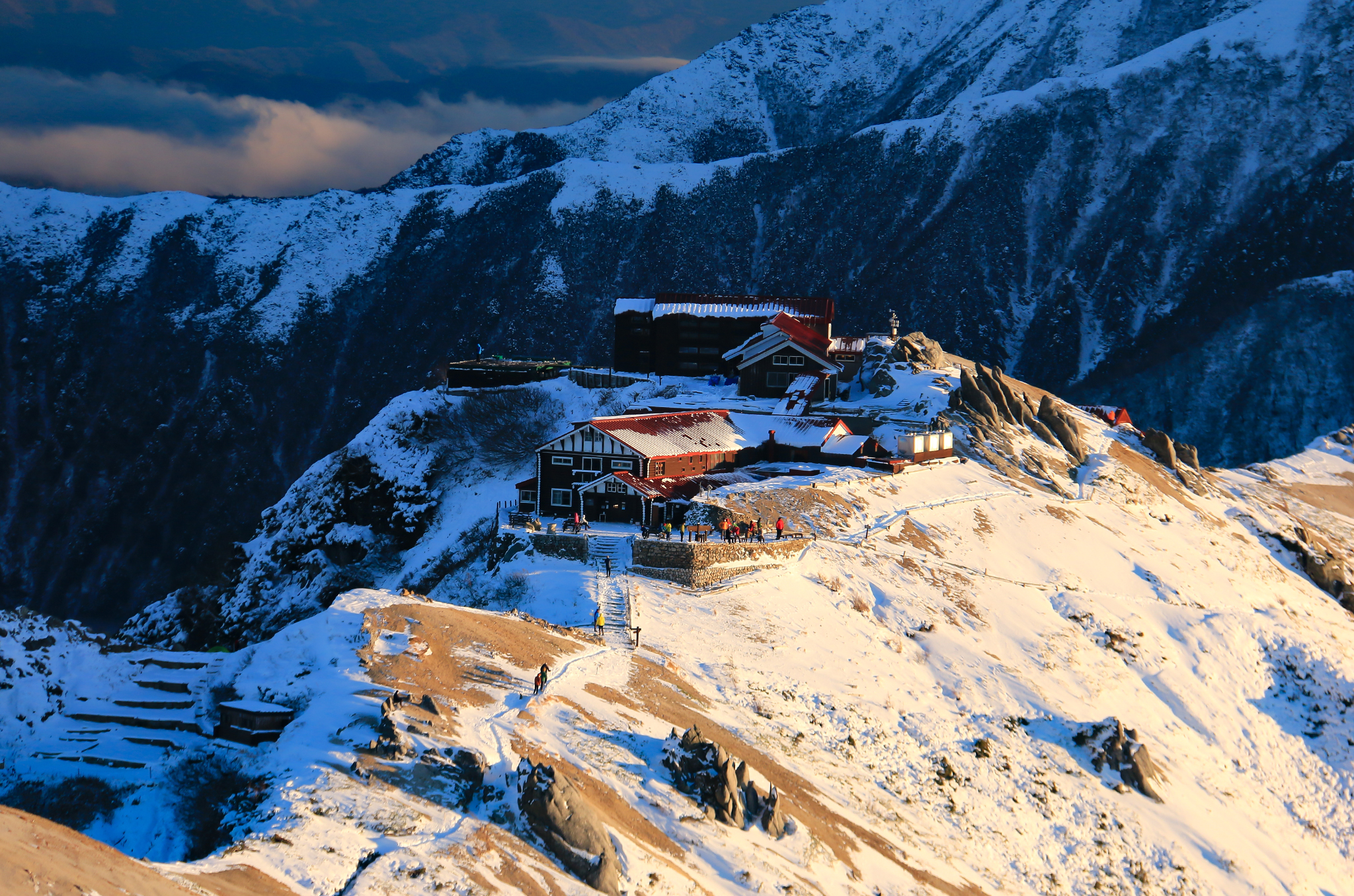
The climb from Nakabusa Onsen is steep and direct, gaining roughly 1,400 meters over six hours on a ridge called Kassen-one. At the top, just below the summit, stands Enzanso, one of Japan’s most storied huts. Built in 1921 by mountaineer Chihiro Akanuma, it was later expanded into the large, multibuilding lodge that stands today.
Capacity is around 650 people, making it one of the biggest huts in the Alps, with all stays on an advance-reservation basis. The hut is typically open from mid-April to late November, with an additional short New Year operation, and even hosts a summer mountain clinic staffed by Juntendo University’s medical alpine club.
Enzanso is where several strands of hut culture converge. It anchors the Omote Ginza traverse, the classic ridge route that runs from Tsubakuro toward Mount Otensho and eventually Mount Yarigatake, one of the most celebrated multiday hikes in the range. It has also become famous among hikers for small luxuries: cake sets and draft beer on the terrace, evening horn performances and an almost panoramic sweep of peaks — Yarigatake and Hotaka, the Jonen range, even Fuji and the Southern Alps on clear days.
The morning routine is simple. People wake around 4 a.m., pull on down jackets and step out onto the terrace. Below them, a thick inversion layer of cloud often fills the valleys of Nagano. As the sun rises behind the Yatsugatake range, the ridge turns briefly silver, then gold. Breakfast is grilled fish, rice, pickles, tamagoyaki. Hikers repack their bags and either head higher on the traverse or back down to hot spring steam and paved roads.
Yarigatake Sanso
The System Behind the Summits
Taken together, these huts describe the shape of Japan’s mountain culture more accurately than any map. Their founding years cluster in the early 20th century, the same period when recreational mountaineering, university climbing clubs and national-park policy were taking form. Their operations today still track the mountains’ own logic — business seasons set by snowmelt and typhoon cycles, pricing influenced by helicopter loads, reservation caps imposed not for exclusivity but to keep crowded ridgelines safe.
For hikers, the effect is disarmingly simple. You move through forest, rock and weather all day, then arrive at a strip of light on a ridge or the floor of a cirque. Inside, there are rows of slippers, a pot of curry steaming on the counter, hand-written weather boards and a bunk with a folded blanket. At dawn, people step outside at roughly the same time to watch the sky change. People who have nothing in common off the mountain share trays and condense their conversations to the essentials: forecast, route, time.
Japan’s hut system doesn’t soften the mountains or turn them into an amusement park. The trails remain serious; crossings like the Daikiretto Gap between Mount Minami and Mount Kita-Hotaka are among the most exposed in the country. What the huts do is quieter: They make these places inhabitable without diminishing their difficulty. They give altitude a human scale — a meal, a dry bed, a bit of order in the wind — and in doing so, they keep access and safety intertwined.
Spend a night in one, and you understand why the system has lasted a century. It isn’t comfort that keeps people coming back. It’s the way these huts let you live, briefly and respectfully, in terrain that would otherwise push you out.