
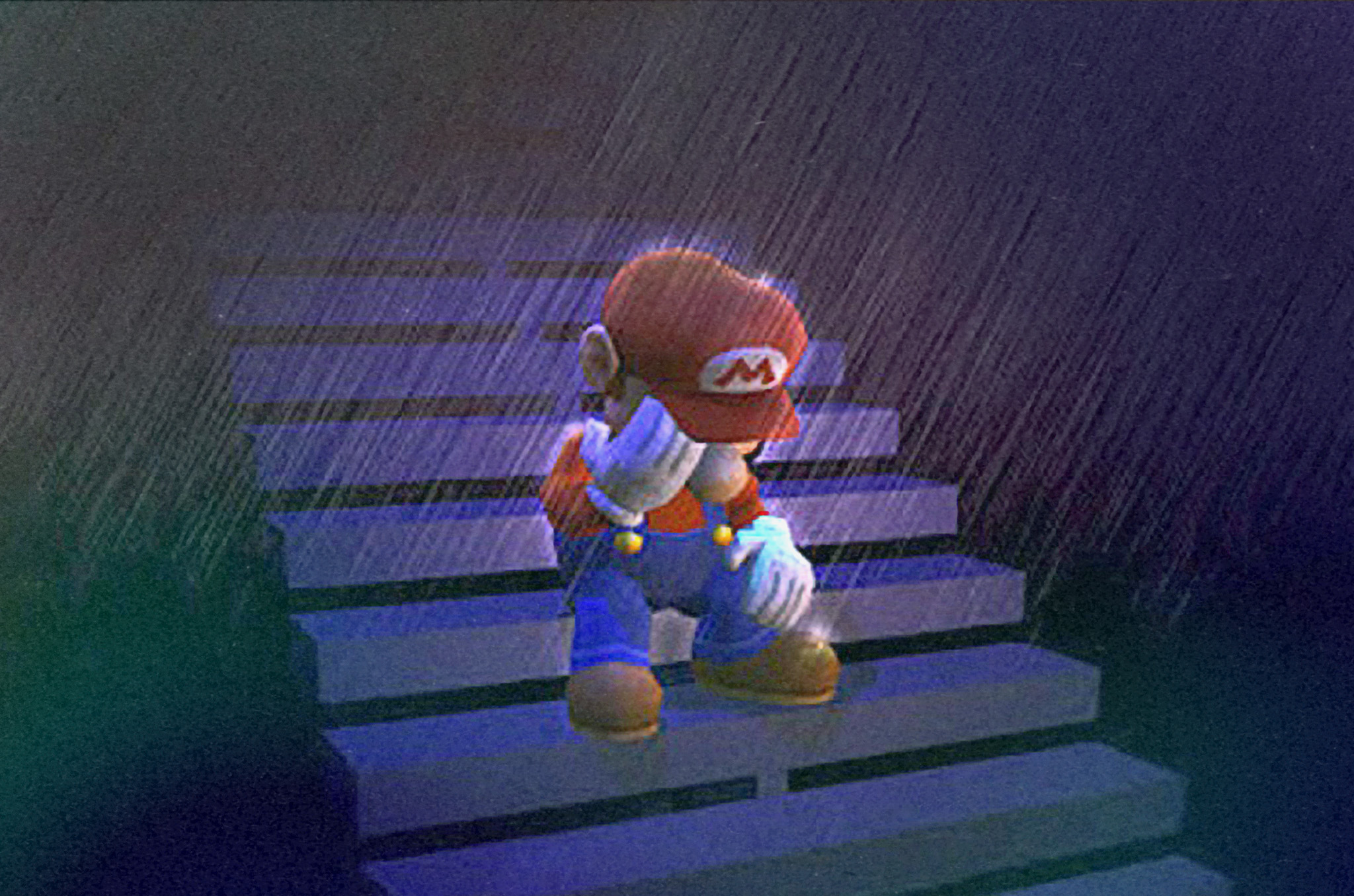
Just imagine: You’re a heavily stereotyped Italian plumber born in Japan who, rather than fixing toilets, has spent 40 years of his life repeatedly rescuing the same damsel in distress. One morning, you wake to find that she’s set her Facebook relationship status to single, and the world loses their mind, mourning a relationship that, beyond a kiss on the cheek, never existed. Your inbox is blowing up, blame flying in every direction. You’ve got nine missed calls from your brother and a Snapchat from a fire-breathing tortoise that you can’t bring yourself to open. You then pull on the only pair of overalls the world has ever seen you in and go out to save her once again, because that’s all you were programmed to do.
This is exactly what Nintendo have done to their golden boy, Mario, blindsiding him via text. But while this revelation may have come as something of a shock to the world’s most famous tradesman, it also raises the question: How much of this is our fault?
The Breakup Text
Our story begins on the Nintendo Today app, a pocket calendar of sorts that allows users to customize their phone with Nintendo-related themes while also delivering updates on their consoles, games and trivia pertaining to their most beloved characters. In a message — since removed from the app due to the daily nature of its updates, but immortalized on X via screenshots — Nintendo officially stated: “Princess Peach and Mario are good friends and help each other out whenever they can.”
It’s unclear what prompted Nintendo to distribute this information, and in the days since, it appears that both Peach and Mario have declined to comment on the situation. What has been apparent, though, is how heavily invested people were in a relationship that was never confirmed to exist — a revelation that suggests that we, collectively, decided on one of two things: Either Mario was only putting in the effort because he and Peach were lovers, or that the act of him saving someone who had been kidnapped was deserving of more than just thanks.
Were We Led On?
Thankfully, I don’t have any idea what it’s like to be kidnapped by a menacing tortoise and locked in a castle surrounded by lava and ruin. At the same time, I have no trouble imagining someone, regardless of orientation, giving their rescuer a kiss on the cheek upon realizing that they were being saved from a life of torturous tortoise marriage. That was all Peach ever did upon meeting her savior. As we all grew up watching Mario’s eyes turn to hearts in response at the end of each game, we decided that they were an item — as if it would have been more normal for her to shake his hand and ask if they could stop at McDonald’s on the way home.
Of course, I’m playing contrarian here. Of everyone I’ve spoken to about this, not one person was of the belief that Mario and Peach were just friends — myself included. The story of a woman in danger being rescued by her embattled lover is a tale as old as storytelling itself. Batman, Indiana Jones, The Bodyguard, Drive. They and countless others all did it and continue to do it, and critics and audiences alike will always pay to see it. It’s a time-worn formula that, when done well, works. So much so that we probably can’t help but go looking for it. Nintendo just let us fill in the blanks with Mario and Peach. The issue now is that those blanks no longer exist.
What Was Really Lost
Ultimately, I think the real reason this became an international topic of interest is because Mario and Peach have been a part of all our lives in one way or another; when something so enduring is unexpectedly and unnecessarily altered, we can’t help but have a reaction to it. Nintendo’s announcement doesn’t change anything. The games will still play out the same way (unless this is foreshadowing a title in which Mario goes on some kind of bachelor’s trip to Vegas, mushrooms included (Nintendo, if you need a writer, I’m available)). But what it does do is alter people’s perception of something that they more than likely associate with the better times in their life and memories that they created for themselves.
Whether it’s in books, films or video games, we need stories. But perhaps just as much, we need gaps in these stories — parts we can fill in for ourselves, which allow us to put our own perceptions and experiences into a work, making it our own in a roundabout way. Nintendo’s declaration of Mario and Peach’s platonic relationship may have given us a chance to examine how we fill in those gaps.
But maybe it’s better not to know everything. Perhaps we’d all prefer to guess and speculate about these fictional characters and their relationship to one another. Now, for better or worse, we need not wonder any longer.
Related Posts
- What Super Smash Bros Character Are You Based on Your Zodiac Sign?
- How To Find Tokyo’s Secret Nintendo Bar
- Inside the Nintendo Museum: Everything Revealed So Far
Updated On July 29, 2025