Before Japan was linked by expressways and bullet trains, it was held together by footpaths. These narrow trails — cut through forests of Japanese cedar, terraced fields and mountain passes — carried more than travelers. They carried devotion, imperial processions, regional trade and the slow movement of stories from one province to the next. Walking them now reveals how tightly faith, terrain and rural culture were woven long before modern infrastructure arrived.
Rooted in nature worship and shaped by evolving currents of Shinto and Buddhism, an extensive network of pilgrimage routes developed across the islands of Japan over the course of several centuries. Among them, three stand out for their endurance and clarity of purpose: the Kumano Kodo, the Shikoku Henro and the Aizu 33 Kannon. Each developed in a different era, under different religious philosophies, serving different communities. Together, they form a cross section of the country’s spiritual and geographic identity.
Kumano Kodo
Kumano Kodo has been an active pilgrimage system for over 1,000 years, and it’s one of only two pilgrimage networks in the world granted UNESCO World Heritage status. Located in the Kii Peninsula, one of the most mountainous and rainfall-heavy regions in Japan, the network winds through Wakayama and extends into Mie and Nara prefectures.
During the Heian period, emperors and aristocrats undertook what were called Kumano-mode, long and often grueling journeys from Kyoto southward into the interior of the peninsula. Their destination was the Kumano Sanzan — the three grand shrines of Kumano Hongu Taisha, Kumano Nachi Taisha and Kumano Hayatama Taisha, which are believed to offer purification and rebirth. But the trails aren’t merely a means to an end; the process of walking them, too, is seen as a spiritual experience.
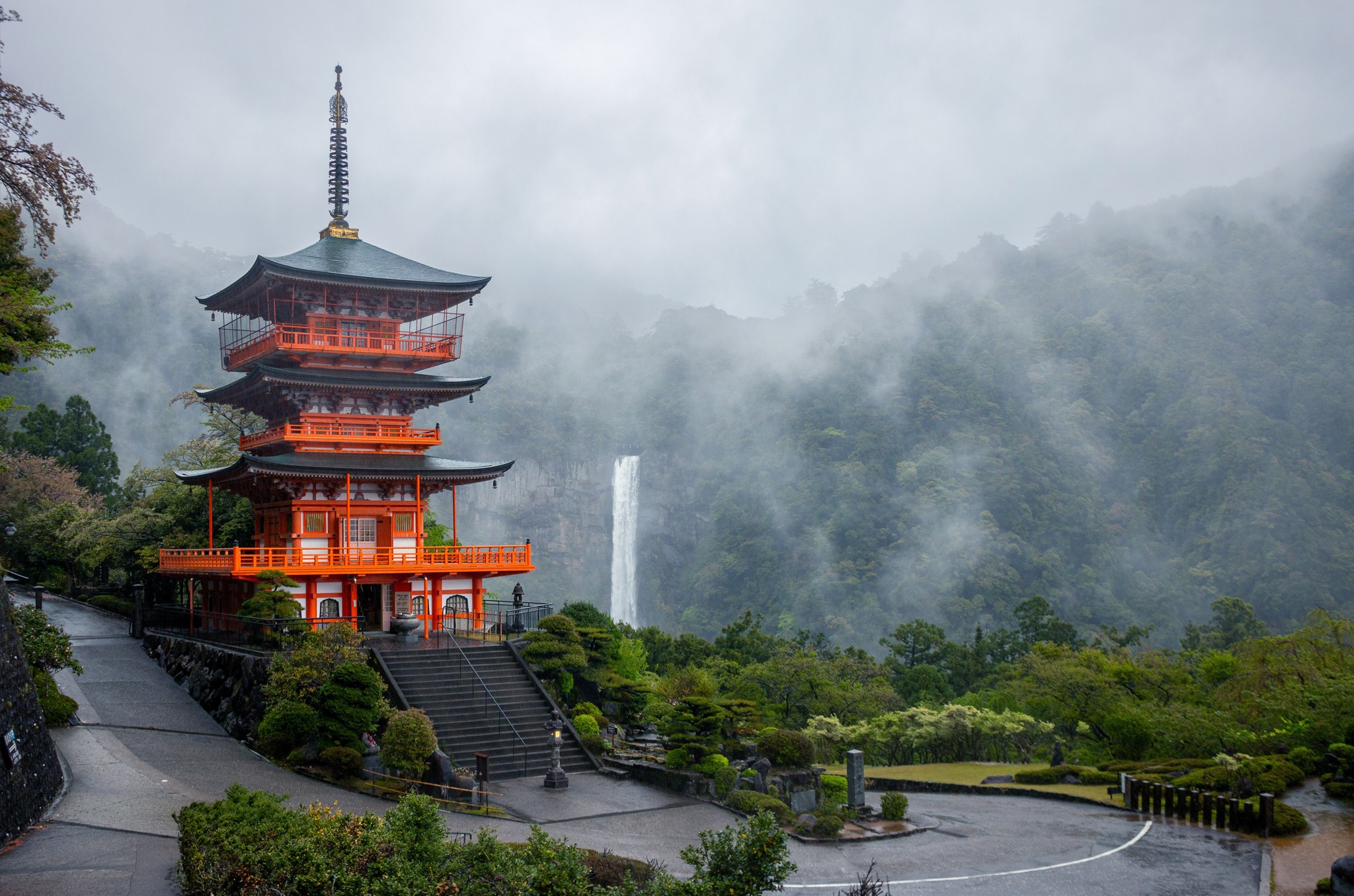
Today, many of the routes that made up the original Kumano Kodo are still intact, with the Nakahechi route remaining the main route, and also the best preserved. The classic Nakahechi trek begins at Takijiri-oji, the spiritual entrance to the sacred Kii mountainscape, and ends at Kumano Nachi Taisha — a distance of around 70 kilometers.
The trail rises through old-growth forest, traverses moss-covered stone stairways and finally drops down to the riverplain that’s home to Kumano Hongu Taisha, nestled peacefully in the forest. From there, the hike continues toward Kumano Nachi Taisha, set alongside the sacred Nachi Waterfall, which drops 133 meters in a single, uninterrupted sheet. The highest straight drop in Japan, it creates a natural climax far older than any shrine architecture beside it.
Infrastructure along the Nakahechi is unusually robust for a rural pilgrimage. Accommodation ranges from family-run minshuku, serving homemade local dishes, to refined ryokan with onsen fed by volcanic springs. Trail signage, waystations and interpretive boards make the route navigable even for first-time visitors; it’s also possible to skip portions of the trek by using public transportation, should you so desire.
What’s striking is how much of the route’s character remains intact: small oji shrines once used by imperial processions still stand, hamlets like Chikatsuyu and Hosshinmon retain their historical footprints and teahouses operate much as they did a century ago.
Shikoku Henro
The Shikoku Henro is in a category of its own. This 88-temple pilgrimage loops roughly 1,200 kilometers around the island of Shikoku, which contains four prefectures — Tokushima, Kochi, Ehime and Kagawa. It’s one of the world’s longest continuous pilgrimage circuits and can take 30 to 60 days to complete in full, though many travelers opt to traverse just a small portion of the circuit at a time.
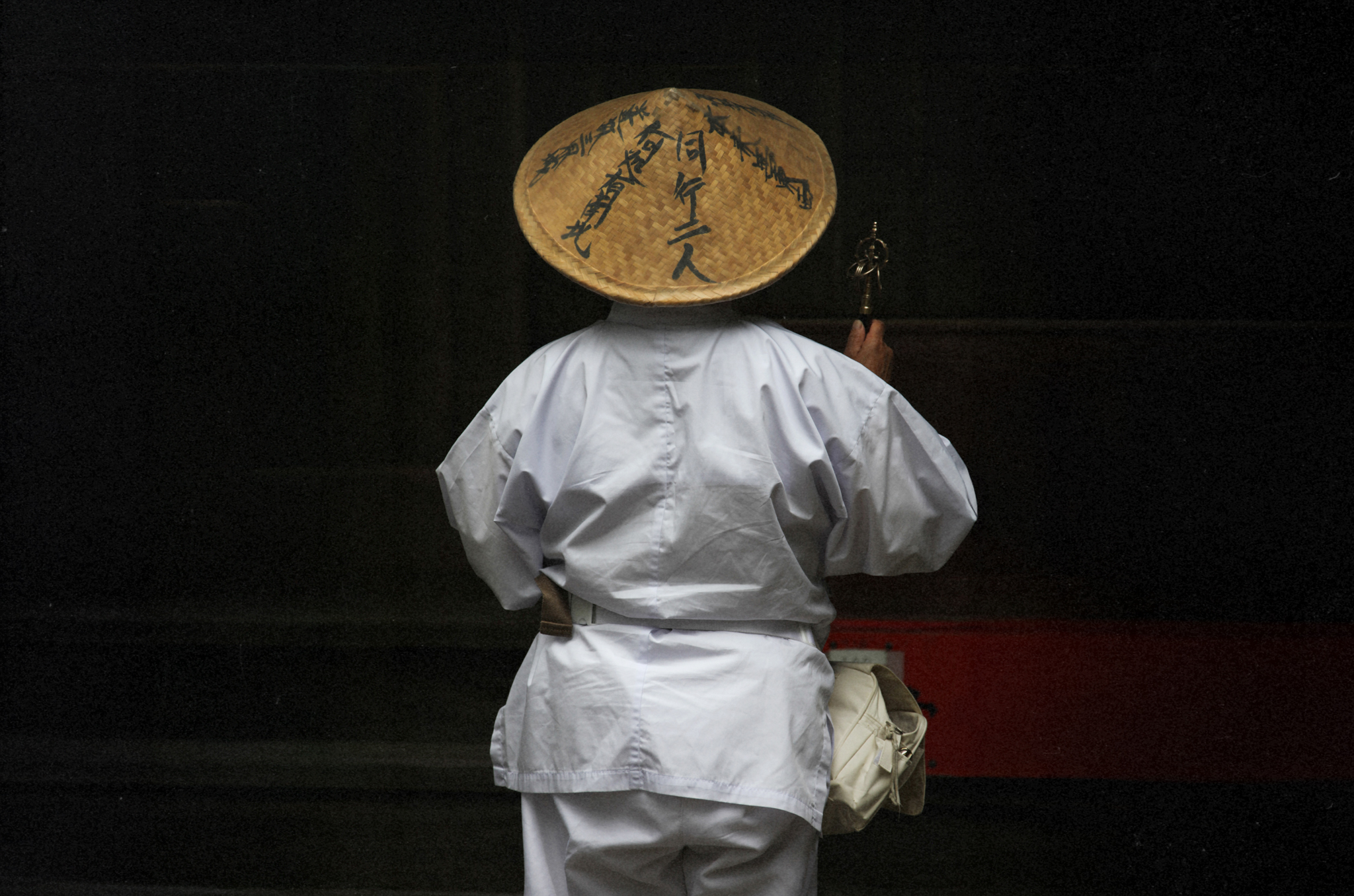
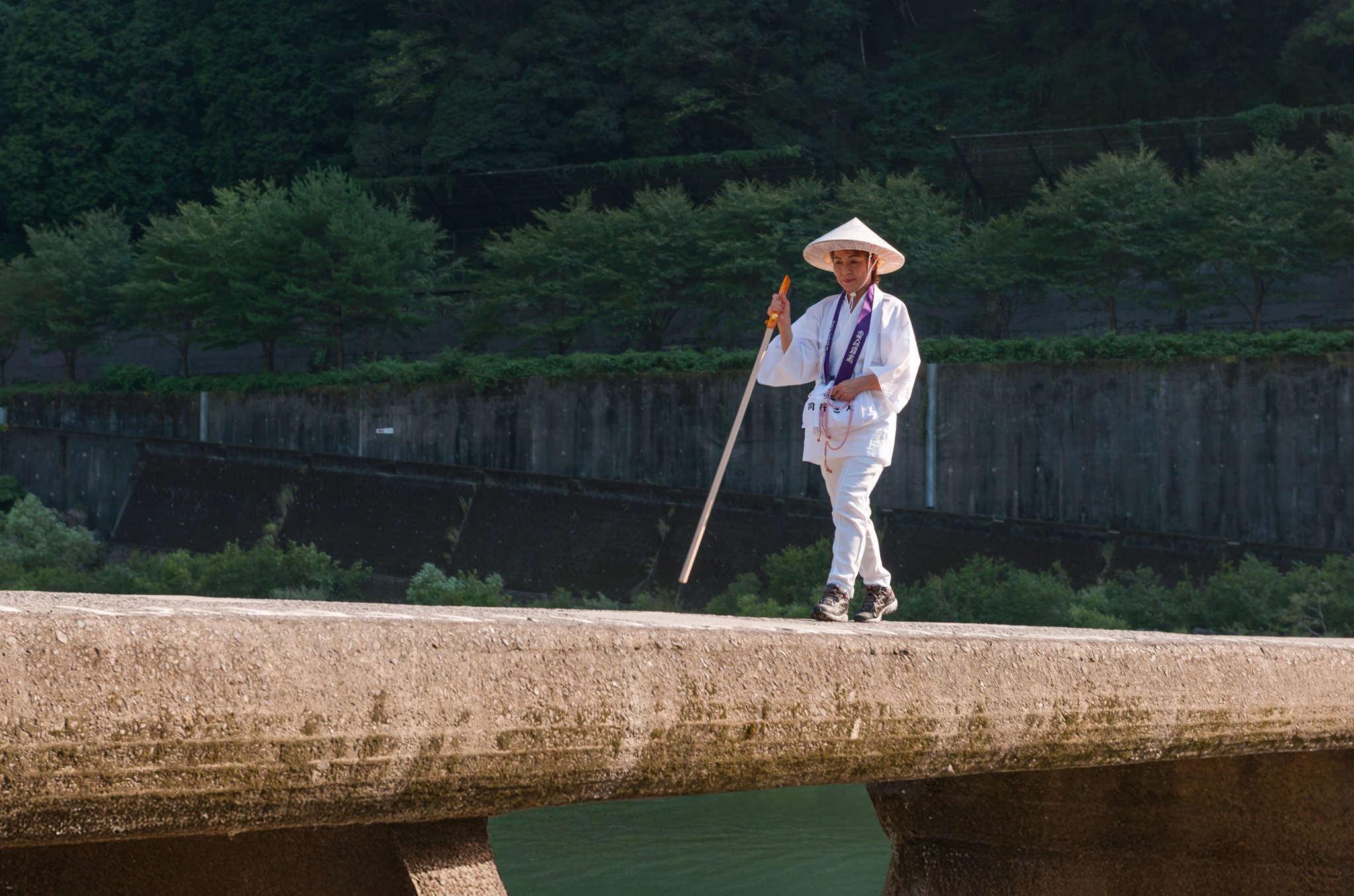
Historically, the route is tied to Kobo Daishi, or Kukai, founder of Shingon Buddhism, who was born in Shikoku in the eighth century. Every temple on the circuit has a narrative, legend or teaching associated with him. Traditionally, pilgrims would wear white vests or half-length robes called hakui, symbolizing purity, and sedge hats, or sugegasa. Many would also carry a kongozue, a wooden staff representing Kukai himself, who is believed to accompany each pilgrim spiritually.
Unlike the curated clarity of Kumano Kodo, the Shikoku Henro is messy, vast and can feel surprisingly ordinary at points. The landscape along the path has changed over time, and it cuts through urban neighborhoods, fishing ports, mountain passes, farmlands and industrial outskirts. Some temple approaches require steep, punishing climbs — Temple 12, Shosanji, is notoriously difficult — while others are reached via suburban sidewalks next to convenience stores. This friction between sacred and mundane is part of the pilgrimage’s identity.
Hospitality, or osettai, is another defining feature. Local residents offer pilgrims everything from tea and snacks to money, rides or lodging — a custom with centuries of precedent.
Aizu 33 Kannon
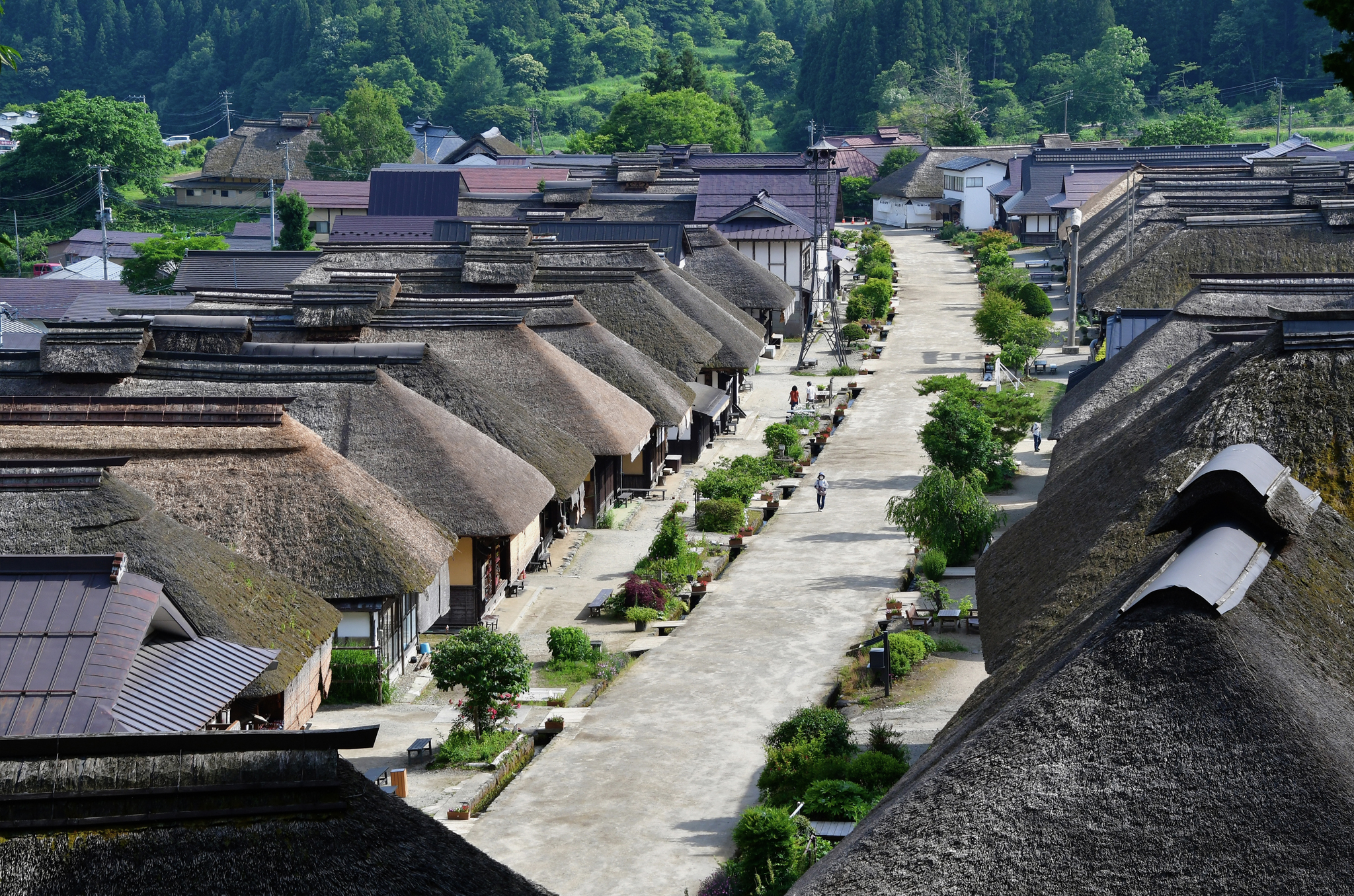
Where Kumano cuts through deep mountain ravines and the Henro circles an entire island, the Aizu 33 Kannon route sits closer to the ground, threaded through towns, farm roads and valley fields in the Aizu area of western Fukushima Prefecture.
The circuit’s origins trace back to the 17th century, when devotion to Kannon, the bodhisattva of mercy, grew rapidly across eastern Japan. During the Edo period, the Aizu domain formalized its own 33-site Kannon pilgrimage, modeled after the prestigious Saigoku 33 pilgrimage in Kansai. The number 33 corresponds to Kannon’s 33 manifestations, each capable of guiding or protecting sentient beings.
Unlike the monumental temple complexes of Kyoto or the mountainous grandeur of Kumano, many of Aizu’s Kannon halls are small wooden chapels tucked beside rice fields, village cemeteries, orchards or roadside clusters of traditional houses. Some contain significant cultural artifacts; others are simple, caretaker-maintained structures that have served local communities for generations.
The circuit is not sequenced, meaning pilgrims may start anywhere. Some complete the full 33 sites over a weekend. Others make it a recurring practice, visiting a few halls each season. For first-time pilgrims, Aizu offers an introduction to pilgrimage without the physical or logistical demands of long-distance routes.
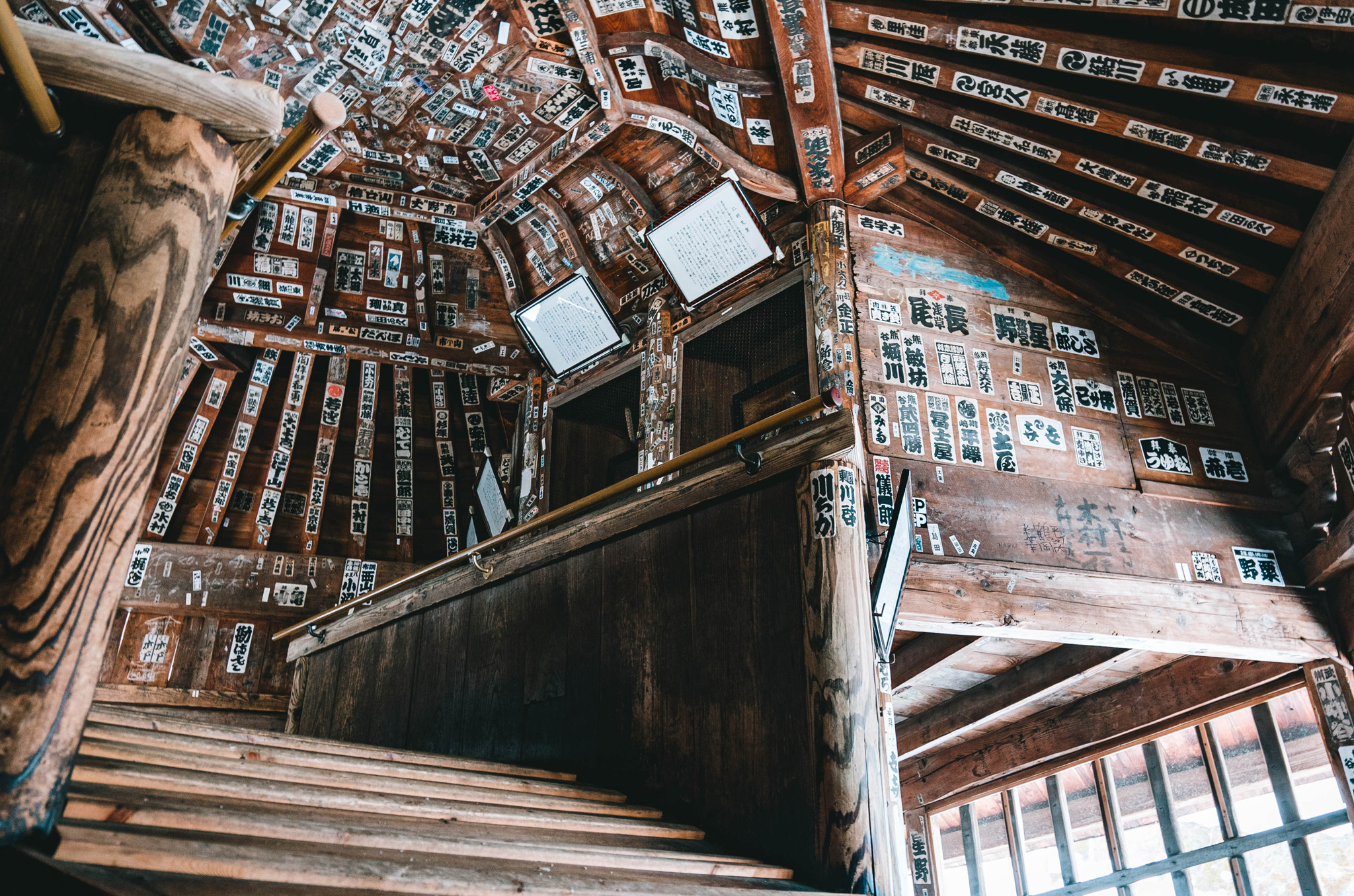
Sazae-do at Shoso-ji Temple, part of the Aizu 33 Kannon
Why These Routes Endure
Across all three pilgrimages, a few constants emerge. These paths offer a style of travel defined by sustained attention: to terrain, to weather, to the people who live along the way. They create a framework that’s structured but not rigid, spiritual but not doctrinaire and deeply connected to local histories.
The practical appeal is just as clear. Japan’s pilgrimage infrastructure is robust — clear trail markers, accessible lodging, reliable regional buses and communities that still see pilgrims as part of their cultural ecosystem rather than an intrusion.
For many, walking a pilgrimage today is less about devotion and more about immersion. The pace forces a recalibration. You start noticing small things again — the shift in light between cedars, a farm dog watching from a porch, the way an elderly caretaker sweeps temple steps each morning.
These routes survive because they still work. They bind geography and story. They let people step outside their timelines and travel through Japan as it has existed for centuries, at the speed of their own footsteps.