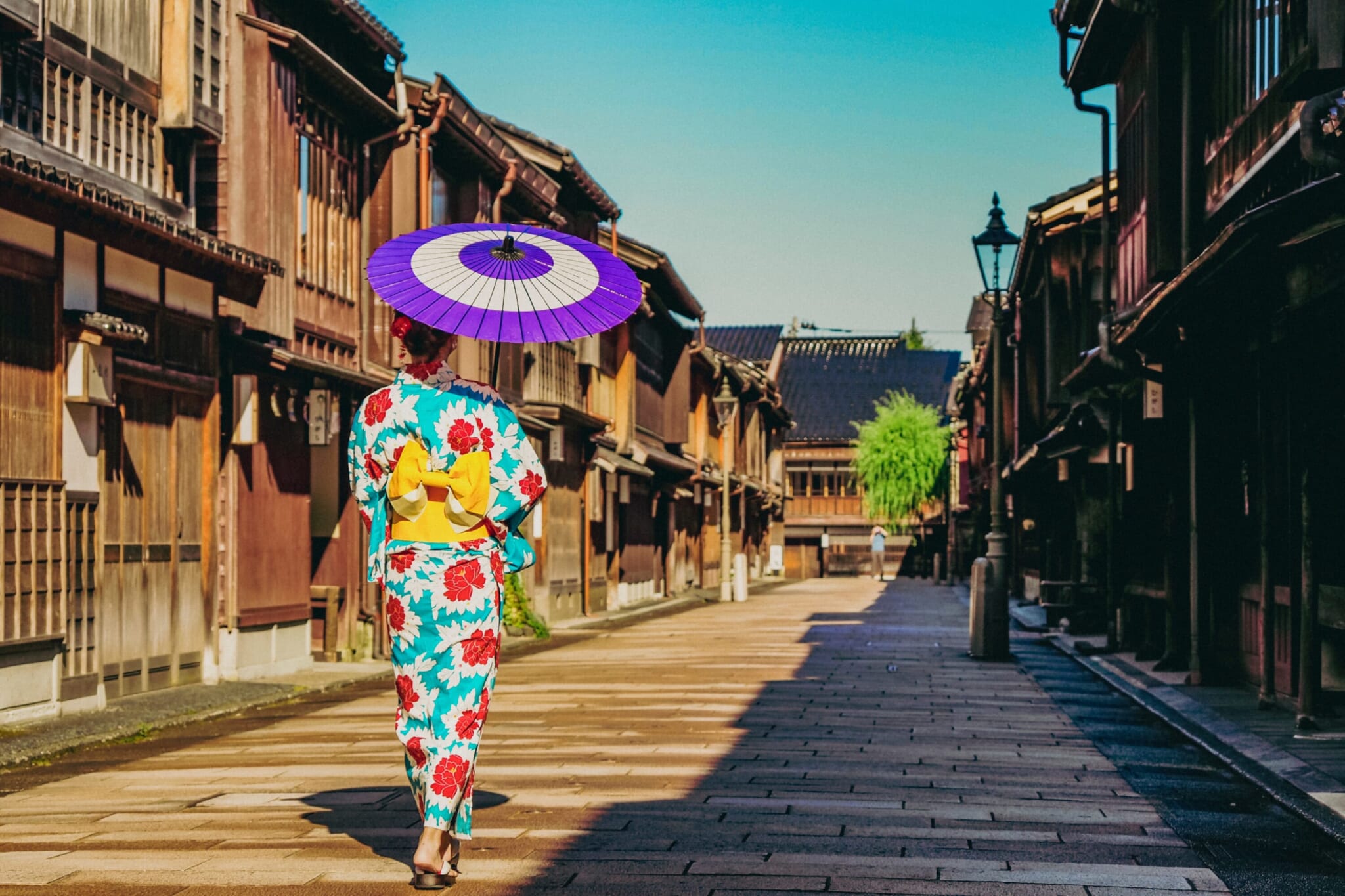
Fondly referred to as the “Little Kyoto” of Japan, Kanazawa was one of the few major cities in the country to avoid widespread destruction during World War II, meaning that much of its Edo-period architecture and cultural heritage remains to this day. A charming and rustic city in Ishikawa Prefecture, it’s renowned for its gold-leaf production, its well-preserved geisha district and for being home to one of the Three Great Gardens of Japan. With a wide range of museums and sumptuous food options, it’s the kind of place you could spend a few days exploring. Unfortunately, we had just 24 hours.
Hyatt Centric Kanazawa
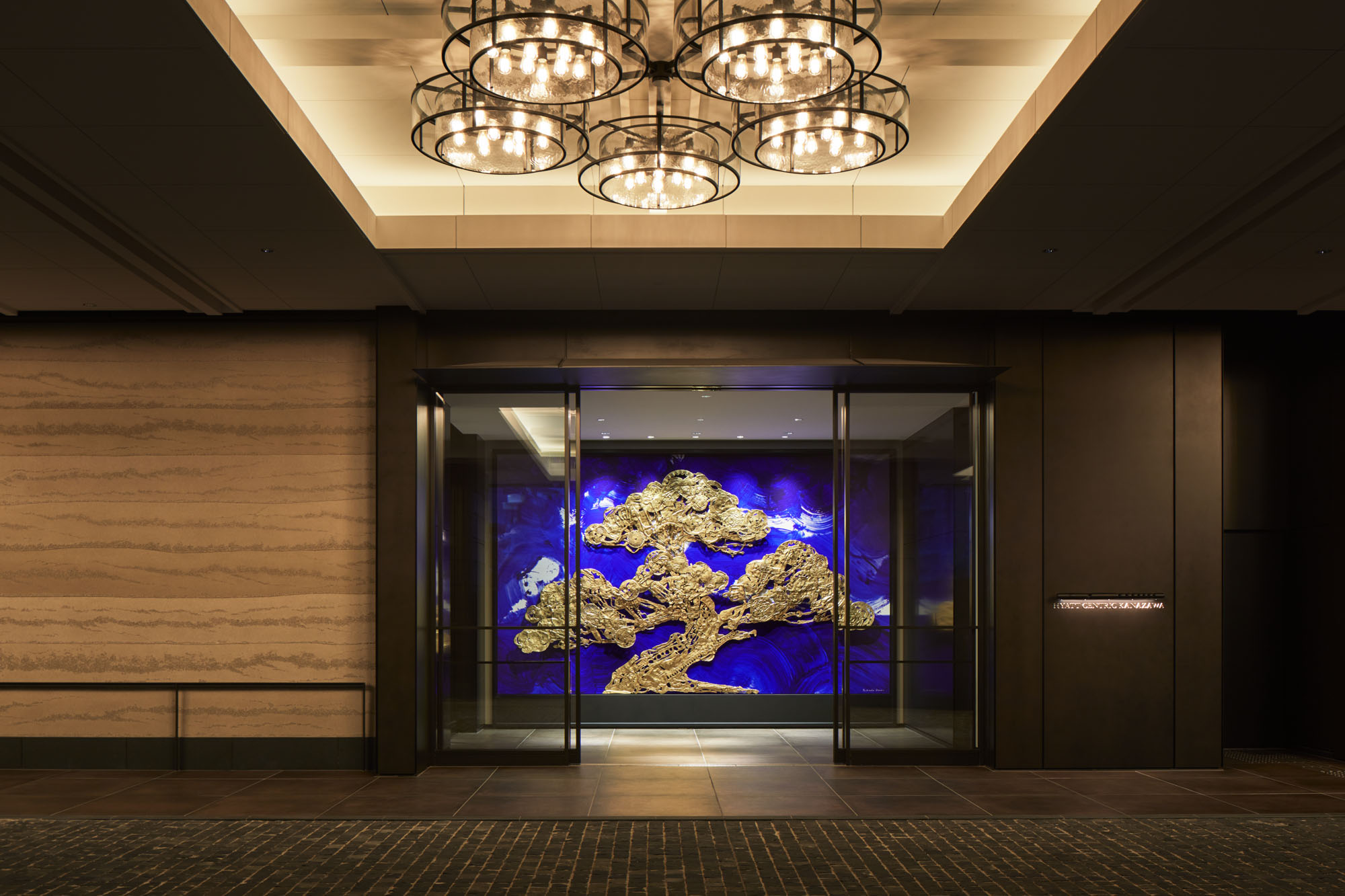
Our accommodation for the night was the Hyatt Centric Kanazawa, which is celebrating its fifth anniversary this year. A two-minute walk from the station, it’s a gallery-like hotel featuring more than 100 pieces of art, almost all of which were created by people who’ve lived in Ishikawa or have some connection to the region. After checking in, a staff member introduced us to some of the pieces on display, starting at the entrance with a large gold-leaf Japanese pine tree made out of metal scissors and tools on a navy-blue canvas. Other tour highlights included the colorful Kutani-yaki plates and the rabbit statues — a tribute to the Kanazawa-born bunny-loving writer, Kyoka Izumi.
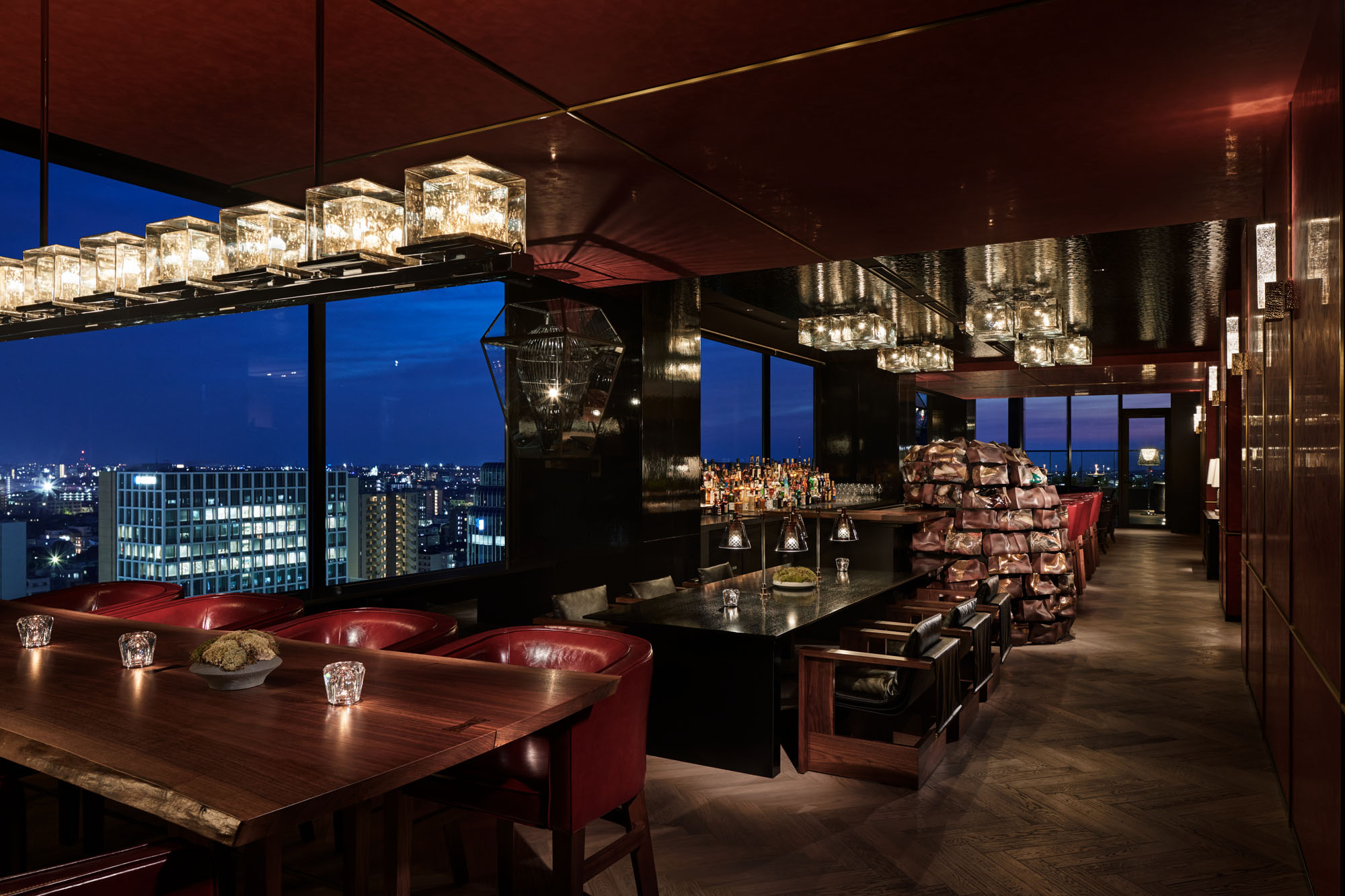
There are also prominent pieces of artwork woven into the interior of the RoofTerrace Bar on the hotel’s 14th floor. Blending sophisticated designs with vibrant accents, it’s an ideal spot for an early evening drink. Despite the heat, we sat outside on the terrace to watch the sun setting over Kanazawa. The majestic view was enjoyed with a refreshing Champagne piña colada followed by a classic daiquiri. Relaxing on the comfy sofas, we could have easily settled there for the evening, but we had dinner booked at Five – Grill & Lounge.
Heading down to the third floor of the hotel, we were treated to a magnificent multicourse menu featuring internationally inspired dishes made using local ingredients from the Hokuriku region. From the amuse-bouche to the grilled Noto beef sirloin, every plate was exquisitely presented and tasted heavenly. What made it even better was the wine pairing course, with each drink enhancing the flavors and texture of the food. Feeling very full and a little tipsy, it was a wonderful way to finish what had been a very pleasant evening.
A Golden Experience
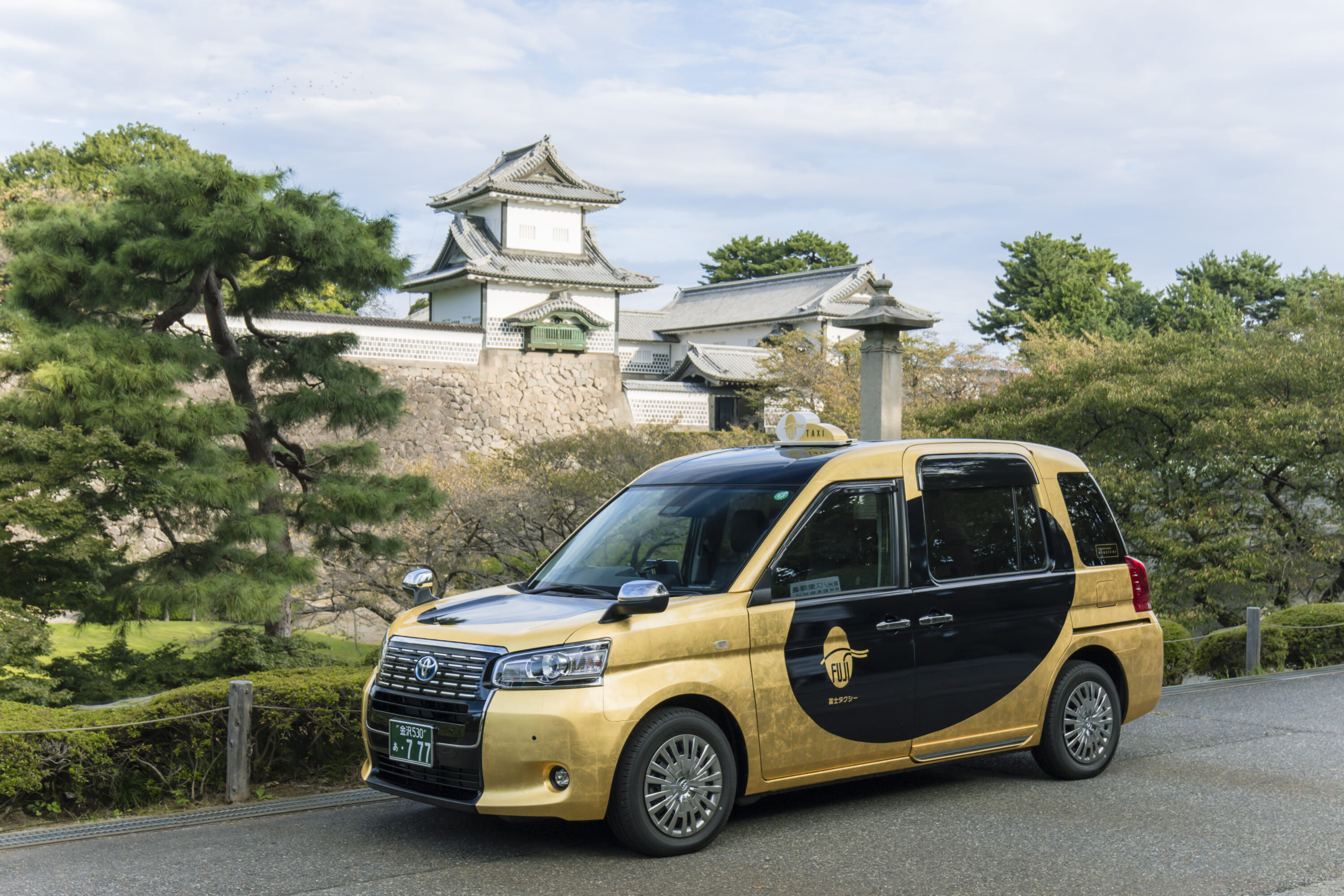
The following morning began with a gentle stroll around the station area, which features an impressive glass structure called the Motenashi Dome and a striking wooden gate modeled after traditional Japanese drums known as tsuzumi. We then headed back to the hotel for an extensive buffet breakfast, including a delightful eggs Benedict dish, before heading out for our morning activity: a gold-leaf pasting experience at Kanazawa Shitsurae, a more than 200-year-old gallery shop in the city’s famed Higashi Chaya district. A ride in the “Lucky Gold Leaf Taxi,” a one-of-its-kind vehicle that boasts around 1,200 sheets of gold, is also available upon request.
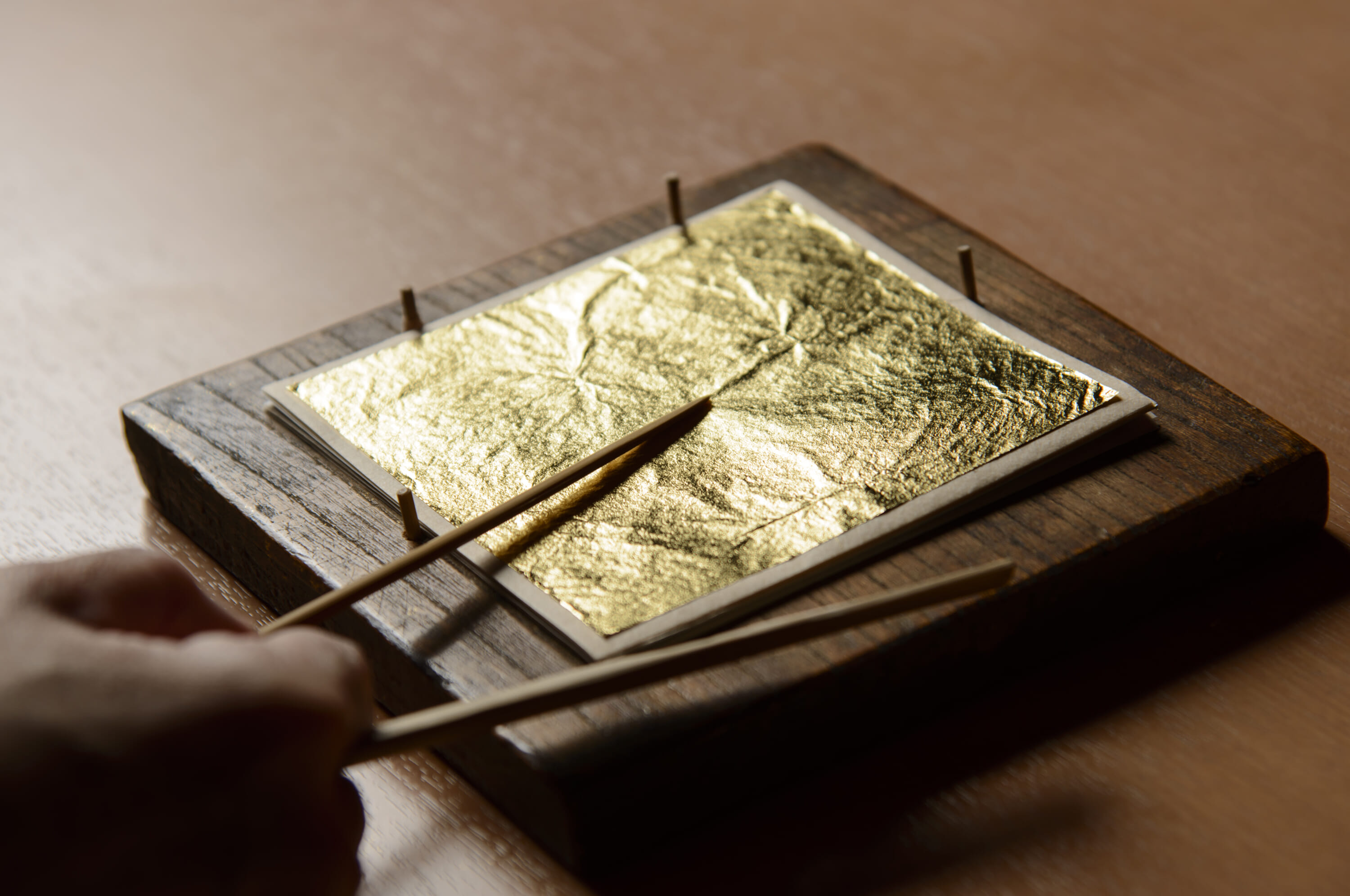
After arriving in style, we were given a tour of Kanazawa Shitsurae’s gallery, which showcases high-quality crafts from the Hokuriku region. We were then escorted upstairs to our workshop. Our task was to decorate a black lacquer-ware plate with a gold hazy moon. A delicate yet fairly straightforward process, it was made a lot easier thanks to our patient teacher. Seeing the finished product — which customers can take home — is quite a thrill. While waiting for the plates to dry, we relaxed with a cup of refreshing matcha green tea and a traditional Japanese sweet.
With the workshop over, we decided to go for a stroll around the Higashiya Chaya district. Famed for its stone-paved alleyways and well-preserved teahouses with latticed fronts, the area is officially designated as a Japanese cultural asset. The picturesque streets are lined with a variety of souvenir shops and cafes, in addition to two teahouses open to the public: Shima and Kaikaro. Having had a large breakfast, we decided to skip lunch while in Higashi Chaya, but we did make time for a gold-leaf-covered soft serve ice cream from Hakuichi.
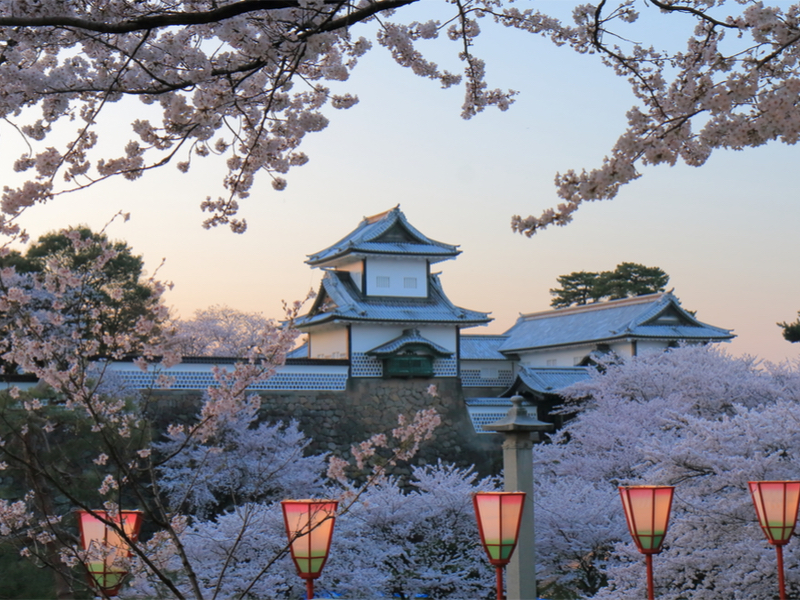
Kanazawa Castle
Kanazawa Castle and Kenrokuen Garden
From the Higashi Chaya district, it’s about a 15-minute walk to Kanazawa Castle Park. There are more impressive-looking castles in Japan, but given its history and proximity to Kenrokuen Garden, this one is definitely worth visiting. Ruled by the powerful Maeda clan for almost 300 years, its longest-lasting features are the Ishikawa-mon Gate and the two-story warehouse, Sanjikken Nagaya, which were rebuilt in 1788 and 1858, respectively. The rest of the castle was reconstructed to restore its appearance from before 1881, when it burned down. Displays in English about the castle’s history can be found at various spots around the park.
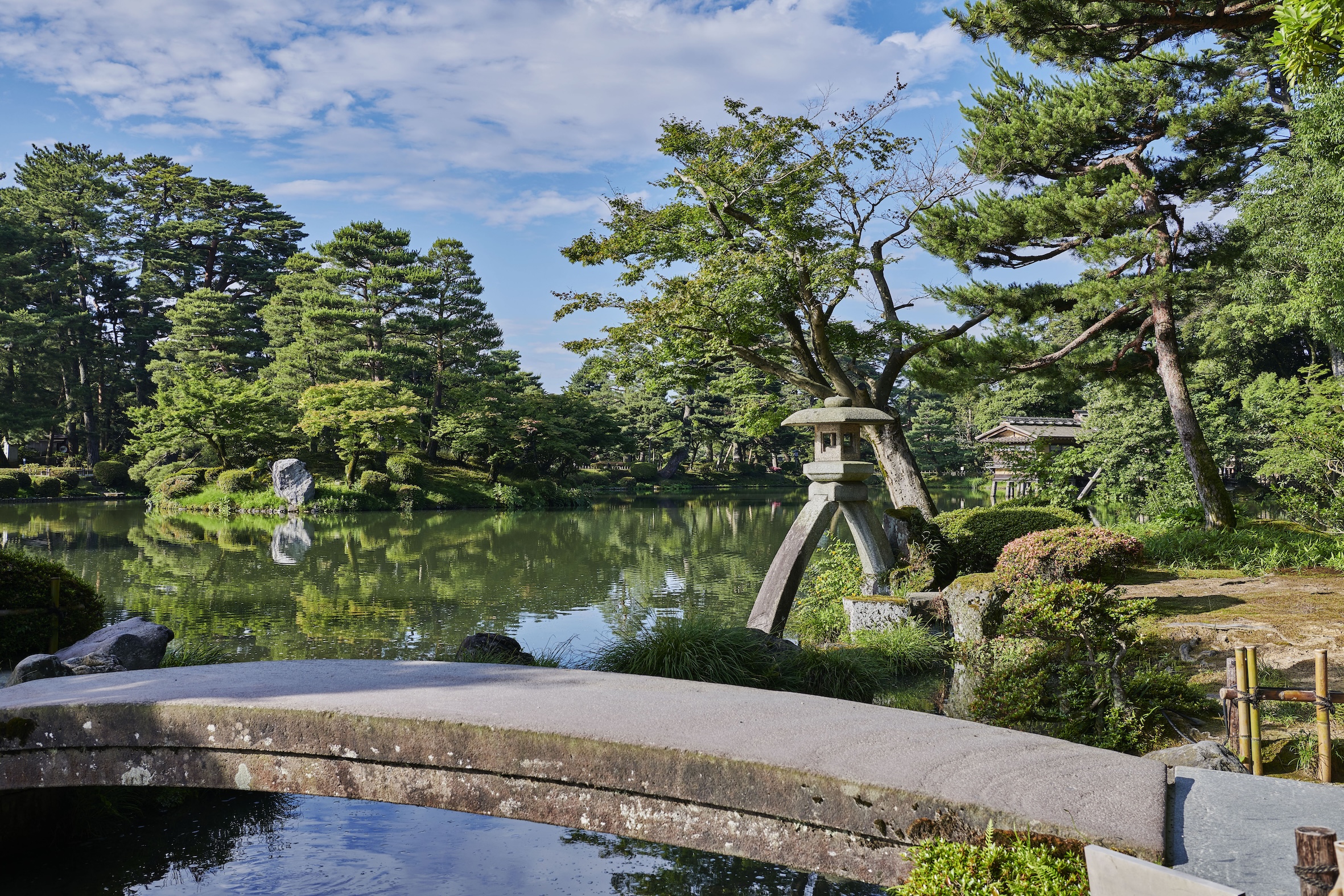
A vital part of the castle’s history is Kenrokuen Garden. Previously a playground for feudal lords and their peers, it was opened to the public in 1874 after the Meiji Restoration’s abolishment of the domain system, which ended the Maeda family’s control over the region. Meaning “garden of the six elements,” the name refers to an ancient Chinese ideal for a perfect landscape garden, which is embodied through three pairs of characteristics: spaciousness and seclusion, artifice and antiquity, water sources and scenic views. Covering over 11 hectares (roughly 28 acres), Kenrokuen is more than deserving of its reputation as one of the Three Great Gardens of Japan.
Highlights include the serene beauty of Kasumigaike, a tranquil pond featuring Horai Island, a sacred symbol of longevity and prosperity, at its center, and Kotoji Toro, an iconic two-legged stone lantern at the water’s edge. The garden’s other pond, Hisagoike, is smaller, but just as picturesque, particularly the view of the tranquil Midoritaki Waterfall streaming down behind the 4.1-meter-tall Kaiseki Pagoda. The garden contains more than 8,000 trees and over 180 species of plants. It also boasts the oldest fountain in Japan and a delightful little teahouse that was built in 1774.

Back to the Station
The idea was to finish the trip with a visit to the 21st Century Museum of Contemporary Art, best known for Leandro Erlich’s “The Swimming Pool.” Feeling worn out from strolling around the garden on a very warm day, however, we decided instead to head back to the station, where we enjoyed some shopping and food before boarding our shinkansen. For our final Kanazawa seafood meal, we chose Sushitama. Tasty and reasonably priced, it was a satisfying way to conclude what had been a very enjoyable 24 hours in Kanazawa.
Related Posts
- 48 Hours in Kanazawa — Dig Deeper into Japan’s Gold Leaf Capital
- The Best 70 Things To Do in Ishikawa Prefecture, Tried and Tested
- The Most Beautiful Japanese Gardens Beyond Kyoto
Updated On September 12, 2025