
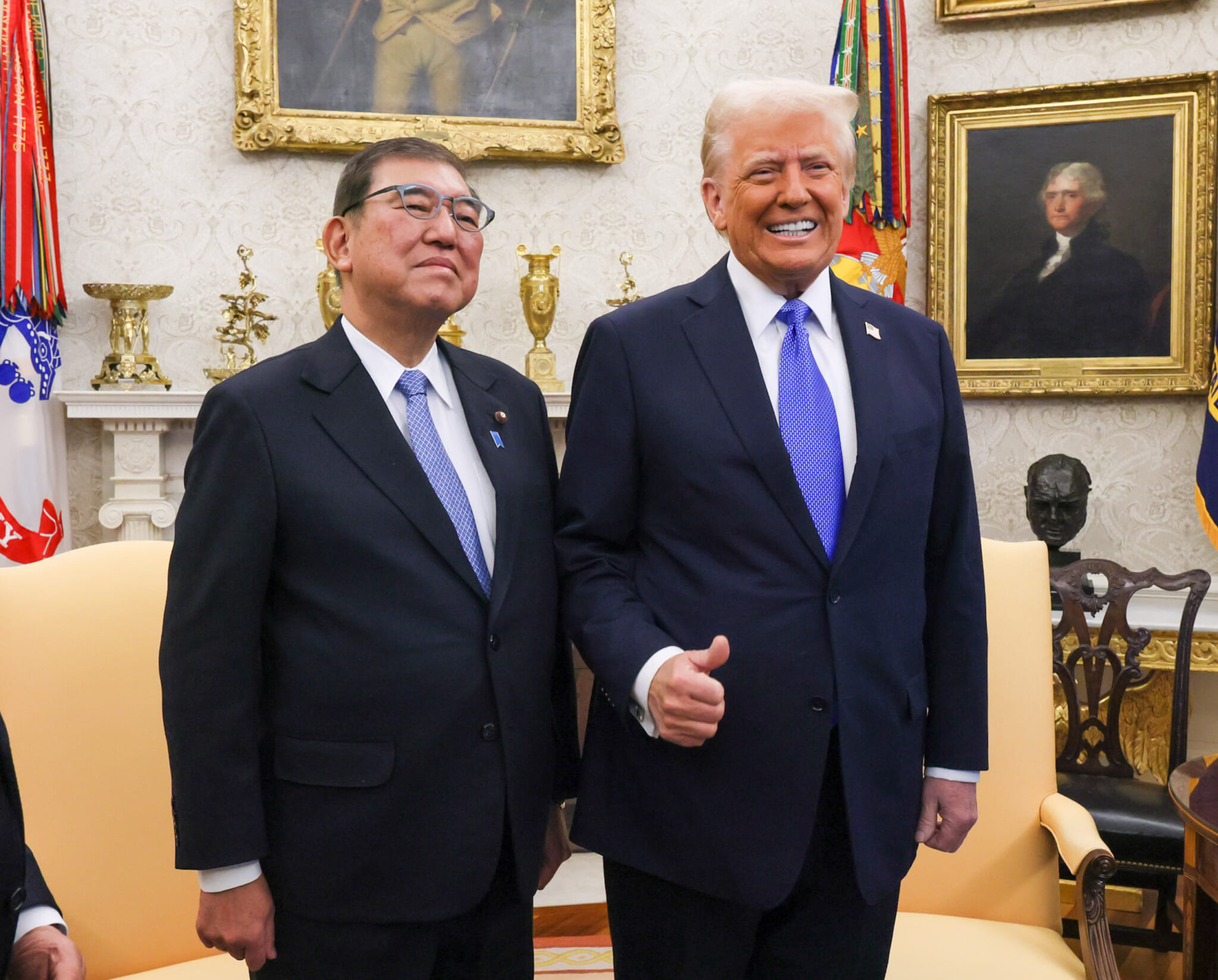
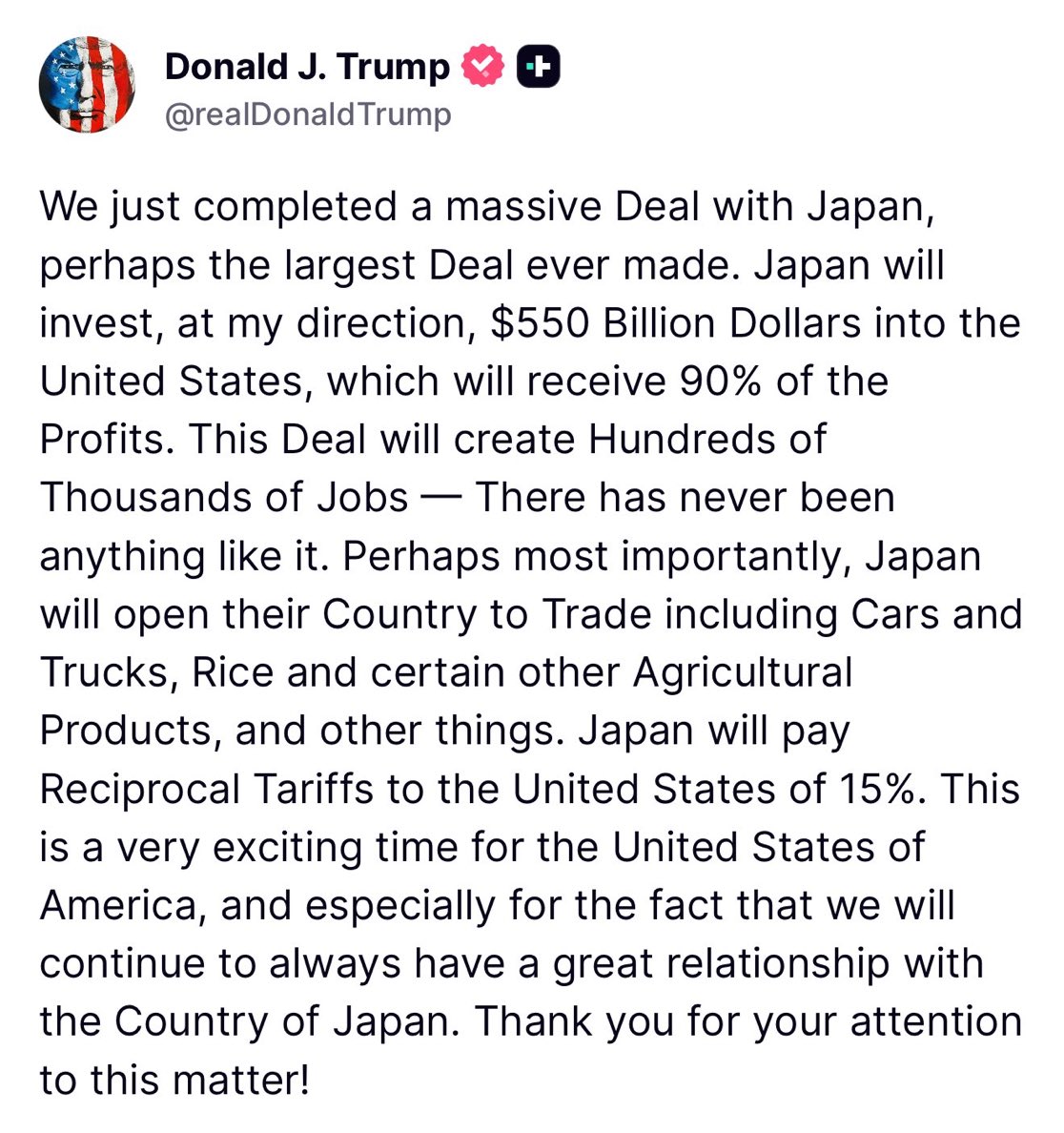
In a long-anticipated announcement, US President Donald Trump revealed a new trade agreement with Japan on Tuesday, calling it a “massive” win for both countries. Japanese Prime Minister Shigeru Ishiba confirmed the news the next morning. He welcomed the deal, saying it was “the lowest figure to date among countries with a surplus with the US.”
The deal marks a significant shift in bilateral trade, but not without costs for Japan. While the agreement eases immediate trade tensions, Japan made several high-value concessions in exchange for relatively limited tariff relief.
Tariff Relief at a Price
At the heart of the deal is a tariff rollback: Japanese carmakers, who had been bracing for 25% duties, will now face a 15% rate. Ishiba described the deal positively, but the reduced tariff still represents a significant burden compared to previous trade terms. In contrast, a recent US-UK agreement set a 10% cap for a limited number of British vehicles.
The US made no firm commitments beyond the tariff reduction. Japan, on the other hand, agreed to invest $550 billion into American industries such as AI, semiconductors, shipbuilding and clean energy, designed to deepen bilateral ties but also ease Washington’s economic security concerns.
Strategic Gains Amid Uneven Terms
The deal also includes assurances that Japan will not be treated unfavorably in future US tariffs on sensitive goods, such as pharmaceuticals and advanced technology. On agriculture, Japan also agreed to buy more US rice within its existing 770,000-ton import quota.
Japan’s chief negotiator, Economic Revitalization Minister Ryosei Akazawa, concluded the final round of talks in Washington this week. “Mission accomplished,” he posted on X after meeting with US officials.
Markets welcomed the news. The Nikkei 225 jumped over 1,300 points, passing the 41,000 mark for the first time in a year, with automakers leading the surge.
Despite concerns about fairness, the agreement is Japan’s “best compromise at this stage,” Shigeto Nagai from research firm Oxford Economics told BBC News.
Related Posts
- Shigeru Ishiba Denies Rumors He Will Resign at the End of August
- Trump Hits Japan and South Korea With 25% Tariffs
- Sanseito, Explained: The Alarming Rise of Japan’s Far-Right Movement
Updated On July 23, 2025