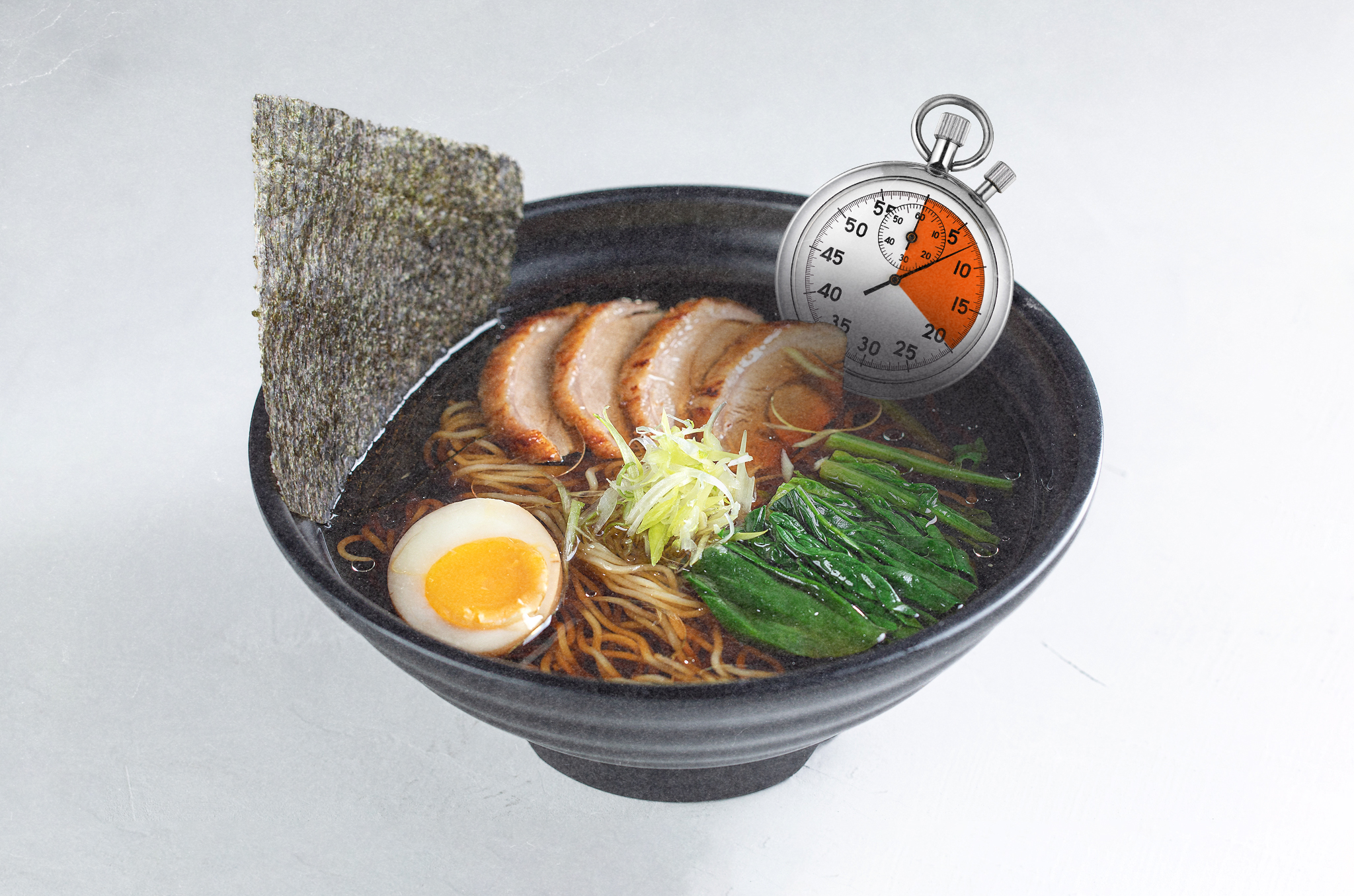
On July 4, a sign posted at the Fuchu branch of Ramen Jiro sparked a backlash. Placed above the ticket machine, it read: “Please finish your meal in no more than 20 minutes.” In most restaurants, a gentle nudge toward efficiency might not warrant headlines. But in Japan, where ramen is revered as more than a simple meal, the sign was enough to split netizens into camps and unleash a debate over what it means to eat under pressure.
The Backlash
The backlash was immediate. Social media users criticized the move as “hostile,” “elitist” and “condescending,” arguing that it transformed Jiro from a beloved cult hangout into an intimidating fortress. Some commented that it “made the store feel scary,” while others felt it disregarded customers, reducing them to seat-fillers in a high-speed noodle assembly line.
Critics also pointed out the sheer impracticality: Jiro’s famously gargantuan bowls can contain up to 300 grams of noodles and exceed 1,600 calories — meals that challenge even the most seasoned “Jirorians” (diehard fans of the chain). Trying to finish that in 20 minutes felt, to many, not just difficult but disrespectful to the ritual of ramen.
Not everyone was outraged, though. A vocal minority defended the policy, emphasizing that Jiro has always operated at a fast-paced, almost militaristic pace. Regulars chimed in online: “If you can’t handle the pace, don’t come,” wrote one business manager, echoing the unspoken code among the Jiro faithful.
The Apology
On July 7, the Fuchu branch issued a public apology. The sign was promptly taken down, and the shop’s social media post was deleted. In its statement, the branch admitted that it had “misjudged the tone,” acknowledging that the policy had caused discomfort and painted the shop as “scary” and “authoritarian.” It further announced that, moving forward, all social media posts would be issued directly by the branch owner, not by staff.
The incident reveals just how complex and emotionally charged ramen culture can be in Japan. Ramen Jiro is no ordinary ramen chain. Since its founding in the 1960s, it has grown into a near-religious institution, famous for its gut-busting bowls of thick noodles drenched in an unapologetically rich, porky broth.
The ordering system is cryptic. The service is gruff. And the entire experience reads like a high-stakes endurance test. Devotees consider finishing a Jiro bowl almost a rite of passage. But even among these diehards, there is an unspoken understanding: the ramen experience, no matter how fast-paced, should feel rewarding rather than oppressive.
The Fuchu branch’s retreat signals that even Japan’s most famously no-nonsense ramen institution understands it can’t afford to alienate the very customers who given the company its legendary status. At its heart, ramen is about pleasure: the warm, savory comfort of broth, the methodical rhythm of slurping and the satisfying heft of noodles that demand both appetite and resolve.
While ramen culture thrives on intensity, there is a fine line between encouraging efficiency and crushing the joy out of the experience. Even for a chain as uncompromising as Ramen Jiro, it seems there’s still room to pause and savor the noodles.
Related Posts
- Tokyo’s Free Ramen Consultant Is Here To Help You Conquer Ramen Jiro
- Ramen 101: A Beginner’s Guide to Japan’s Favorite Noodle Dish
- Family-Friendly Ramen Shops in Tokyo for All Ages
Updated On July 9, 2025