
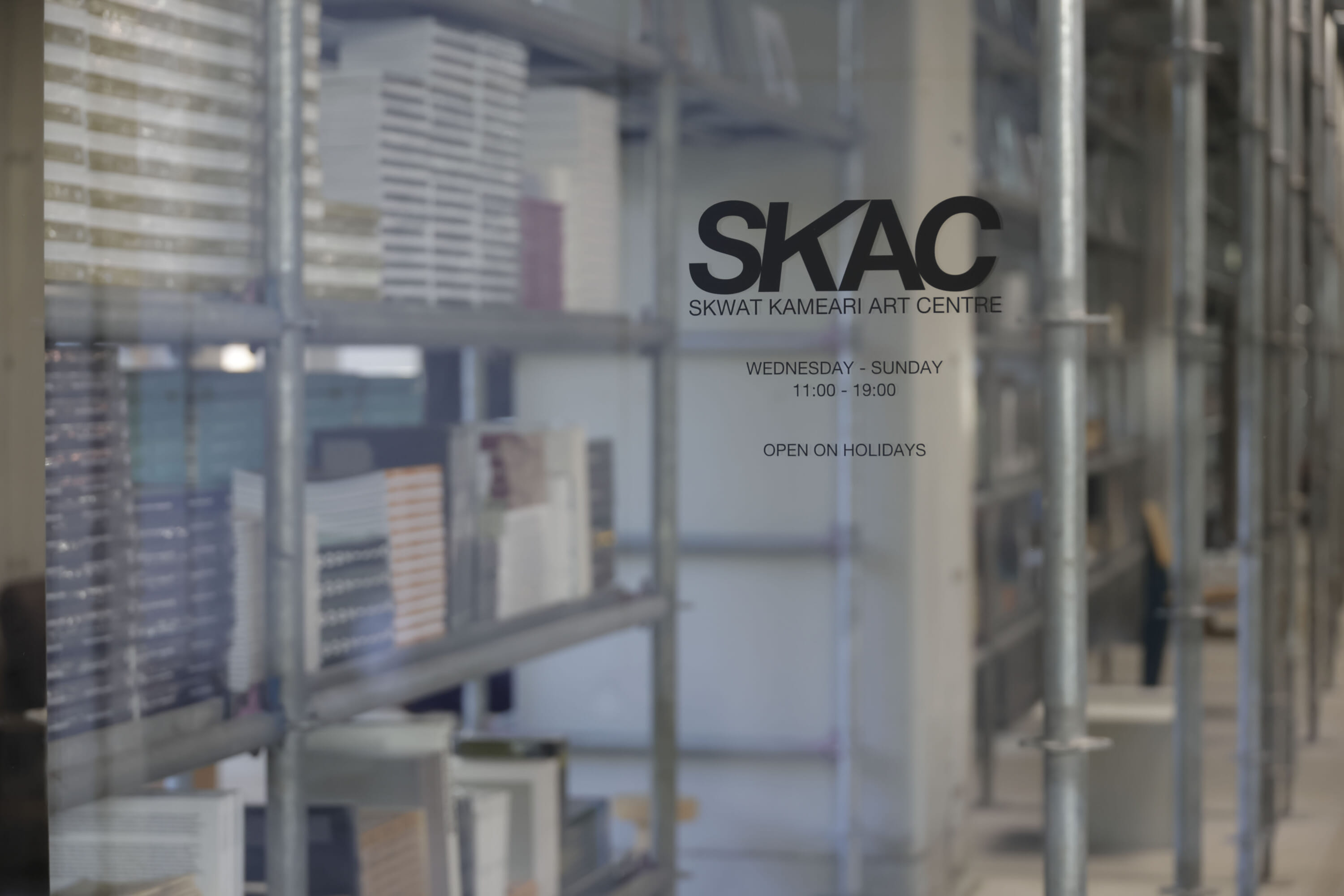
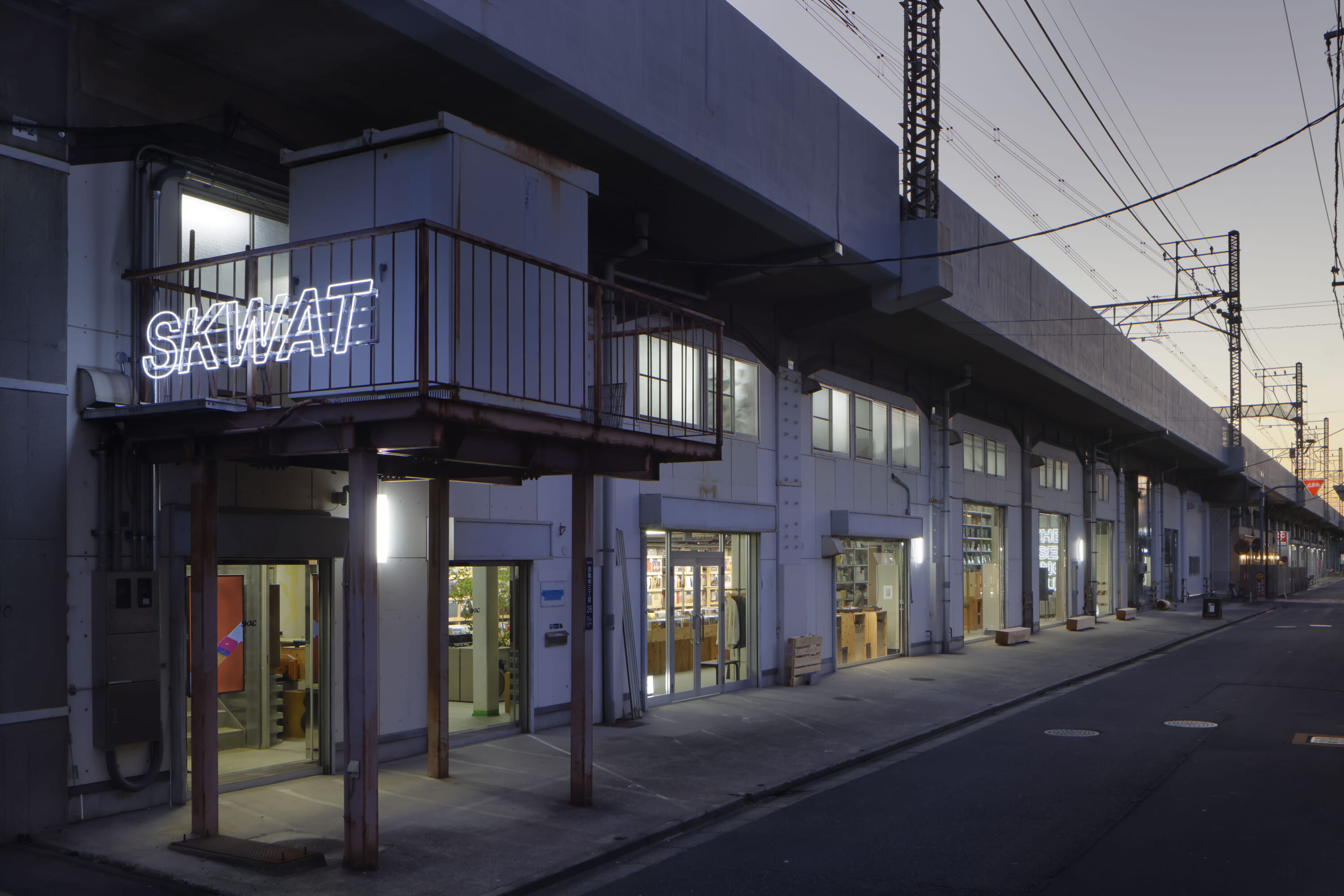
Beneath the steady hum of passing trains on the JR Joban Line, a stretch of long-neglected storage bays under the elevated train tracks has been transformed into a multiuse cultural space. Once a vacant parcel of land in Kameari, a humble shitamachi (downtown) area in eastern Tokyo, the 800-meter-long area now comprises a bookstore, a vinyl shop, a coffee stand and an open space that rotates between workshops, exhibitions, installations and everything in between.
This is all part of an ongoing experiment by the collective Skwat, led by architect Keisuke Nakamura of Daikei Mills — a design and architectural firm known for its work with brands such as Issey Miyake, Not A Hotel and Artek.
True to its name, Skwat began by temporarily occupying vacant buildings and converting them into galleries, pop-up shops and event spaces. This new space, called the Skwat Kameari Art Centre (SKAC), is its most ambitious project to date. More permanent than past ventures, SKAC was designed to grow and adapt with the neighborhood around it.
From Design Studio to Social Movement
Taking inspiration from the concept of “squatting” — which is something Nakamura did as a student in London — Skwat began as a response to Tokyo’s relationship with its own architecture. In a city where spaces are routinely erased and rebuilt, Nakamura sought a way to reveal the potential of what already exists.
Founded in 2020 under the umbrella of Daikei Mills, which Nakamura established in 2011, Skwat started as a loose collective of architects, designers and collaborators experimenting with how underused spaces might host temporary exhibitions, shops and workshops.
At first, these interventions were deliberately ephemeral. Many lasted only a few months, serving as spontaneous tests of how space could be animated through design. One of the collective’s earliest projects, known as The Blue Project, took place in a former laundromat flanked by two buildings in Harajuku. Painted entirely in cobalt blue and minimally outfitted with shelving and seating, the building became a micro-gallery and event space — a symbolic blueprint for Skwat’s philosophy of minimal intervention and maximum creative potential.
Another initiative, Skwat Hertz in Kyoto, turned a dormant commercial building into a cultural site by collaborating with a local radio station. A “street piano” was set up in the building’s atrium, open to anyone to play. Each performance was recorded and broadcast on a dedicated radio program run by the collective.
Over time, something more enduring began to take shape. “Prior to undertaking the SKAC project, most initiatives were short-term in nature,” Nakamura tells TW. “The Kameari project marks our first venture into medium-to-long-term initiatives, looking ahead over a decade.”
Perpetually Unfinished and Visibly Incomplete
Just like the utilitarian notion of “form follows function,” Nakamura believes that the actual design of a space is less important than the design process. “In Skwat’s activities, while the importance of design must be emphasized, I believe that what matters most is not the design itself, but the context — who we work with, what we do, why we do it and when we do it. Therefore, I consider design to be a by-product derived from that context,” he reflects.
This principle guides every Skwat project: The collective envisions architecture as a form of social dialogue, not just mere spatial arrangement. Sites are more than just their physical characteristics; they have emotional and communal significance, too. It is not uncommon for a Skwat space to remain visibly incomplete — an invitation for users to shape it over time.
Transforming disused buildings into cultural hubs isn’t simply a matter of physical renovation. According to Nakamura, the most difficult part is “accurately discerning the specific characteristics of each location, and determining how to sustain ongoing dialogue and communication with local residents.”
This process often requires negotiating with landlords, public bodies and residents, finding mutual benefit in reimagining a space’s purpose. It also demands architectural humility: Skwat’s minimal-intervention style prioritizes the spirit of a place over imposing new visions onto it. In this sense, its work challenges the logic of erasure that so often drives Tokyo’s development. Instead, Skwat offers a model of continuity and rediscovery.
SKAC: The New Cultural Hub Beneath the Tracks
SKAC is a 10-minute walk from the nearest station, which takes you through an unassuming stretch of the Kameari district. The building’s warehouse-like exterior is raw and utilitarian-feeling. You might miss it if you didn’t know it was there.
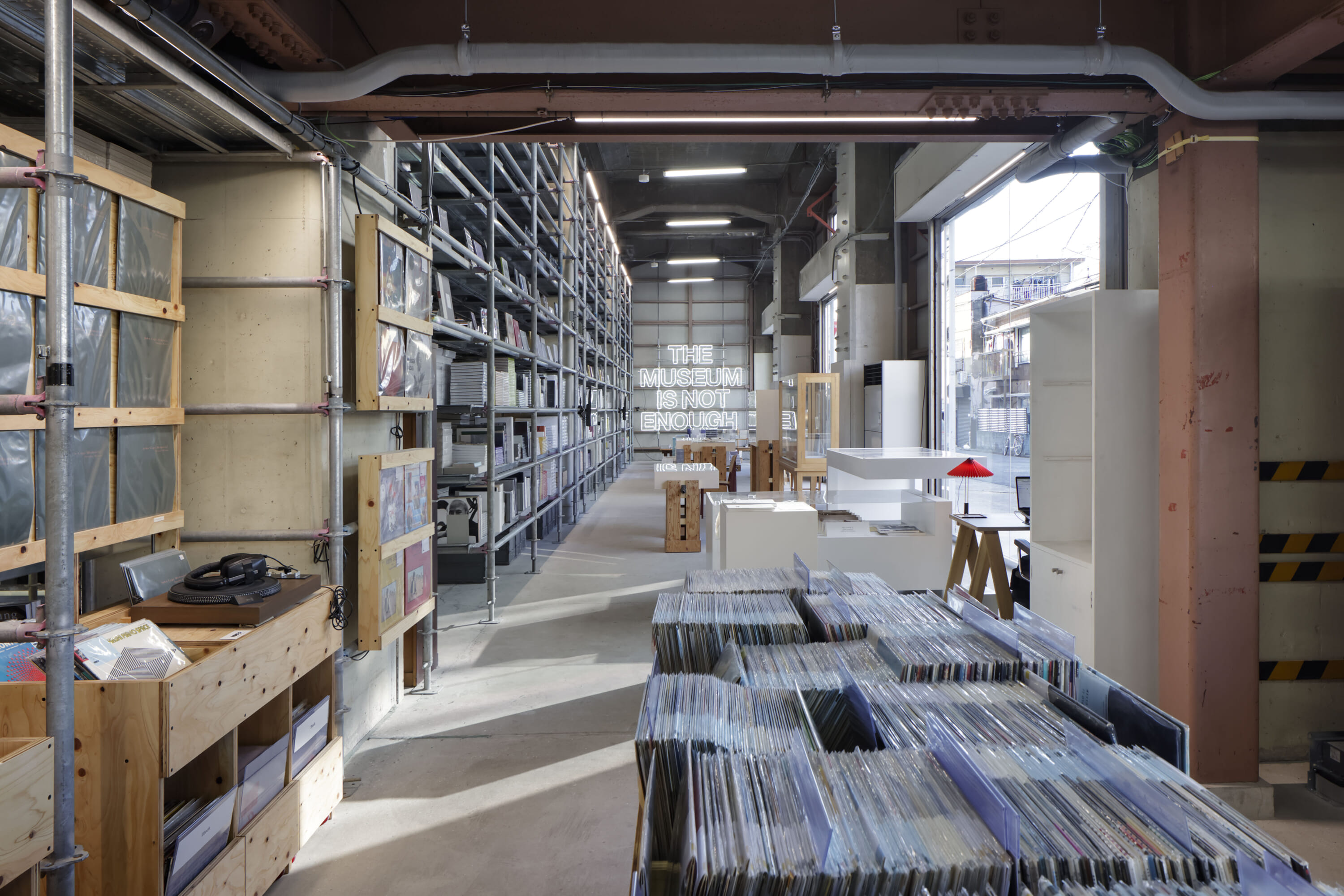
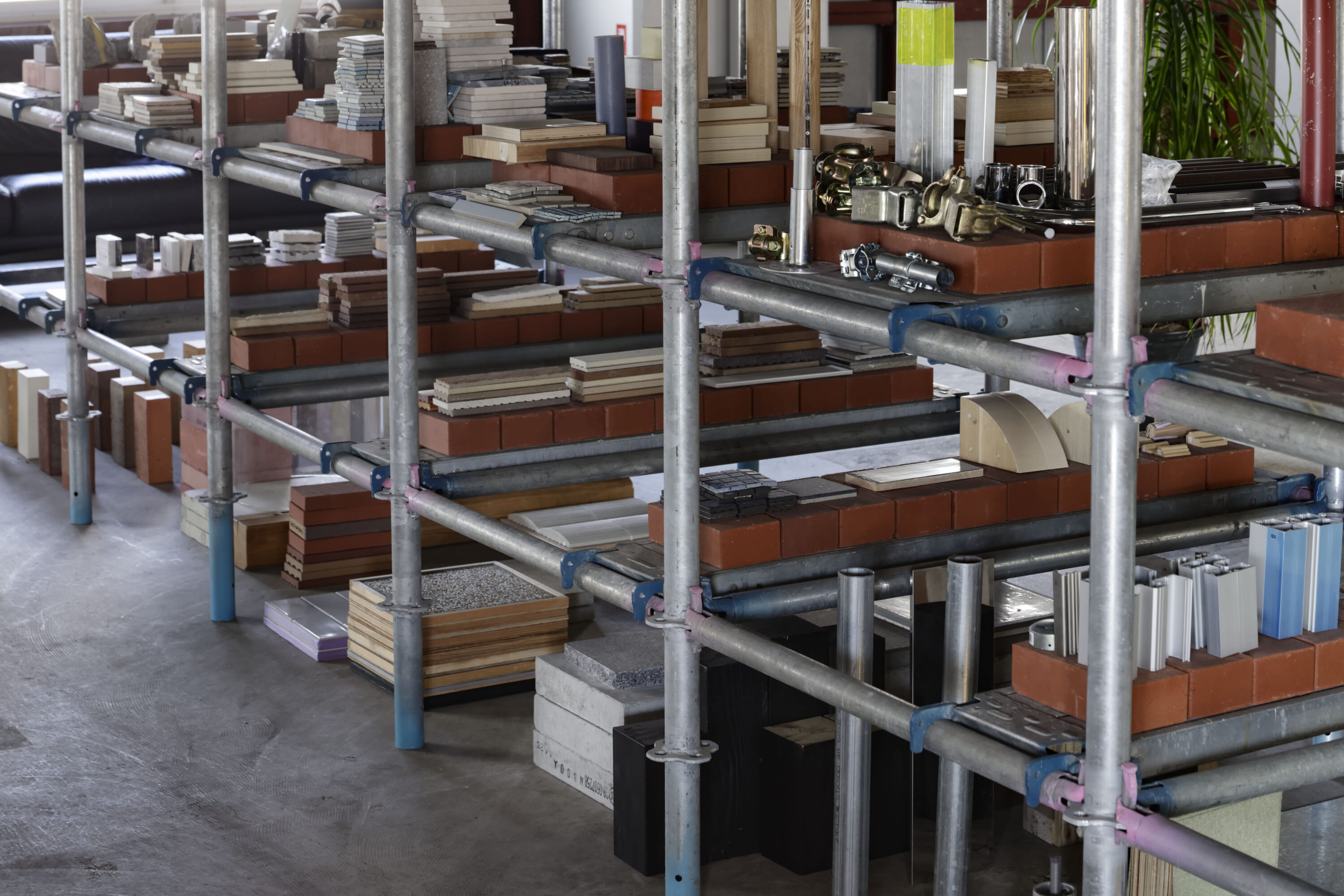
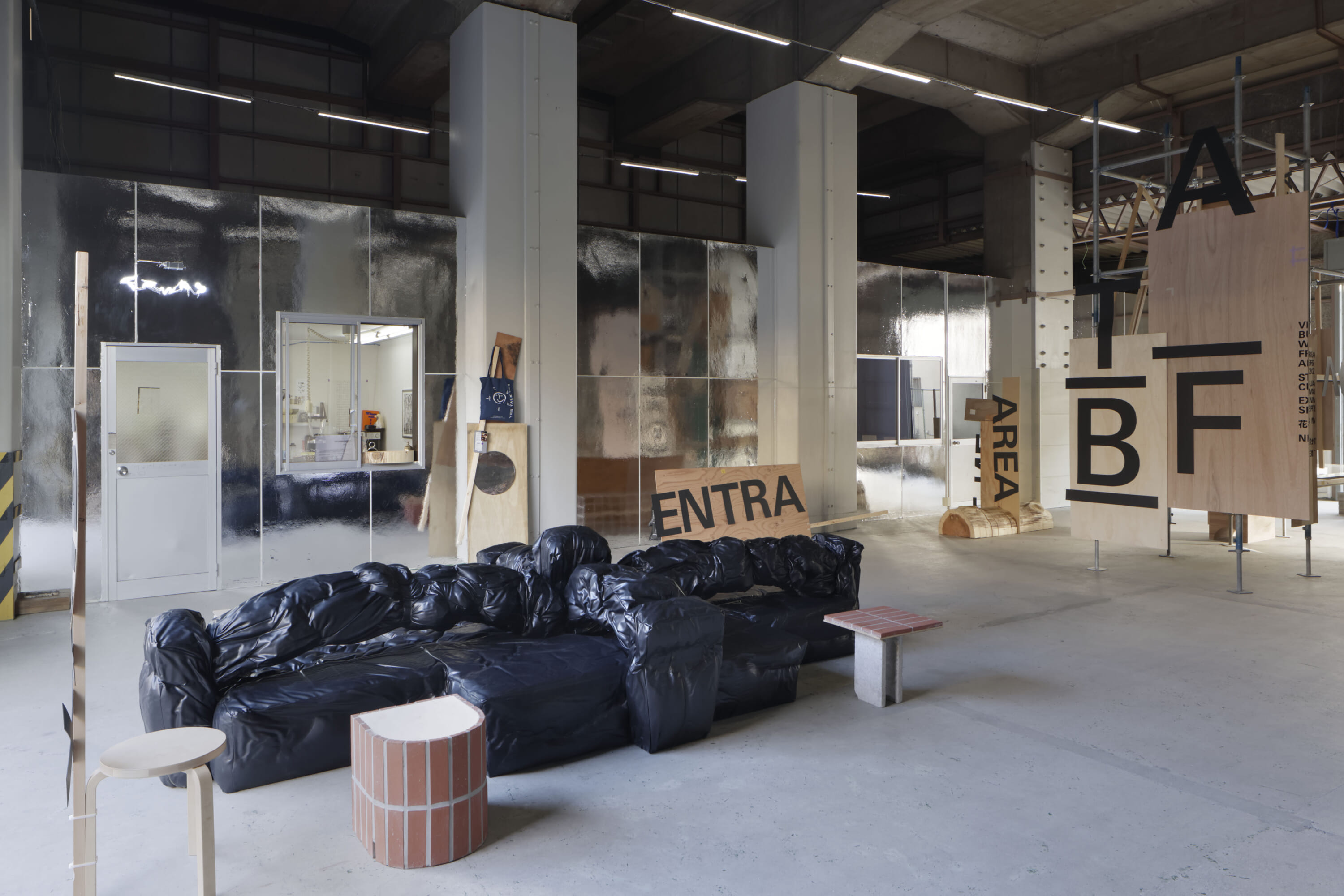
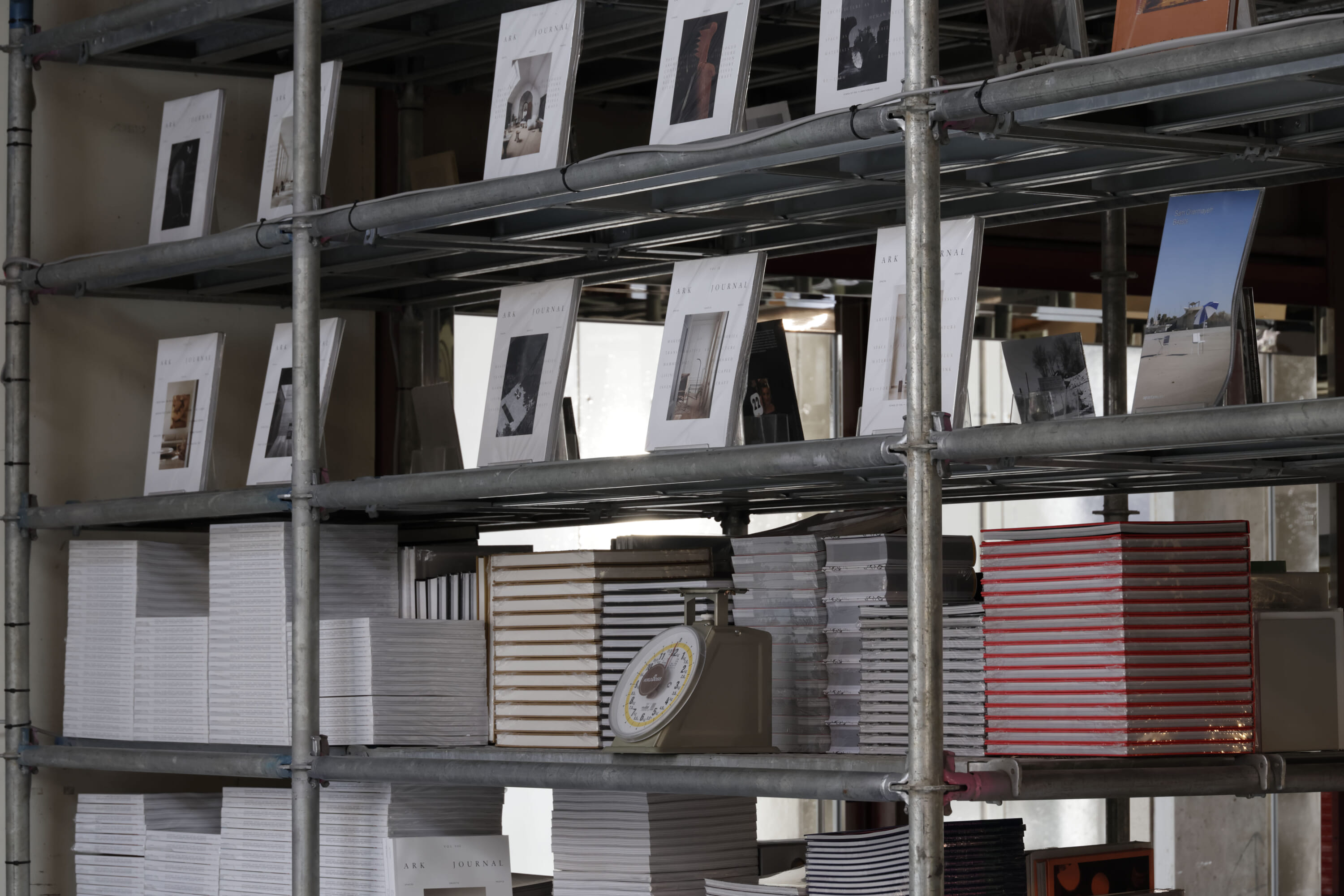
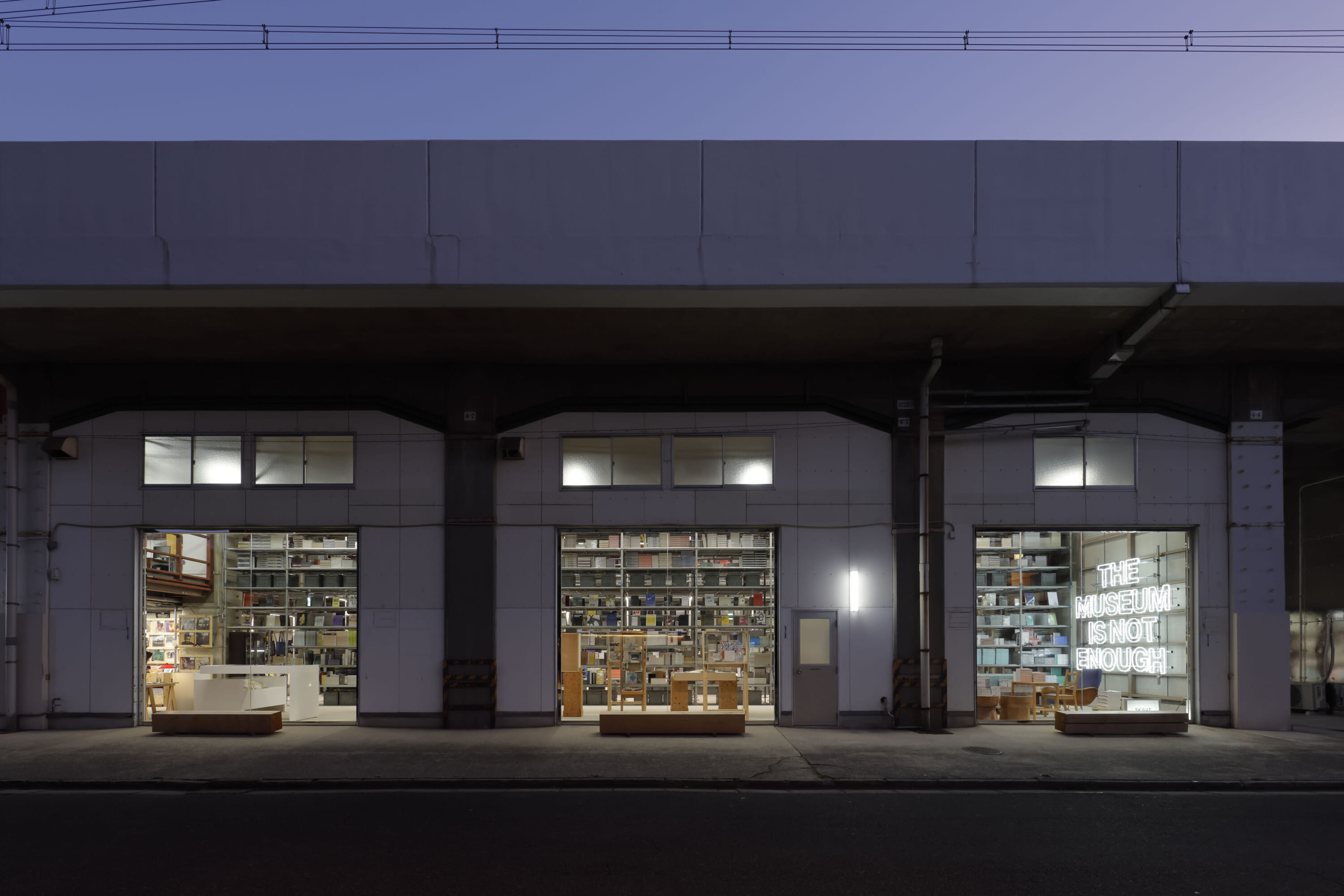
Inside the warehouse you’ll find Twelvebooks, a book distributor founded by Atsushi Hamanaka in 2010. The space is dominated by towering shelves of foreign art and design books, spanning disciplines from photography and architecture to visual essays. In one corner, a giant neon sign reads, “The Museum is Not Enough.” The warehouse itself spans two floors, connected by a creaking steel staircase. Scattered throughout are mismatched desks, cushy leather sofas and communal tables where visitors can freely browse, read or simply linger. From the second level, one can even peer into the office of Daikei Mills.
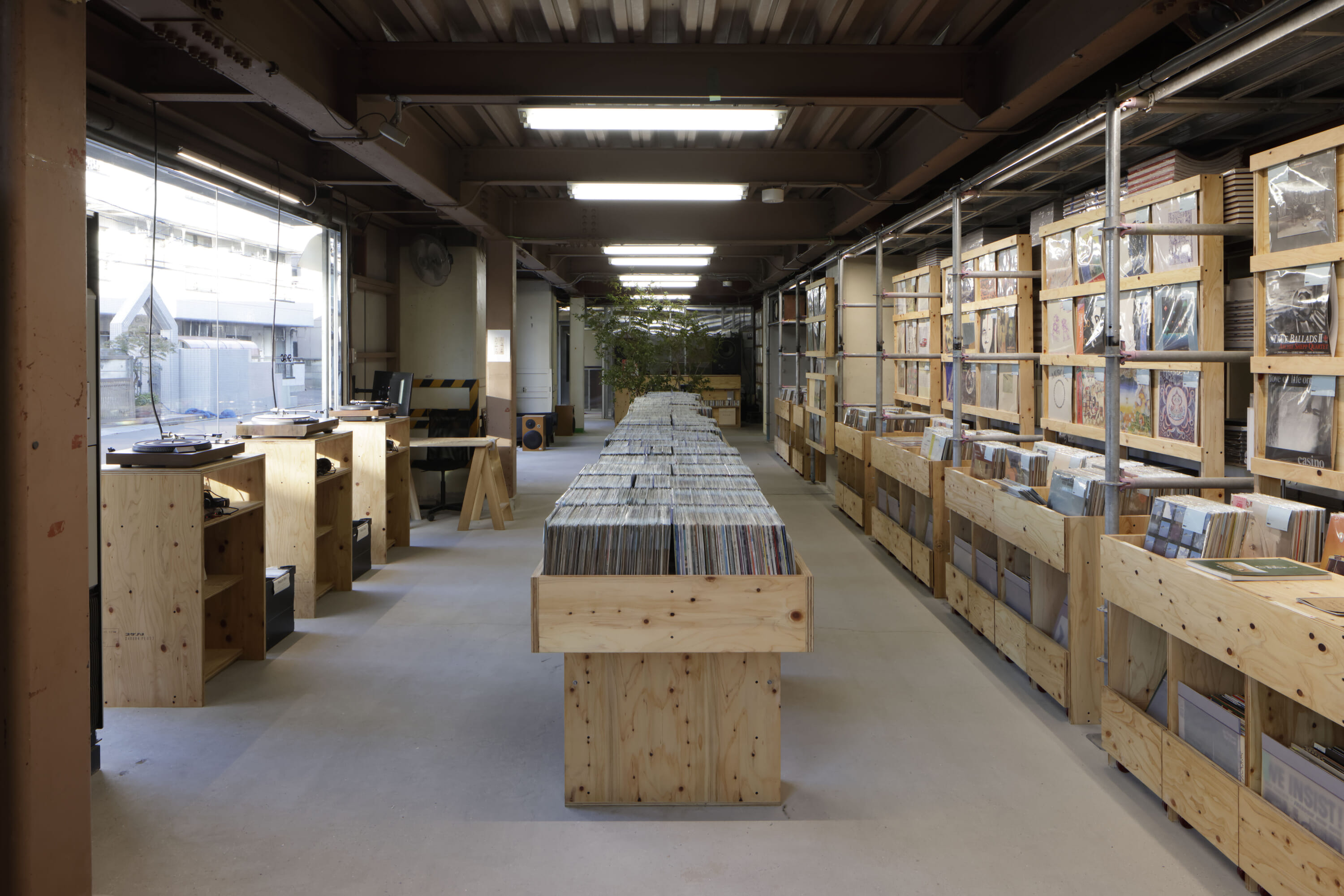
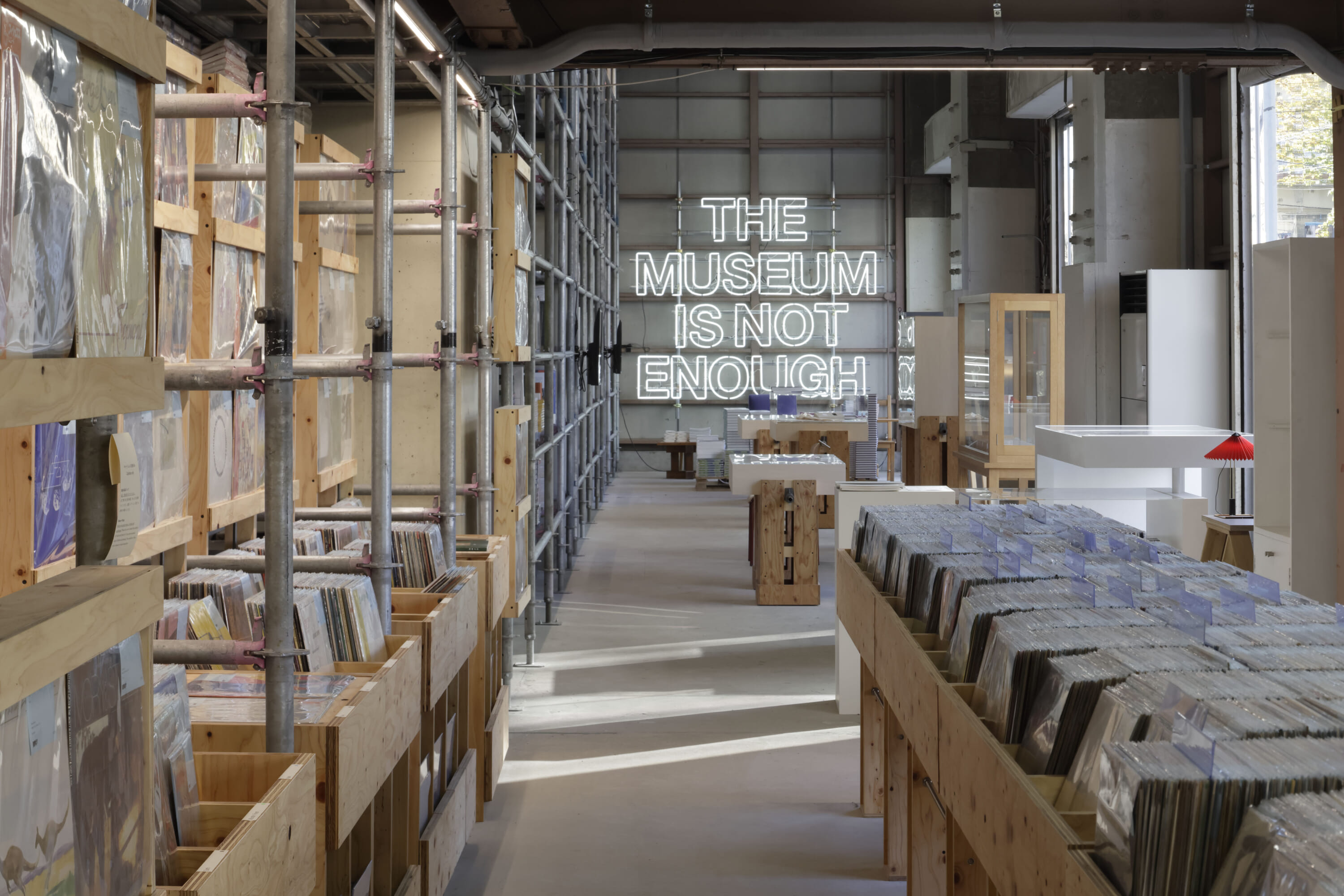
Next door, Vinyl Delivery Service (VDS) houses a collection of over 8,000 secondhand records, many organized not just by genre, but also by mood, color or elemental associations. You can test out the records on open listening stations near the window filled with ambient light.
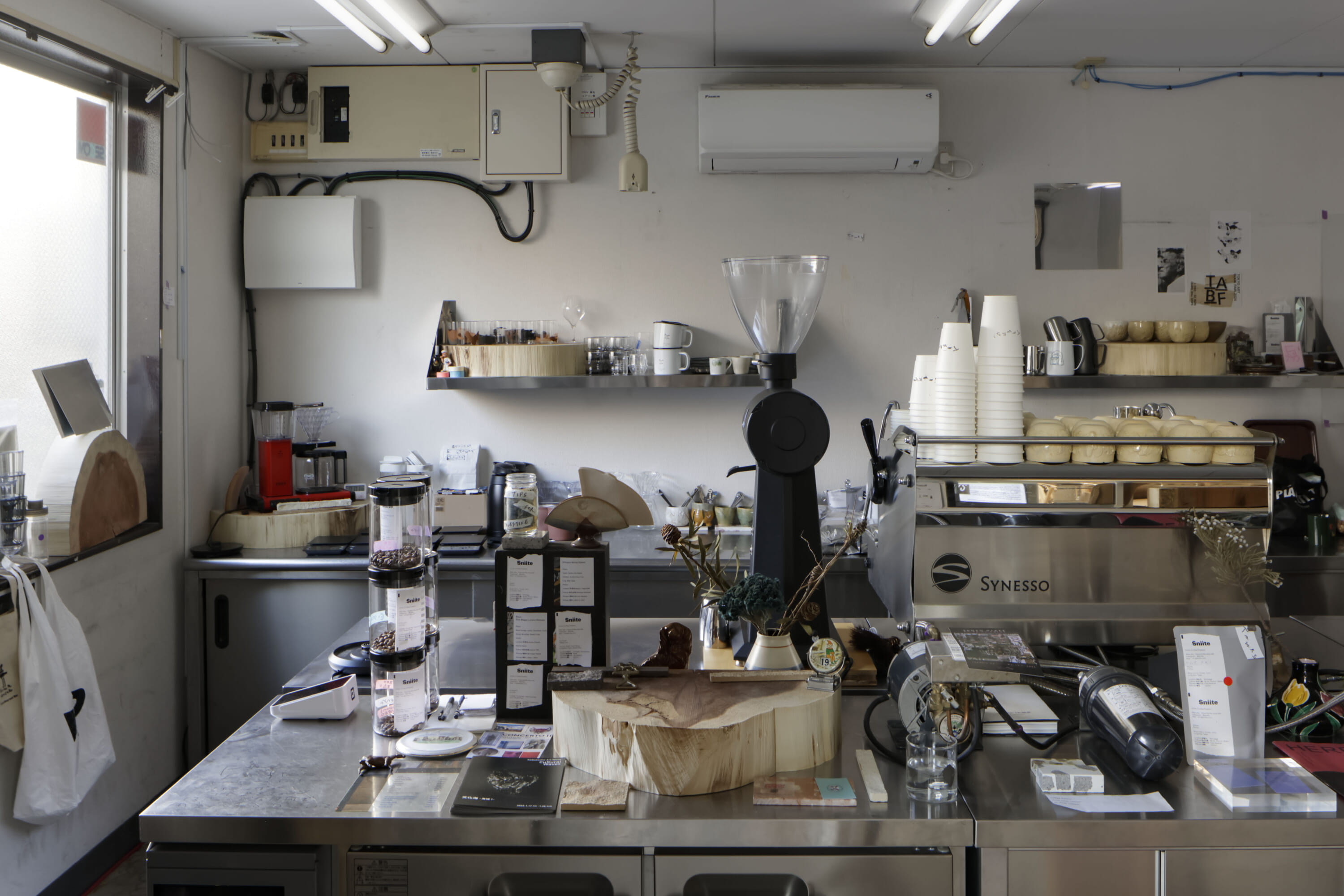
Then comes the cafe, playfully titled Tawks — meant to echo Skwat. Known for specialty coffee served in handmade ceramic cups and vegan treats, the cafe’s design evolves perpetually. It also serves as the site of rotating exhibitions. During my visit, seating was constructed from stacked concrete blocks topped with rubber sheets for comfort — a characteristically ad hoc detail that added to the site’s rough charm.
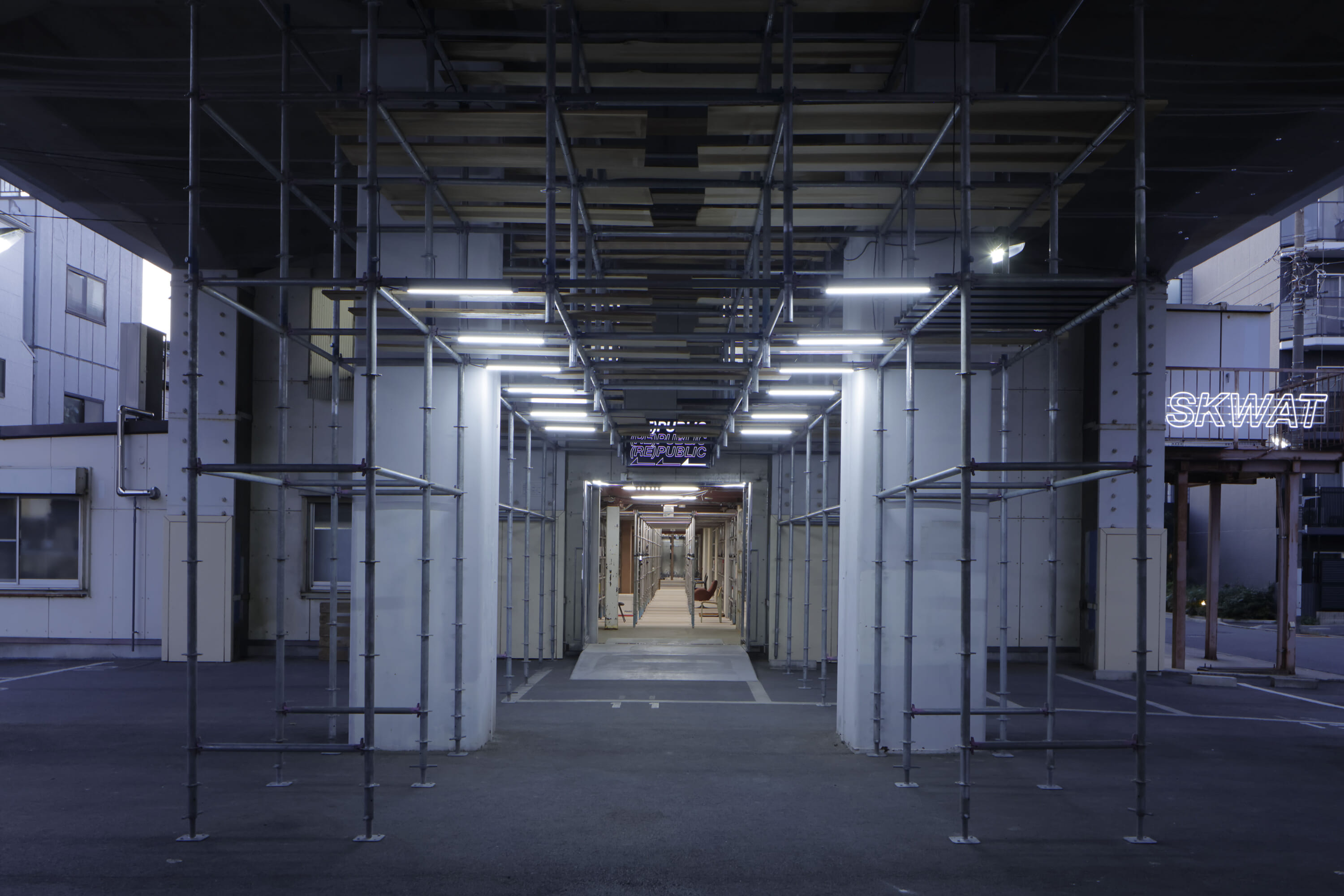
The entire space preserves the industrial integrity of the underpass — concrete pillars, exposed steel, warehouse bones — while inserting minimal, functional interventions.
More than a place to consume, SKAC is a place to convene — and it continues to grow. “We now plan to expand SKAC further beneath the elevated railway over the next few years,” Nakamura says. “Our future objectives include further strengthening the bottom-up ethos and ensuring this space remains an experimental ground for creation, perpetually unfinished.”
Skwat and the Future of Tokyo
As Skwat continues to evolve, it represents a compelling vision for Tokyo’s future. Where others see decay or vacancy, Nakamura and his collaborators see opportunity — not just for architecture, but for community and renewal.
By treating design as a process rather than a product, and by allowing space to remain in flux, Skwat challenges the idea that a building can ever be “finished.” The collective’s projects remind us that cities don’t need to be rebuilt to be reborn.
More Info
Keep up with Skwat on Instagram here.
For more about Daikei Mills, visit its website.