It’s the middle of the night in rural Kyushu circa the 1700s. A young man is quietly making his way toward the house of a young woman who caught his eye during the last harvest festival. Today, she’s sleeping in a backroom, which will give them extra privacy. He finds the door thanks to a fortunately forgotten lantern. He goes inside, and the girl tells him her parents are already asleep or out. What a series of lucky breaks for the boy. Except — not really.
The girl’s father left the lantern there on purpose and the entire village (or at least the youth association) knows that the two are spending the night together; if they look inside the basket by the door, they might find snacks made by the girl’s mother for after. Specifically, for after they have sex to see if they are compatible. Later, maybe they will marry — or maybe they won’t.
Welcome to the fascinating world of feudal Japan’s “free love within rules,” known as yobai (night-crawling).
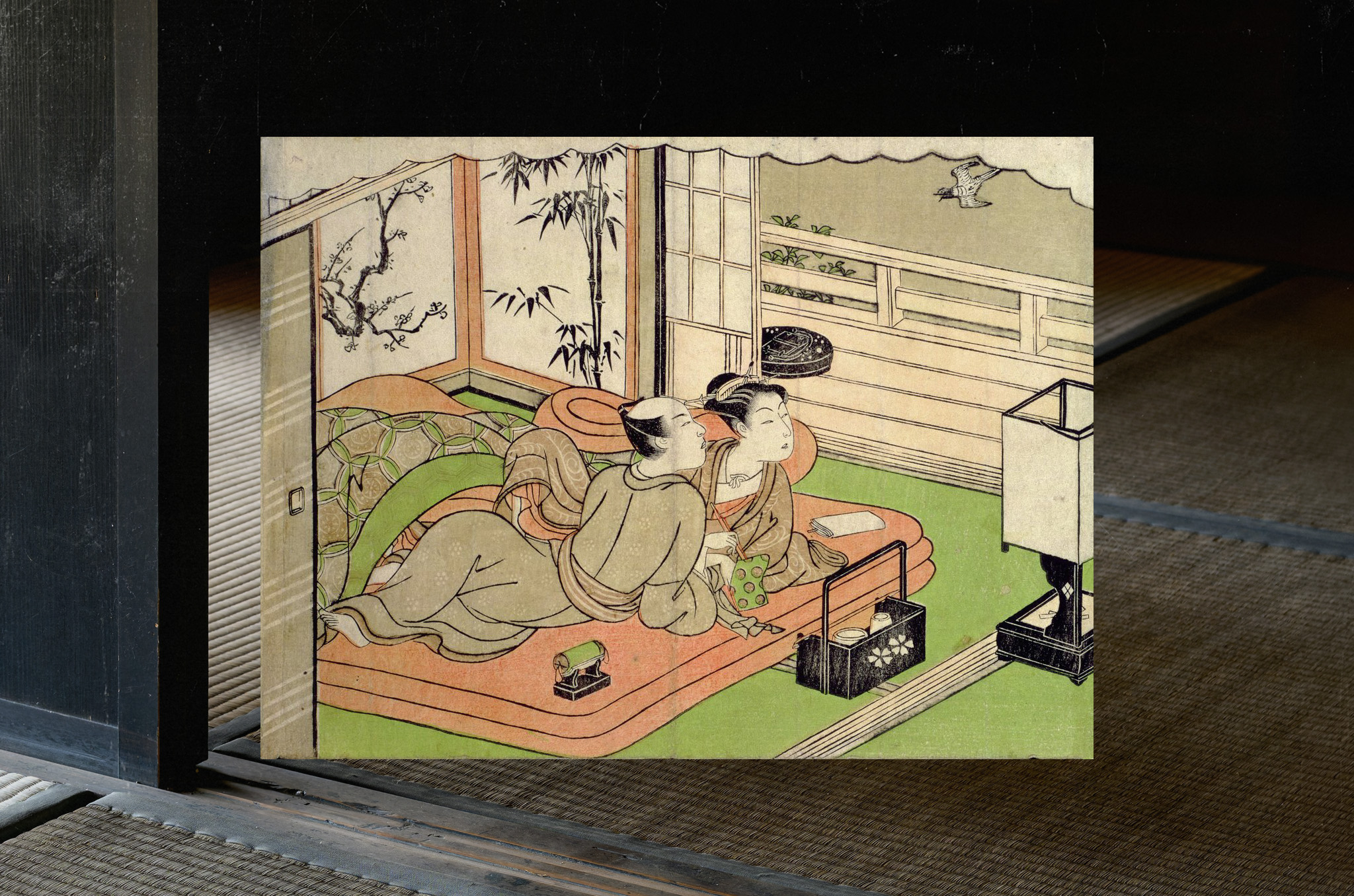
“Lovers listening to a cuckoo” by Ippitsusai Buncho
From the Kyoto Court to Fishing Villages
Most modern puritanical ideas about sex and virginity can be traced back to the upper classes, who were obsessed with the legitimacy of their heirs because of the titles and money that were up for grabs. Japan was a bit looser about those things. The Kyoto Imperial Court, going as far back as the Heian period (794–1185), was actually very OK with casual sex — they saw it as a potential step toward marriage. But even if no matrimony materialized, nobody was “ruined.” There was no “scandal.” Because, in most cases, everyone already knew who was sleeping with whom.
Nobles didn’t do anything low-key, and it wasn’t strange for a Kyoto aristocrat to visit his lover (who might be single, married or widowed) with his attendants in tow, arriving in an incredibly conspicuous cart. Some entered the house more quietly, but there was almost never any question about them being turned away. Kyoto’s blueblood sex was typically the result of prolonged courting or flirting that started with exchanging erotic but euphemistic poems, and was often done with the full knowledge of the woman’s family. Many would actively encourage their daughters into sexual relationships if the man had a promising future or was already of a high court rank.
Casual flings with no expectations for anything more weren’t uncommon, but more often, the night visits were simply the result of a woman preferring to stay in her family home. Even after marriage, cohabitation didn’t occur automatically, and the husband and wife may have continued to see each other mainly at night.
The practice of nighttime visitation wasn’t limited to Kyoto’s courtly circles; it existed in rural communities as well, particularly in areas of western Japan, like Kyushu, in isolated mountain and coastal communities where social stratification was weaker. The connection between the two is uncertain, but perhaps both the Kyoto and rural traditions evolved from an earlier form of nocturnal Japanese courtship.
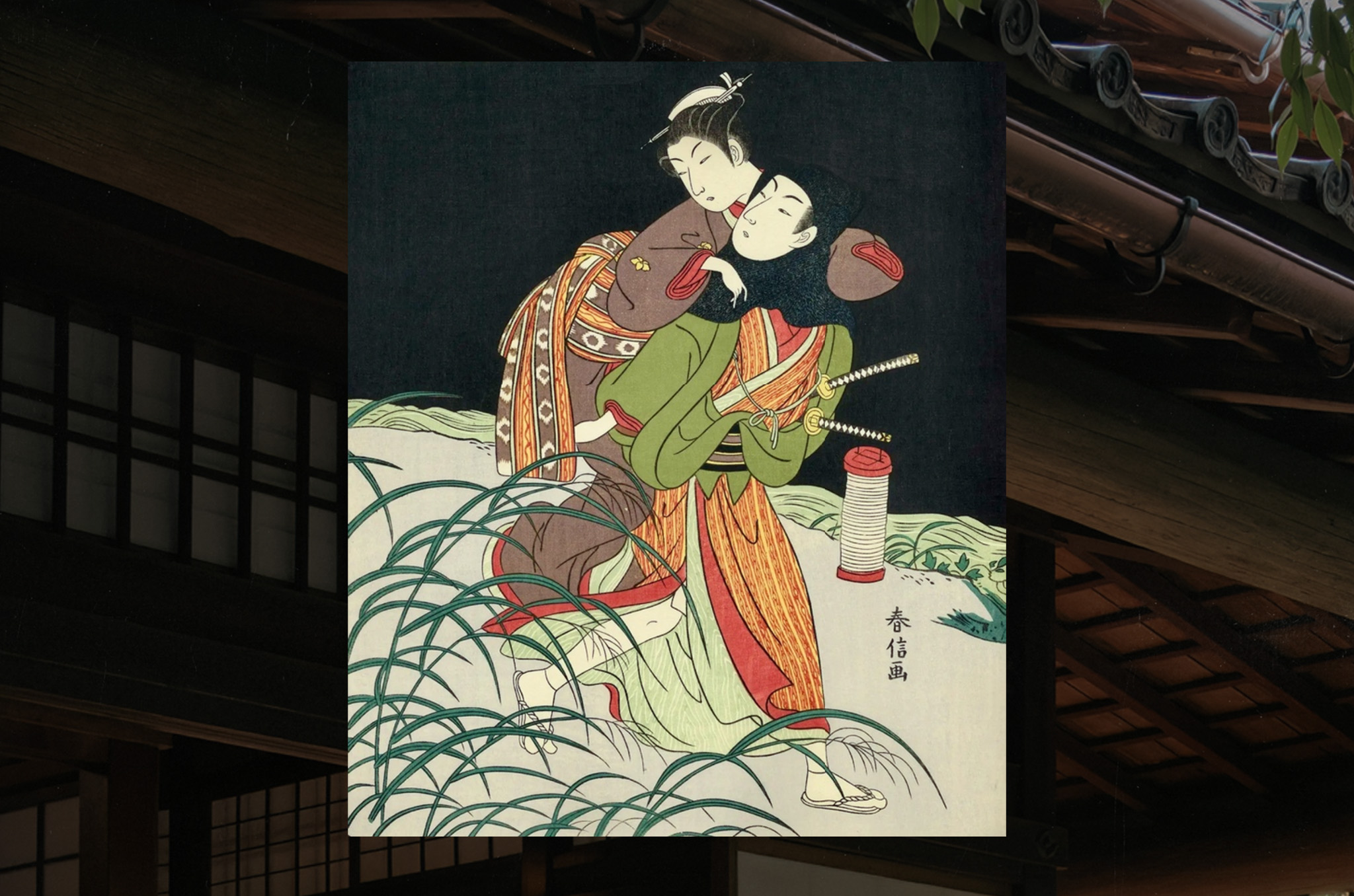
“Osen Eloping With Lover” by Suzuki Harunobu
Yobai Was Feminist, Communal and Varied
A Kyoto noblewoman had every right to end things with her lover whenever she wanted. A similar level of female agency existed in villages where men and women were of similar standing. It’s why yobai didn’t catch on in less egalitarian areas like northeastern Japan. In places without strong patriarchal control, though, the idea flourished as a kind of “test marriage,” whose rules were enforced by wakashugumi village youth associations.
Wakashugumi did it all, from organizing festivals (where young people met) to handling village defenses, firefighting and matchmaking. They kept an eye on young men, making sure that their advances were reciprocated, that they behaved respectfully and, if they were refused, that they didn’t turn into feudal incels, going on about how all women were trash. Going against the wakashugumi could result in fines, beatings and banishment from the village. Some places even had mentoring programs for girls or, in rare cases, a system of female-led yobai, where the girl visited a boy she liked in his home.
Although it was called “night-crawling,” there was no need for secrecy, as the visits were socially negotiated and signaled in advance. But, still, some sneaking around was involved because when you’re young, you may not want literally everyone around to know your business. But that, too, was part of yobai. Happy married couples (better yet, ones with complementary labor skills) could be a real gift to a village. Sex and marriage were thus viewed less as private matters and more as communal issues.
For this reason, paternity wasn’t always a huge deal to yobai communities. A girl might get pregnant during night-crawling, then dismiss the father and end up marrying someone else. The child would ultimately be raised by the whole village, so the idea of a biological father was of little concern — usually. Ultimately, there wasn’t one form of “yobai.” Even egalitarian villages who practiced it sometimes had stricter rules than others, only allowing one yobai partner at a time, caring about paternity or banning the practice for widows. Also …
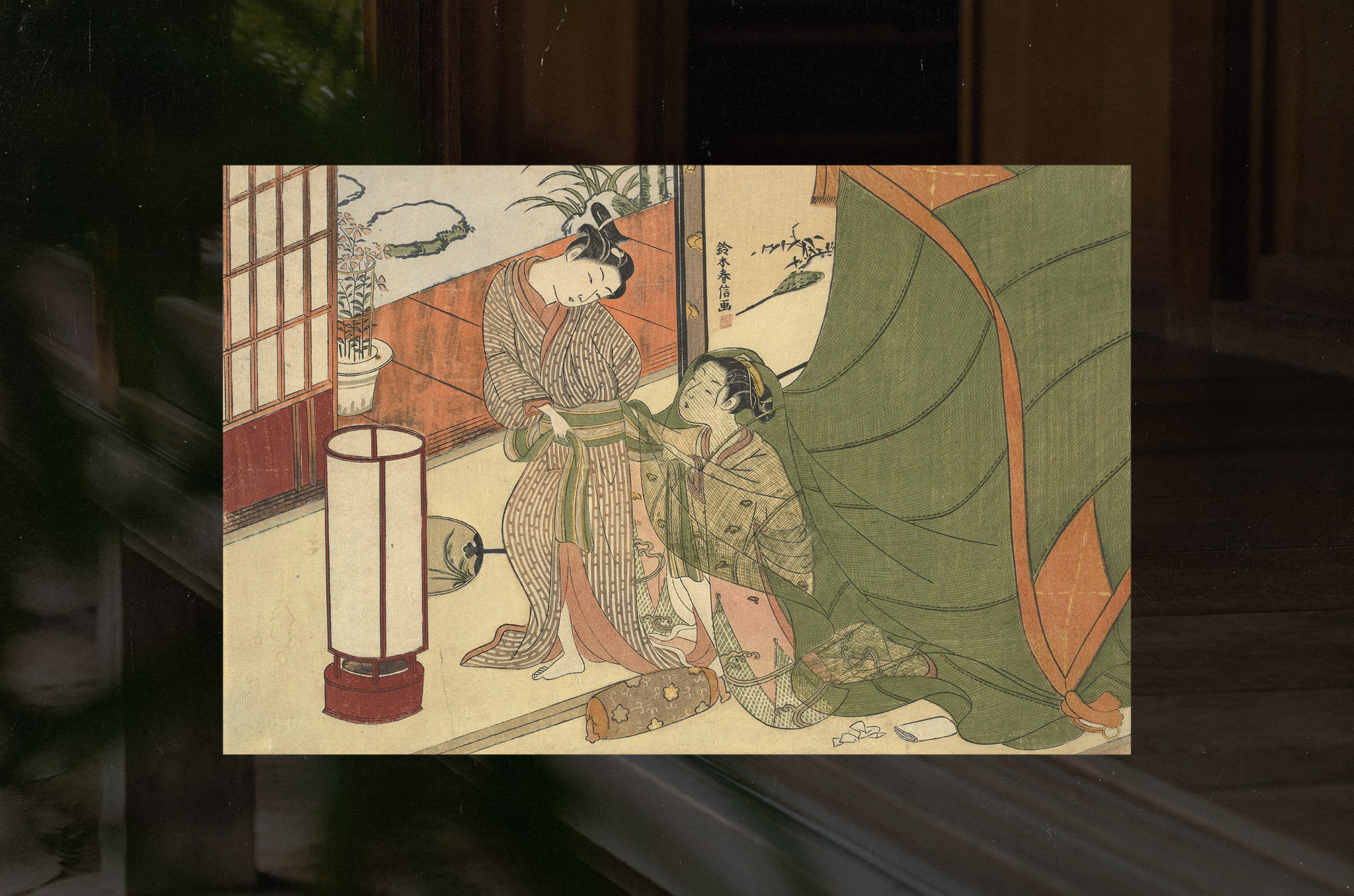
“Parting of Lovers: The Morning After” by Suzuki Harunobu (c. 1765–70)
There Was a Dark Side to Yobai
Depending on the specific village, yobai offered little to no real freedom for women. Since it was viewed as a communal thing, wakashugumi or women’s organizations could push girls into relationships they weren’t interested in because, say, the boy was great at raising silkworms and the girl in question was great at spinning silk. There was no physical coercion, but going against the wishes of the many could have terrible long-term consequences. In an isolated, tightly knit community, ostracism could be as good as death.
When the Meiji period (1868–1912) kicked off and embraced Western-style modernity, yobai was officially labeled primitive and immoral. And as more people left rural areas for the cities, and with the advent of electric lights, police presence and Victorian-era moral education, yobai started fading away until it disappeared completely. It reportedly survived in certain areas until the 1950s, and of course some believe it’s still being practiced to this day in hidden villages deep in the mountains. But that’s really more of a weird sexual fantasy than anything based in reality.
Related Posts
- Yotsumeya: The Story of Japan’s Oldest Sex Shop
- Japan’s Ancient Sex Worker Sirens: Asobi
- The History of Sex Education in Japan
Updated On July 30, 2026