Across Japan, a few “floating” torii gates appear to rise from the sea or stand lightly on the surface of a lake. Their character shifts with the tide and time of day — sometimes reflective and still, sometimes framed by waves or mist. Below, you’ll find several worth seeking out.
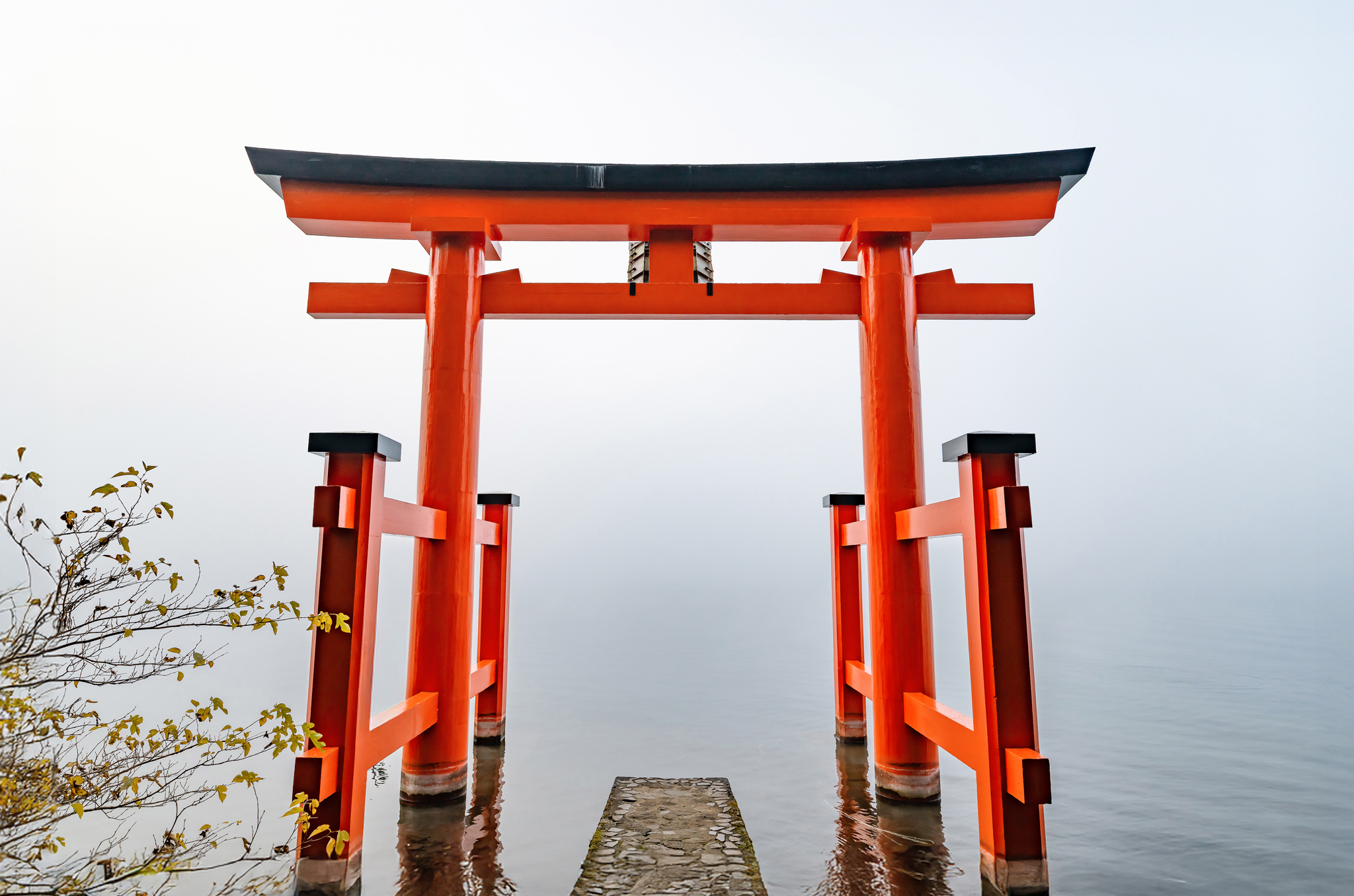
Hakone Shrine, Kanagawa Prefecture
Set on the shores of Lake Ashi, Hakone Shrine’s Heiwa no Torii is one of Japan’s most photographed spots; if you arrive during peak hours, you’ll likely have to wait in line for quite a while to take a photo beneath it. But despite being a popular tourist spot, it still invokes tranquility and a sense of awe; the gate stands at the water’s edge, forest presses in from behind and the lake expands out toward the horizon.
Many visitors arrive for the classic photograph, but it’s worth taking time to walk through the torii’s surrounding forested shrine complex, which dates back to the eighth century and contains several historic subshrines.
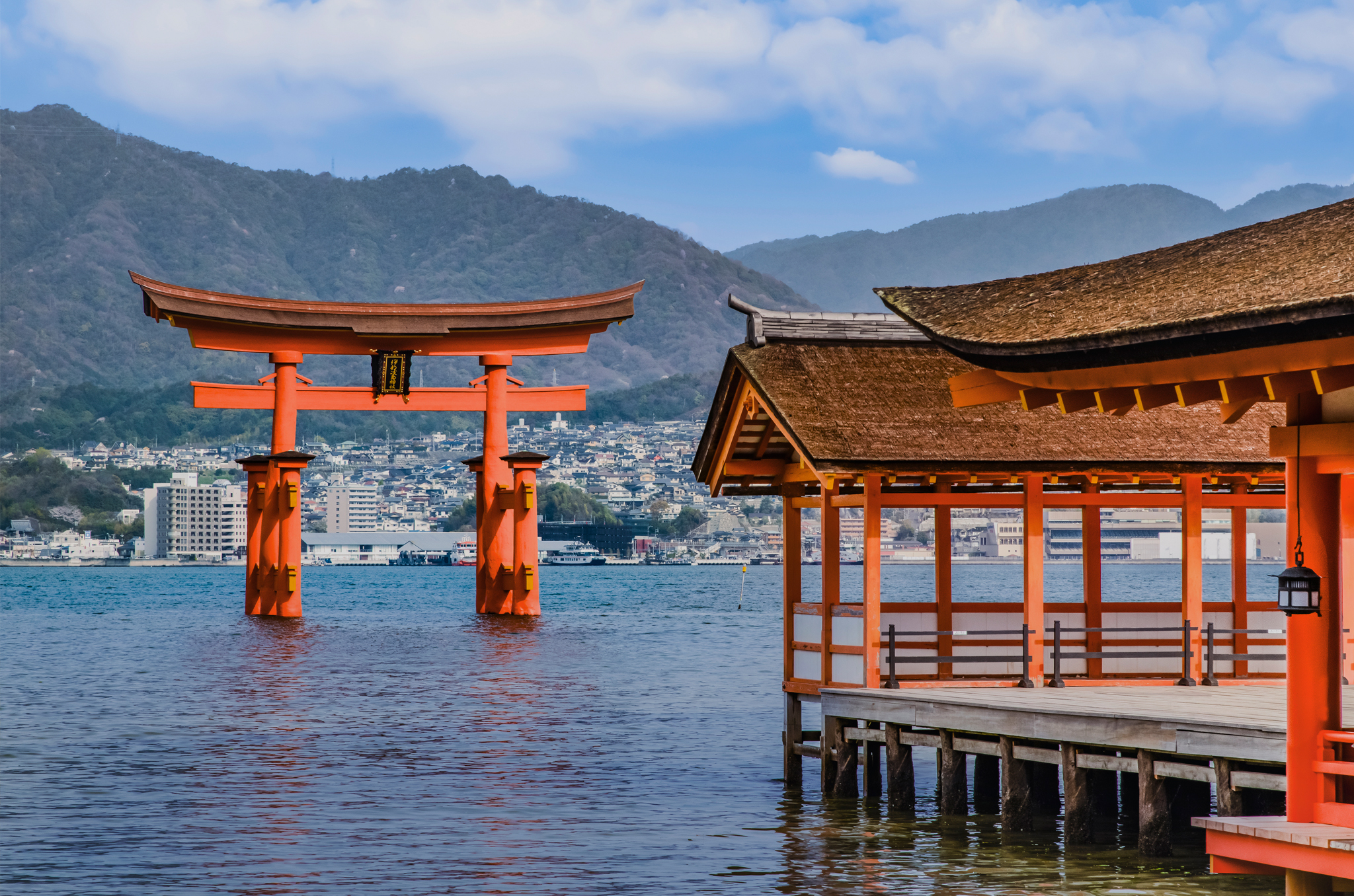
Itsukushima Shrine, Hiroshima Prefecture
Itsukushima Shrine’s torii at Miyajima is among the most photographed symbols of Japan, and justifiably so; since the 1600s, it’s been considered one of Japan’s Three Great Views. First established in the sixth century and rebuilt several times, the gate rises majestically from the Seto Inland Sea, standing in striking contrast with the surrounding mountainscape.
At high tide, it appears to hover; at low tide, visitors cross the seafloor on foot and stand beneath its enormous pillars. The island itself is equally rewarding, with walking trails to Mount Misen, serene shrine buildings built over water and resident deer drifting through town. Stay overnight if you can. When the day-trippers leave, lanterns glow along the shoreline, creating a serene and ethereal atmosphere.
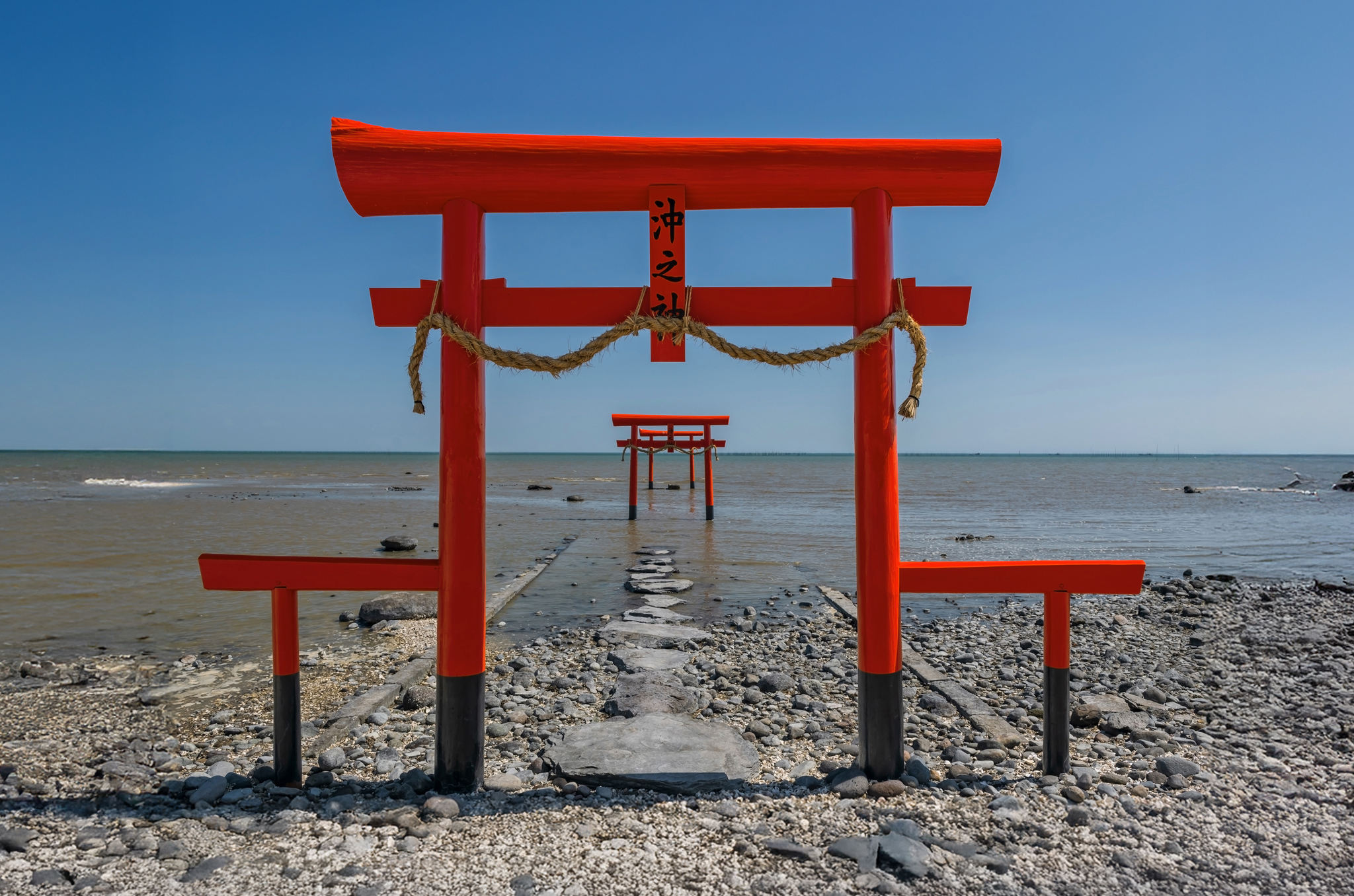
Ouo Shrine, Saga Prefecture
Ouo Shrine can be found in Tara town, Saga Prefecture, a place with a charmingly mystical claim to fame: Because it has the largest tidal range in Japan, it’s said to be the place where you can most clearly feel the power of the moon. The torii gates at Ouo Shrine come in a set of three, extending into the Ariake Sea in an arresting procession.
This is perhaps the best place to appreciate the town’s famous tidal fluctuations. At low tide, visitors can walk out across wet sand and stones directly toward the gates; at high tide, they appear to emerge from the sea at a distance.

Sakurai Shrine, Fukuoka Prefecture
The dazzling white torii gate at Sakurai Shrine provides a stunning visual, emerging boldly from the cerulean sea. Behind it stand the famous meoto iwa — “wedded rocks” bound by a shimenawa rope. The name refers to the fact that they appear to be leaning toward each other like a loving couple, and they’re said to represent the Shinto deities Izanagi and Izanami. This sacred site is thus thought to be especially auspicious for matters relating to love.
Futamigaura Beach, where the shrine stands, is an easy day trip from Fukuoka city. Known for its relaxed atmosphere and stylish cafes, it’s also recognized as one of the country’s top 100 beaches, as well as one of the top 100 spots for viewing the sunset.
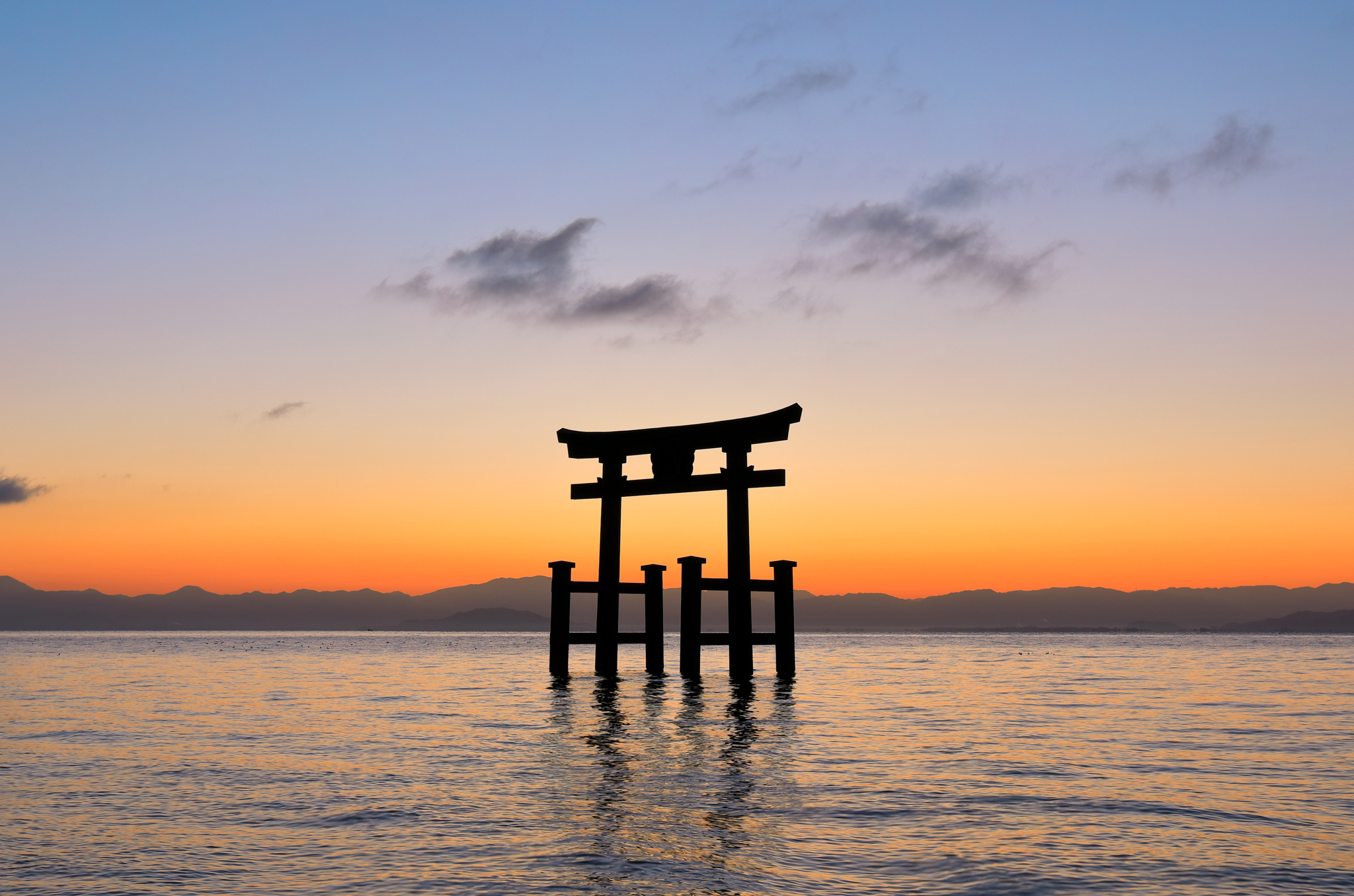
Shirahige Shrine, Shiga Prefecture
Shirahige Shrine sits on the western bank of Lake Biwa, Japan’s largest lake, and its offshore torii is known for its quiet beauty. It’s a view that’s breathtaking in its simplicity: one gate, open water, no competing structures along the horizon. The shrine is dedicated to longevity, and its name, which means “white beard,” suggests an ancient guardian figure.
Sunrise is the most atmospheric time to visit, when the lake surface often reflects the torii so clearly that it appears doubled. Because Biwa is ringed with cycling routes and lakeside inns, the site works naturally into broader itineraries — particularly those connecting Shiga and Kyoto.
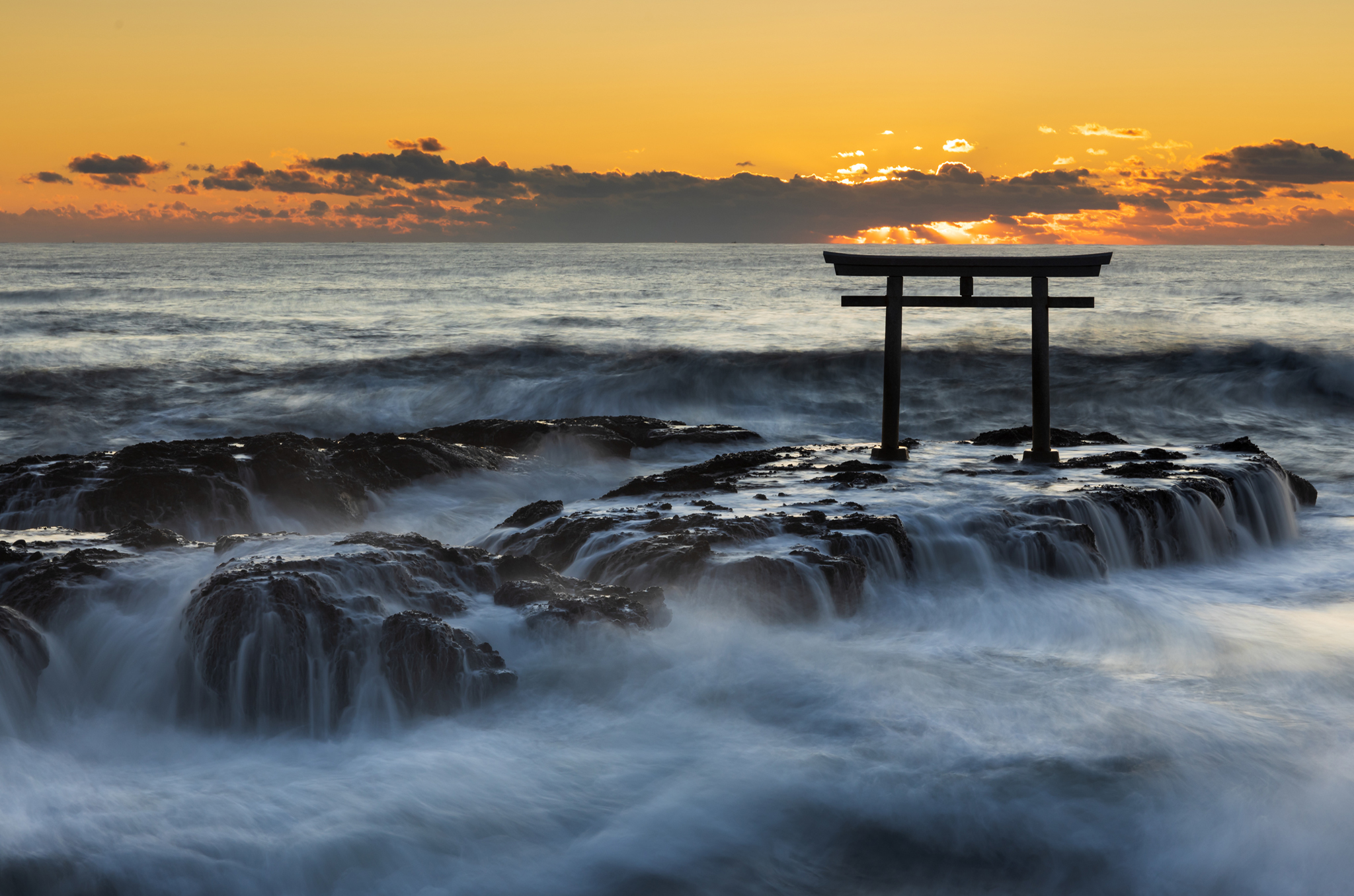
Oarai Isosaki Shrine, Ibaraki Prefecture
On the Pacific-facing coast of Ibaraki, the Kamiiso no Torii stands on a rock shelf where waves break hard and consistently. Unlike the calm-water environments at Hakone or Biwa, this gate’s identity is shaped by movement and force — it stands dramatically on the rugged coastline, and waves crash around its base.
Sunrise is the peak moment; photographers often gather before first light, waiting for the sun to rise directly behind the gate. A short walk inland leads to the main shrine buildings, which have a distinctive feature: In place of the traditional guardian komainu lion-dogs, the shrine has statues of frogs.