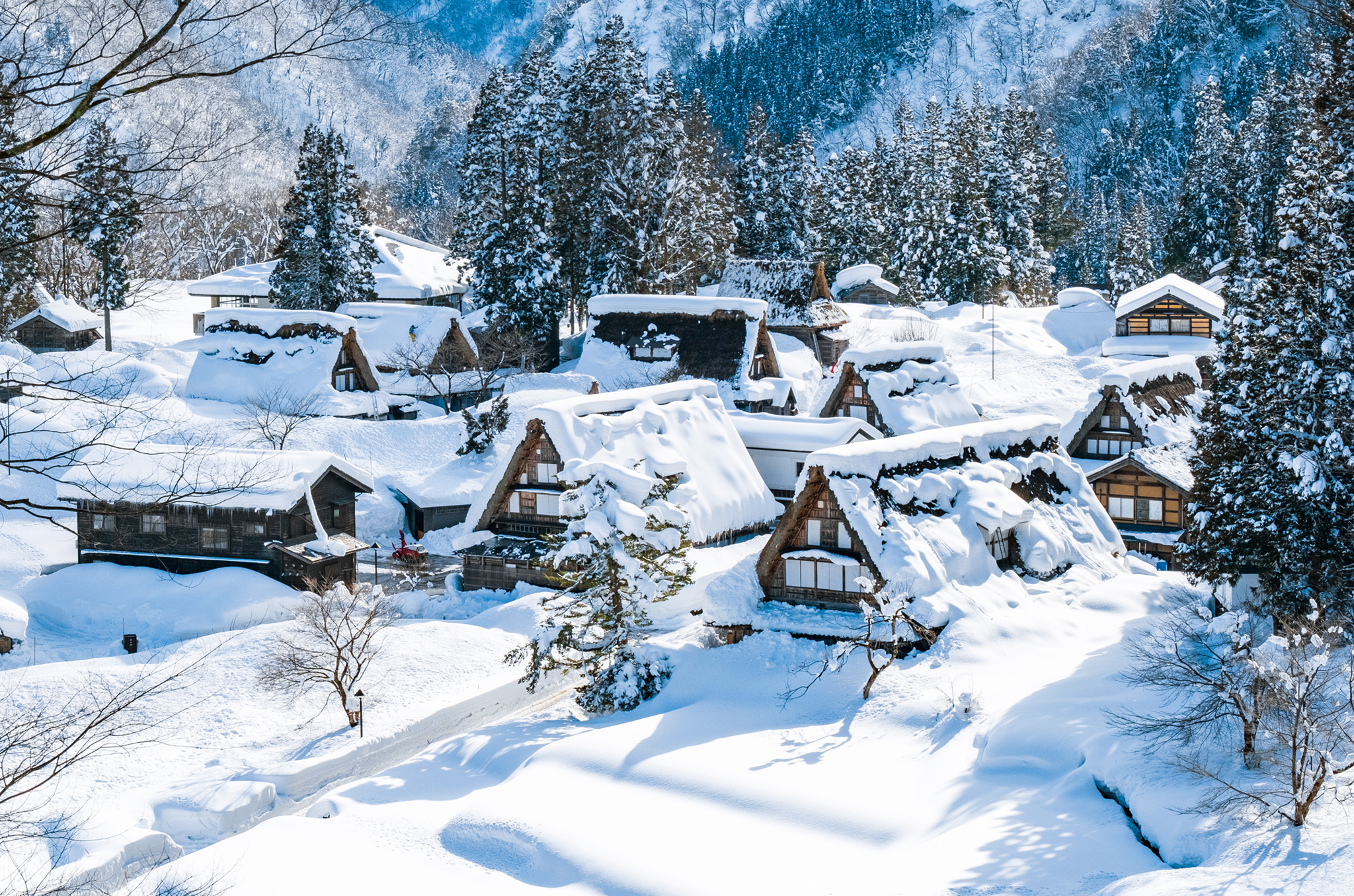
Travelers from around the world fly to Japan during the spring or fall to revel in the blushing pink cherry blossoms or fiery carpets of foliage, but many are sleeping on the country’s abundance of uniquely beautiful winter destinations. Beyond ski and hot spring resorts, Japan is dotted with dazzling snowscapes, immortalized in paintings like “Evening Snow at Kanbara” by Hiroshige and literature like Snow Country by Yasunari Kawabata.
These wintry landscapes are worth seeking out just to admire, allowing you to make the most of January and February — months that are typically considered off-season. From bizarre, towering “snow monsters” to the enchanting sight of bathing snow monkeys, these five iconic locales transform the season’s chill into evocative, poetic tableaux.
Shirakawa-go and Gokayama, Gifu and Toyama Prefectures
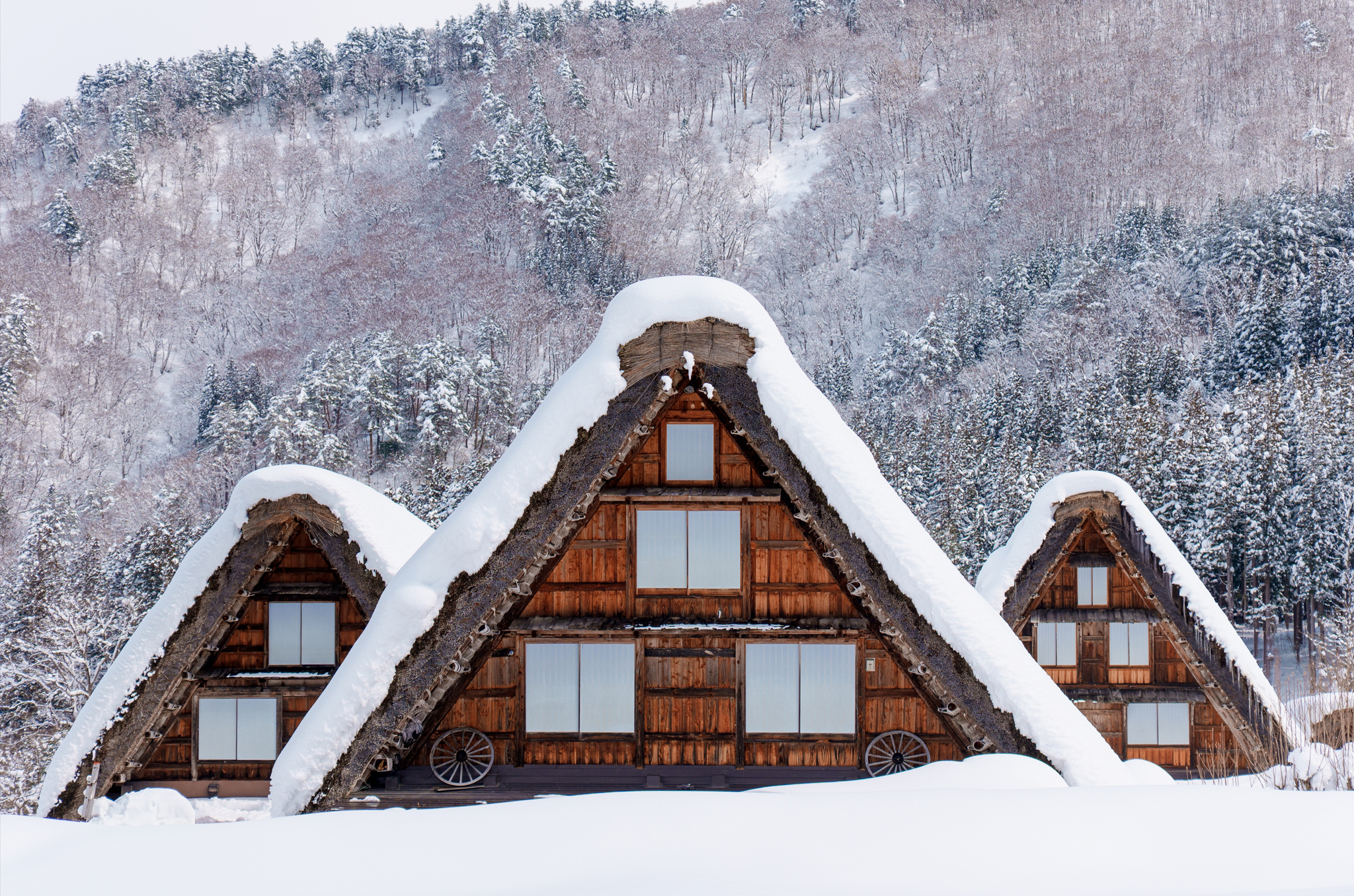
Glowing softly in the embrace of the snow-laden peaks of the Japanese Alps, the regions of Shirakawa-go and Gokayama hold one of Japan’s most distinctive and enchanting winter sights. A UNESCO World Heritage Site since 1995, the area is defined by its gassho-zukuri farmhouses — some of which are thought to be over 250 years old — featuring distinctive thatched roofs set at a steep angle to withstand heavy snow. When deep winter descends in January and February, you might be lucky enough to catch the valley draped in a cloak of white, framing a fairytale townscape under a glittering, velvety sky.
The two areas are home to three traditional villages: Ogimachi in Shirakawa-go and Ainokura and Suganuma in Gokayama. Of these, Ogimachi is the largest and most tourist-friendly, and many of its farmhouses are now home to restaurants or museums. Some have also been converted into minshuku — family-operated, Japanese-style bed-and-breakfasts — allowing for an overnight stay.
On select nights in January and February, the village hosts its famous illumination event; advance reservations are required for entry, and the observation deck is limited to those participating in a tour package or staying overnight.
Zao Snow Monsters, Yamagata and Miyagi Prefectures
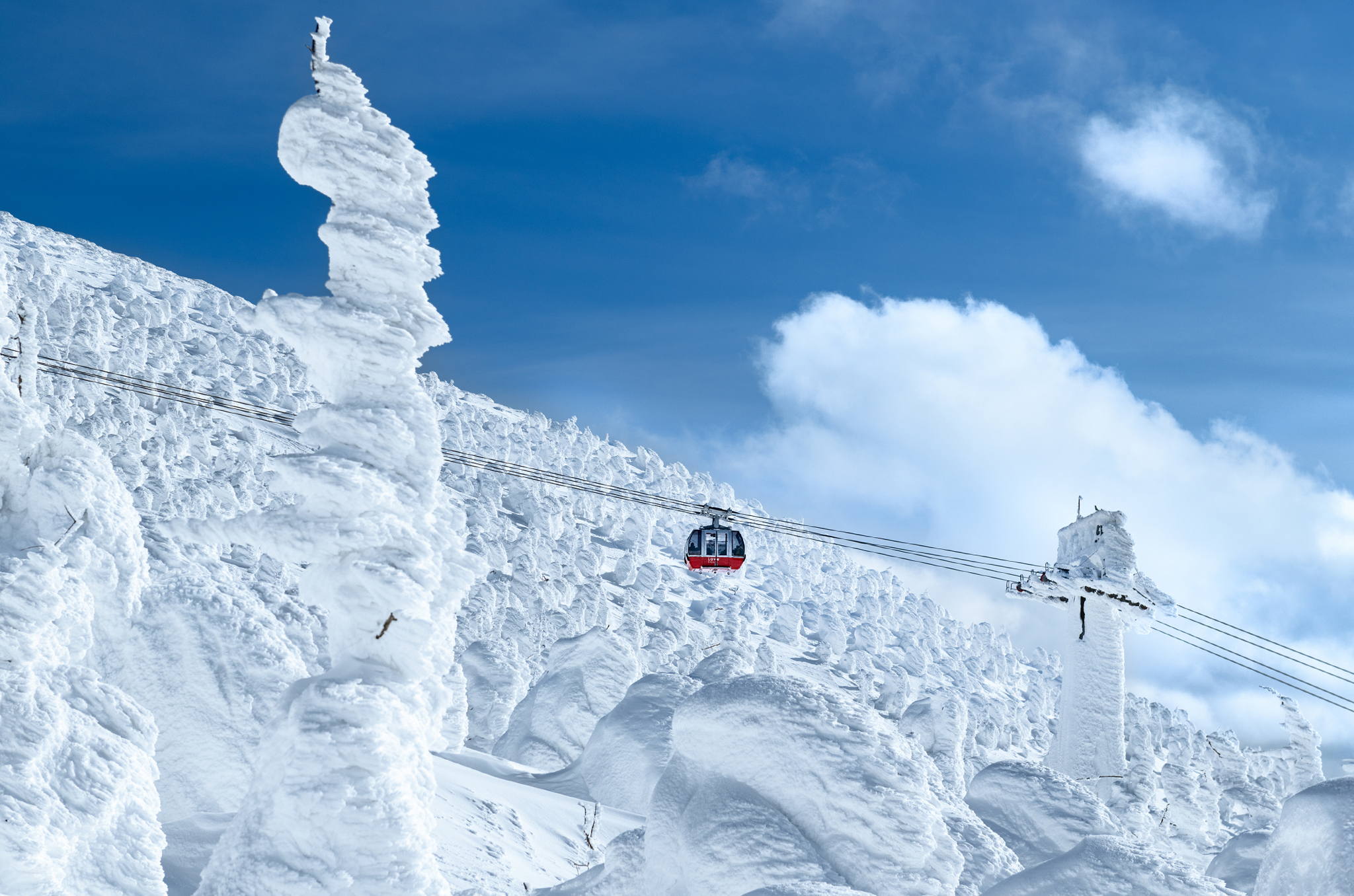
High on the slopes of the Zao Mountain Range, which straddles the border of Yamagata and Miyagi prefectures, a beautiful and eerie natural phenomenon unfolds each winter. Driven by intense subzero temperatures and fierce Siberian gales, the mountain’s native fir trees are swathed in layers of ice and compacted snow, transforming them into towering, misshapen figures reminiscent of a Tim Burton film.
Affectionately known as the Zao snow monsters, these icy trees — also called “juhyo” in Japanese — can be most easily seen near the top of Zao Onsen Ski Resort. Winter sports enthusiasts can enjoy skiing and snowboarding among the wintry beasts, though they’re arguably best viewed from above — via the Zao Ropeway, which is available to both skiers and non-skiers alike. From Zao Sanroku Station, take the Sanroku Line to Juhyo Kogen Station, then transfer to the Sancho Line, which will take you to Jizo Sancho Station.
From late December to early March, the trees are illuminated at nighttime, creating an even more otherworldly vista, which can be appreciated from a variety of viewpoints around the mountain. There are also night tours available, where visitors can ride in a heated snowcat to see the monsters up close.
The surrounding town of Zao Onsen is an incredibly popular winter sports and hot springs destination, with ample options for lodgings, including both hotels and traditional inns. If you want to see the monsters at their peak, it’s recommended to go in mid-February.
Misotsuchi Icicles, Saitama Prefecture
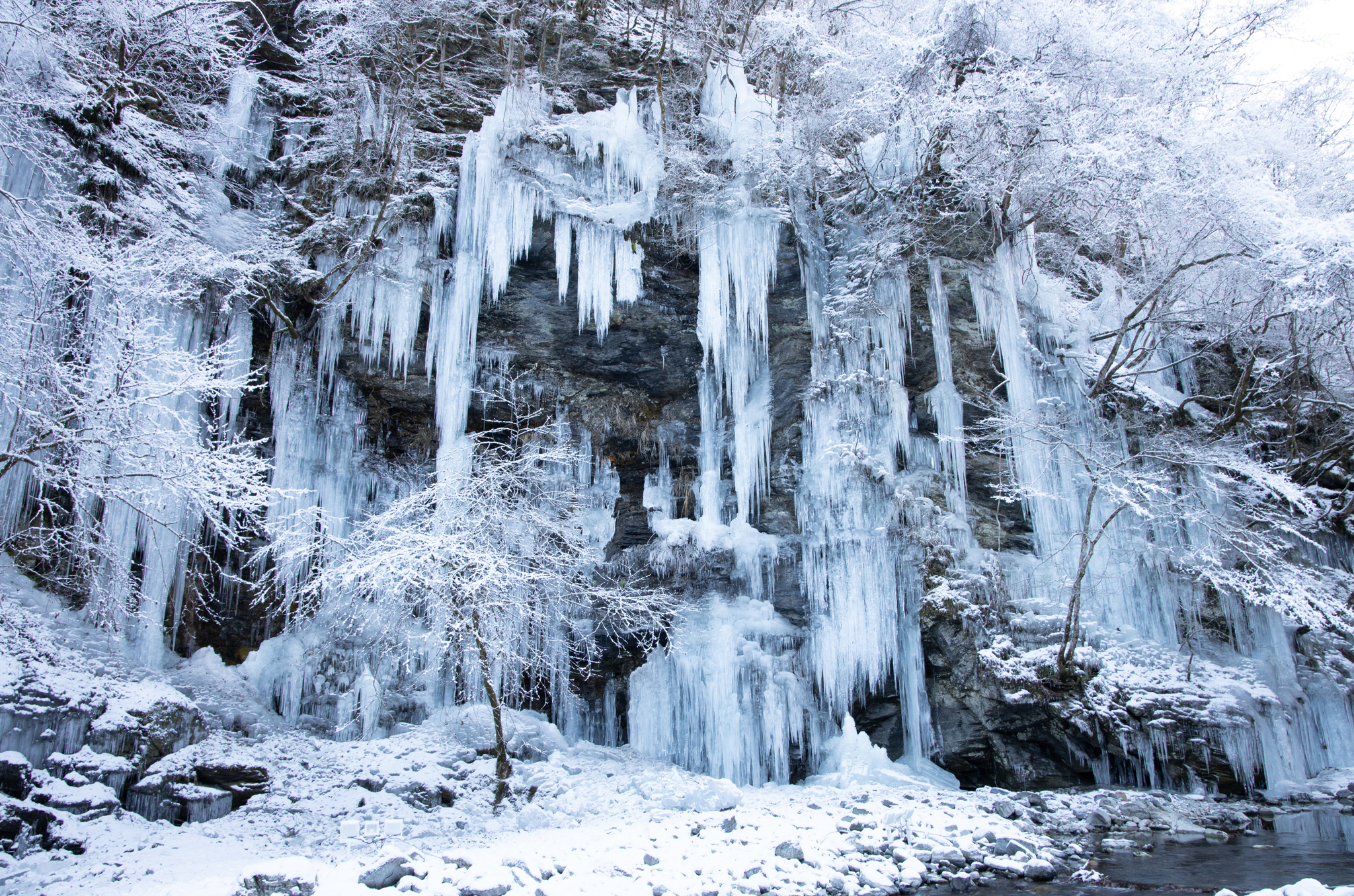
Just over two hours away from Tokyo in the mineral-rich valleys of Saitama Prefecture’s Chichibu city is an awe-inspiring natural wonder: the icicles of Misotsuchi. Resembling stalactites, these magical structures reach impressive lengths of up to 8 meters, forming an imposing wall of iridescent, cascading spikes.
The icicles are typically at their most spectacular between mid-January and mid-February, when the area’s temperatures are consistently at their lowest; during this period, the sight is further enhanced by a breathtaking illumination display at nighttime, which infuses the crystalline sculptures with shades of pink, green and violet.
The easiest way to access the Misotsuchi Icicles is by car, with limited parking available at a nearby campground. If you’re without a car, the icicles are reachable via Shinkansen and public transportation, then a short walk.
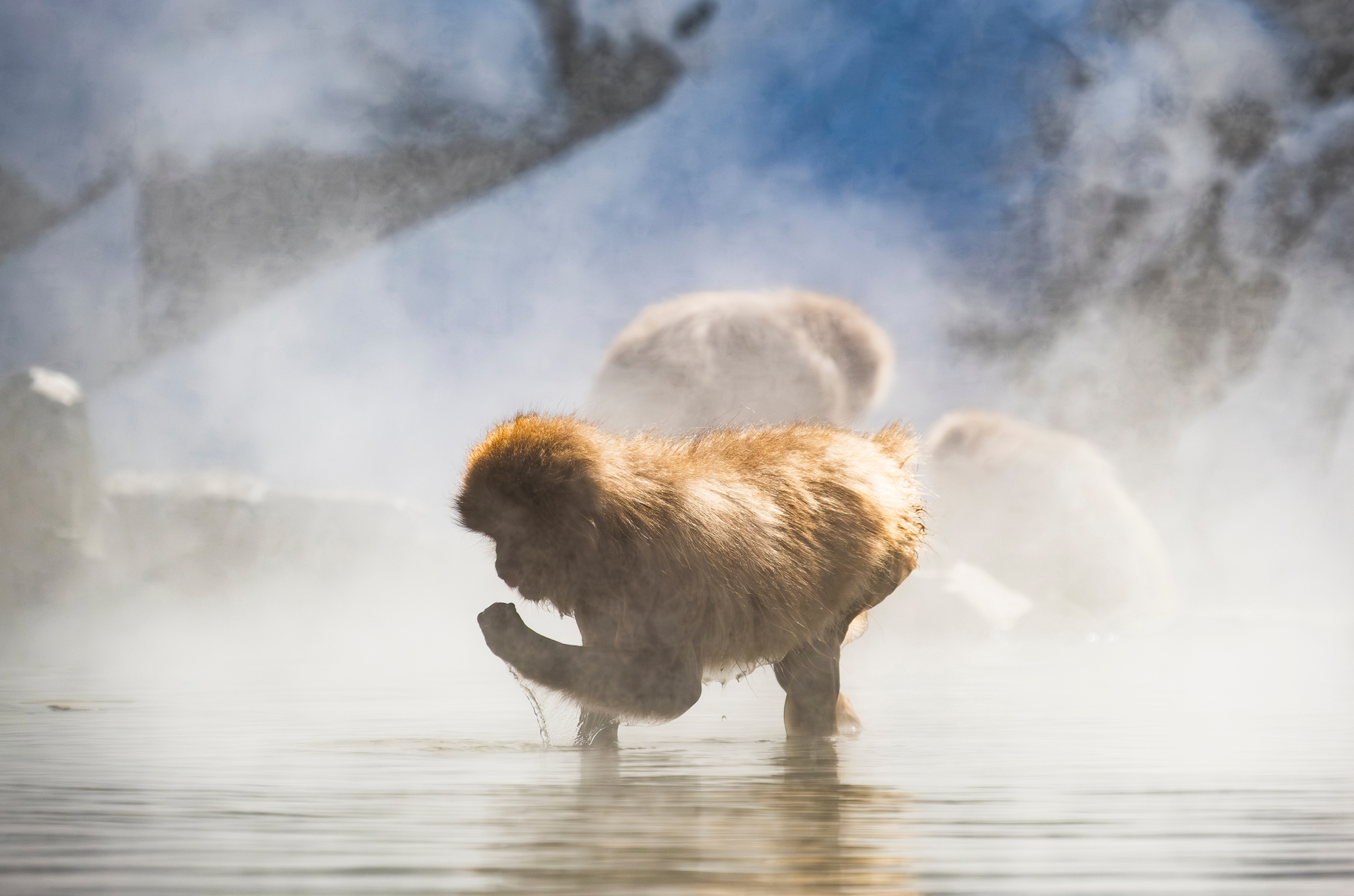
Jigokudani Monkey Park, Nagano Prefecture
In the thermal valley named Jigokudani, or “Hell Valley,” in Nagano Prefecture, a uniquely Japanese wildlife spectacle plays out amid snow-coated evergreens. Shrouded in deep snow for a third of the year, the Jigokudani Monkey Park is famously known as the domain of Japanese macaques, also known as snow monkeys.
From December to March, the macaques descend from the forested peaks to seek refuge and warmth in the steaming, sulfurous waters of the area’s hot springs. Consistently sought after by photographers, the sight is truly iconic: red-faced monkeys, fur powdered with snow, enjoying a relaxing soak with blissful, Zen-like expressions.
Visitors can reach the monkeys via a 25–40-minute walk through a picturesque woodland from the Kanbayashi Onsen bus stop. It’s worth staying overnight to enjoy the charm of the surrounding area. The nearby Yudanaka Onsen is beautiful and historic, with plenty of ryokan to choose from.
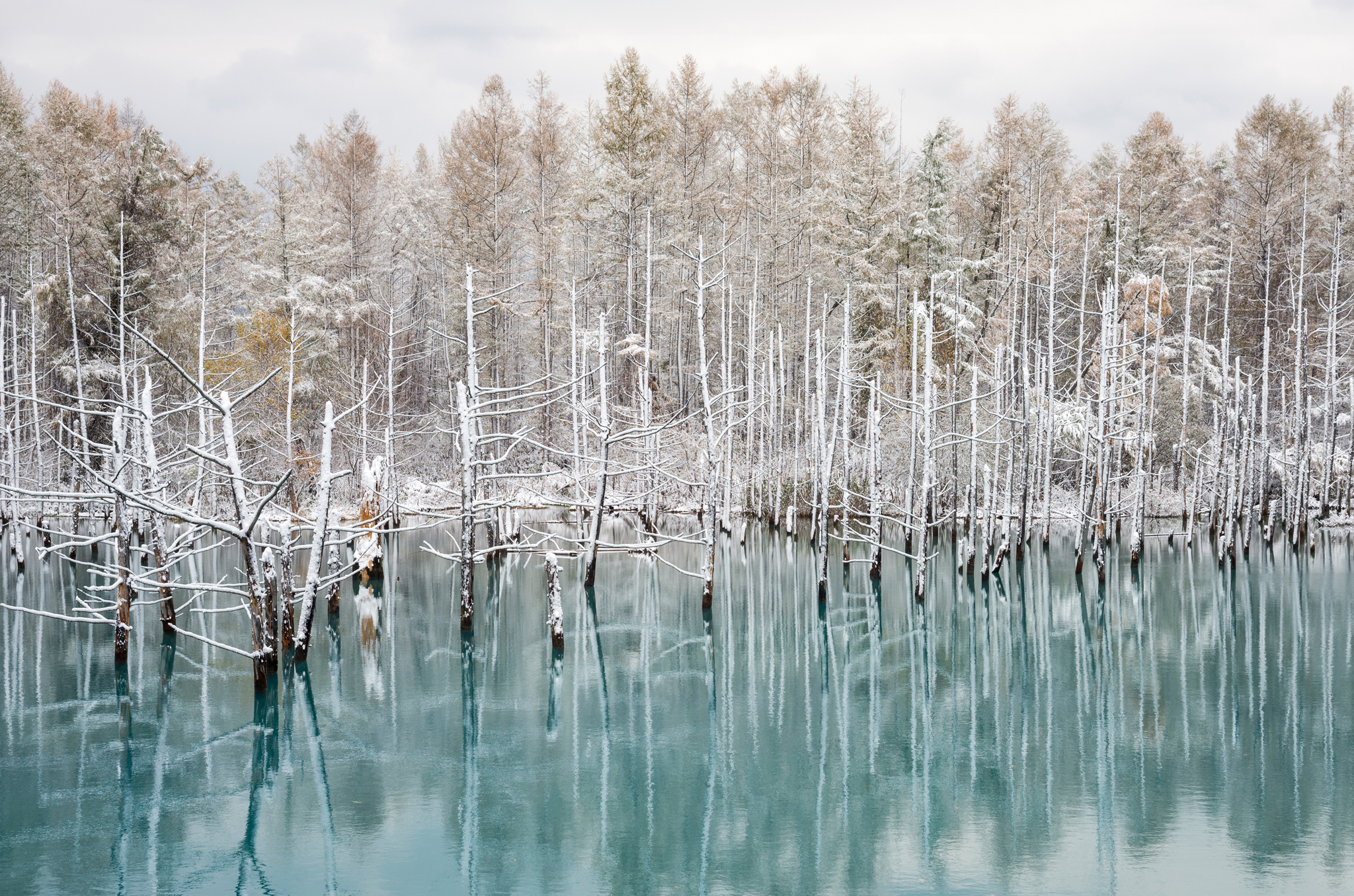
Biei, Hokkaido Prefecture
Hokkaido Prefecture’s Biei is a beloved winter destination offering some of Japan’s most ethereal snowscapes. Characterized by gentle rolling hills and wide farmlands, the agricultural town acquires a distinctly minimalist, poetic beauty when carpeted in snow. Here, the natural scenery is stripped down to its starkest, most evocative elements.
Shirogane Blue Pond is a highlight. In late fall, its milky waters reflect skeletal larch trees dusted in frost, while winter brings snow that blankets emerald-tinged ice. Evenings see the scene softly illuminated in a variety of colors. Nearby, Shirahige Falls offers a dramatic counterpoint, with spectacular curtains of water crashing into the teal Biei River below. Both are easily reached by car from Asahikawa, Hokkaido’s second-largest city after Sapporo, and short walking paths make it simple to explore and photograph these iconic spots even in the depths of winter.
No trip to Biei is complete without driving along the scenic Patchwork Road and Panorama Road areas, where endless snow fields are punctuated by single, isolated trees, some of which have been given their own names — Christmas Tree, Ken and Mary Tree and Seven Stars Tree, for instance — creating scenes straight out of a surrealist painting. The best light is often in the morning and early afternoon, so plan to pause and take in the views.
Warm up at one of Biei’s cozy cafes, where local specialties like creamy corn soup and dairy-rich desserts provide a welcome respite. The town offers a variety of cozy accommodations, from small guesthouses to intimate lodges, making it easy to extend your stay and experience Biei at a gentle pace.
Related Posts
- 8 Magical Winter Festivals in Japan: Matsuri To Enjoy in the Snow
- Winter in Shirakawa-go: A Fairy-Tale Village in the Japanese Alps
- 6 Enchanting Alternative Onsen Towns To Visit This Winter
Updated On April 21, 2026