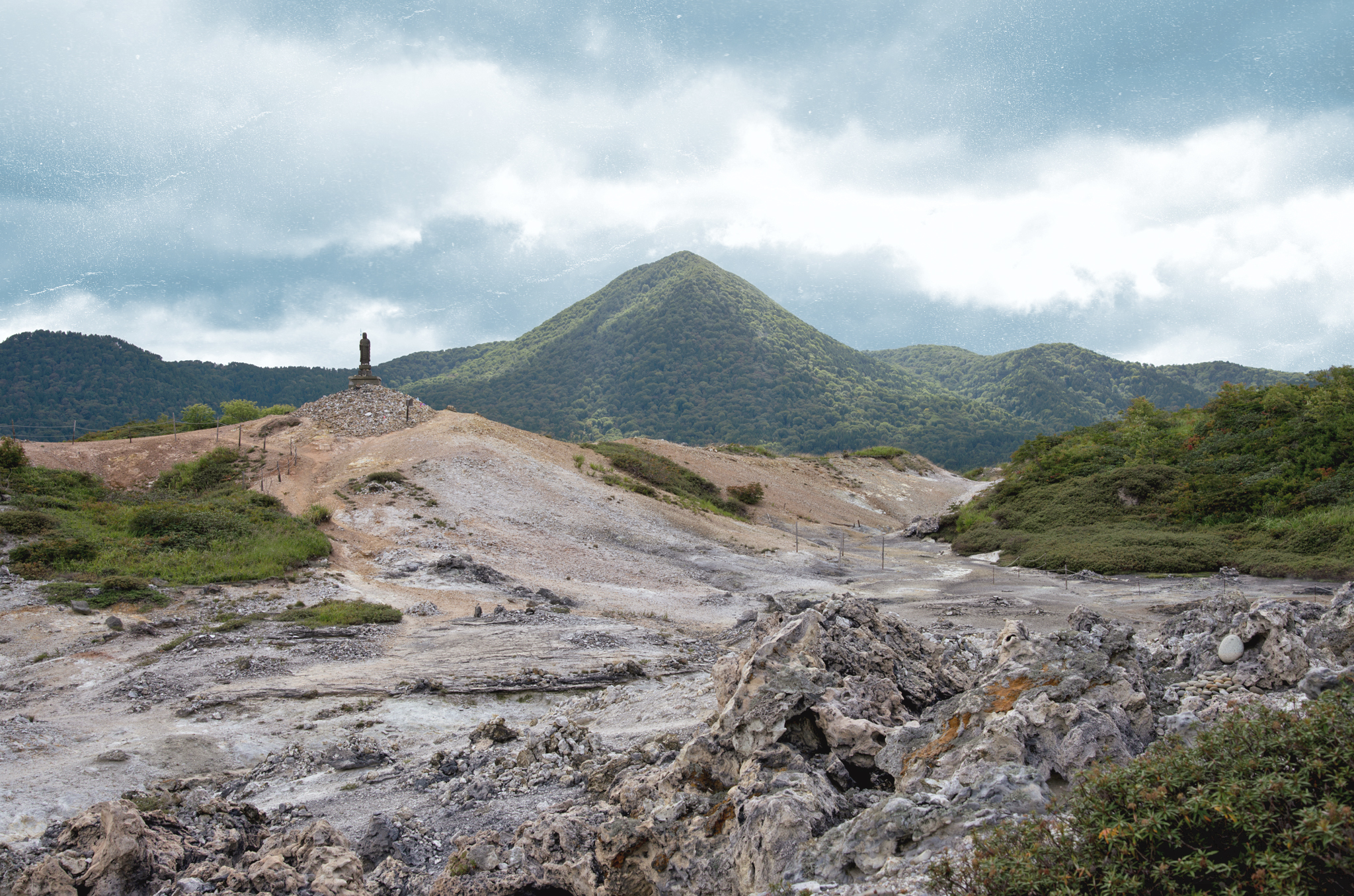
Located in Aomori, northern Japan, Mount Osore has probably never made a single person curious about the etymology of its name. All it takes is one look at its barren volcanic landscape of otherworldly rock formations shrouded in sulfuric gases and encircling pools of acid for anybody to go: “Yup. I too would call this place Mount Dread/Terror/Fear,” the literal meaning of “osore.” But that’s not the entire story. Here’s everything else you should know about Japan’s “entrance to the afterlife.”
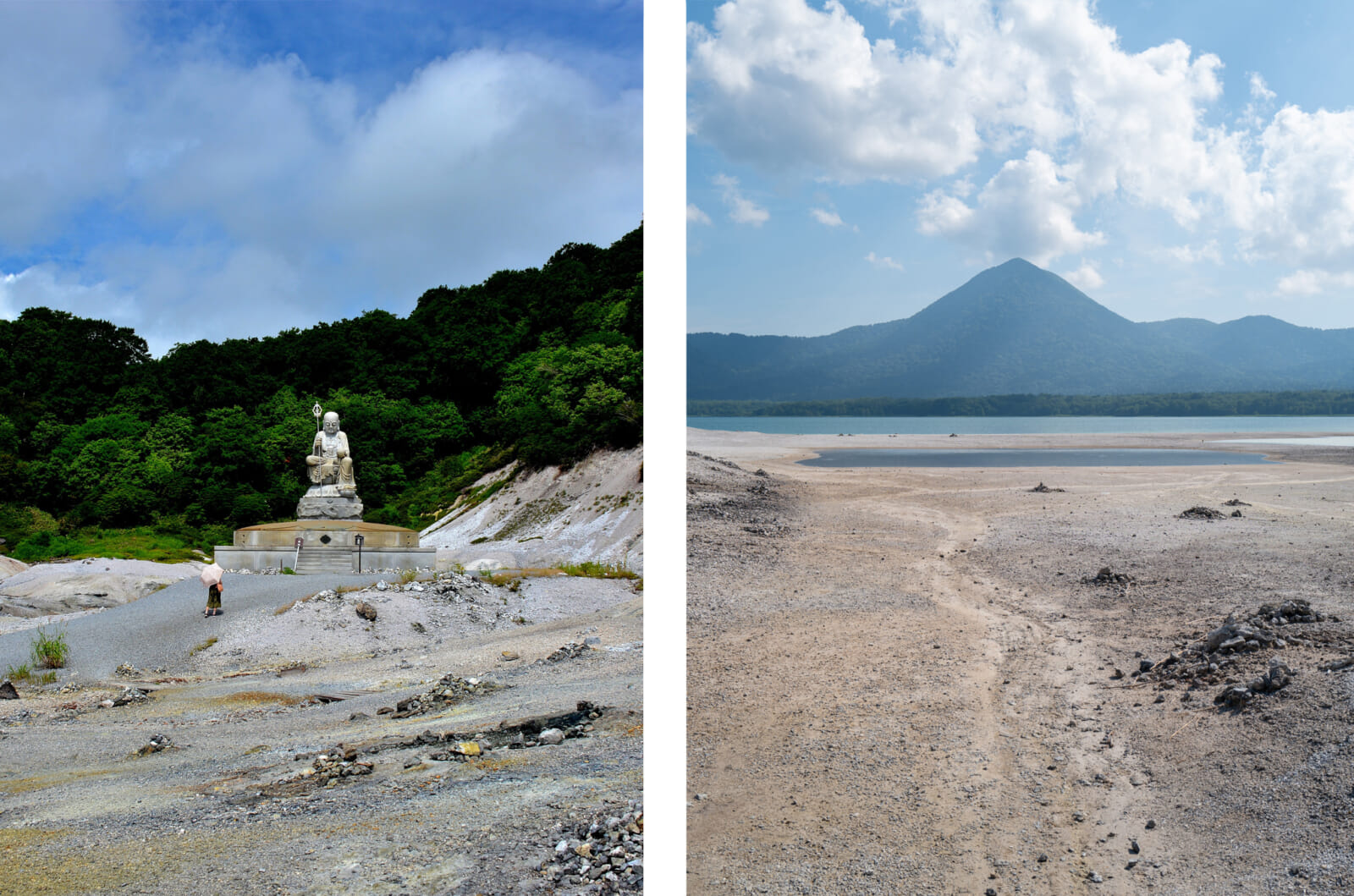
The rocky landscape of Mount Osore (left) and Paradise Beach (right) | Pixta
Heaven and Hell
There is more than meets the eye to Mount Osore, both figuratively and literally. On the one hand, yes, it is an eerie, frightful-looking place. But it also isn’t some Halloween destination where people go looking for cheap thrills. It’s actually one of the “three great sacred mountains” of Japan, where people come to mourn, grieve and, hopefully, find closure at the hallowed site’s Bodaiji Temple after the death of a loved one. True, they sometimes do that with the help of blind mediums, but we all heal in our own way. (More on this below.)
Also, there is an almost heavenly beauty to Mount Osore. But in order to get to heaven, you have to go through hell first. In any other context, this would be a great metaphor for something, but here it’s the literal truth. The temple ground routes are designed to take worshippers past geological features called “Hells” due to their unnerving shapes and coloration, a combination of volcanic rock, black pumice and sulfur. But keep going and you’ll end up on Paradise Beach, with its white sands overlooking the tranquil and impossibly clear Lake Usori. Just don’t go swimming in it: It’s so acidic that only one species of fish has adapted to living in it. It’s still very beautiful, though.
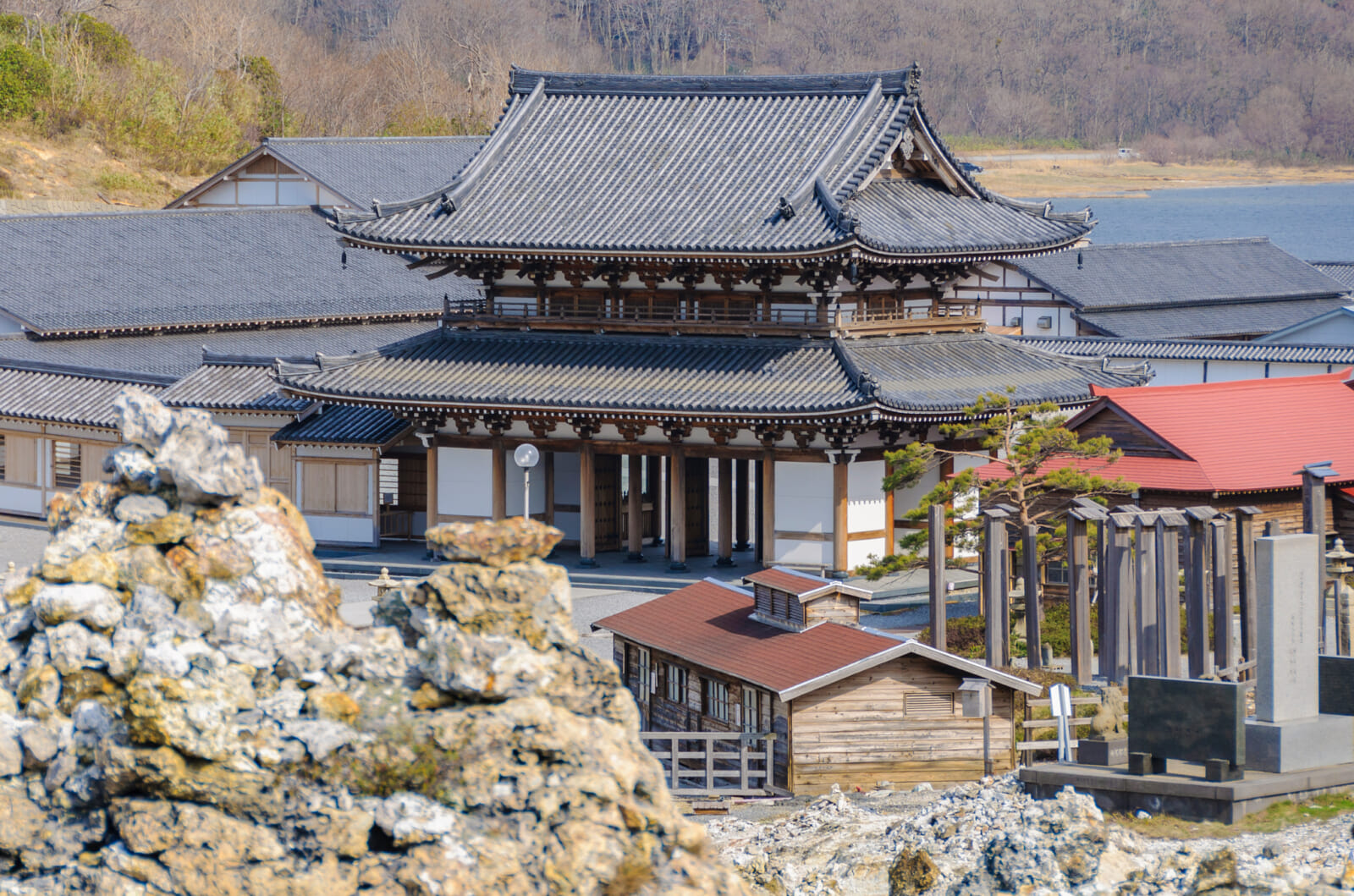
Bodaiji Temple | Pixta
Voices of the Dead
Legend goes that Bodaiji was founded in 862 by the monk Ennin after he received a prophetic dream that guided him to Mount Osore. Later attracting practitioners of esoteric Buddhism and ascetics, the site became known around Japan as the route souls took on their way to the other side. A saying in the Edo period (1603–1867) even stated, “When people die, they go to the mountain.” It was widely understood that they meant the volcano in Aomori.
Eventually, Mount Osore started attracting itako mediums. All female, and originally all blind, they specialize in channeling spirits, allowing the dead to speak through them, a service that they’ve been providing during Bodaiji’s itako festivals for centuries now. These women don’t actually live at the temple, instead setting up tents on Mount Osore in late July and early October. It’s worth mentioning that being blind is not a requisite for being an itako, and some modern practitioners of “spirit-calling” are sighted. Historically, limiting access to the profession to people with no or low vision could have been a kind of welfare — a way for disadvantaged women to make a living.
It doesn’t work that way anymore, though. While modern itako charge for their services, it’s not an exorbitant sum (about ¥5,000), and their primary goal, together with all of Mount Osore, is helping people heal.
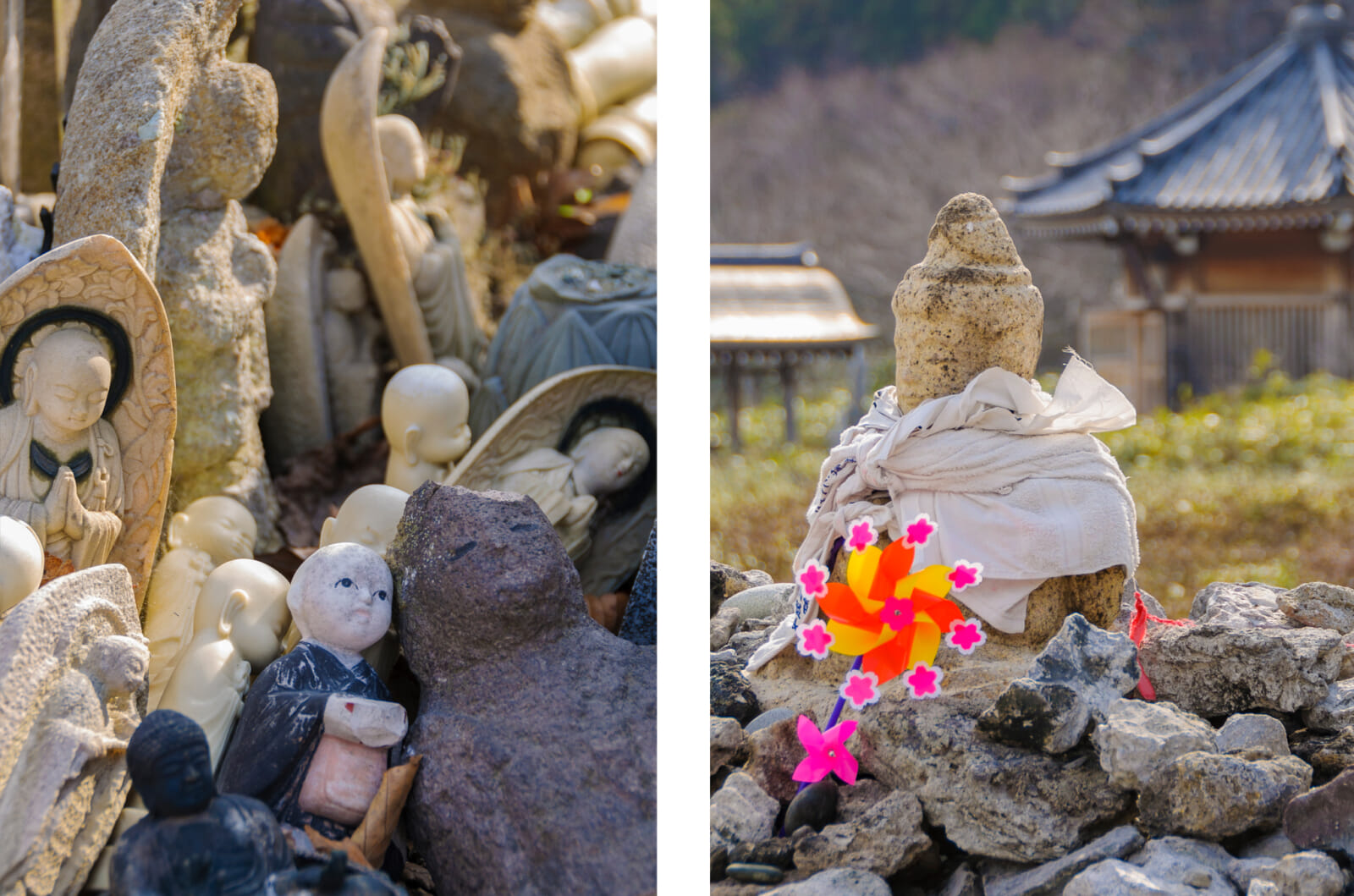
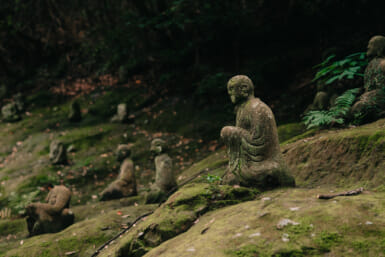
Remembrance objects on Mount Osore include Buddhist statues (left) and colorful pinwheels in memory of children (right) | Pixta
A Mountain of Remembrance
Modern-day Mount Osore is a repository for the memories of those no longer with us. Photos of the dearly departed and their personal items adorn one of the temple halls, piled stones mark spots where believers offered a little of their time and energy to pray for the soul of someone they miss, and colorful pinwheels sprout along the route through the mountain’s rock hells, each one indicating the memory of a lost child.
There are some guides out there who tell potential visitors to skip Mount Osore if they’re just curious about the landscape. Some may mention the mountain temple’s powerful spirit energy. But the more practical argument against tourists is the fact that, to many, a visit to Mount Osore is a form of therapy. Even if you are profoundly against dealing with grief by using mediums, keep in mind that that’s not everything that’s happening on Mount Osore. People there mourn the dead in a variety of ways, exhibiting a fundamentally different approach to death than in the West.
In Japan, in-home Buddhist altars for departed family members are near universal, and it’s not uncommon for them to even hold cremated remains. Japanese people live with death on a daily basis, and giving it a voice on Mount Osore can be viewed as a logical extension of that culture. Because, despite the name and the ghostly topography, the dead of Mount Dread — as channeled by the itako — aren’t scary or feared. Rather, they’re welcomed, honored and missed by people simply trying to leave behind more traces of their loved ones. That may be a little hard to do with someone taking a peace sign selfie in the background.