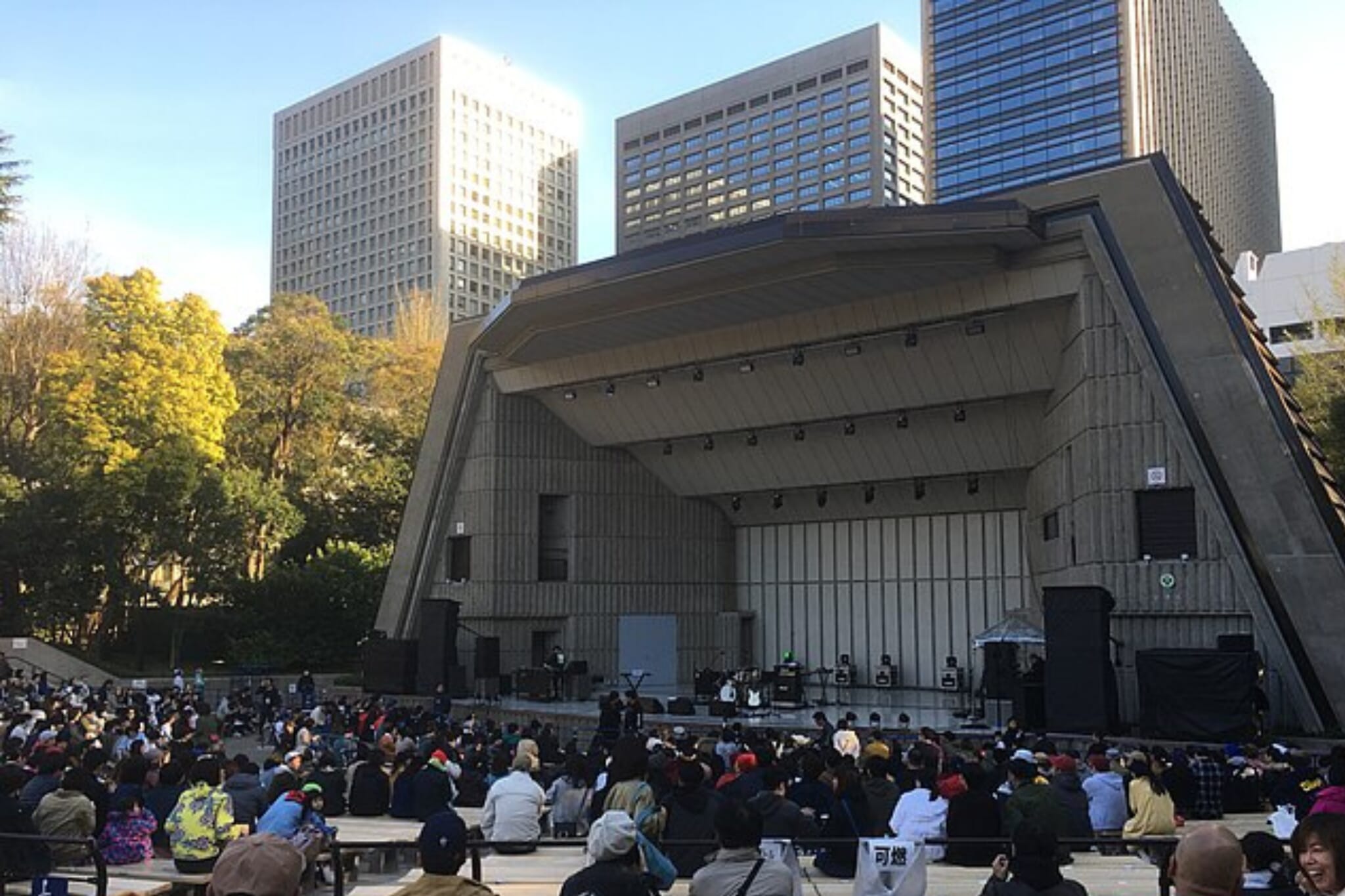
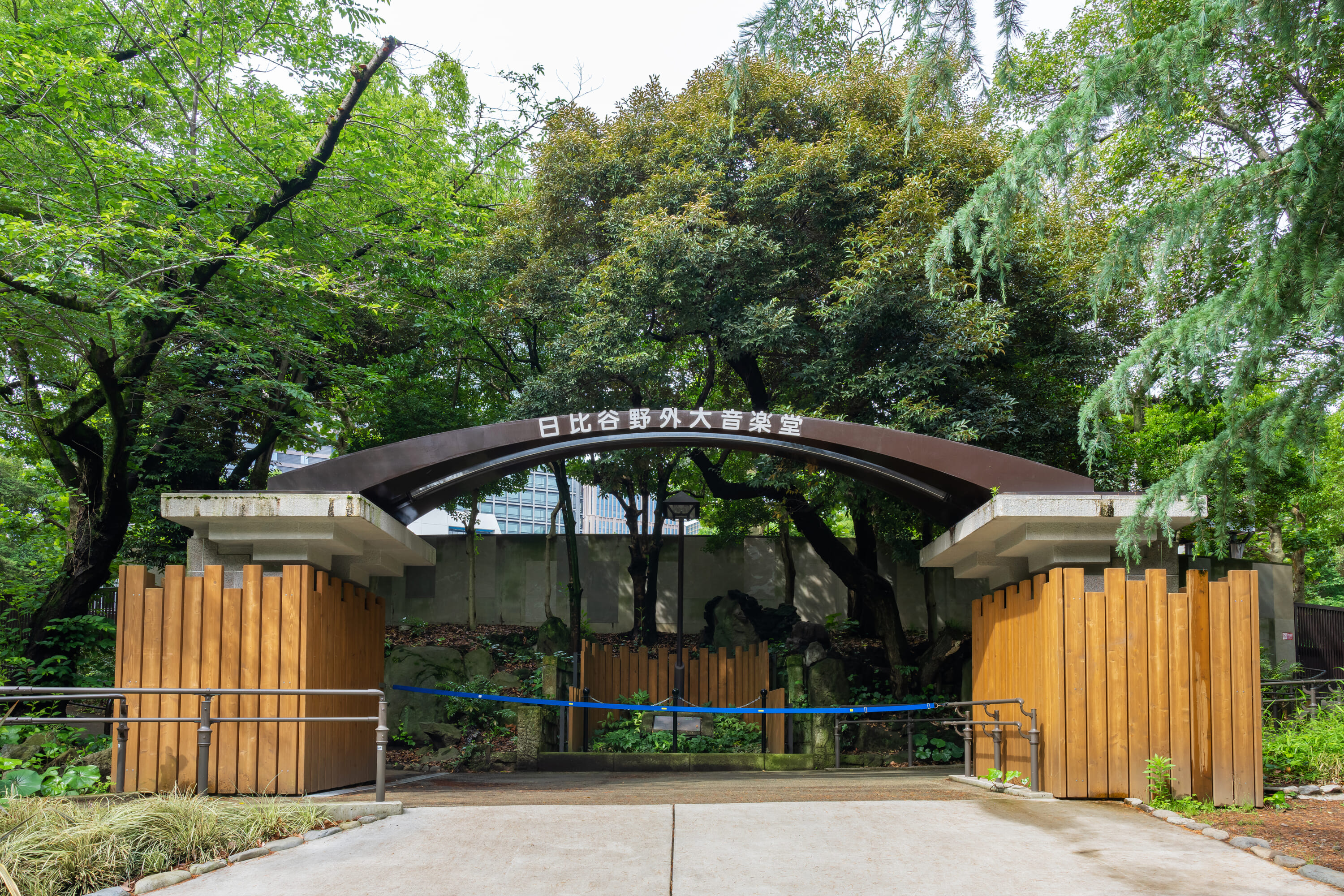
The Hibiya Open-Air Concert Hall, known affectionately as Yaon, or “outdoor music,” has closed its doors for major renovations that will keep it silent until around 2029. On September 28, the storied Tokyo venue within Hibiya Park hosted its final performance before construction begins in October. The honor of closing out this era went to veteran rock band Elephant Kashimashi, a group whose decades-spanning career embodies the spirit of the stage.
The decision to rebuild was prompted by the hall’s aging facilities, with the current structure dating back to 1983. Plans for the new version include updated soundproofing to reduce noise impact on the surrounding park, as well as full barrier-free access and an overhead canopy to accommodate performances on rainy days.
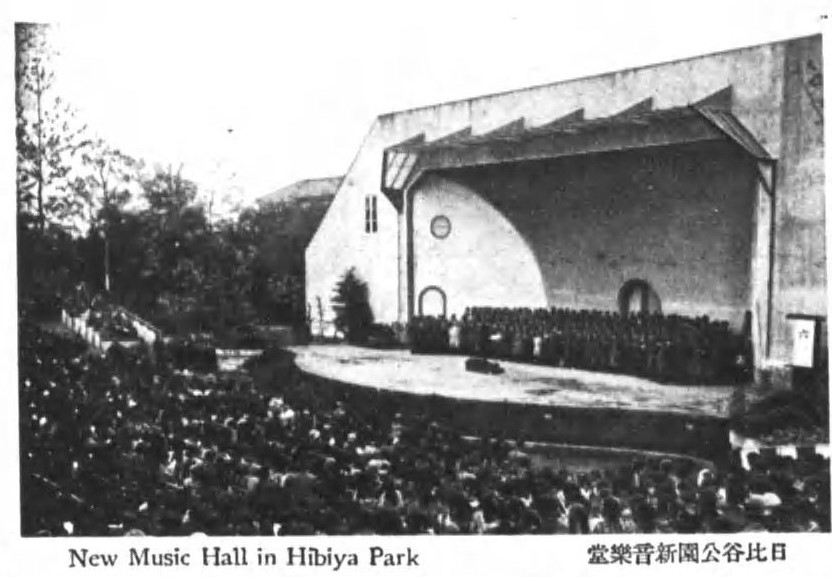
The first generation large hall, 1937 (Courtesy of Wikicommons)
A Century of Music
Located in the southwestern corner of Hibiya Park, the open-air theater spans 5,700 square meters and accommodates around 3,000 people. For decades, concerts were largely confined to weekends and public holidays. Besides live music, it also hosted civic gatherings and even boxing contests in its earliest years. One of its most notable events was when composer Ryuichi Sakamoto addressed a massive anti-nuclear rally from its stage in 2014.
The facility first opened in July 1923 under the management of the Tokyo Metropolitan Government. Remarkably, it survived the Great Kanto Earthquake that struck just two months later. From there, the stage became a magnet for performers from across genres and generations. In 1962, Frank Sinatra sang there on his first trip to Japan, offering his star power to a local charity concert. In 1975, rock band Carol, which launched the career of Eikichi Yazawa, chose the venue for its dramatic breakup show. Two years later, the idol trio Candies stood on the same stage to announce the group’s disbandment.
Through the postwar decades, the concert hall became a stage for defining cultural moments. RC Succession shook audiences with its provocative rock, while the late Yutaka Ozaki etched his legend in 1984 by continuing a soul-baring set even after fracturing his leg in a dramatic leap from a lighting scaffold. Generations of folk artists also claimed the venue as their own, cementing its reputation as both “the holy ground of rock” and “the hall of folk.”
An Iconic Stage in the City
As the hall goes dark for renovations, it leaves behind more than just a gap in Tokyo’s live music calendar. When it reopens in 2029, it will mark the fourth generation of a venue that has carried a century of stories — and will be ready to welcome new ones. More than a stage for lineups, the Hibiya Open-Air Concert Hall has long embodied a rare kind of public space.
“Yaon will be rebuilt in a form suitable for the new era, while maintaining the openness of the outdoor space and inheriting the history of the venue,” Masatomo Matsumoto of the Tokyo Metropolitan Government told Kyodo News in 2023.