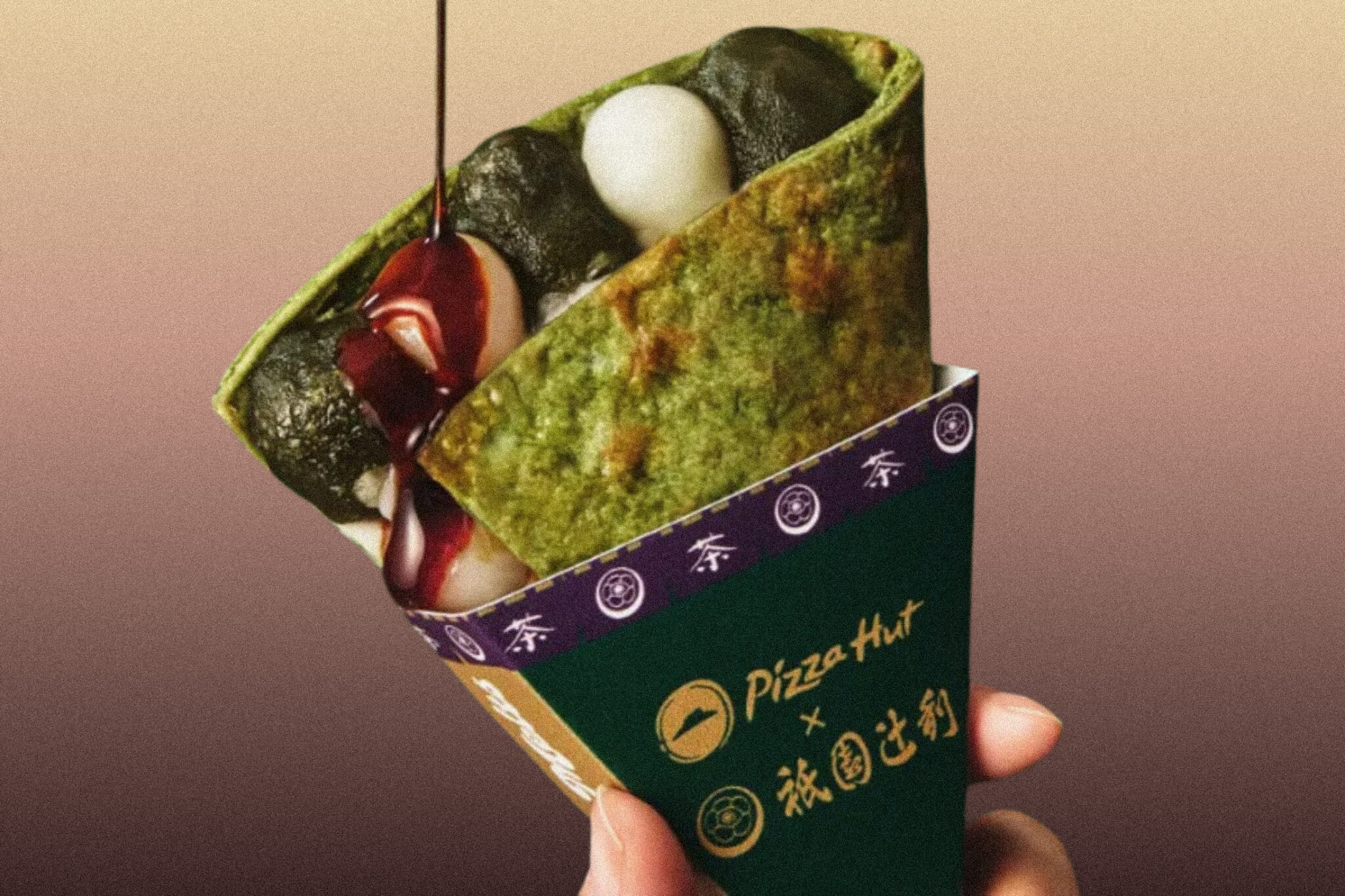
In a move bound to have both Italian and Japanese ancestors rolling over in their graves, Pizza Hut has released its first-ever matcha pizza in collaboration with long-established tea brand Gion Tsujiri. Described as “a new type of Japanese sweet pizza,” the hand-held dessert pizza will be available until October 26 at select Pizza Hut locations nationwide.
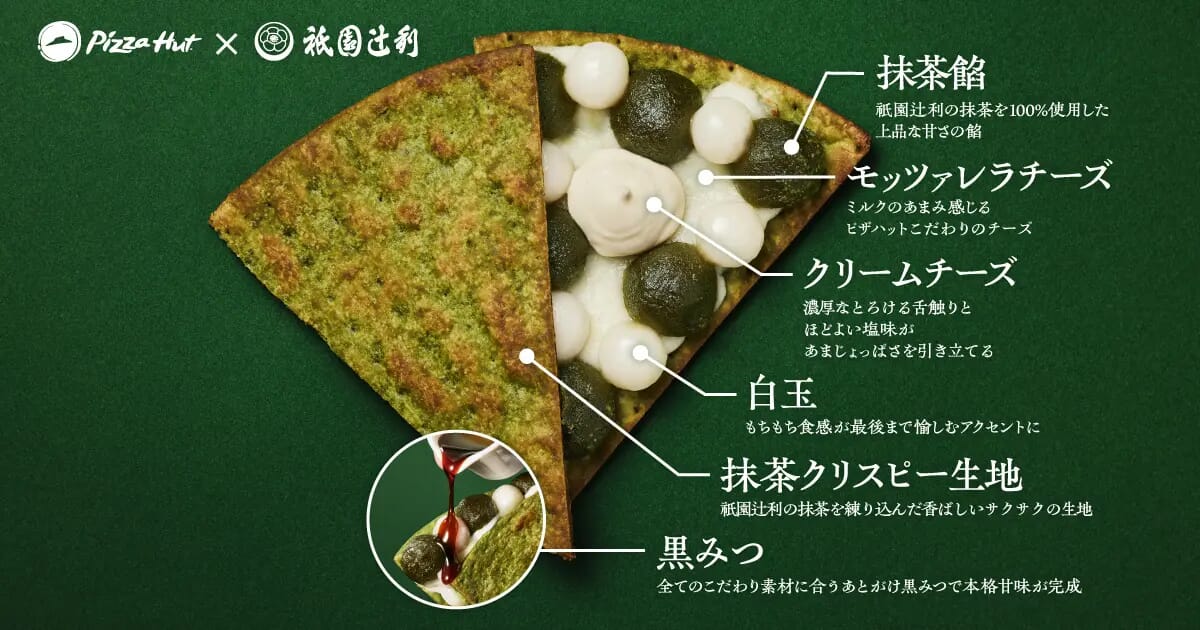
We’ve seen matcha pizzas before, but the ingredient lineup of this one really takes the cake as the most bizarre combination of sweet and savory. The pizza consists of matcha paste, shiratama mochi balls and — gasp — mozzarella cheese, sandwiched between crispy matcha-kneaded dough and drizzled with brown sugar syrup.
Officially named “Handy Melts Matcha Shiratama Kuromitsu,” the crepe-like pizza was released in conjunction with Pizza Hut’s autumn tsukimi pizzas. Tsukimi, Japan’s annual moon-viewing festival celebrating the harvest moon, sees an array of limited-edition food offerings by various brands. These tend to feature autumnal ingredients like chestnuts and sweet potato; the most common example is the tsukimi burger, starring a sunny-side-up egg that resembles the full moon.
courtesy of pizza hut
Who Is This For?
If this matcha pizza was rolled out in a Western country, it would immediately get flamed for cultural appropriation and gimmickiness. But the fact that it was conceptualized by Pizza Hut Japan, with none other than Gion Tsujiri — one of Japan’s most well-known and respected tea producers, with 800 years of history — lends a level of legitimacy to the concoction.
As evidenced by the ubiquity of matcha Kit-Kats for the past two decades, manufacturers and eateries in Japan infuse foods, beverages and desserts with matcha flavors with wild abandon. Uji, the country’s tea capital, is the most famous example of this incorporation — from matcha soba noodles and matcha beer to matcha takoyaki and gyoza, the city’s offerings range from enticing to plain unappetizing.
While Japanese consumers famously enjoy a seasonally themed food release, the recent influx of matcha-themed goodies and experiences seems to be pandering more to a global audience rather than Japanese consumers. Or, at least, it’s a phenomenon largely influenced by the meteoric rise of matcha’s cultural capital.
After all, the country’s ongoing matcha shortage is mostly due to mass-purchases by foreigners, and it’s rare to find a local whisking up a matcha latte at home. In a way, the contrived nature of matcha-based inventions as of late mirrors the tea’s new digitally-influenced fanbase: novelty and visual appeal is just as, if not more important than the actual taste.
Related Posts
- Overconsumption Leads to Unprecedented Matcha Shortage in Japan
- The Best Matcha Powders: A Beginner’s Guide to Green Tea Brands
- A Guide to Types of Japanese Tea: From Matcha to Mugicha
Updated On September 4, 2025