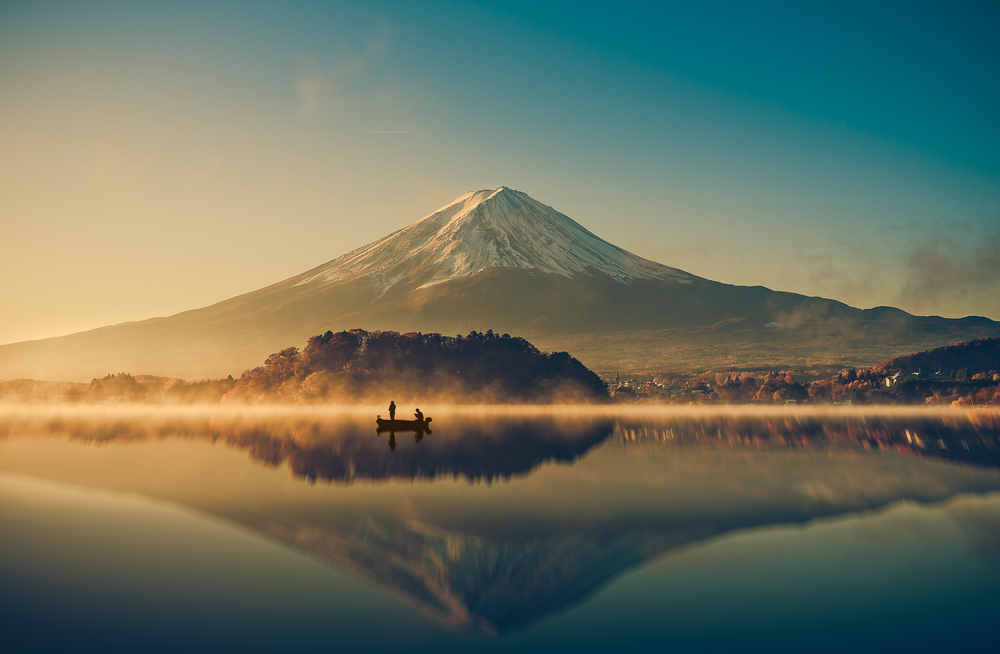
Japan’s tallest and most iconic mountain, Mount Fuji has long been considered a sacred place. During the eighth and ninth centuries, it repeatedly erupted, which some people interpreted as expressions of anger by the mountain deity, Asama no Okami. After volcanic activity subsided, the mountain became a major center for Shugendo ascetics, with practitioners, known as yamabushi or gyoja, climbing it for rigorous spiritual training.
The Fujiko Movement
In the late 16th and early 17th centuries, regular people started climbing Mount Fuji, and a cult known as Fujiko emerged. Pioneered by the Shinto priest Hasegawa Kakugyo, the movement saw the mountain as a creator and god, with followers climbing it as an act of worship. However, until 1872, the doctrine of nyonin kinsei prohibited women from ascending, as they were considered ritually impure and a threat to the sanctity of the mountain.
The ascent was also considered too dangerous for old men and children, as it was an era before modern infrastructure. There were no well-maintained trails or huts, and it was lacking in safety measures. Shinto priests known as oshi were, therefore, on hand to provide support, serving as intermediaries between pilgrims and the mountain. In addition to providing lodgings and meals, they arranged for powerful guides known as goriki to help Fujiko climb the sacred site.
Kaneyama Waterfall
Fujisan Museum
At one time, there were as many as 86 oshi inns in Fujiyoshida providing accommodation to climbers. Today, there are just a handful. During a recent visit to the city in Yamanashi Prefecture, we had the opportunity to stay at one and partially — as the climbing season was over — follow in the footsteps of the Fujiko pilgrims. Before that, though, we dropped by the Fujisan Museum, which provides visitors with an immersive and educational experience to learn about the volcano’s deep significance as a holy object.
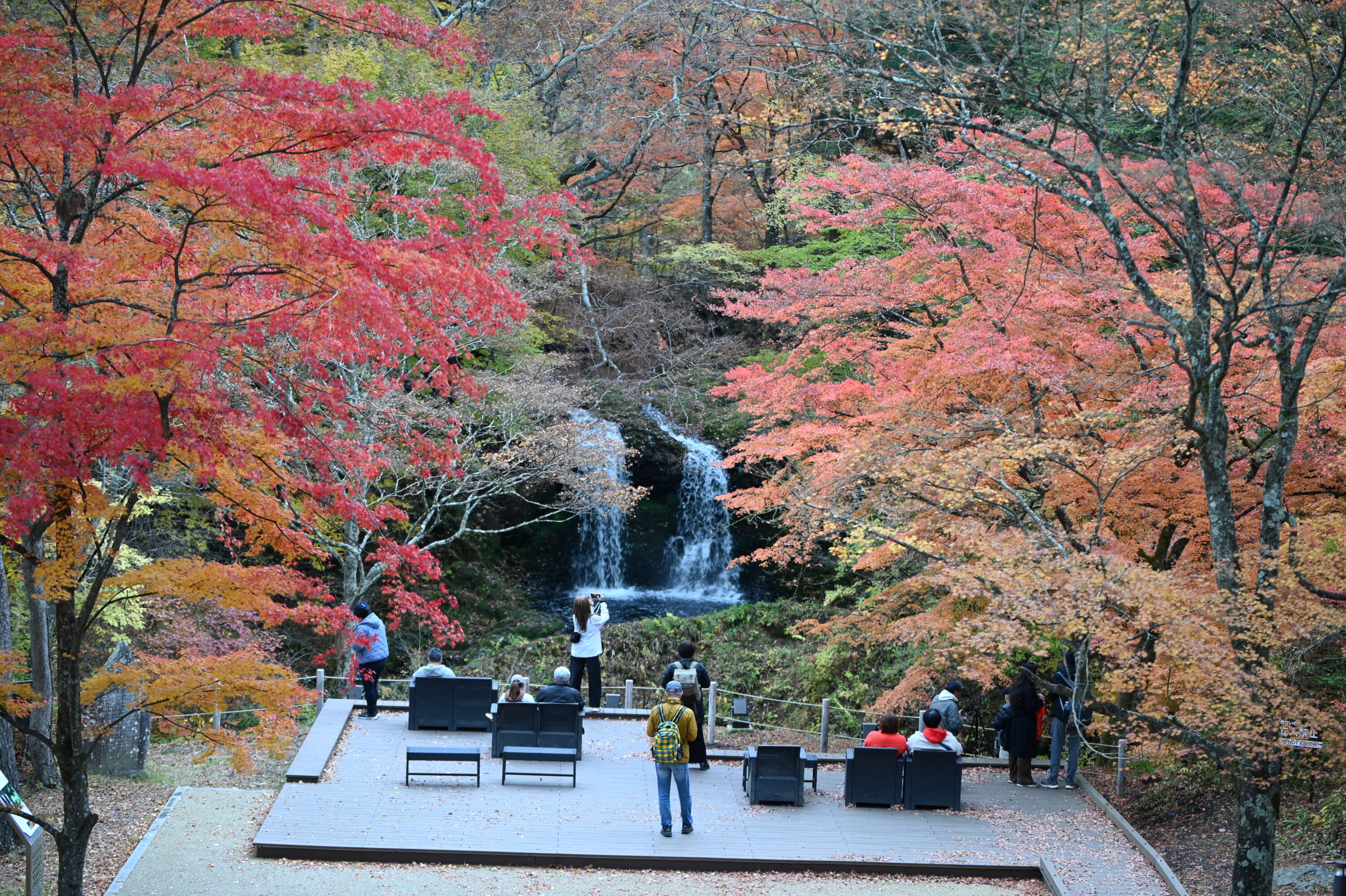
Located next to the majestic Kaneyama Waterfall, the highlight of the museum is arguably the virtual reality room, which takes guests on a 360-degree cinematic journey up Mount Fuji. The 12-minute high-definition video, played on the walls, ceiling and floor, simulates the spiritual path pilgrims took to the summit of the mountain, and makes you feel like you’re ascending it yourself. It’s an exhilarating introduction to a museum that also features a large, three-dimensional model of Mount Fuji, made from washi paper and brought to life via lighting and video effects.
A Sacred Boundary Between the Earthly Life and Mount Fuji’s Spiritual World
It was fascinating to learn about the history of Mount Fuji and Fujiyoshida before embarking on our journey with an oshi, which began at Kanadorii, a historic torii gate built to welcome worshipers and mark the sacred boundary between the earthly world and the spiritual domain of the mountain. In the past, pilgrims would have had their credentials and religious allegiances checked here. A landmark of the city and a welcome sign to climbers, it’s a must-visit destination for photographers on a clear day. Unfortunately, it was cloudy when we were there, but it was still worth visiting for the sense of history it provides.
From Kanadorii, it was just a short walk to our next destination: Mirokudo Hall. After getting our kongo-zue (wooden staff) stamped by a local craftsman, we headed there to pray in front of a statue of Shinto priest Jikigyo Miroku, the founder of the Miroku branch of Fujiko. A real ascetic, he committed himself to spending more than 30 days meditating and fasting on Mount Fuji in 1733 to help all sentient beings and transform society. Aged 63, he died near the Ganso Muro hut before the eighth station. This dramatic self-sacrifice was said to have been the driving force behind the veneration of Fuji becoming a mass movement, particularly in Edo (modern-day Tokyo).
A Womb-Like Cave and a Centuries-Old Inn
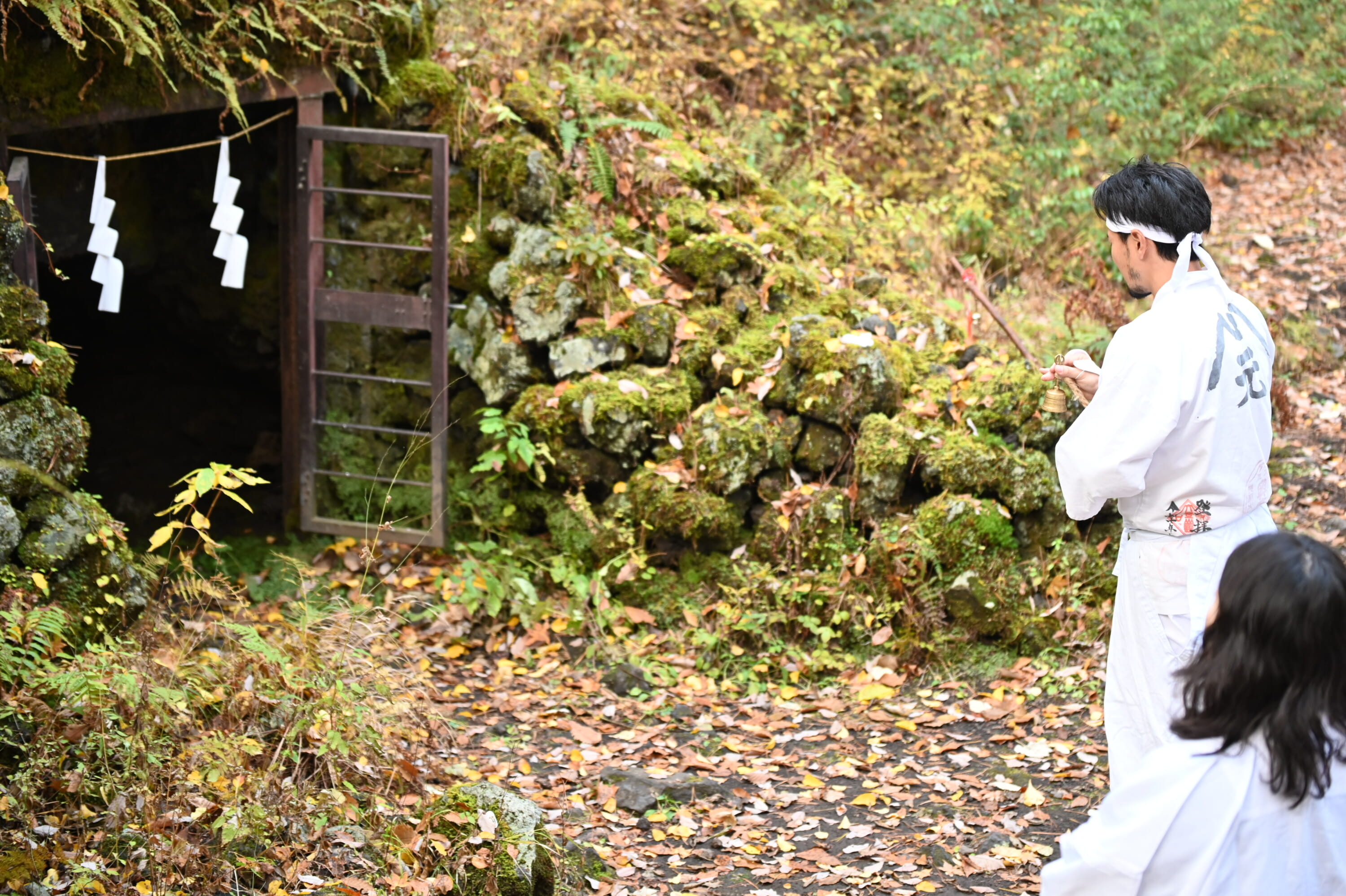
While Fujiko is not popular in the mainstream today, the reverence for the mountain that the movement embodied still endures. It has a spiritual presence that could be felt as we hiked up its forested flank. Our oshi led us to Yoshida Tainai, a sacred lava tree mold cave that was discovered by Fujiko pilgrims in 1892. Formed following a significant eruption in 937, the cave used to see people crawl through its womb-like space for spiritual rebirth and purification. Though usually closed to the public, we were fortunate enough to have the rare opportunity to enter the narrow 61-meter tunnel that enshrines Konohanasakuya-hime, the guardian deity of Mount Fuji.
The final religious ritual of the day was then a prayer ceremony at Hitsuki, our accommodation for the night. A family-run oshi inn with a history dating back more than 400 years, it was renovated around a decade ago by the 18th-generation owner. A place where tradition meets comfort, the inn features cozy tatami rooms, some of which have terraces with mountain views. Other features of the property include a cafe, a woodworking showroom and an oshi gallery. It’s a charming place to stay, and our two meals — home-cooked dinner and breakfast, with lots of locally sourced vegetables — were fantastic.



Horseback Riding Up Mount Fuji
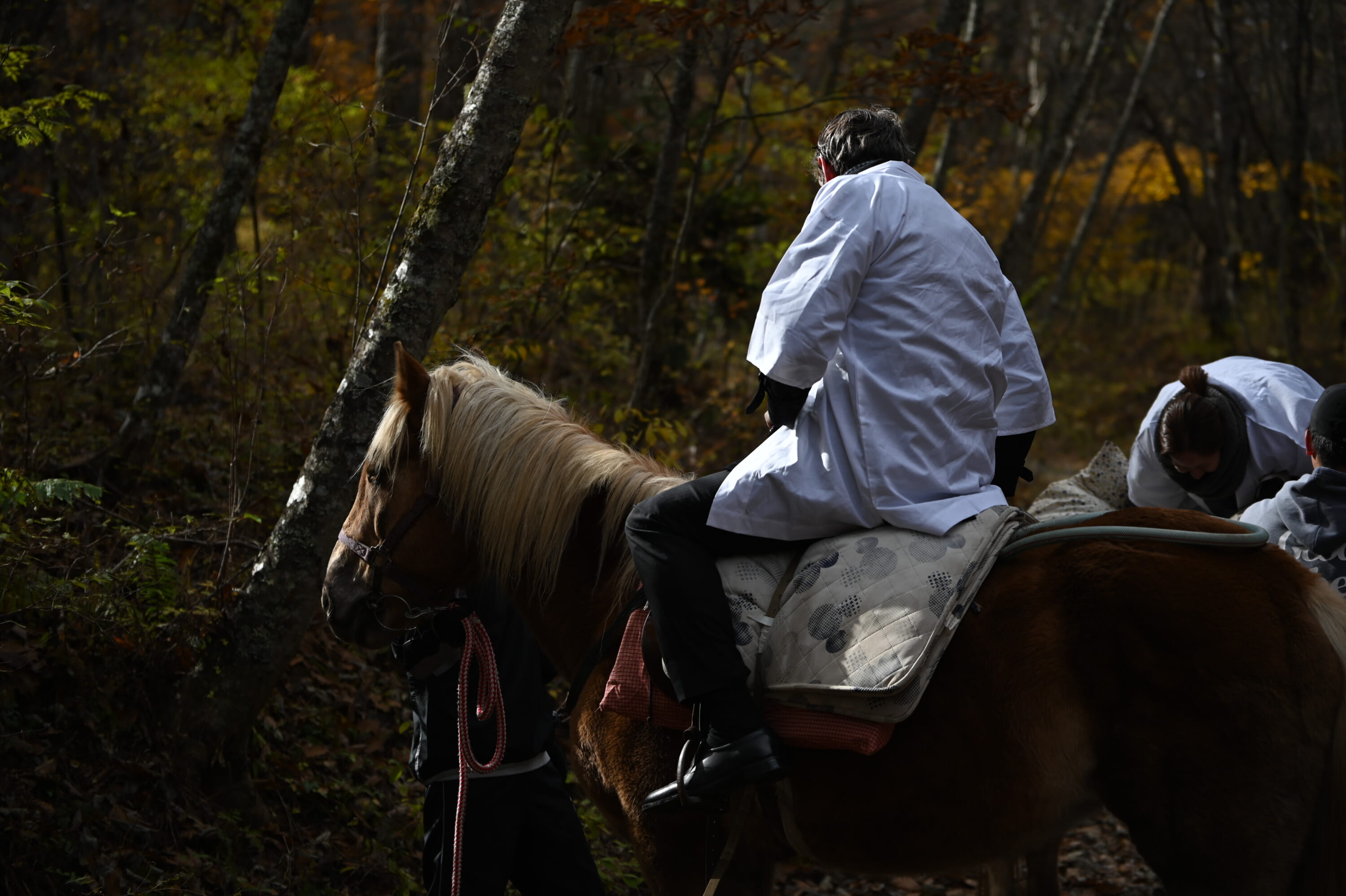
After checking out of Hitsuki, we went by car back up the mountain to Naka no Chaya, a teahouse with a history of more than 300 years. The name translates to “middle teahouse” as it is located between the beginning of the Yoshida trail and the next pit stop, Umagaeshi, which means “horse’s return.” Umagaeshi is the place where pilgrims dismounted their horses and continued on foot, as the trail became too steep for the animals. We had the chance to partially recreate that journey as we rode up from Naka no Chaya to Umagaeshi on horses. The peaceful rhythm of their hooves created a symphony of serenity amid the scenic landscape.
Hopping off our animals, we got back in the car and returned to the oshi village for a sumptuous lunch at Daikokuya Mount Fuji, another historic inn. That was followed by a visit to Kitaguchi Hongu Fuji Sengen Shrine, the gateway to Mount Fuji’s Yoshida trail. Though a key spiritual starting point for Fujiko pilgrims, it was our final destination of the tour. Built in 788, with the intent of protecting the region’s inhabitants from Mount Fuji’s eruptions, the shrine — with roots that stretch back to 100 CE — is known for its 18-meter-tall red torii gate, mossy stone lanterns and holy Japanese cedar trees. Strolling around the tranquil, historic grounds felt like the perfect way to end what had been a very educational trip.
Related Posts
- University Student Rescued From Mount Fuji Twice in Four Days
- Authorities Warn Climbers After Four People Die on Mount Fuji
- 5 Japan Volcanoes You Can Visit
Updated On December 18, 2025