
Shirakawa-go: Japan’s Most Iconic Village
Tucked into the remote mountains of Gifu Prefecture, Shirakawa-go is one of Japan’s most enchanting and recognizable destinations. The village — formally known as Ogimachi — sits in the Shogawa River Valley along the border of Gifu and Toyama Prefectures, cradled by steep forested ridges that once kept it almost entirely cut off from the outside world. That very isolation is what makes it so remarkable: over centuries, its residents developed a distinctive way of life, preserved today in the iconic gassho-zukuri farmhouses that dominate the landscape.
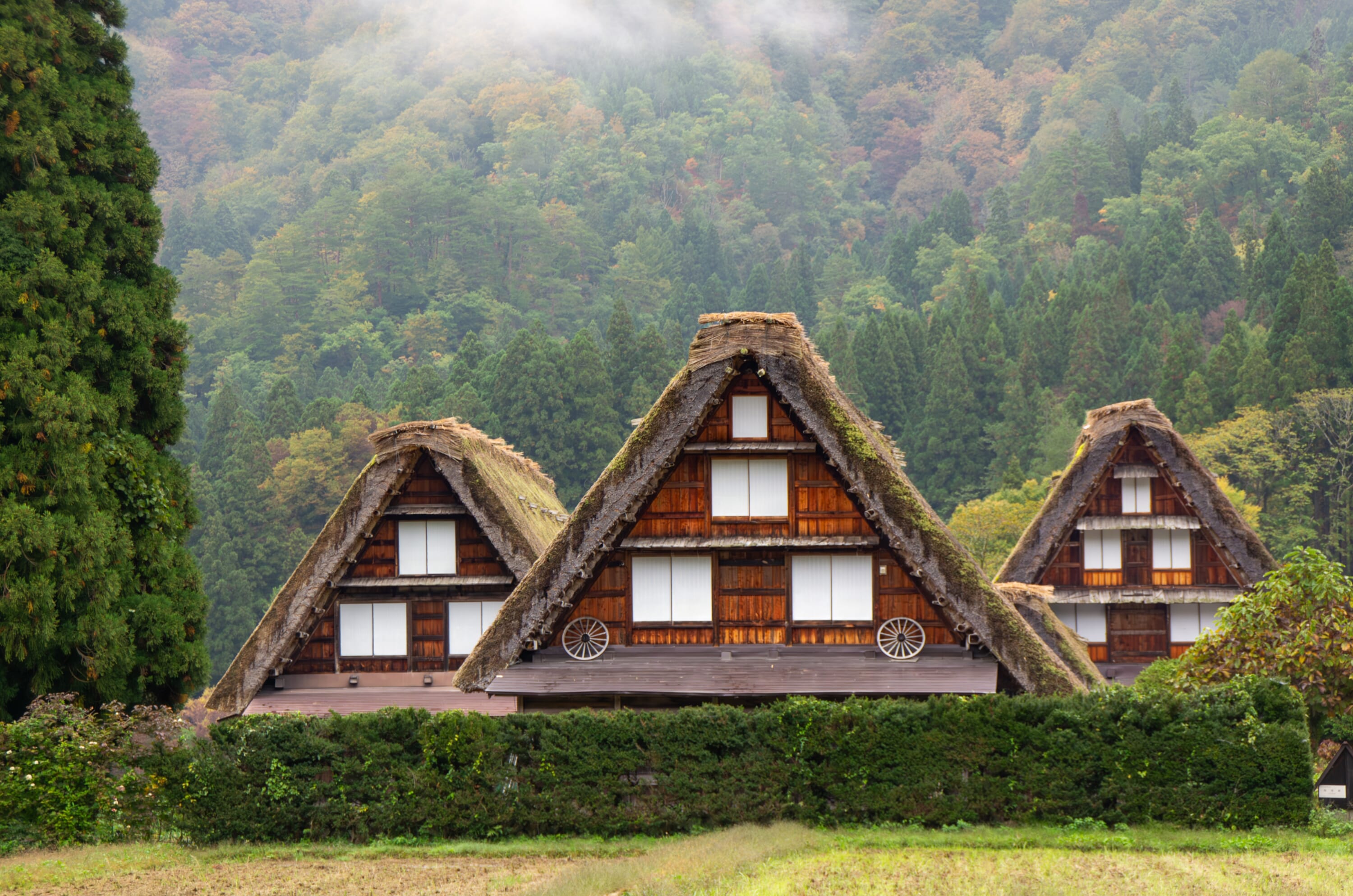
Gassho-zukuri (合掌造り) translates roughly as “hands in prayer,” a reference to the steeply pitched thatched roofs that resemble two palms pressed together. These multilevel structures, some of them more than 250 years old, were engineered with remarkable ingenuity: the extreme roof angle allows heavy snow, sometimes reaching two meters or more, to slide off before it accumulates, while the upper floors provided warm, well-ventilated space for cultivating silkworms. The silkworm trade was the community’s economic lifeline for generations, and you can still see remnants of that industry inside farmhouses open to visitors.
Shirakawa-go (together with the neighboring Gokayama villages of Ainokura and Suganuma) was designated a UNESCO World Cultural Heritage Site in 1995, in recognition of both its architectural uniqueness and the community practices — particularly the tradition of yui, or communal labor — that made sustaining it possible. Around 500 people still live in Ogimachi today, and the village maintains strict rules on building preservation: residents agreed to never sell, rent, or demolish the historic structures.
The Wada House, the largest farmhouse in Ogimachi and a designated Important Cultural Property, offers one of the best glimpses into traditional village life. The Gassho-zukuri Minkaen outdoor museum across the Sho River is another highlight, gathering relocated farmhouses into an open-air complex with shops, shrines, and exhibits. From the Ogimachi Castle Ruins Observatory, a short shuttle bus ride above the village, you can take in the full panorama that has graced a thousand postcards.
Best Times To Visit Shirakawa-go
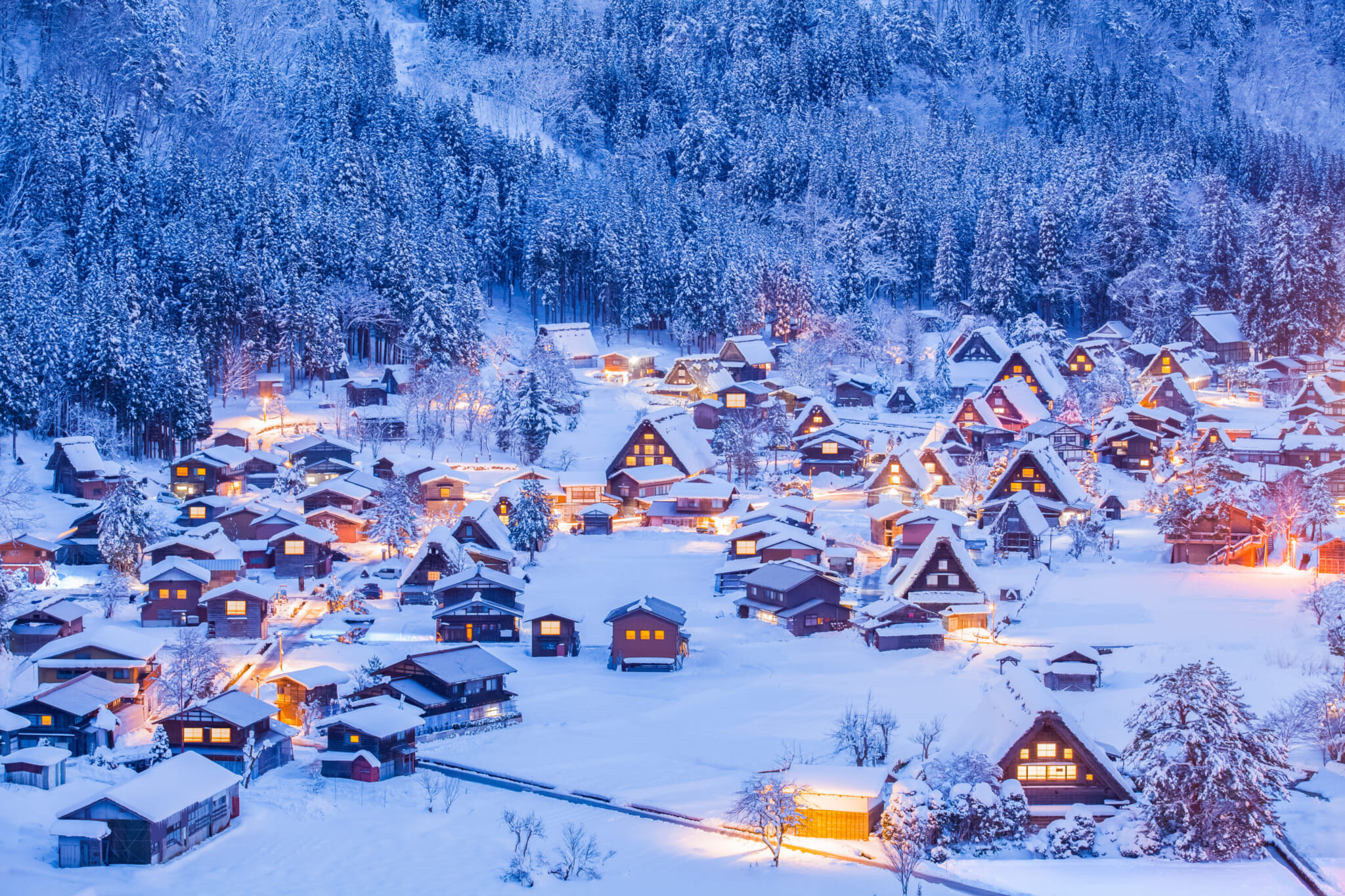
Every season brings something compelling. Winter is the most dramatic — deep snow blankets the thatched roofs and the valley, transforming the village into something close to a fairy tale. Selected weekends in January and February feature the celebrated winter light-up event, when the farmhouses are illuminated after dark. Attendance is strictly limited and requires advance reservations; accommodation during these dates is allocated by lottery.
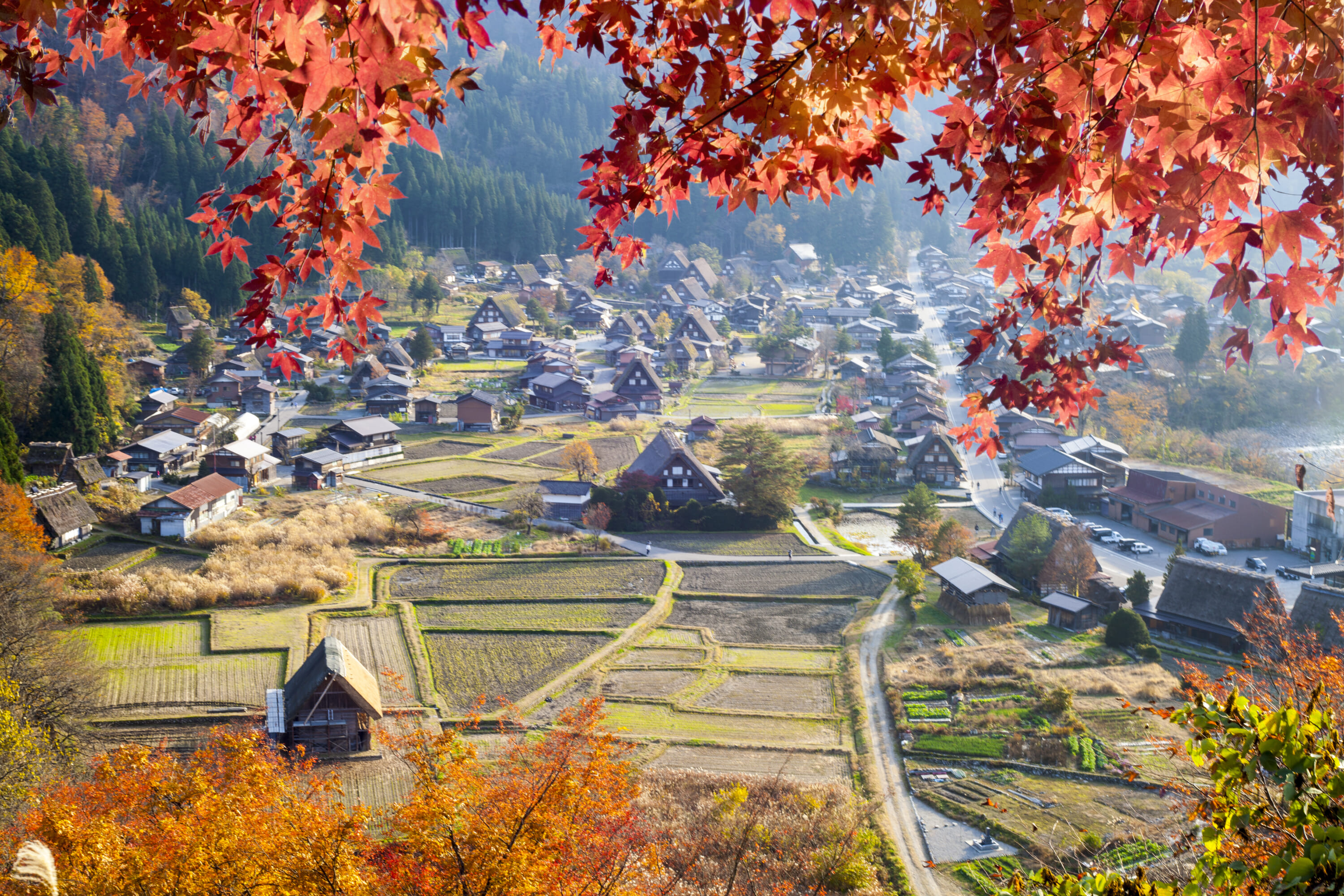
Autumn (late October to mid-November) brings vivid foliage across the surrounding mountains. Spring, when cherry blossoms bloom from mid-April and the rice paddies turn bright green through summer, offers a softer but equally photogenic palette. Any season rewards a visit, though weekday mornings are generally less crowded than weekends or national holidays.