

Seigantoji Temple Overview
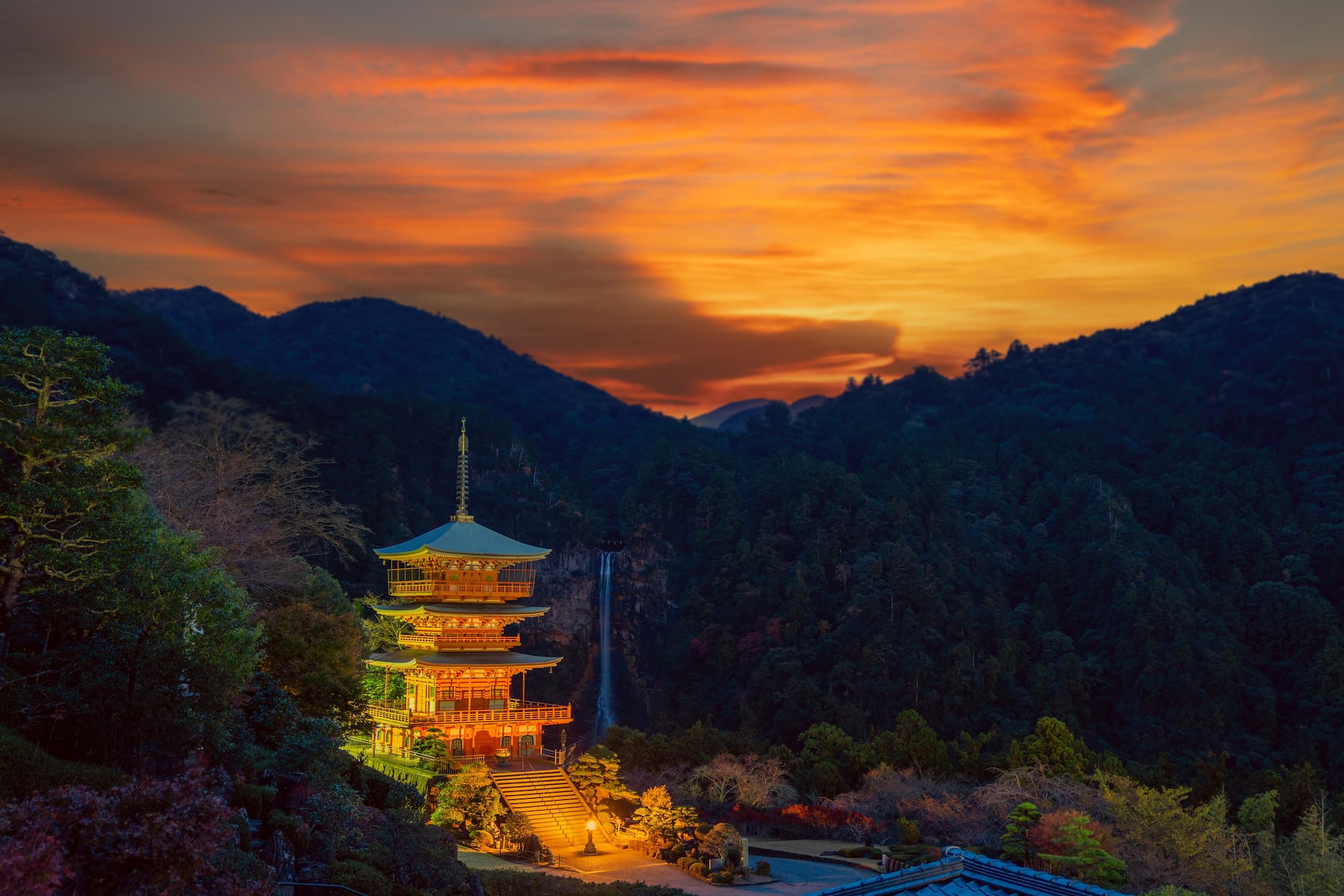
Seiganto-ji Temple is one of Japan’s most photographed religious sites, and it’s easy to see why. Nestled in the mountainous Nachikatsuura area of Wakayama prefecture, this Buddhist temple sits beside Nachi Falls — the country’s tallest single-drop waterfall at 133 meters. The striking image of Seiganto-ji’s three-story vermillion pagoda framed against the cascading falls is iconic, appearing on countless travel guides and social media feeds alike.
The temple has deep roots in both Buddhist and Shinto traditions, reflecting the syncretic religious heritage that defines the Kumano region. It belongs to the Tendai sect of Buddhism and holds the distinction of being the first temple on the Saigoku Kannon Pilgrimage, a sacred route of 33 temples spread across western Japan. The neighboring Kumano Nachi Taisha Grand Shrine shares the same forested hillside, and together they represent over a thousand years of coexisting spiritual practice.
The surrounding area forms part of the Kumano Kodo pilgrimage trail network, a UNESCO World Heritage Site, drawing visitors from across the globe seeking both cultural discovery and natural wonder.
Best Times To Visit Seigantoji Temple
The temple is beautiful year-round, but each season offers a distinct experience. Spring (late March to April) brings cherry blossoms that contrast beautifully with the pagoda’s red lacquer. Summer sees the falls at their most powerful following seasonal rains, though it can be humid and crowded. Autumn (late October to November) is perhaps the most spectacular, when vivid foliage surrounds the temple and waterfall in shades of gold and crimson. Winter visits are quieter and more contemplative, with occasional mist adding an ethereal quality to the scene.
If visiting during the Nachi Fire Festival on July 14, you’ll witness one of Japan’s most dramatic traditional events, featuring large portable shrines and flaming torches carried by white-robed priests.