

Okunoin Cemetery Overview
Tucked within the forested peaks of Mount Koya (Koyasan) in Wakayama Prefecture, Okunoin is Japan’s largest cemetery and one of its most sacred spiritual sites. Opened in 835, it houses the mausoleum of Kukai — known posthumously as Kobo Daishi — the founder of the Shingon school of esoteric Buddhism. According to Buddhist belief, Kukai is not deceased but in a state of eternal meditation, awaiting the arrival of Maitreya, the future Buddha.
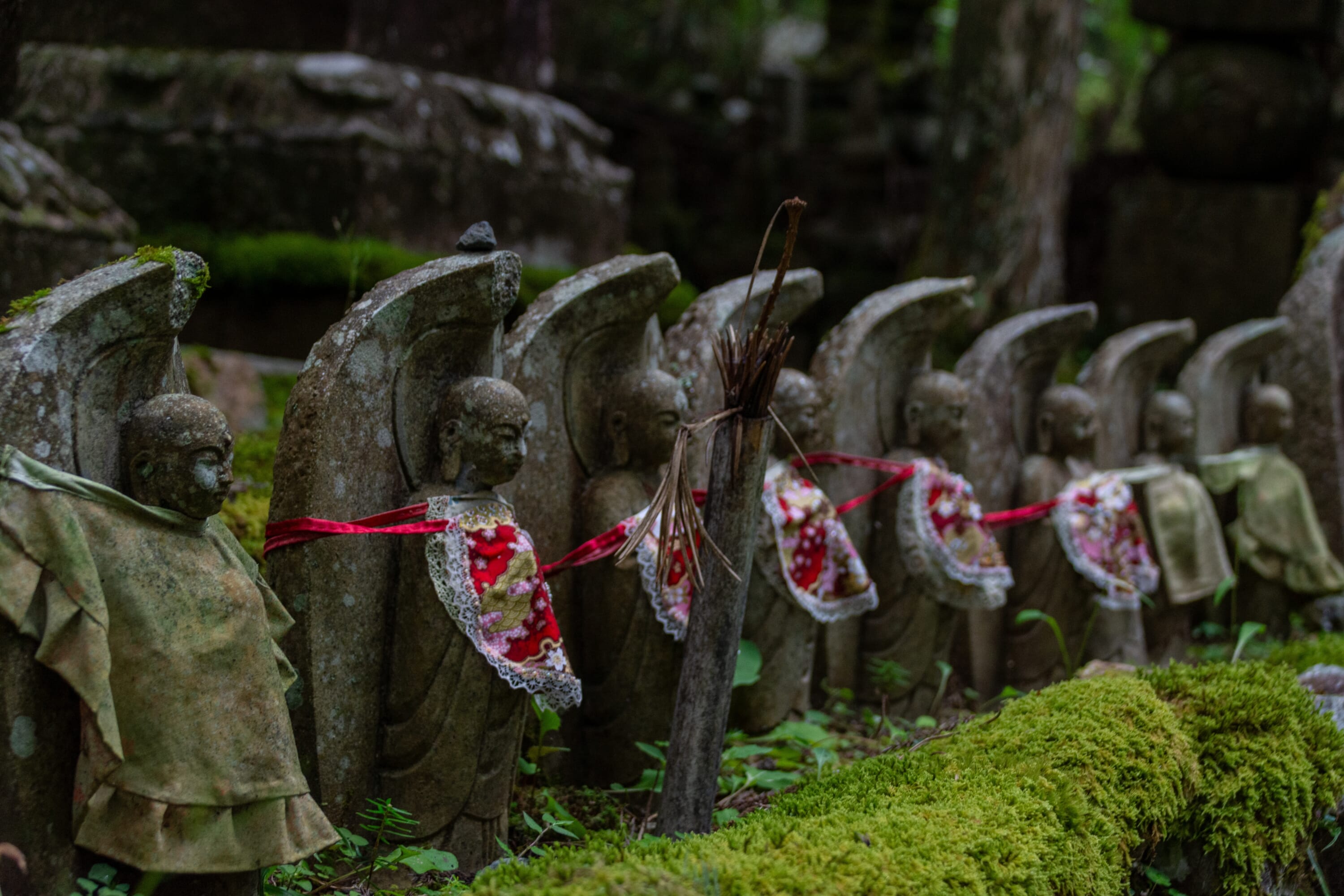
The two-kilometer path stretching back from Ichi-no-hashi Bridge — the official cemetery entrance — is lined with more than 200,000 graves and memorial monuments. The styles range from ancient moss-covered stones to refined modern granite, dotted with the graves of monks, lords, and military commanders.
At the heart of the site, Torodo Hall — the main hall of worship — stands directly in front of Kobo Daishi’s mausoleum. Over 10,000 lanterns, donated by pilgrims and worshippers, are lit in perpetuity; two are said to have been burning without pause for more than 900 years.
Further along, Gobyo-no-hashi Bridge separates the innermost sacred area from the rest of the cemetery. Once you cross the bridge, eating, drinking, and taking photographs is forbidden. The bridge itself features 36 stone planks, each representing a Buddhist deity of the Diamond Realm Mandala.
Beyond its ancient graves, Okunoin also surprises visitors with its modern side. A large number of corporate tombs can be found in a newer section, typically bought by Japanese companies for their employees and families — the first was built by Konosuke Matsushita, founder of Panasonic, in 1938.
Best Times To Visit Okunoin Cemetery
Okunoin is striking in every season, though each time of year offers a different atmosphere. Spring brings cherry blossoms that weave between the ancient cedars, while autumn drapes the grounds in red and gold. Winter, when snow settles on the moss-covered tombstones and lantern light reflects off the white ground, is considered by many to be the most atmospheric time to visit.
It is also possible to visit Okunoin during the nighttime. As the sun sets and darkness engulfs the surroundings, the atmosphere shifts entirely — the fresh air of the forest is filled with the smell of cedar, and the silence is broken only by rustling leaves and nocturnal animals. Early morning visits before the day-trip crowds arrive from Osaka are also highly recommended.