
Overview of Magome-juku
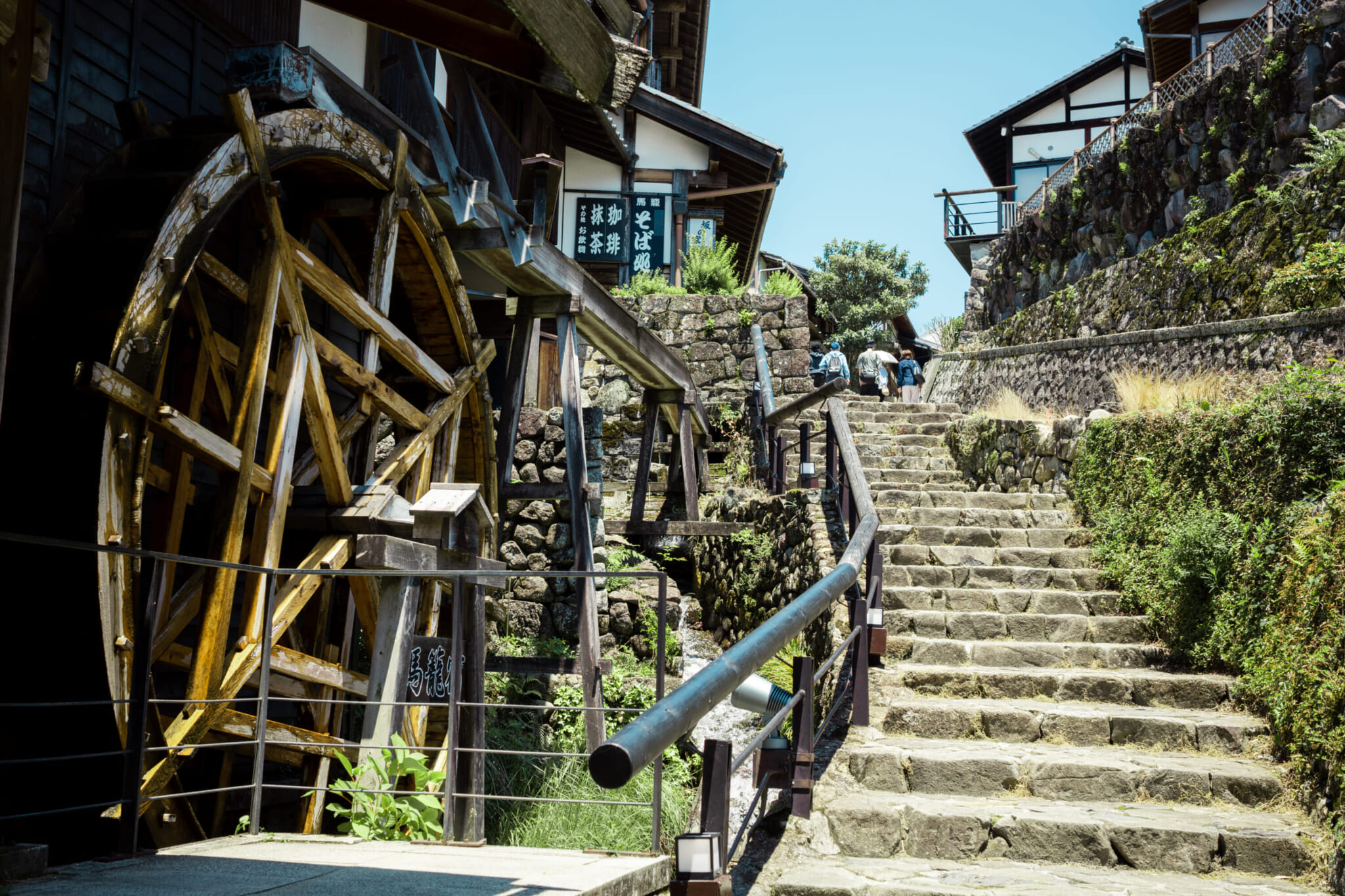
Magome-juku is a historic post town in Nakatsugawa city, Gifu prefecture, nestled in the mountains of the Kiso Valley. It was the 43rd of the 69 stations along the Nakasendo, the major inland route connecting Edo (present-day Tokyo) with Kyoto during the Edo period, and the last of 11 stations along the Kisoji section that ran through the Kiso Valley The town’s name, which translates roughly to “horse basket,” reflects its notoriously steep terrain — packhorses reportedly had to be left behind before travelers could continue onward.
The village appears in records dating as far back as 1215, but it was formally established as a post station in 1602 under the Tokugawa shogunate. At its peak in the mid-19th century, Magome had a population of around 700 residents and featured a honjin (inn for high-ranking officials), a waki-honjin (secondary inn) and 18 hatago (lodgings for common travelers). The original Edo period buildings were lost to devastating fires in 1895 and 1915, but the town has since been carefully restored to evoke its historical appearance, with wooden buildings and lattice windows lining a broad stone-paved slope.
Magome is also closely associated with Shimazaki Toson, a celebrated figure in Japanese literature who was born here in 1872. His novel Yoakemae (Before the Dawn) depicts life in the Kiso region during the Meiji Restoration. The former honjin where Toson was born now serves as a memorial museum.
One of Magome-juku’s greatest draws is the hiking trail that connects it to neighboring Tsumago-juku. This well-maintained section of the former Nakasendo is about eight kilometers long and takes around two to three hours to walk at a leisurely pace, leading through forests, past waterfalls and alongside local farmhouses. Visitors should also try gohei-mochi, a grilled rice dumpling coated in a sweet and savory walnut-miso sauce — a beloved local specialty.
Best Times To Visit Magome-juku
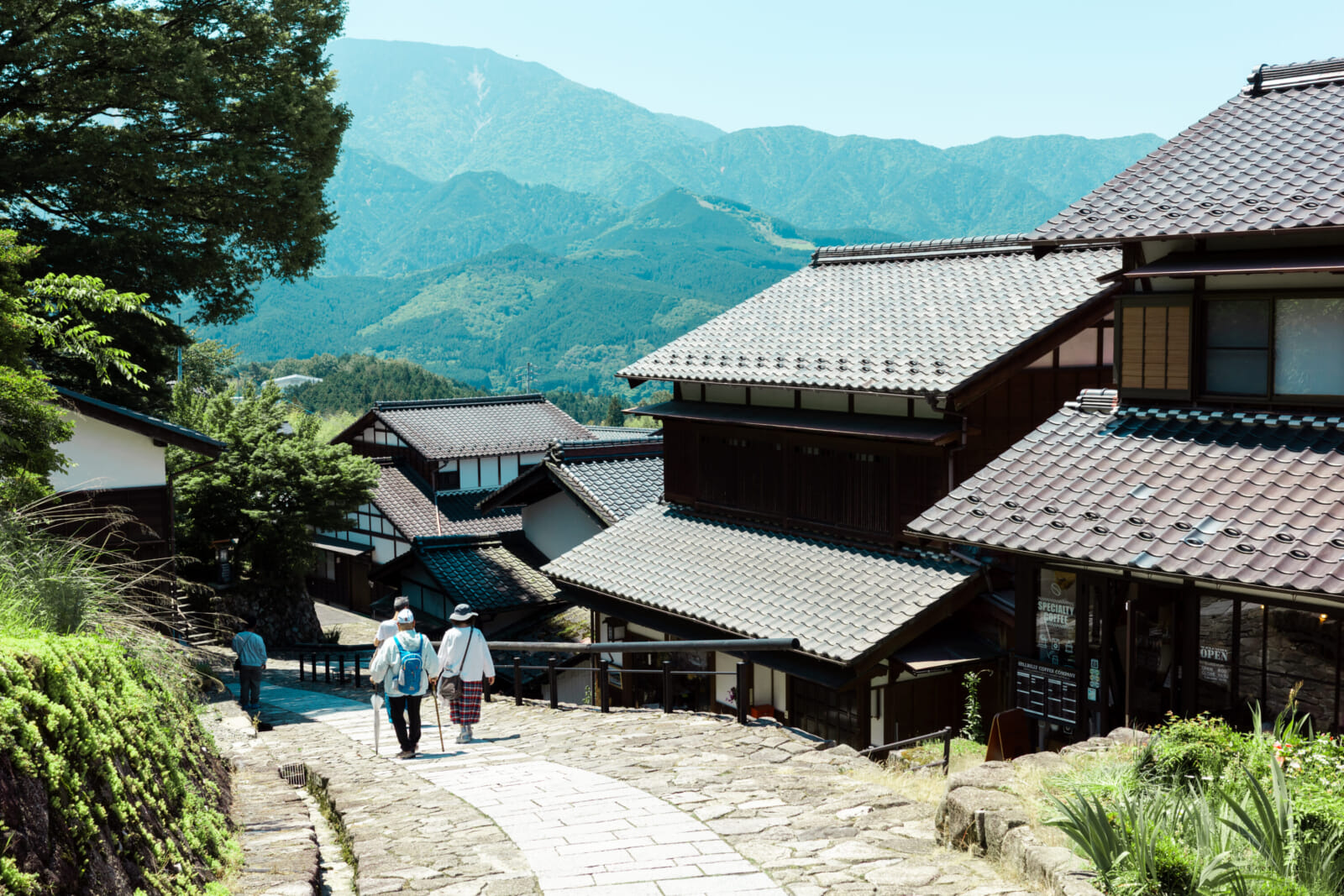
Spring and autumn are the most popular seasons to visit. Cherry blossoms brighten the hillside in April, and vibrant foliage transforms the Nakasendo trail in October and November. Summer is pleasant at Magome’s elevation of around 600 meters, offering cooler temperatures than the lowlands, though the trail can be humid. Winter brings a quieter atmosphere and occasional snow that dusts the wooden rooftops — beautiful but cold, and the hiking trail can be slippery without proper footwear. The town also offers fine views of Mt. Ena, which rises to 2,190 meters.