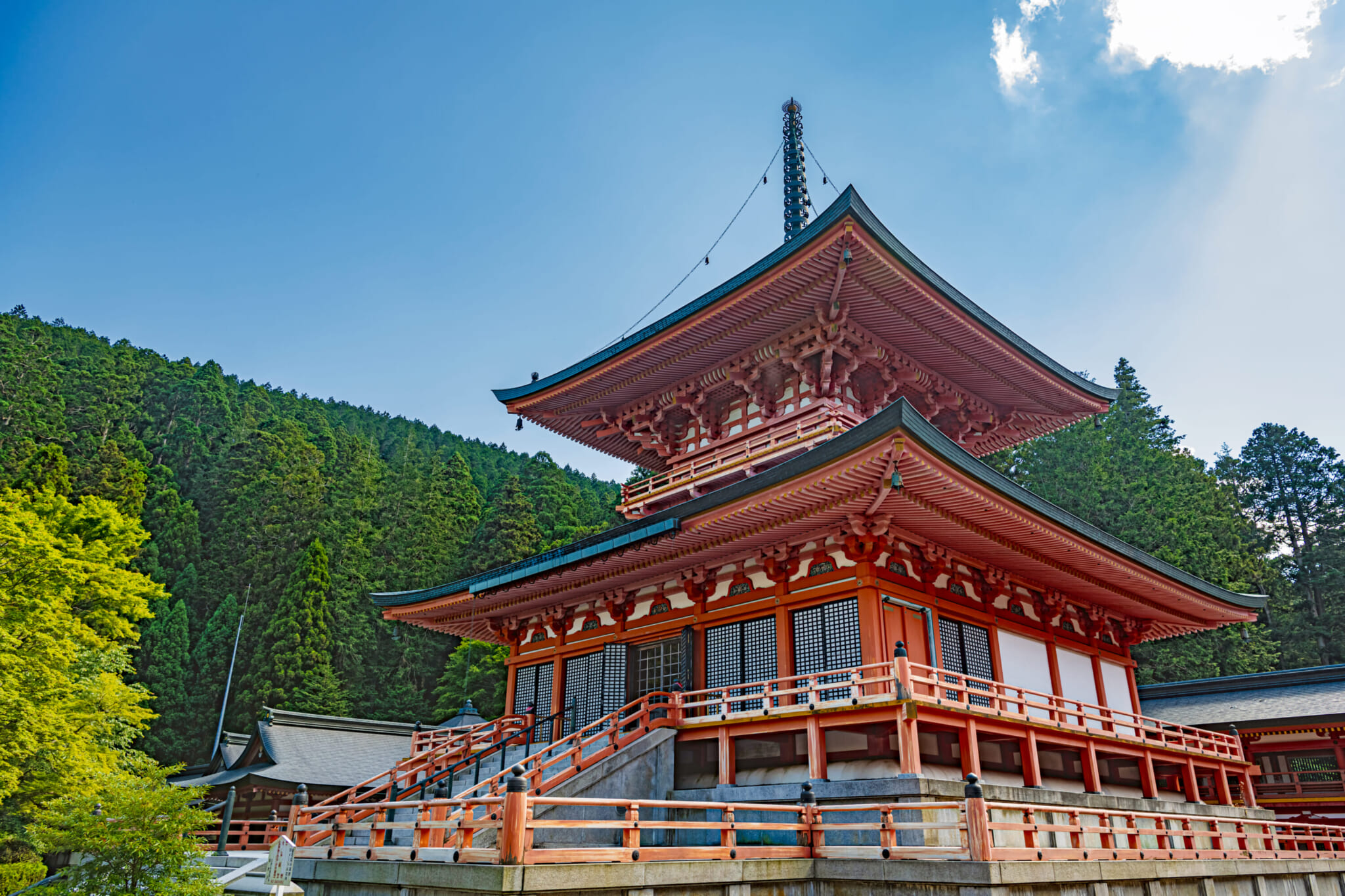
Overview of Enryakuji Temple
Spread across the forested ridgeline of Mount Hiei on the border of Shiga and Kyoto prefectures, Enryakuji is one of Japan’s most historically significant and spiritually profound religious sites. Founded in 788 CE by the monk Saicho — later venerated as Dengyo Daishi — the temple complex served as the headquarters of the Tendai school of Buddhism and became the most powerful and influential religious institution in Japanese history, shaping the course of Japanese Buddhism for over a millennium.
At its height, Enryakuji comprised over 3,000 sub-temples and housed thousands of warrior monks (sohei), wielding enormous political and military power. This power came to a catastrophic end in 1571, when warlord Oda Nobunaga — in one of the most notorious acts of the Sengoku period — ordered the complete destruction of the complex and the massacre of its inhabitants. The current structures were rebuilt during the Edo period under the patronage of the Tokugawa shogunate, and the complex was designated a UNESCO World Heritage Site in 1994 as part of the Historic Monuments of Ancient Kyoto.
Today Enryakuji is organized into three distinct precincts: the Todo (East Pagoda) area, which contains the Konpon Chudo — the temple’s most sacred hall, where a flame said to have burned continuously for over 1,200 years is enshrined; the Saito (West Pagoda) area, a quieter and more atmospheric precinct deep in the forest; and the Yokawa area, the most remote of the three, reached by a short bus ride from the main complex. Together the three areas cover a vast expanse of mountain terrain and can take a full day to explore thoroughly.
Enryakuji holds a unique place in Japanese religious history as the training ground for many of the most influential Buddhist reformers in Japanese history, including Honen, Shinran, Eisai and Dogen — founders of the Pure Land, Jodo Shinshu, Rinzai Zen and Soto Zen schools respectively.
Best Times To Visit Enryakuji Temple
Autumn (mid-October to mid-November) is widely considered the finest time to visit, as the mountain forests surrounding the temple complex turn vivid shades of red, orange and gold, framing the ancient wooden halls in spectacular seasonal color. The combination of atmospheric mist, ancient architecture and autumn foliage makes this one of the most visually striking temple experiences in all of Japan.
Spring brings cherry blossoms and fresh greenery to the mountain, typically arriving slightly later than in Kyoto city below due to the higher elevation. Summer is cool and refreshing compared to the heat of Kyoto and Otsu, making Enryakuji a welcome retreat during the humid summer months. Winter visits are quiet and austere, with occasional snow adding a meditative quality to the complex.