

Ainokura Village: Japan’s Most Secluded Farmhouse Community
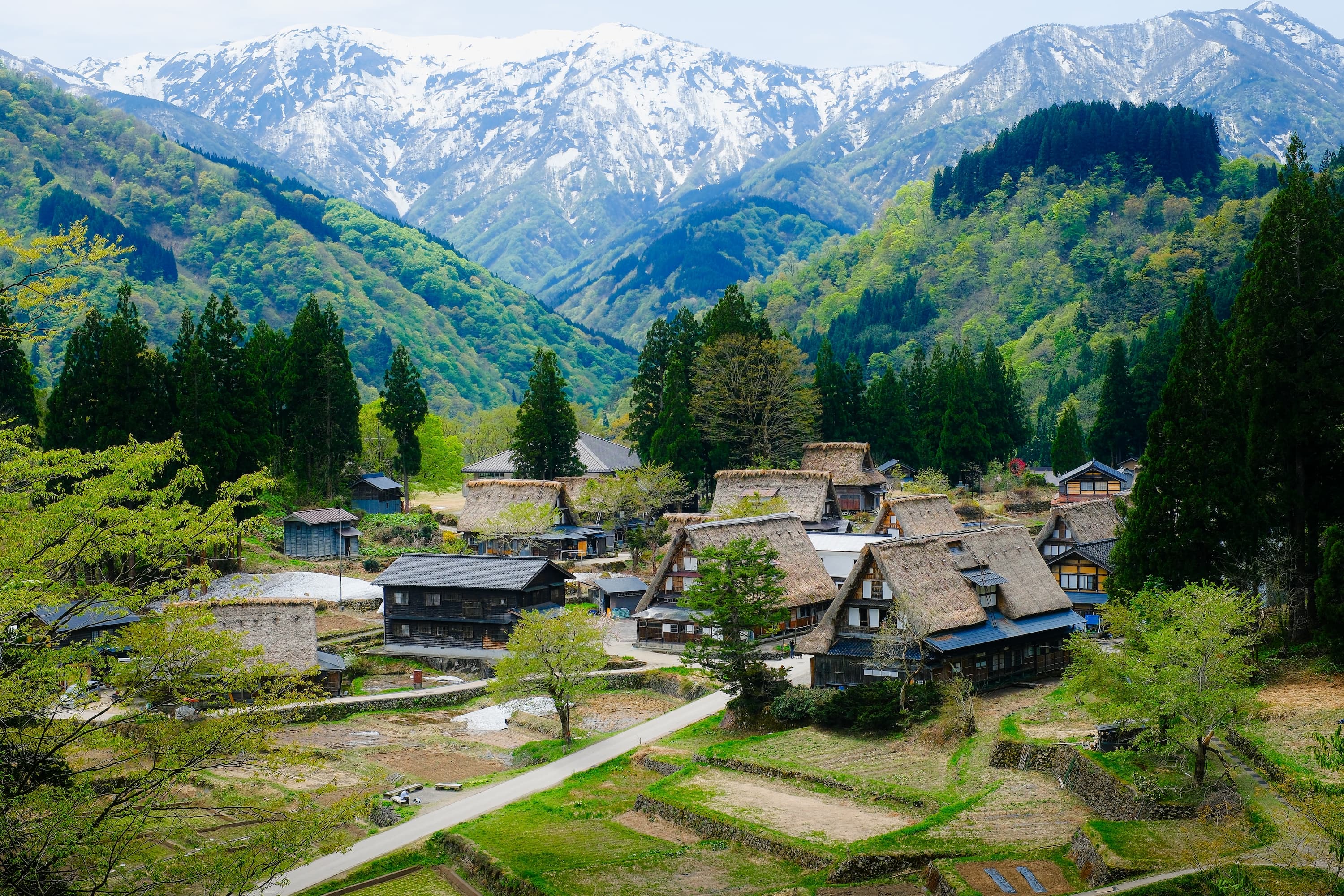
Nestled in the remote Gokayama region of southwestern Toyama Prefecture, Ainokura Village is one of Japan’s most remarkably preserved historic settlements. The village is home to more than 20 gassho-zukuri farmhouses — structures defined by their dramatically steep thatched roofs, designed to shed the region’s famously heavy winter snowfall of up to 3 meters or more. The name “gassho” means “hands in prayer,” a nod to the triangular shape of the rooflines.
Ainokura, along with neighboring Suganuma Village and Ogimachi in Shirakawa-go, was designated a UNESCO World Heritage Site in 1995. What sets Ainokura apart from its more tourist-heavy counterpart in Shirakawa-go is that people still actually live here. Most of the farmhouses remain private residences, though a handful operate as cafes, museums and minshuku — traditional guesthouses where overnight stays are possible.
The village’s isolation shaped its culture in profound ways. During the Edo period, the Kaga Domain promoted the production of saltpeter, washi paper and silkworm cultivation as the area’s primary industries. Evidence of this heritage lives on through small museums and workshops where visitors can observe — or try — traditional washi paper-making. Folk traditions, including the folk song “Kokiriko Bushi” and instruments like the sasara, a clapper made of hundreds of wooden slats, are still practiced by locals today.
Best Times To Visit Ainokura Village
Ainokura is beautiful in every season, but each offers a distinct experience. Winter (December–February) is the most dramatic: the farmhouses blanketed in snow create one of Japan’s most iconic rural scenes. The village also hosts seasonal illumination events throughout the year, typically in March, May, September and November, during which the gassho-zukuri houses are lit up from sunset, giving the village an otherworldly atmosphere. September’s light-up event includes a live performance of traditional Gokayama folk songs.
Spring and autumn bring lush greenery and vivid foliage respectively, while summer is quieter and less crowded. The village asks daytime visitors to arrive between 8:30 and 17:00 and to be mindful of residents, particularly in the early morning and evening hours.