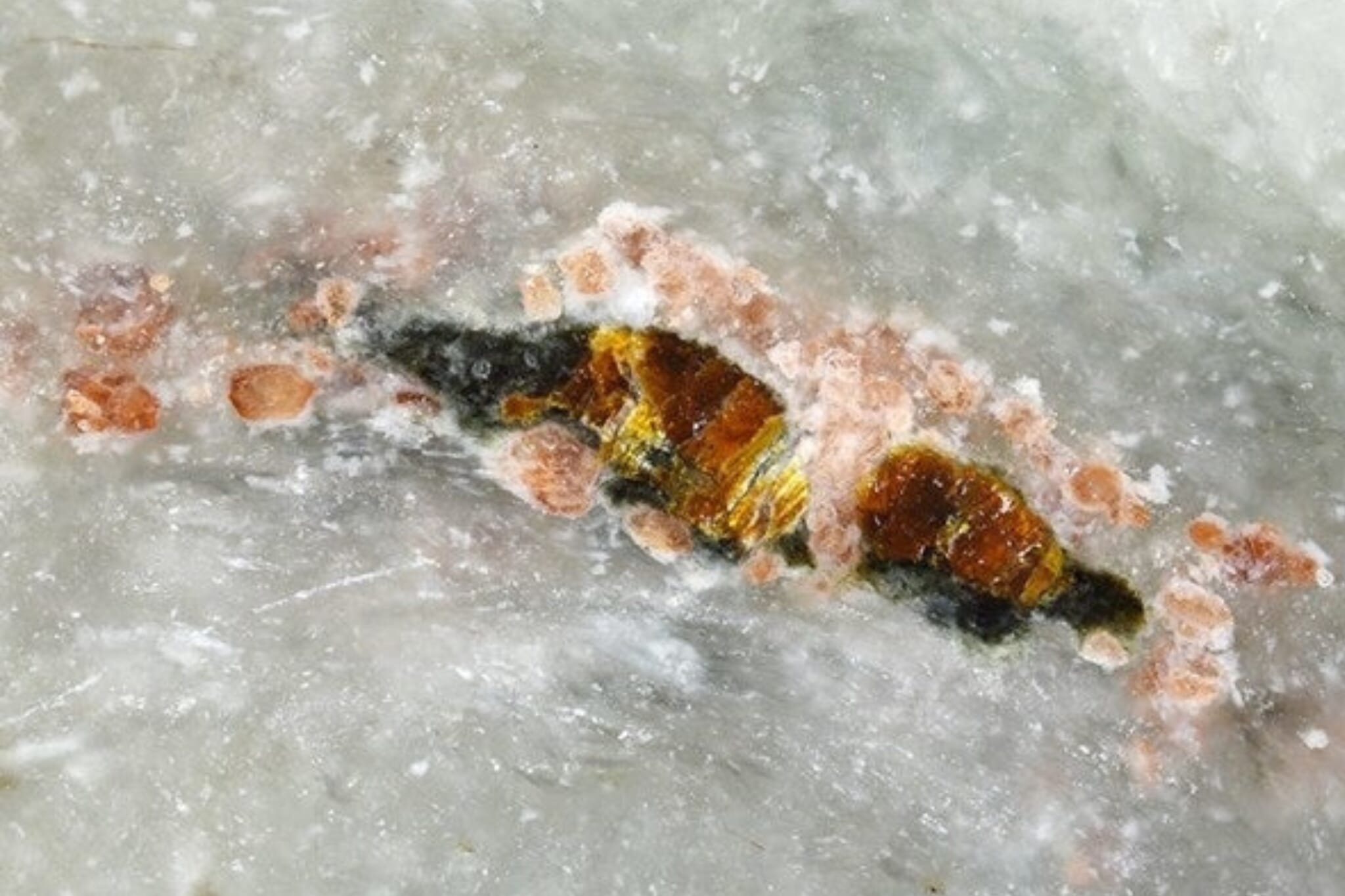
Scientists in Japan have uncovered a new mineral hidden inside jadeite, the country’s nationally designated stone. It’s been named Amaterasuite, after the sun goddess Amaterasu in Shinto mythology. The discovery was made by a joint team from the University of Tokyo, Yamaguchi University, Kyoto University, the Japan Synchrotron Radiation Research Institute, Rigaku Corporation and two amateur mineral collectors. The specimen came from jade deposits in the Osayama mountain area of Okayama Prefecture — a site not usually associated with rare mineral finds.
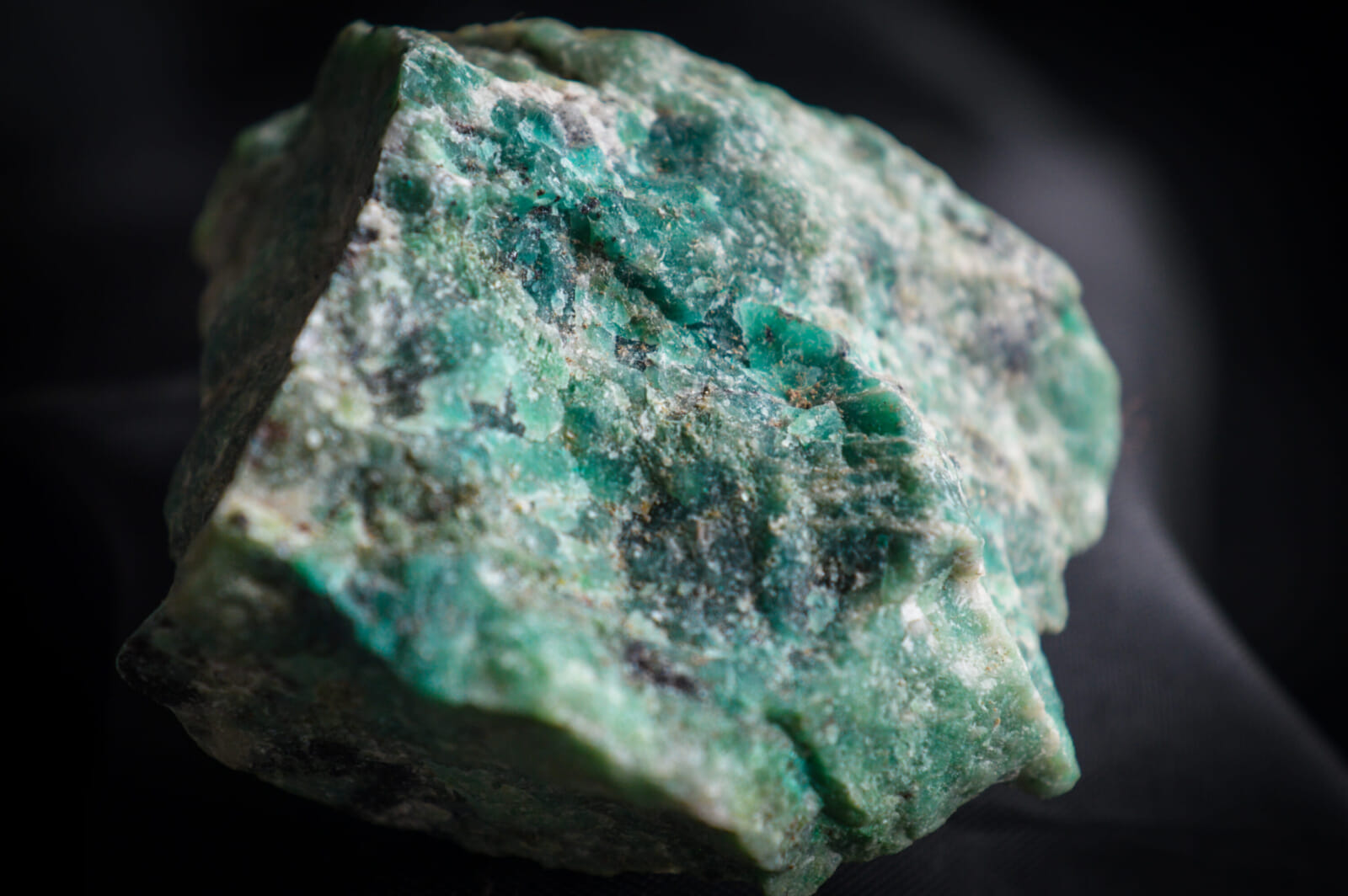
A photo of Jadeite
Hidden Within a Gem
Amaterasuite is unlike any mineral previously documented. Its chemical formula combines strontium, titanium, silicon, oxygen, hydrogen and chlorine in a unique ratio, suggesting the presence of geological processes previously unknown to science.
The mineral was found within jade, which is primarily made of jadeite. Jadeite forms under intense pressures in subduction zones, where tectonic plates collide and descend into the Earth’s mantle. These extreme conditions not only produce jade’s distinctive toughness and beauty but also make it a geological archive of the Earth’s tectonic history.
Jade — called hisui in Japanese — also holds special cultural status in Japan, having been used for tools, ornaments and ceremonial items for thousands of years. Its significance led to jade being named the country’s national stone in 2016 by the Japan Association of Mineralogical Sciences. While other new minerals have been found in jade from Niigata Prefecture’s Itoigawa region, Amaterasuite marks the first discovery of its kind in deposits found in Okayama Prefecture.
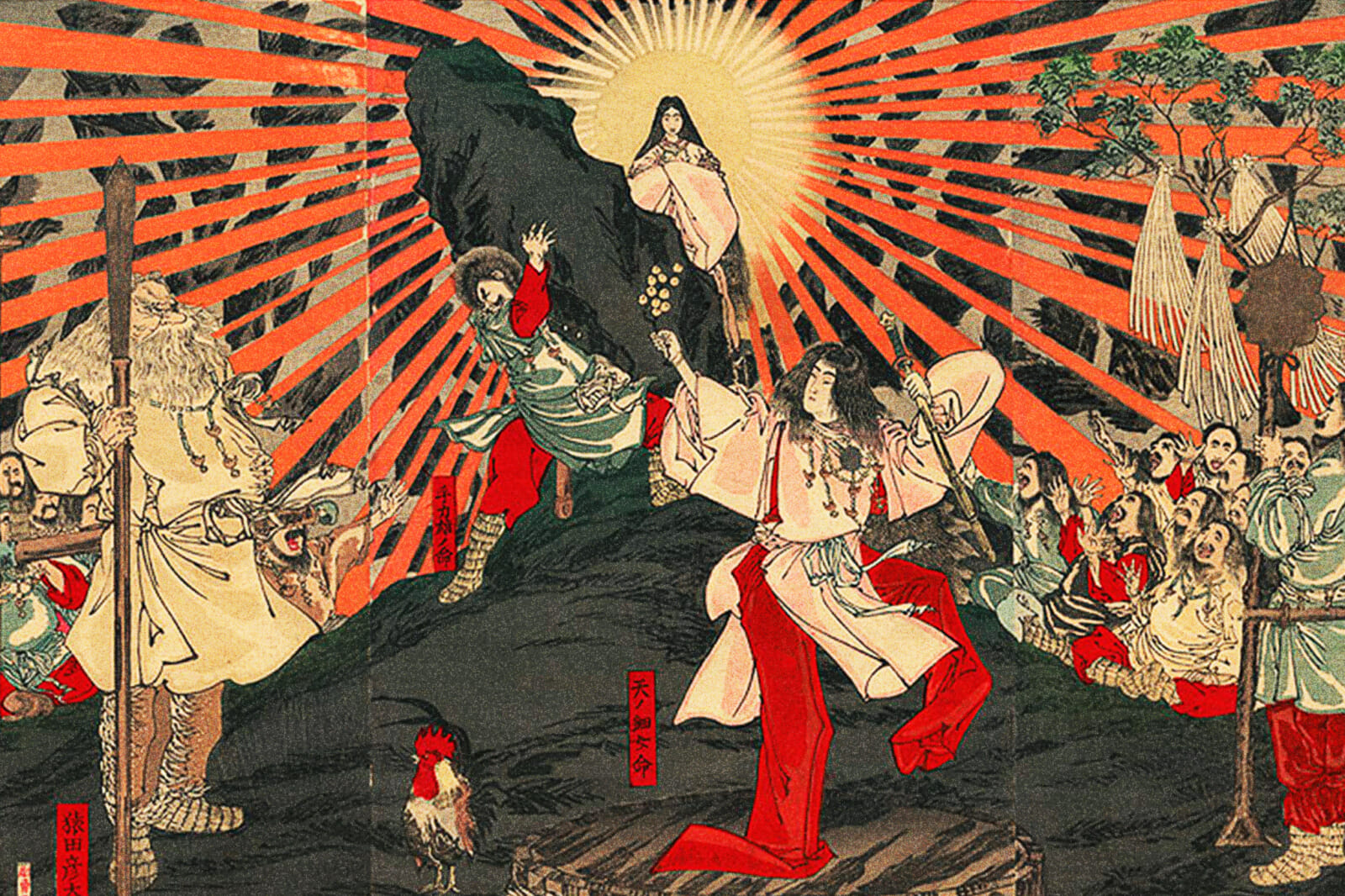
Amaterasu: The Sun Goddess
The mineral’s name pays tribute to Amaterasu, the sun goddess and one of the most revered deities in Japanese mythology. She is a central figure in the Kojiki and Nihon Shoki, Japan’s oldest historical chronicles, and is believed to be the mythical ancestor of Japan’s imperial family. As ruler of the heavens, Amaterasu embodies light, order and renewal.
One of her most famous legends recounts how, after a quarrel with her storm god brother Susanoo no Mikoto, Amaterasu hid inside a cave, plunging the world into darkness. The other gods lured her out through a raucous celebration, restoring sunlight to the land. This myth is often interpreted as a symbol of rebirth and the return of hope.
Related Posts
- Japanese Mythology: The Shinto Creation Myth
- The Real-Life Locations Behind 3 Iconic Japanese Myths
- Japanese Scientists Develop Artificial Blood Compatible With All Blood Types
Updated On August 13, 2025