Japanese history has no shortage of badass female warriors, including the 12th century vanguard leader Tomoe Gozen, said to be “a warrior worth a thousand,” and Nakano Takeko, leader of the Joshitai (Women’s Army) at the Battle of Aizu, part of the Boshin War. Somewhere between those two, there was Sasaki Rui.
Not much is known about her, not even her date of birth and death. What we do know, though, is that she was a swordmaster active during the early Edo period and that her life is easily worth a minimum of two big-budget historical action dramas.
Sasaki Rui’s Background
She was born in what is today Ibaraki Prefecture to Sasaki Budayu, a renowned martial artist in the service of Doi Toshikatsu, chief advisor of shogun Tokugawa Hidetada. An only child, Sasaki was trained from an early age in all manner of fighting, from traditional swordsmanship to sekiguchi-ryu, an eclectic art combining hand-to-hand combat with quick draws and other sword techniques.
At the same time, though, she reportedly also excelled in etiquette, household administration and other arts of feudal Japan. That, plus her position as the daughter of a notable samurai household, made her a very attractive marriage prospect, and she apparently had many suitors. However, she rejected them all because she and her father wanted her to marry a warrior worthy of the Sasaki legacy.
Sadly, her father died before naming an heir, and she didn’t count. During the Sengoku period of civil war, it was technically possible for a woman to lead a family in the absence of any male relatives, like what happened with Ii Naotora in the mid-16th century.
However, by the Edo Period, this would no longer fly; the Sasaki bloodline would end with Rui unless she found a husband. And that’s what she claimed to be doing by going to Edo (modern-day Tokyo) and dressing like a man.

“Ishi-jo wielding a naginata” by Utagawa Kuniyoshi (c. 1800s)
The Strangely Dressed Female Swordmaster
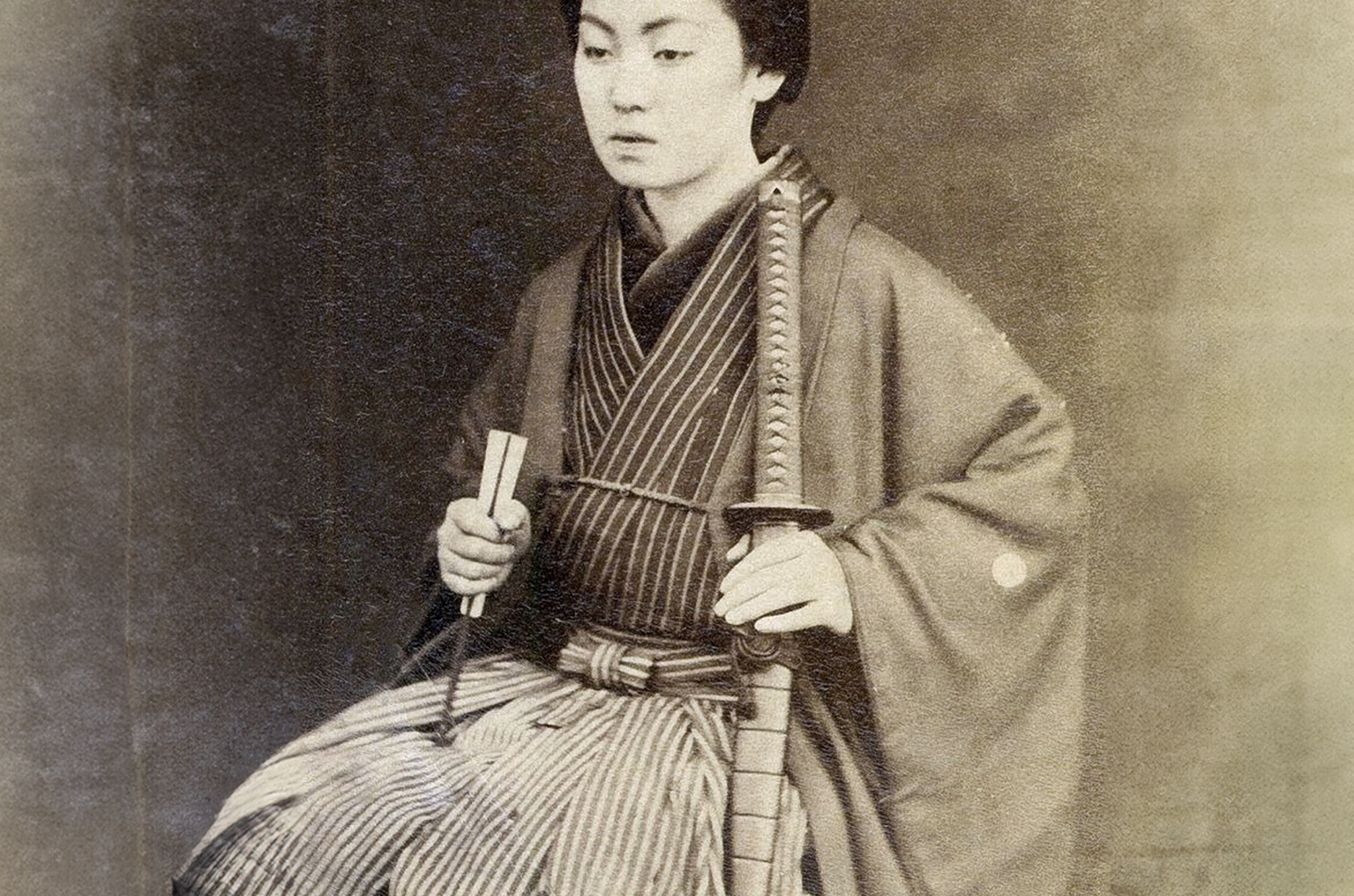
After the death of her father, Sasaki opened her own dojo in Asakusa. She apparently decorated the entrance with spears, naginata glaives and armor storage chests, but that wasn’t what made the biggest impression on her neighbors. While out and about, she wore a black silk haori jacket and carried two samurai swords, very much in a style reserved at the time for men.
Some sources say she also wore a samurai hairstyle, but that may be a misunderstanding because she used a kogai — a long, dagger-like hairdressing tool that was used by the samurai to style hair (or mark cut-off heads) — that became a popular ornament among Edo women in the 17th century.
Nonetheless, Sasaki’s cross-dressing actually got her summoned before both of Edo’s magistrates (machi-bugyo). When asked about her appearance, Sasaki simply explained that she hoped her bold attire would help her attract a powerful man worthy of restoring the proud Sasaki clan.
By that point, Sasaki’s dojo was already quite popular, and she had established herself as a great swordmaster, so her explanation was accepted. Later, her father’s former patron, Doi, allegedly helped her find a husband, restoring her family name and lands. And that’s more or less where Sasaki’s legend ends. Except for one tiny detail.
Sasaki Rui vs. Cross-dressing Delinquents
Sasaki didn’t just practice fighting in her dojo. Stories go that she often clashed with a new breed of street gangs that started plaguing Edo ever since the country entered an era of peace.
These kabukimono or hatamoto-yakko were made up of young samurai from the entire spectrum of Japan’s warrior class, from low-ranking ronin to members of houses in the direct service of the shogun. Without a real war to occupy them, they banded together to terrorize, extort and even kill the people of Edo. They also often did it in incredibly gaudy clothing or even female kimono.
Kabukimono engaged in un-samurai-like behavior. Their name comes from the verb kabuku, meaning “to act or dress strangely,” and is also the origin of “kabuki” since the theater was originally a female-only affair, where women played all the roles, which included dressing up as men. The kanji characters for “kabuki” were later changed to “sing, dance and skill.”
Sasaki, a woman dressed as a man, would reportedly fight these criminal cross-dressers, but also won the respect of other street gangs like the Shiratsuka-gumi, who dressed entirely in white, from their clothes to their scabbards. Far be it from us to romanticize the feudal era, but when street crime happened during the Edo period, it at least looked super fun.
Related Posts
- Mori Motonari: The Beggar Prince Who Conquered the Island of God
- The Lesbian Romance That Inspired a String of Volcano Suicides
- Oda Ujiharu: Why the ‘Weakest Samurai Warlord’ Is Admired to This Day
[newsltetter]
Updated On August 29, 2025