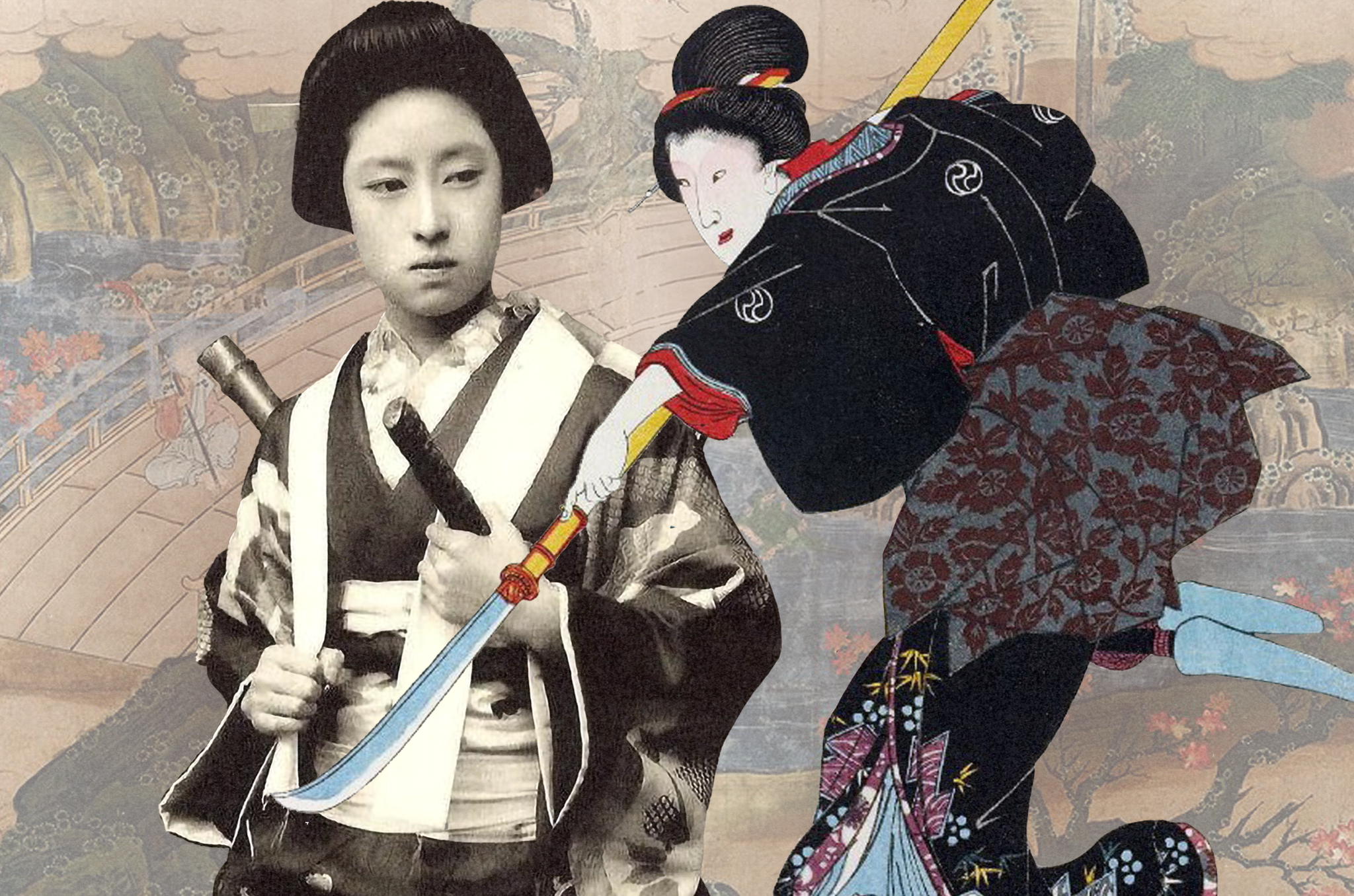
In our latest List of 7 article, we’re focusing on legendary onna-musha (Japanese female warriors) from the Sengoku period to the Meiji era. As we are going from the 1500s onwards, Tomoe Gozen, widely regarded as the most famous onna-musha in history, is not included. There’s also no solid proof that she existed.
While it’s generally agreed that women fought alongside men in battle — DNA analysis of remains from the 1580 Battle of Senbon Matsubaru appears to confirm this — their exploits were less frequently documented due to societal norms and biases. As a result, some of the accounts below may have been exaggerated or possibly underplayed.
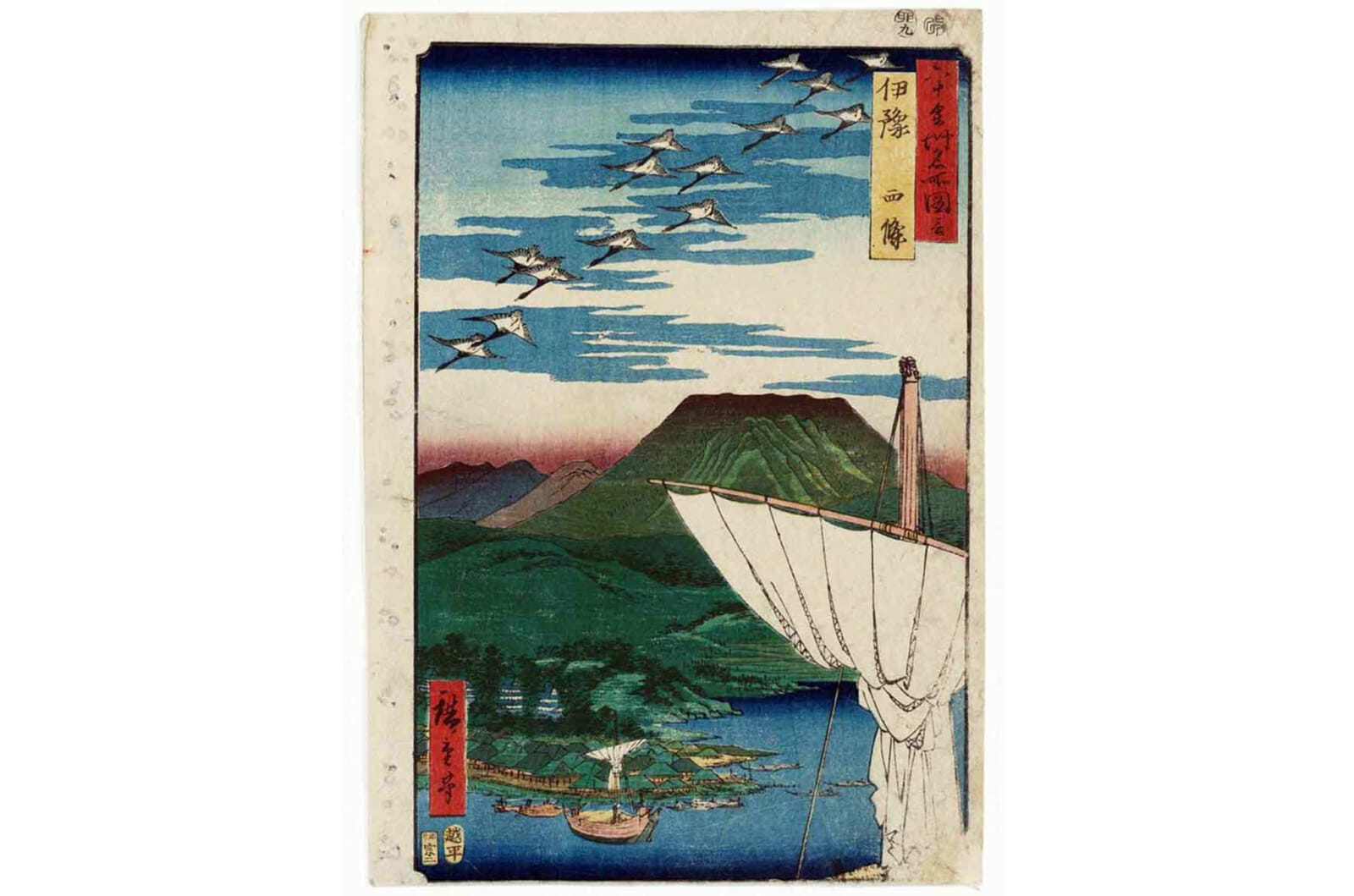
“Iyo Saijo” by Utagawa Hiroshige (c. 1855)
Ohori Tsuruhime
Referred to as the “Joan of Arc of Japan,” Ohori Tsuruhime was the daughter of Ohori Yasumochi, a chief priest of Oyamazumi Shrine — where samurai used to stop and pray — on Omishima Island in the Seto Inland Sea. With Yasumochi’s two sons being killed in battle, Tsuruhime succeeded him when he passed away in 1541.
Despite only being in her mid-teens, she reportedly led an armed resistance to defend Omishima against the Ouchi clan, one of the most powerful families in Western Japan. They were driven back into the sea, but then returned a few months later. Tsuruhime again led a counter-attack against the enemy ships.
One story — which may have been embellished over the centuries — tells of Tsuruhime boarding the ship of Ohara Takakoto, a general from the Ouchi clan. After being mocked, she allegedly challenged him to a duel and won. The do-maru armor kept in Oyamazumi Shrine is said to have been worn by Tsuruhime.
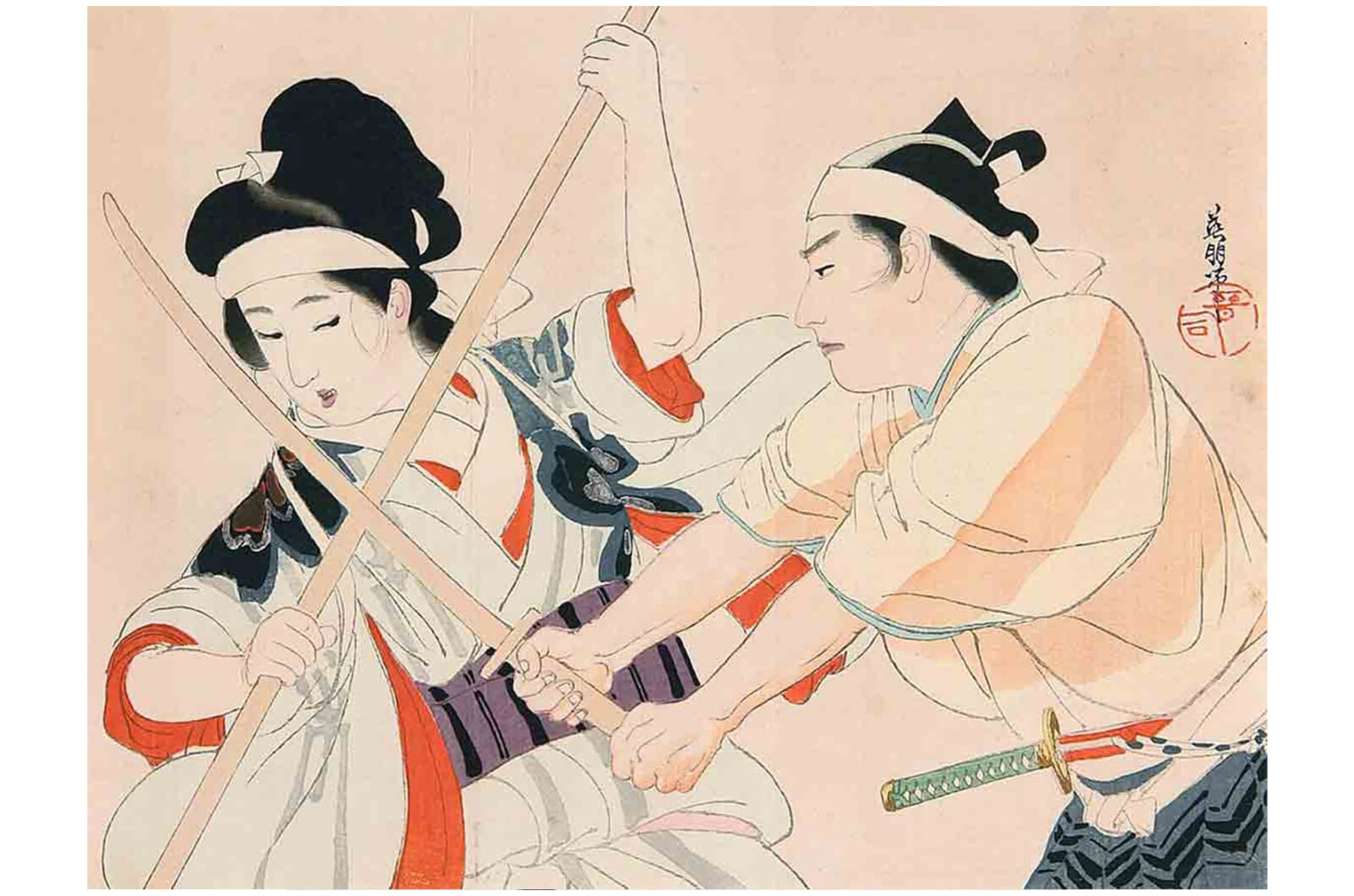
“Fighting Lesson” by Hirazaki Eiho (c. 1910)
Akai Teruko
Described as the “strongest woman in the Warring States period,” Akai Teruko reportedly fought in many battles alongside her husband, Yura Narishige, the head of the Yura clan and lord of Kanayama Castle. Following his death in 1578, their son, Kunishige, took over as the leader of the Yura clan, and Teruko became a Buddhist nun.
Kunishige, though, was inept as a leader, and in 1584, he and his brother, Nagao Akinaga, were captured by the Hojo of Odawara. Teruko then reportedly led an army of 3,000 soldiers to defend Kanayama Castle when it was attacked by the Hojo clan. Just over 15 months later, she agreed to surrender.
That was under the condition that her two sons were released. Teruko was in her early 70s at the time, but apparently that wasn’t the end of her fighting days. She allegedly fought in the Siege of Odawara, which marked the end of the Sengoku period and the beginning of Japan’s unification under Toyotomi Hideyoshi.
Myorin
In the mid-1580s, Hideyoshi invaded Kyushu as part of a broader effort to unify Japan under his rule. At the time, the south of the island was ruled by the powerful Shimazu family of Satsuma, which was also attempting to expand its influence by gaining ground in northern areas of Kyushu.
To this end, in 1586, the Shimazu clan attacked Tsurusaki Castle in the Bungo region (now part of Oita Prefecture), home to a vassal of the rival Otomo family — allies of Hideyoshi.” Preparing to storm the castle with 3,000 soldiers, the generals were allegedly shocked to learn that its defense was being led by a woman.
Myorin, also known as Yoshioka Myorin-ni, held them up with various traps. Offered a substantial amount of gold and silver to surrender, she reportedly refused. It’s said that the Shimazu clan made 16 failed attempts to storm the castle. Myorin was purportedly in the thick of the action, dressed in armor, with her naginata — Japanese pole weapon — in hand.
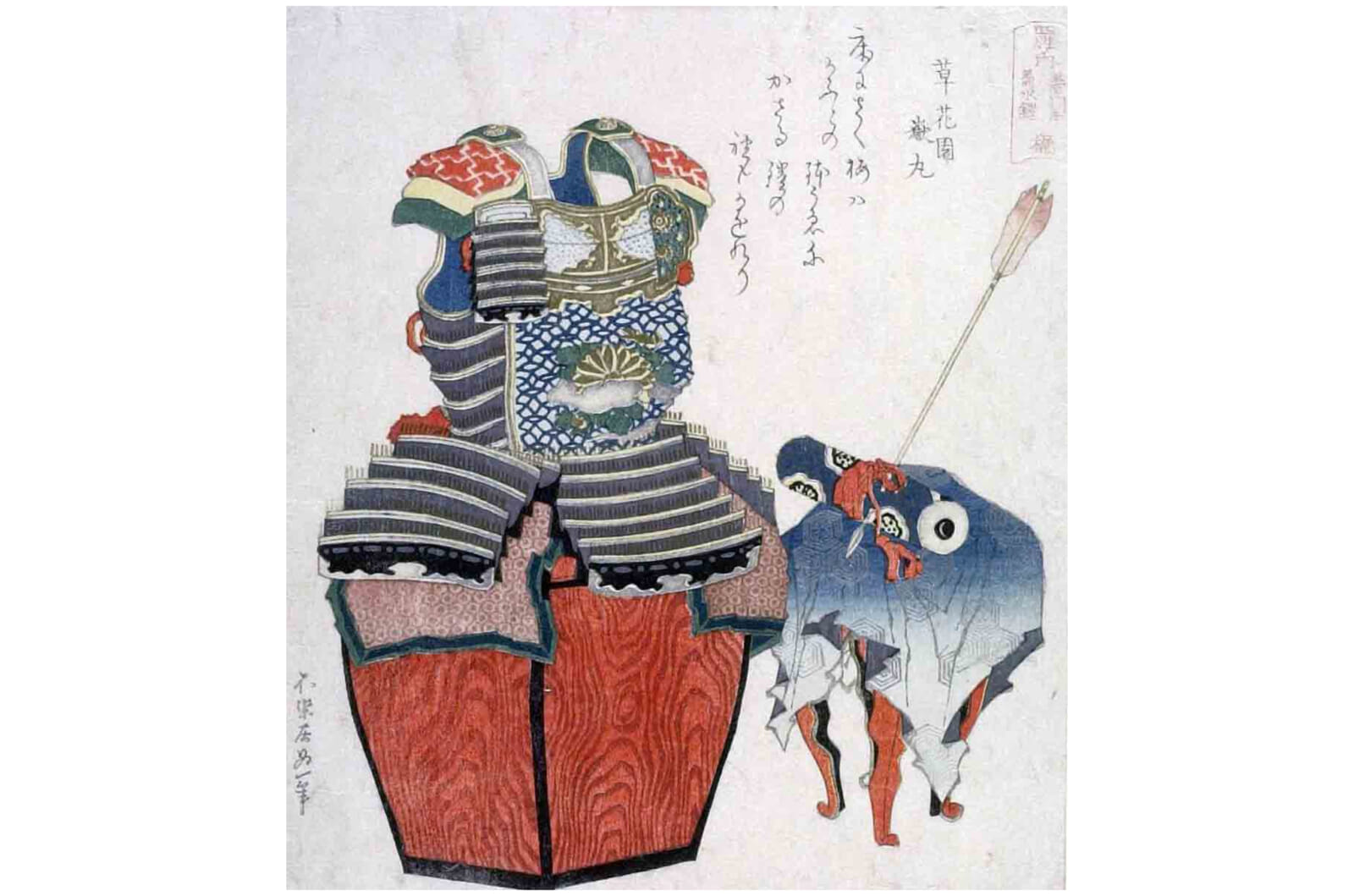
“Tachibana Armor” by Katsushika Hokusai (c. 18th century)
Tachibana Ginchiyo
Another female warrior who battled the Shimazu clan was Tachibana Ginchiyo. Daughter of the revered samurai Tachibana Dosetsu, she succeeded her father as leader of the Tachibana clan following his death in 1585. Not long after that, the Shimazu clan attacked Tachibanayama Castle in Chikuzen Province (today part of Fukuoka Prefecture).
Ginchiyo was reportedly there at the main gate to resist them, alongside a group of female warriors she had trained. They were all armed with naginata and guns. She led the defense of the castle with her husband, Tachibana Muneshige. He had been adopted by Dosetsu and eventually became the leader of the Tachibana clan.
The siege by the Shimazu clan failed, but the castle eventually fell to Hideyoshi’s forces. Ginchiyo and Muneshige subsequently allied with Japan’s second “Great Unifier.” They later joined forces with Ishida Mitsunari’s Western army against the Eastern army of Tokugawa Ieyasu in the Battle of Sekigahara (1600), the largest battle in Japanese feudal history.
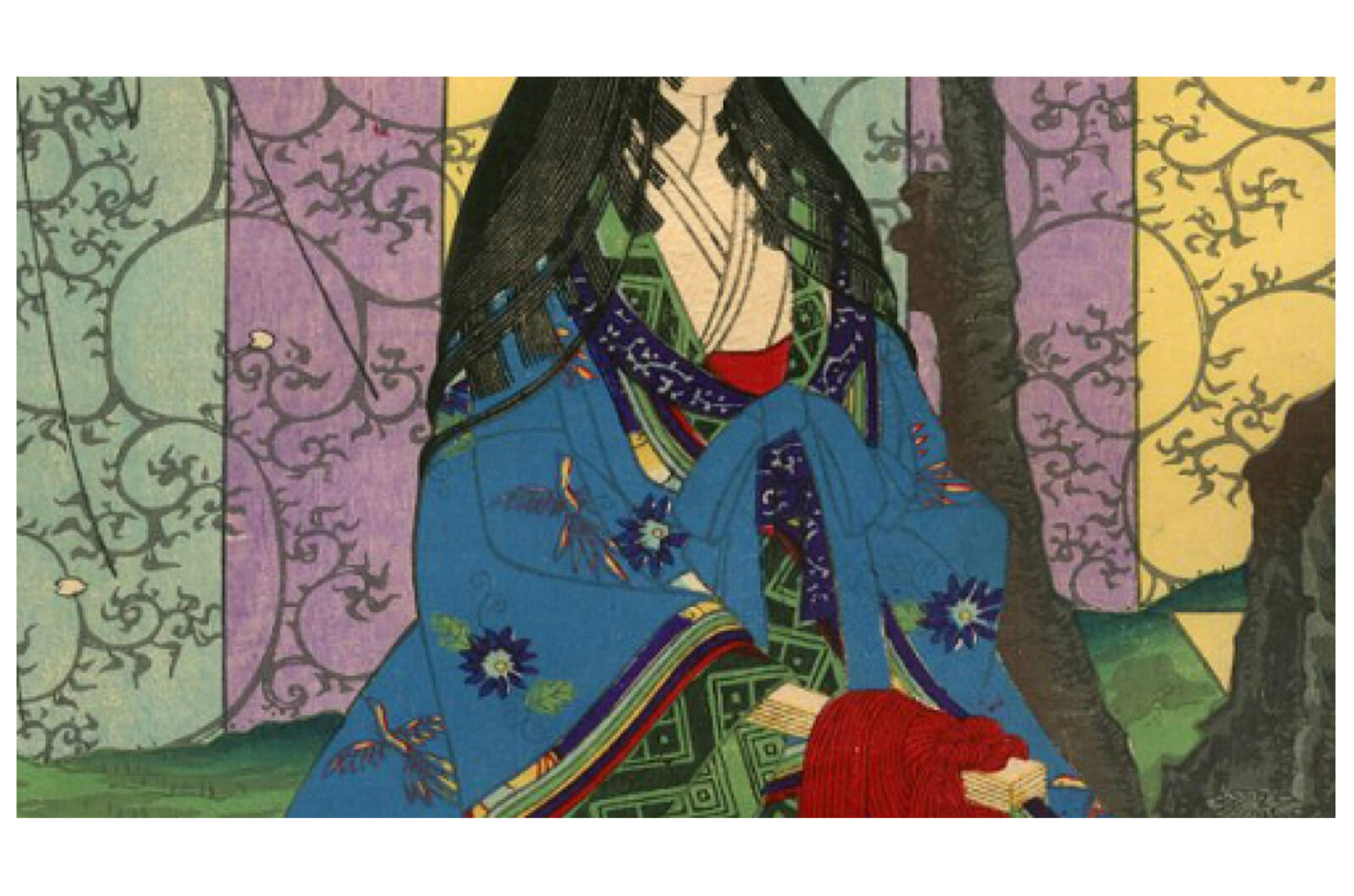
Onamihime
The daughter of daimyo Date Harumune, Onamihime became the ruler of Sukagawa Castle, and subsequently the de facto leader of the Nikaido clan after the deaths of her husband, Nikaido Moriyoshi, and her son Yukichika. The couple’s other son, Heishiro, was adopted by the powerful Ashina clan after being taken hostage.
The Nikaido clan was opposed to the expansionist ambitions of Onamihime’s nephew, Date Masamune, in Mutsu Province, which encompassed several modern-day prefectures in northern Honshu. She subsequently fought against his army in various conflicts, including the Battle of Hitotoribashi, which started as a revenge attack by Masamune following the death of his father, Terumune.
Masamune, one of the most revered military leaders of the Sengoku period, was said to be hated by his aunt. After the Battle of Suriagehara, he demanded Onamihime surrender. She refused. Masamune eventually captured Sukagawa Castle in 1589. That wasn’t the end of Onamihime’s fighting days, though. She also reportedly participated in the Battle of Sekigahara.
Nakano Takeko
The Boshin War was fought from 1868 to 1869 between the military of the ruling Tokugawa shogunate and those supporting the restoration of imperial rule under Emperor Meiji. Women were prohibited from fighting. This, though, didn’t stop Nakano Takeko and her Joshitai (Women’s Army).
The spontaneously organized ad hoc group of female warriors, which included Takeko’s mother and sister, fought alongside the Aizu Domain forces during the conflict. Using naginata, they fought valiantly, with many of them being killed in the conflict. This included Takeko, who died on the morning of October 16, 1868, leading the charge against the imperial troops.
The enemy soldiers were initially ordered by their commanders not to shoot when they realized the attackers were women. This gave Takeko and her band of warriors a chance to attack. The imperial forces eventually started to open fire, and Takeko took a bullet to the chest. She then ordered her sister to behead her.
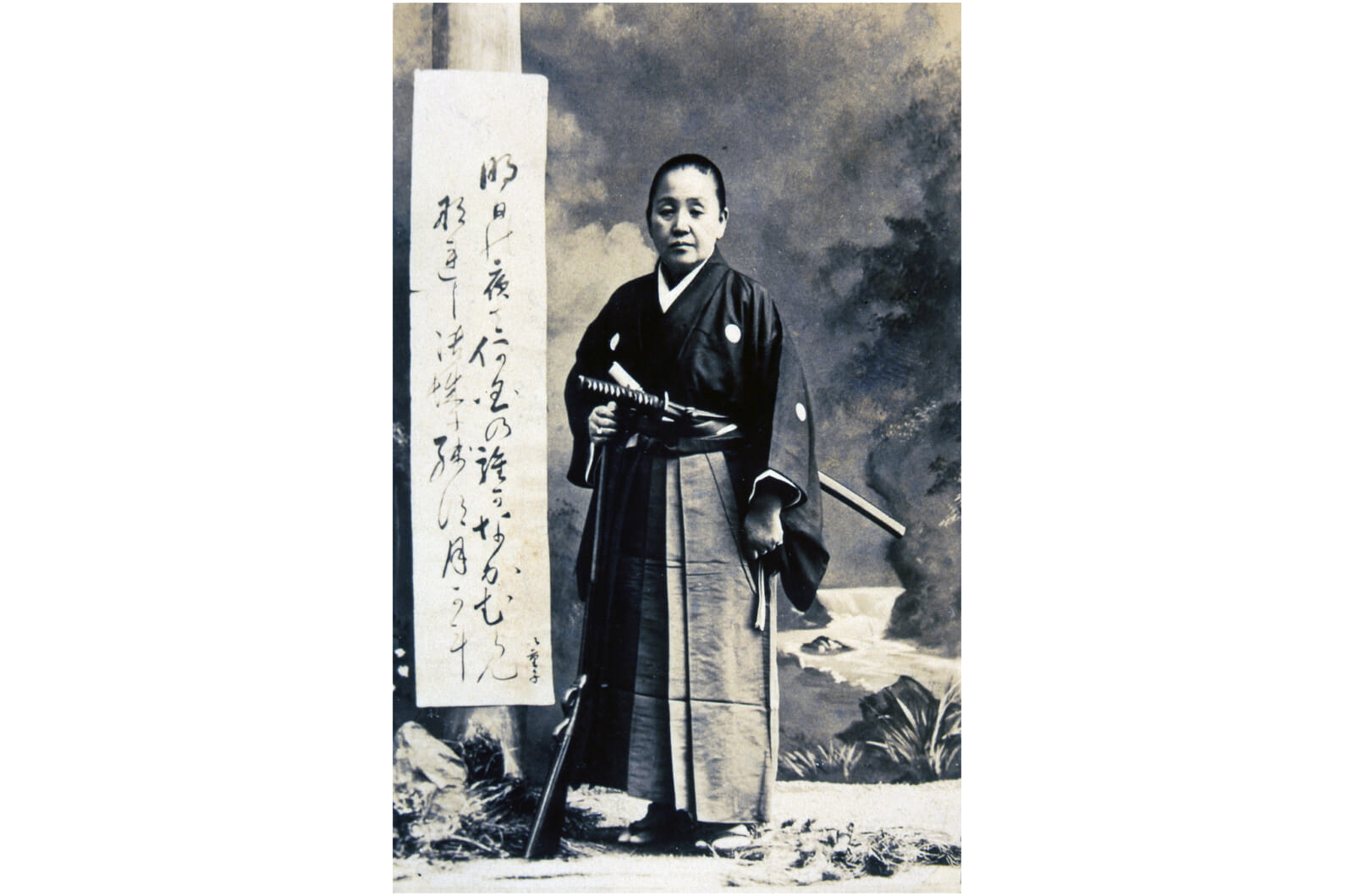
Portrait of Niijama Yae (c. 1932)
Niijima Yae
Another onna-musha who fought in the Boshin War was Niijima Yae, also known as Yamamoto Yaeko. After learning marksmanship from her gunnery instructor father, she used her skills with a Spencer repeating rifle to help defend Tsuruga Castle during the Battle of Aizu, while also taking care of injured soldiers.
Following a month-long siege, Aizu officials agreed to surrender on November 6, 1868. Many of the samurai population were subsequently forced to relocate to the Tsugaru Peninsula. Yae sought refuge in Yonezawa before moving to Kyoto, where she became a Christian and married Reverend Joseph Hardy Neesima, founder of Doshisha University.
In 1890, Yae became a member of the Japanese Red Cross. During the First Sino-Japanese War, she led a team of 40 nurses that cared for the wounded soldiers. In 1896, a year after the conflict ended, she was awarded the Order of the Precious Crown. She received the same accolade after serving in the Russo-Japanese War.
More From This Series
- Iconic City Pop Songs Covered or Sampled by Overseas Artists
- Japanese Films That Influenced Quentin Tarantino
- Legendary Figures From Osaka
Updated On September 5, 2025