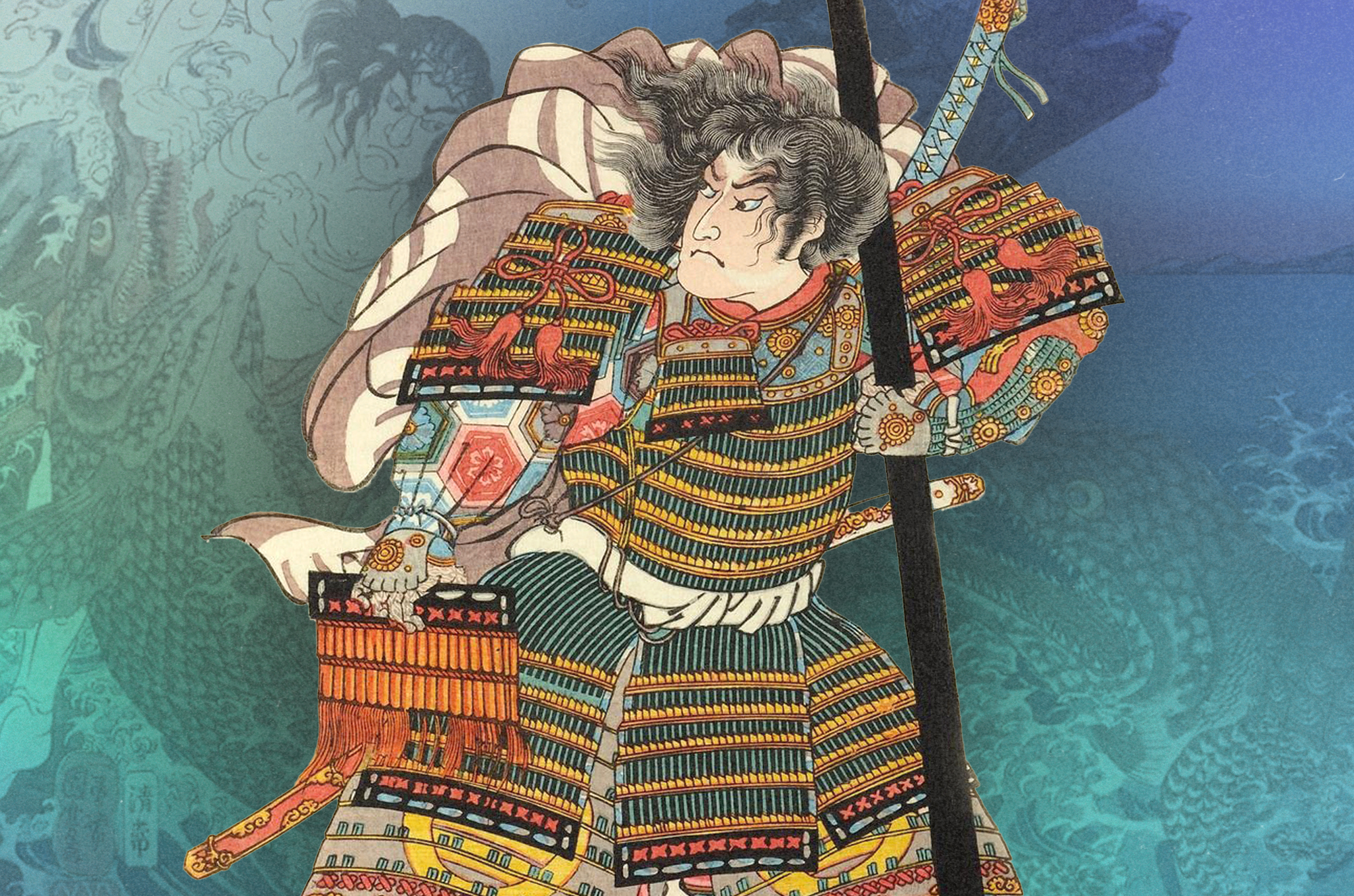
Asahina Yoshihide, also called Asahina Saburo, was born in the late 12th century as the third son of general Wada Yoshimori, retainer of the first shogun Minamoto no Yoritomo. Except that he almost definitely wasn’t because Asahina’s mother was supposedly the legendary female warrior Tomoe Gozen, who, sad to say, probably didn’t exist. It’s hard to be born for real when your mom was made up for narrative purposes.
Perhaps Wada actually had a son named Asahina Yoshihide but, if he did, then he had to have been a flesh-and-blood person and nothing like the superhero legends that grew around him. Still, we shouldn’t let facts distract us because the Asahina legends are awesome.
Asahina Yoshihide depicted by Utagawa Kuniyoshi (c. 1849)
A Superhuman, Hands-On Fisherman
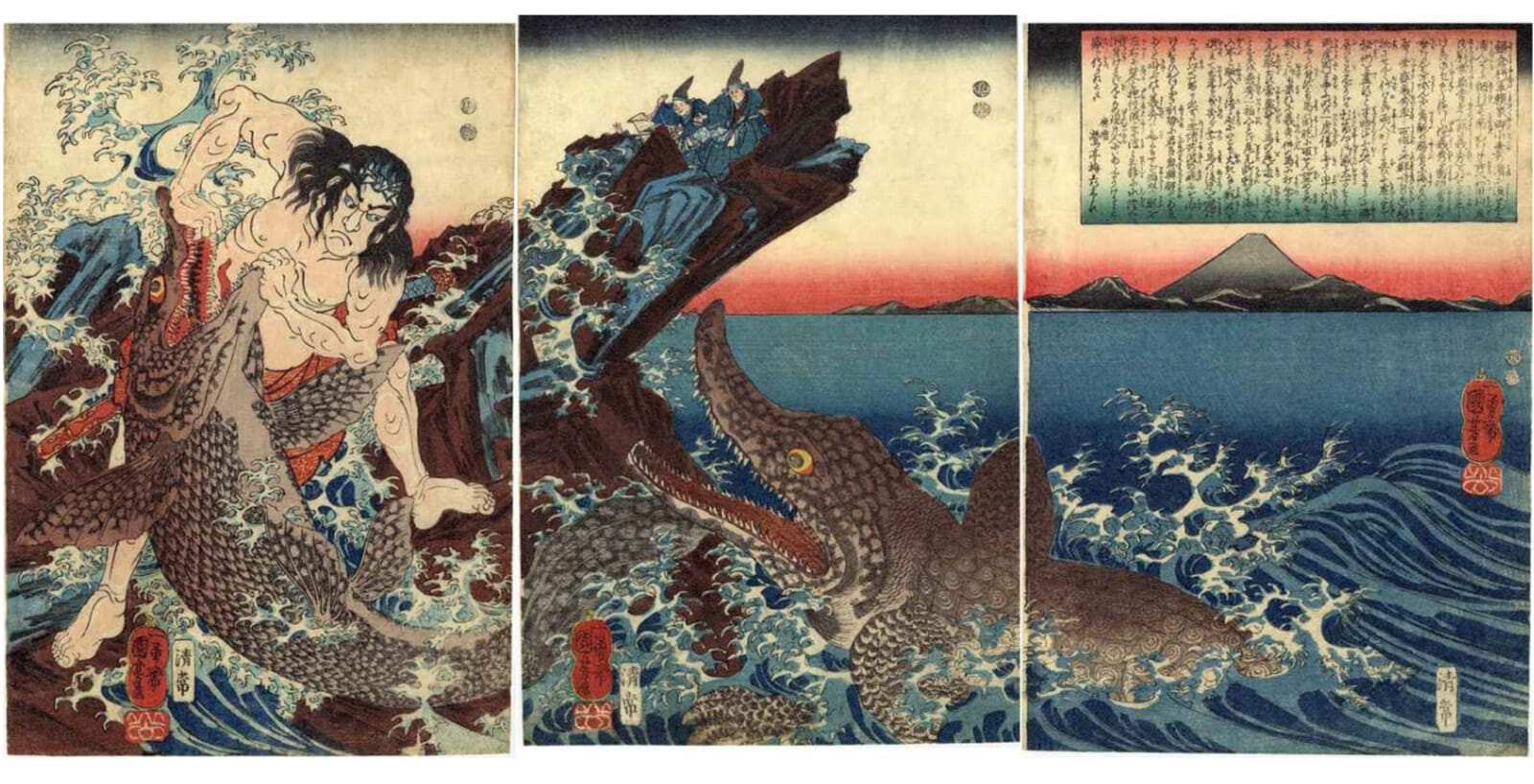
According to the Azuma Kagami chronicle, which largely deals with real history, Asahina was hanging out with future shogun Minamoto no Yoriie around modern-day Zushi, Kanagawa Prefecture, when he was asked to demonstrate his swimming skills. Diving into Sagami Bay, he supposedly came up with three massive wani, two in his hands, and one under his arm.
Wani were originally dragon-like sea monsters from Japanese mythology, but by the time of Asahina, the name came to mean any scary sea creature with scales, most typically a shark or a crocodile. There are portraits of Asahina wrestling both animals out of the water, and also some versions where the artist decided to combine the creatures into some sort of terrifying crocodile-shark. Because a good superhero is defined by their foes.
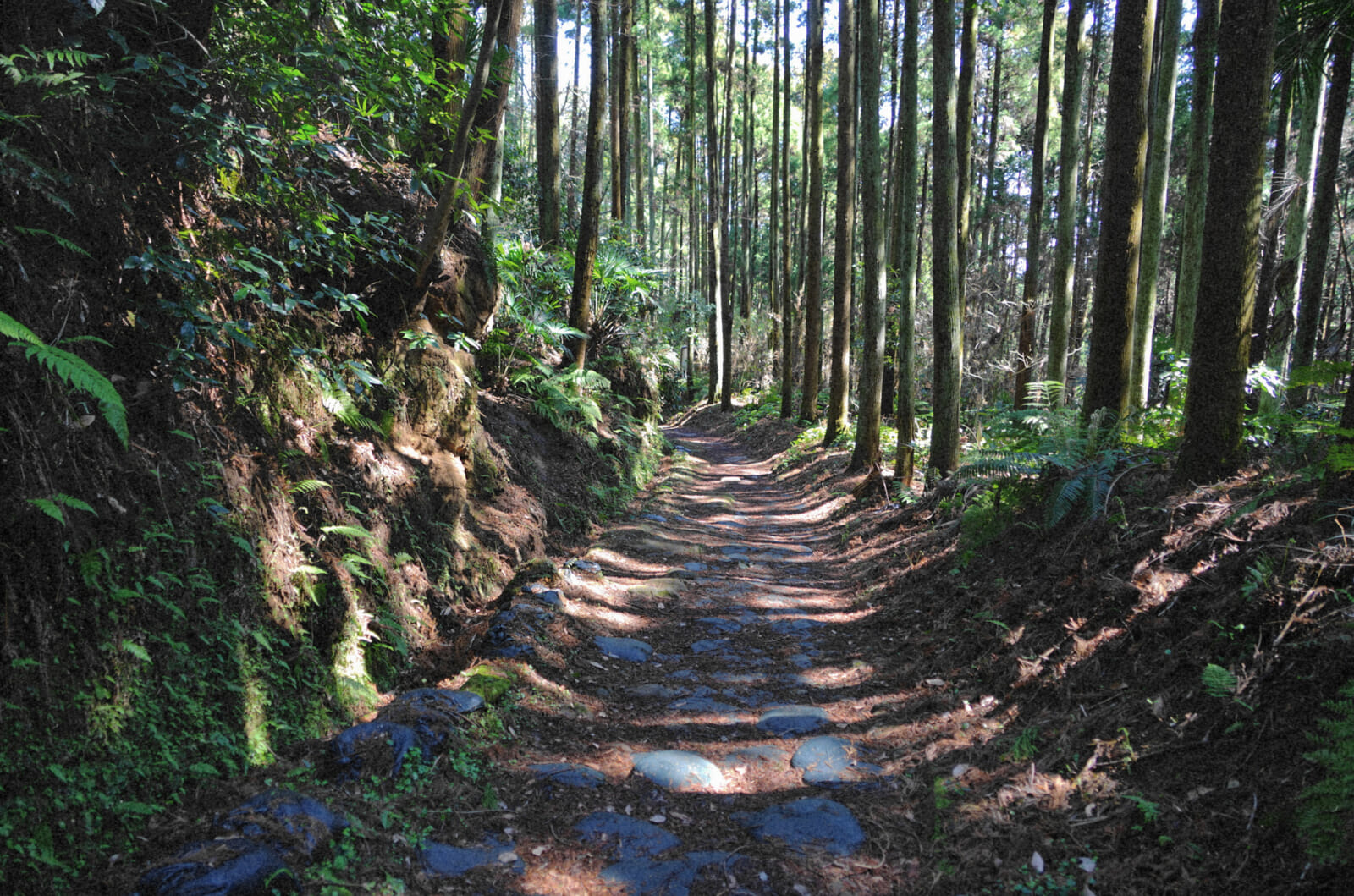
Asaina Pass, Kamakura
Making and Breaking Mountains
Asahina is why Miyagi Prefecture looks the way it does today. Apparently. Legend goes that when he was up north, he wanted to create a mountain as a target for his archery practice, as one does. So, he constructed a massive tangara basket that was carried like a backpack. He filled it up with soil and ventured towards his practice ground, while taking breaks along the way.
Whenever he rested, a little bit of the soil spilled out of the basket and formed a new mountain, leading to the famous Nanatsumori Seven Mountains of Miyagi. The archery-practice mountain? That’s Miyagi’s Mount Yagui (also known as Mount Yakurai, the “Arrow-Eating Mountain.”)
The place Asahina got the soil from? The Shinai Marsh. The abandoned tangara? That’s now the Tangara Forest, obviously. The footsteps he left behind? Those became the Yoshida River. Chances that he was a real person? Very low.
His name, though, will never be forgotten because while it wasn’t commemorated in Miyagi, it does appear in Kamakura. Sort of. The Asaina Pass (sometimes called the Asahina Pass) is a narrow mountain road and one of the historic Seven Entrances to the city.
Historical records show that it was built by the Hojo clan sometime around the 1240s. However, according to legend, Asahina dug the pass in one night using only his hands and monster strength. The legend was more interesting, so the place is now named after Asahina instead of the Hojo family.
A Tiny Sliver of Truth in the Legend?
While there are a lot of reasons to suspect Asahina wasn’t a Japanese Hercules, he may have been real, with his legend being the result of his accomplishments during the historically verified Wada Rebellion.
In 1213, Asahina’s father and his relatives rebelled against the Hojo clan because they imprisoned his family. In the Hojo’s defense, they were planning a coup against the Hojo and their puppet shogun Minamoto no Sanetomo.
Facing the forces of Hojo Yoshitoki — who would later order the construction of the Asaina Pass — Asahina’s father was suddenly betrayed by one of his allies. Yet, he fought bravely against a numerically superior enemy. When he got news that his son Yoshinao was killed, though, he lost the will to fight and allowed the enemy to take his life.
There are tales that Asahina was part of the fighting, breaking down the massive wooden gate of the Hojo with his bare hands and fighting off hundreds of enemy soldiers. There are two possible explanations for that.
There really was an Asahina Yoshihide, who fought bravely in the Wada Rebellion and, over time, stories of his deeds got a little out of hand until they made him into Superman. It happened with other historical figures. There’s also a chance that, moved by Wada Yoshimori’s bravery and love for his real children, people kind of invented a third son for him out of pity.
This child wasn’t just super strong and brave. He, according to legend, survived the aftermath of the rebellion and lived the rest of his life in peace, having many children and allowing some part of the Wada family to survive. Wouldn’t that be nice?