Located in what is today Higashi-Nihonbashi, the Yagenbori area of Edo (modern-day Tokyo) was where the city’s doctors and herbalists lived. In the 17th century, it established itself as the birthplace of shichimi, the popular red chile pepper spice mix that’s still widely used in Japanese cooking. But Yagenbori was also spicy in a more figurative sense by virtue (though that may be the wrong word here) of being home to Japan’s first and most famous sex shop. Its name was Yotsumeya, and this is its story.
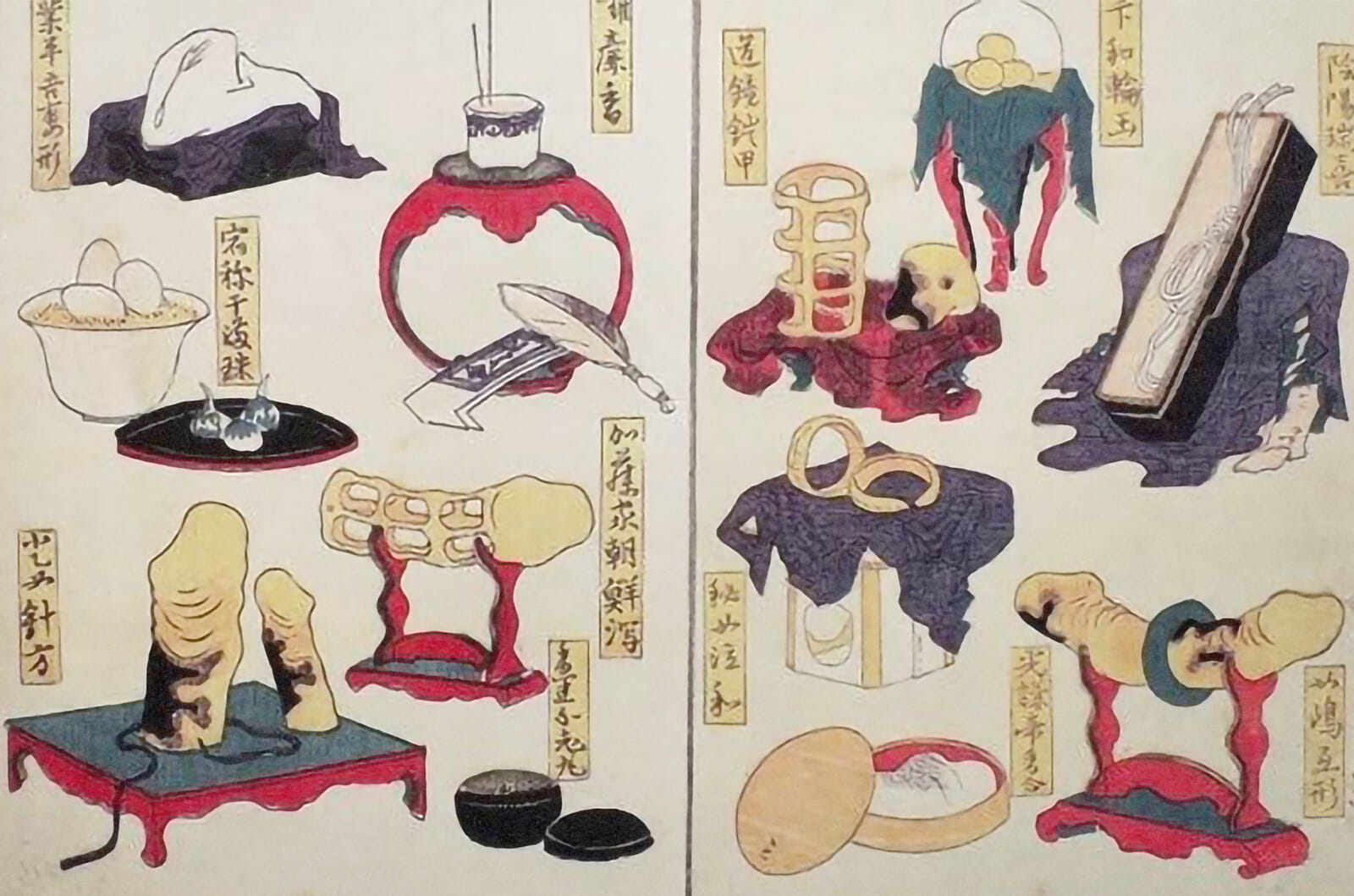
An illustrated selection of the wares available in Yotsumeya, date and artist unknown
A Raging Selection
The history of Yotsumeya is actually closely connected to shichimi, but it’s not as disturbing as it sounds — that wasn’t how Edo people liked to spice things up in the bedroom. The same type of experts on natural ingredients who came up with the chile pepper mix also turned out to be great at other kinds of herbal blends, like birth control and, especially, aphrodisiacs. The latter quickly became the basis for Yotsumeya’s success, making the business swell and grow and possibly experience enhanced sensations.
The store also offered a wide variety of dildos. Some were very straightforward, like the harigata type that was simply a phallus fashioned out of water buffalo horn, tortoiseshell or wood. But then there was the more involved Higo-zuiki: the dried skin of the taro stalk or lotus root stems that could be fashioned into a cord for wrapping around the penis or braided in a thick, pliant dildo. When moistened, it reportedly became quite slippery and produced a pleasant tingling sensation.
Yotsumeya even carried an early form of Japanese condom called kabuto-gata (helmets), which were made from just about anything, including leather and tortoiseshell, and weren’t exactly bestsellers. Customers apparently often complained of slippages and breakages (hopefully meaning the condoms).
Yotsumeya tried to cater to everyone. For male lovers, it had the tsuwasan lubricant, while specialty cushions and various other supports were marketed to older couples. Yoroi-gata — a stiff, latticed casing that acted a bit like armor (yoroi) for the phallus — was just the thing for women seeking a ribbed-for-her-pleasure experience (or men needing a little structural reinforcement). The store’s variety was so impressive that the word yotsumeya soon became a synonym for all sex shops and their adult inventory, sort of like how “Kleenex” is now a general word for all facial tissues.
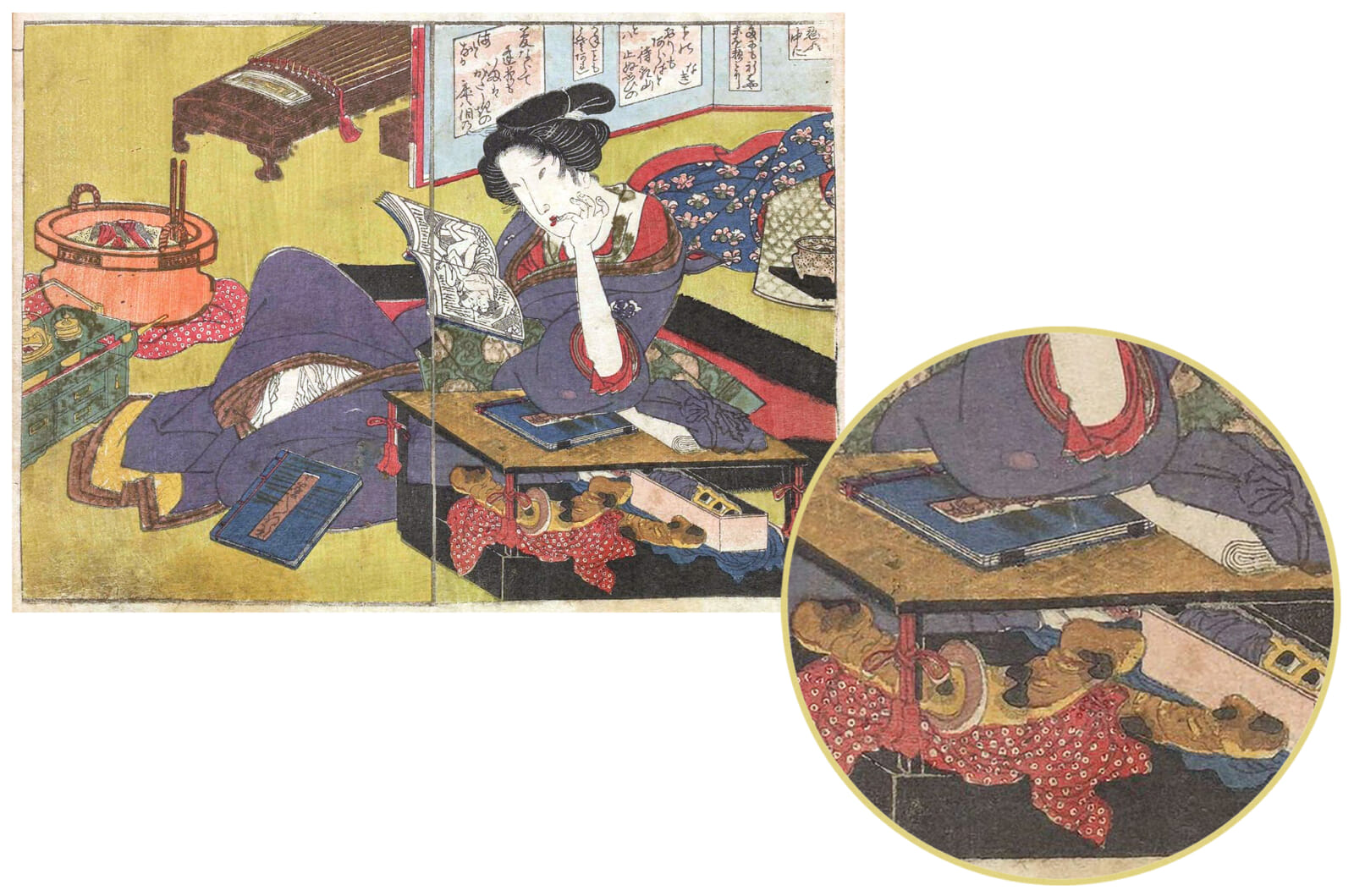
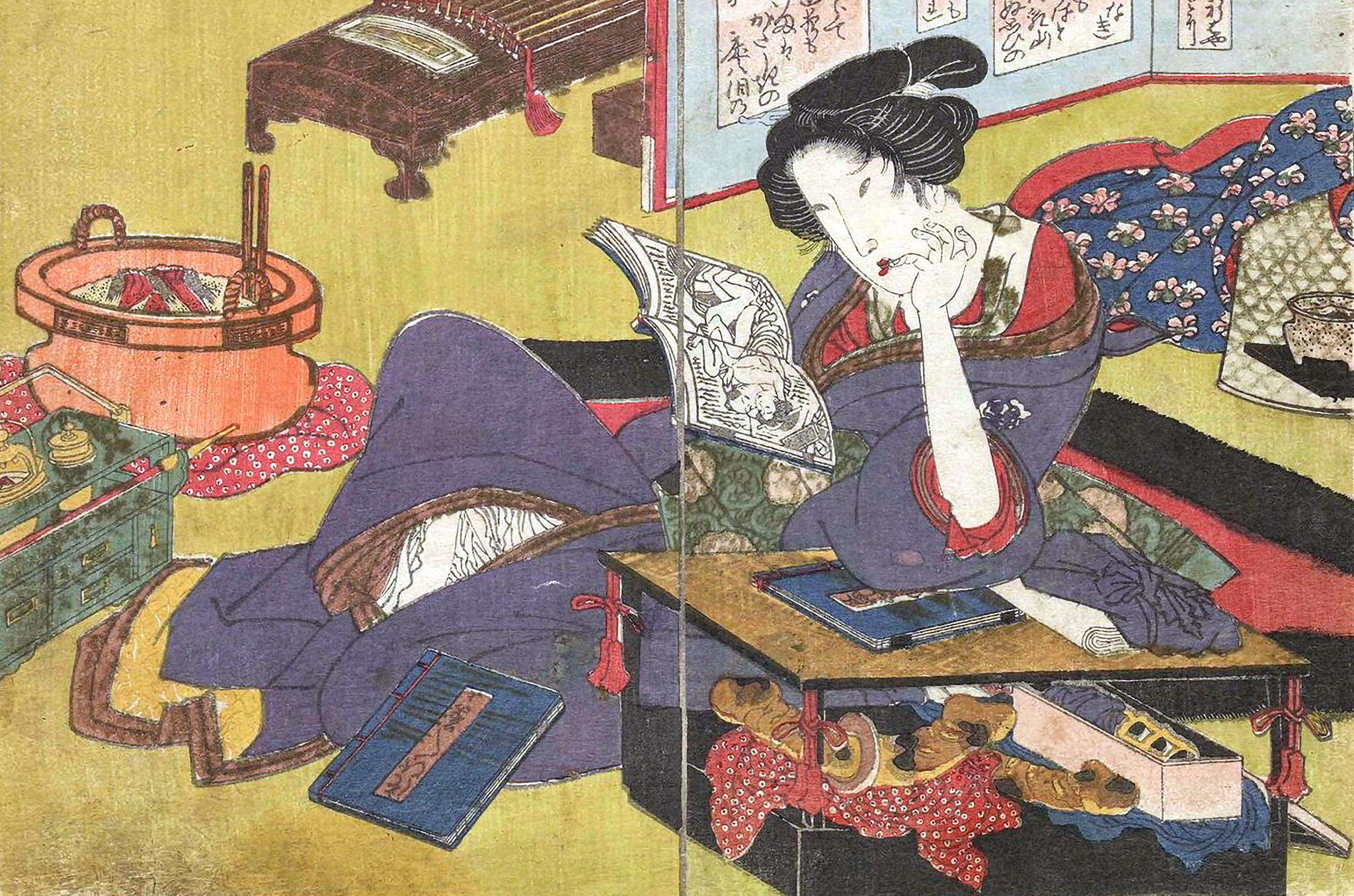
Edo period print showing a woman viewing Shunga (erotic art) with various adult toys underneath her table | Image appears in the “Kaidan Eikachochi” by Okujiro Toshima (date unknown)
E-Commerce in Feudal Japan
On the whole, Edo was a very sex-positive city, but shopping for adult toys in full view of people you might bump into later at work (as the genital inspector, for instance) could be a little embarrassing. That is why Yotsumeya liked to keep the interior dimly lit and invited customers to browse its selection in private backrooms. It also did a lot of business by mail order.
Yotsumeya advertised heavily. The best primary historical sources about the store are the mountains of pamphlets, posters, catalogs and other ads that it left behind. And these weren’t confined to Edo: They went out to the provinces, and when someone there ordered something off the Yotsumeya catalog through a paid courier, they knew that the product would arrive in a plainly wrapped box and contain detailed instructions inside. We can probably assume that the store didn’t take returns, but in many other ways, it was basically a feudal Amazon Japan.
This was very appreciated at the Ooku, the part of Edo Castle for women connected to the shogun. It was very rare for them to leave their living quarters, but they could shop through couriers and were apparently frequent customers of Yotsumeya. Maybe their high-ranking patronage is what helped the store survive for so long. It would partially explain why it came crashing down soon after the shogun was deposed.
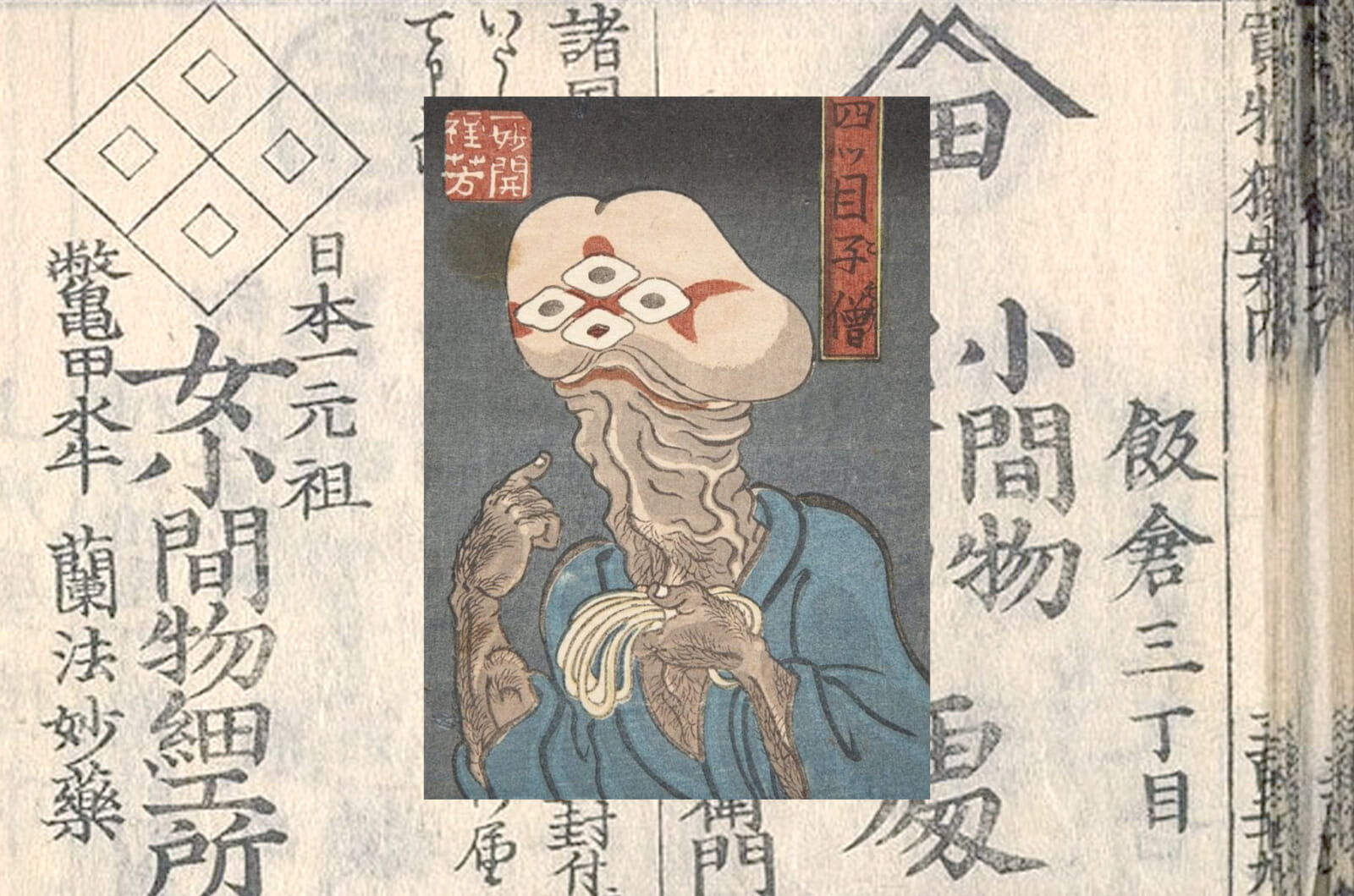
Yotsumeya paper advert (background) and woodblock print (center), date and artist unknown
A Momentary Mercantile Dysfunction
At the height of its popularity, Yotsumeya appeared in ukiyo-e paintings and prints, was name-dropped in popular literature and was even joked about in rakugo comedy performances. It was a huge part of everyday Edo life. The biggest evidence for its success is the fact that it started attracting copycats, with knock-off Yotsumeya shops popping up in Edo, Osaka and Kyoto. It was a glorious time to be a purveyor of the playfully perverse.
But then the Meiji period (1868–1912) came along, the feudal system and the shogunate were abolished, and Japan decided to modernize, which unfortunately meant adopting Western ideas of morality. Soon, sex shops all across Japan started to be raided for “disturbing public morals.” There were fines, there were inquiries, there were public campaigns against “immoral” practices and items. Slowly, Yotsumeya faded into the background.
The exact dates are unknown, but the original store probably closed down in the late 19th or early 20th century. However, its spirit continues to live on in places like M’s Pop Life, the biggest sex shop in Japan — and possibly the world. Though even it probably doesn’t carry tortoiseshell condoms.