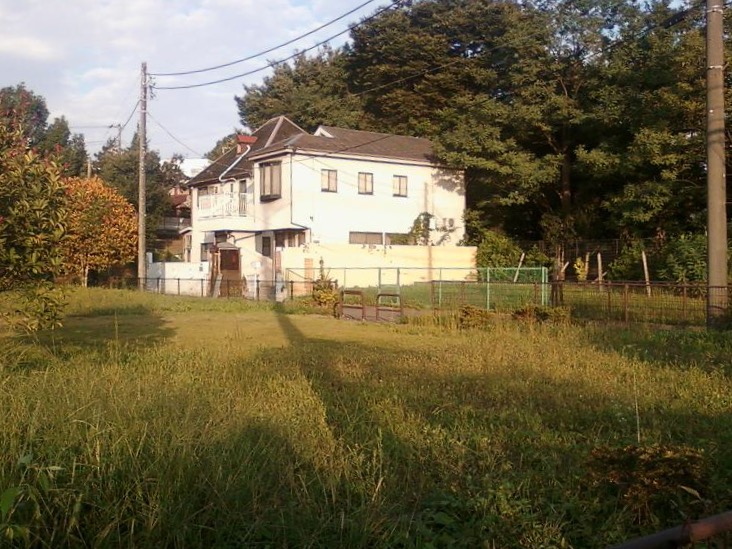
On this day 25 years ago, the Miyazawa family was brutally killed at their home in Tokyo’s Setagaya ward. Known as the Setagaya family murder case, it was a devastating fin de siècle crime with several clues and an extensive manhunt involving thousands of police officers. Yet, a quarter of a century on and the killer still hasn’t been caught.
Mikio Miyazawa, 44, his wife, Yasuko, 41, and their 8-year-old daughter, Niina, were stabbed to death, while their 6-year-old son, Rei, died from strangulation on the night of December 30, 2000, transitioning into the early hours of December 31. Bizarrely, after murdering them all, the criminal then stayed in the house.
The bodies were discovered at approximately 10:40 a.m. on New Year’s Eve. Yasuko’s mother, Haruko, who lived next door, was the person who found them. She decided to call around after failing to get through on the phone. Officers arrived at the scene soon after, with Takeshi Tsuchida, the chief of Seijo police station, leading the investigation.
“It looked like they had been tortured for fun,” Tsuchida told Blue Light Yokohama author Nicolás Obregón on the Faceless podcast. “When I think of their pain and how they died slowly, they may not have felt all the pain because of shock. But when I think of their fear as well, it must have been truly unimaginable. It was horrible.”
The Night of the Setagaya Family Murder
It appeared to be a normal evening for the family. After going shopping, they ate dinner together — shirataki noodles and rice with chicken and vegetables — before Yasuko called her mother. Niina went over to her grandmother’s house to watch TV and returned home at around 9:30 p.m.
The last known activity of the father, Mikio, was at approximately 10:38 p.m., when he opened a password-protected business email. Though it’s difficult to establish a definitive timeline for what happened, it is believed that the perpetrator entered the property shortly afterward and killed Rei, the youngest child, by strangulation in his bedroom.
Mikio was widely believed to have been the second victim. It has been suggested that he heard a disturbance and rushed upstairs to his son’s room. He was murdered with a sashimi knife that the killer had brought with him. Haruko found her son-in-law slumped at the bottom of the staircase near the front door in the morning. He had multiple stab wounds.
A portion of the knife’s tip broke off and was found lodged in Mikio’s skull. The perpetrator then used the broken knife on Yasuko and Niina before discarding it and replacing it with a santoku (general-purpose) kitchen knife he found in the house. Like Mikio, the mother and daughter were stabbed multiple times.
A Mountain of Evidence
After committing the heinous crimes, the killer then stayed around. We know he was still there past 1 a.m., as he used the family computer. It is widely believed that he also took a nap, ate melon, consumed four cups of ice cream, drank several bottles of barley tea and used the toilet.
Unflushed feces found in the upstairs bathroom contained traces of sesame seeds and string beans. The killer also left behind traces of blood, the murder weapon, a hip bag, two handkerchiefs and some of the clothes he was wearing, including a sweatshirt of which only 10 had been sold within Tokyo. The fragrance Drakkar Noir was detected on the handkerchiefs.
In total, there was said to be more than 12,500 pieces of evidence. “Normally at the crime scene, you need to look carefully for tiny clues,” said Tsuchida. “You don’t always know what you are looking for, but here it was everywhere … In all my years as an officer, I have never seen a case with more evidence.”
Despite this, and the fact that over 200,000 officers have been assigned to the case at some point over the last 25 years, the murderer remains at large. More than 5 million fingerprints have been taken and the police have conducted approximately 1.3 million DNA comparisons, yet no matches have been found either in Japan or abroad.
Analysis of the mitochondrial DNA suggested the killer’s maternal line may trace back to Southern Europe, but this could be from a very distant ancestor. Sand found in his hip bag was reportedly traced back to the Mojave Desert, specifically the area around Edwards Air Force Base in California, though this isn’t mentioned on the Tokyo Metropolitan Police Department website.
Possible Motives
Based on police findings, the perpetrator, at the time of the crime, was believed to be a man in his late teens or early 20s, of slender build and medium height. The motive for the murders remains unknown, but various theories have been put forward. Police initially suspected that it was a burglary gone wrong, but as the criminal left a significant amount of cash in the house, many have dismissed this hypothesis.
Another theory is that the criminal held a grudge against a member or members of the family. It was reported that Mikio had a disagreement with skaters at a nearby park over the noise they were making a week before the crime. However, skaters in the area were soon eliminated from the investigation.
In his book, Setagaya Ikka Satsujin Jiken: Jugonen-me no Shin Jijitsu (The Setagaya Family Murder Case: 15 Years On, the New Facts), investigative journalist Fumiya Ichihashi (a non de plume) proposed that the Miyazawa family was killed by a contract killer from South Korea. According to Ichihashi, the Miyazawa family was targeted because they refused to sell their land like other people in the area.
Ichihashi claims to know the identity of the killer, a man he refers to as “R.” He was allegedly a former member of the South Korean military. The theories presented by Ichihashi, however, are unproven speculation, with some accusing the journalist of having an agenda against Koreans. Police investigated his claims, but they could not be substantiated due to insufficient evidence. The case remains unsolved.
More From This Series
- The Battle of Okinawa Ends
- Queen Arrives in Japan for First Asian Tour
- The JAL Mass Food Poisoning Incident
Updated On December 30, 2025