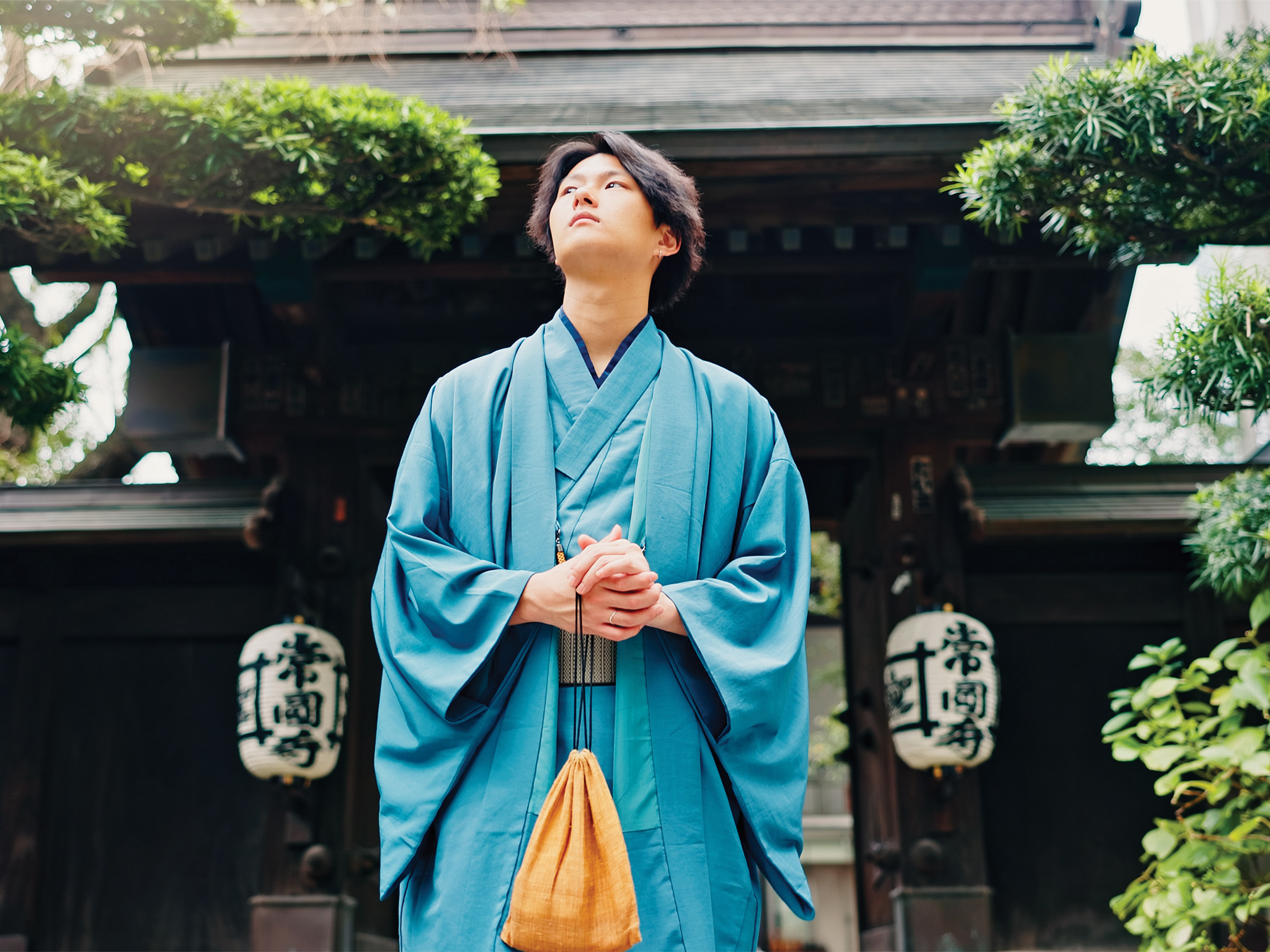
When you think of kimono, the first thing that usually comes to mind is an image of women’s garments. With their colorful textiles, intricate obi musubi knots and gorgeous detailing, women’s kimono are renowned for their showstopping elements. However, not all kimono are limited to just female collections. Traditional Japanese clothing’s extensive history includes male designs as well.
We’ve previously covered different styles of kimono. such as irotomesode and furisode, as well as period pieces like juunihitoe. While seemingly less ornate than women’s kimono, men’s collections also have their own designs, symbolism and dressing components, and can be separated into distinctive categories and looks. Here is our guide to navigating the world of men’s kimono.
An Introduction to Men’s Kimono History
Literally translated, “kimono” refers to a “thing to wear.” Its roots can be traced back to the Sui and Tang dynasties in China. Japanese envoys and scholars brought back styles and tailoring techniques from China during the Heian period. It remained as the popular attire for both formal and everyday wear here until the Meiji era.
An 1872 imperial regulation mandated that the ceremonial robes of court nobles be substituted for Western-style clothing, and such styles gradually became more prevalent.
Nowadays, kimono are mainly reserved for ceremonial occasions or seasonal events such as Shichi-go-san, graduations and weddings. Men usually opt for suits at these milestone celebrations, so there are fewer opportunities that call for the grandiose visuals of a full kimono. It is more common to see men wearing a yukata (an informal unlined cotton kimono) at summer festivals or at a ryokan inn.
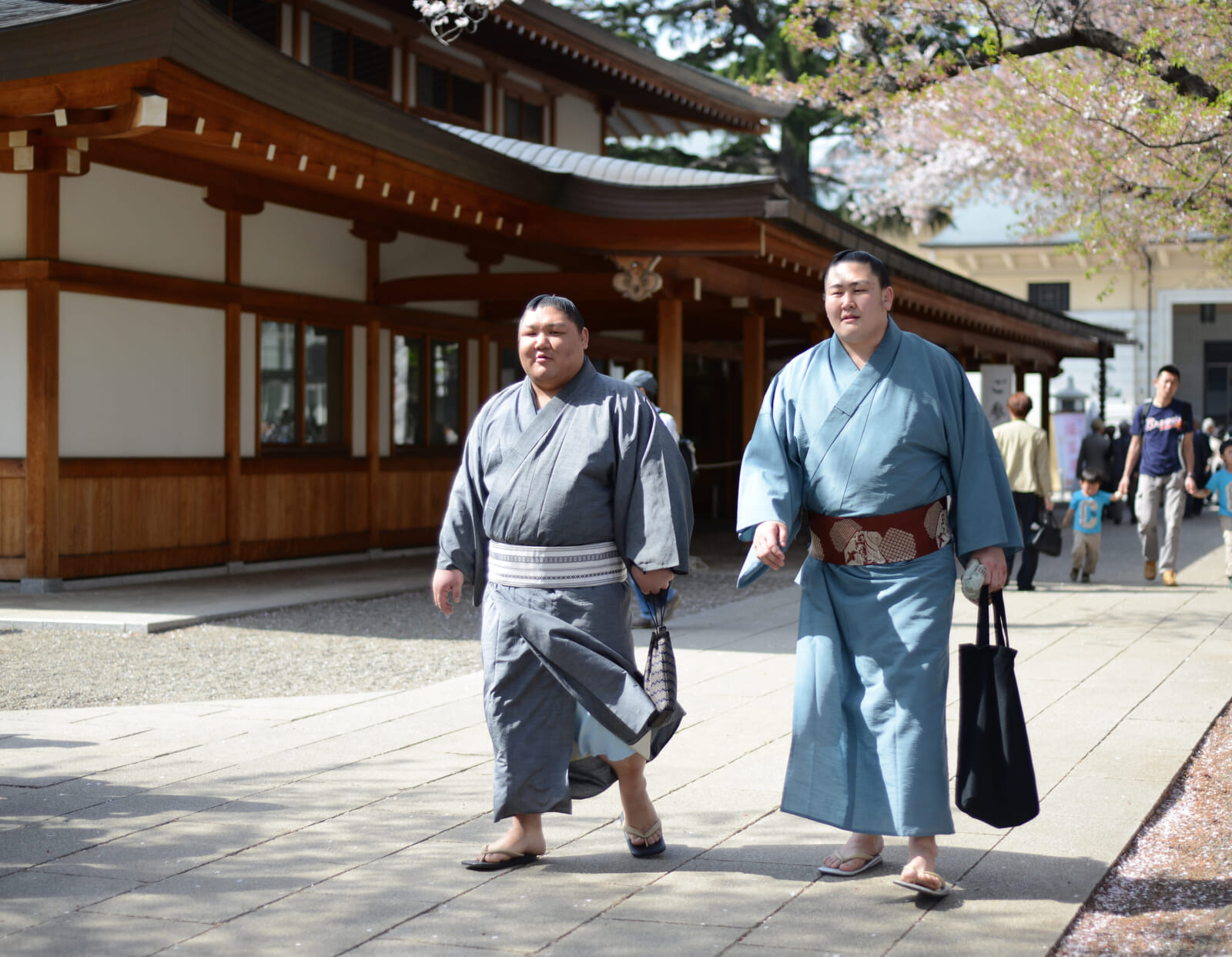
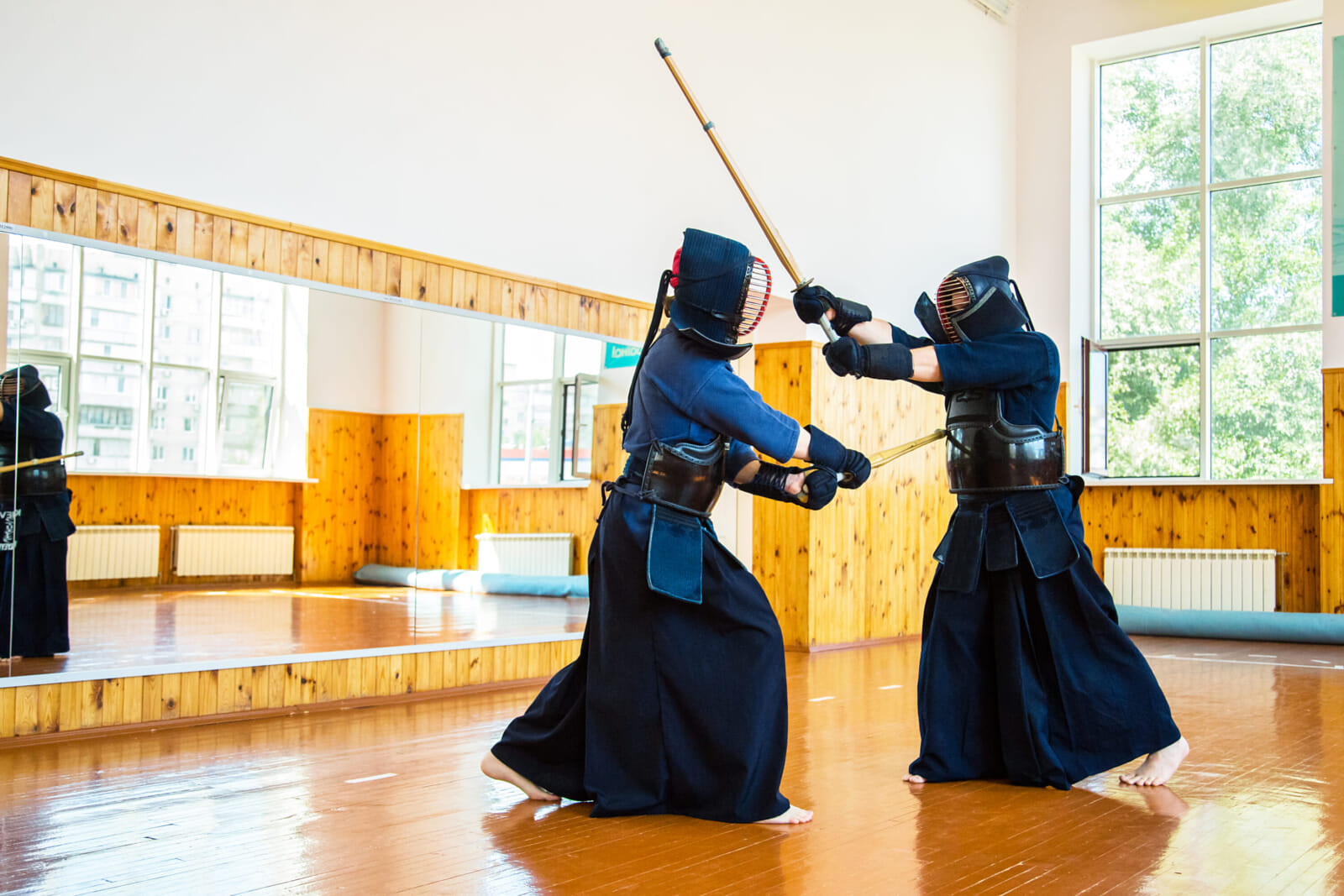
You may also spot sumo wrestlers around neighborhoods wearing yukata or custom somenuki kimono for practicality and to uphold the sport’s traditional image. Other kimono-clad sports and rituals include kendo, kyudo and sado tea ceremonies.
Types of Kimono for Men
Kuro Montsuki
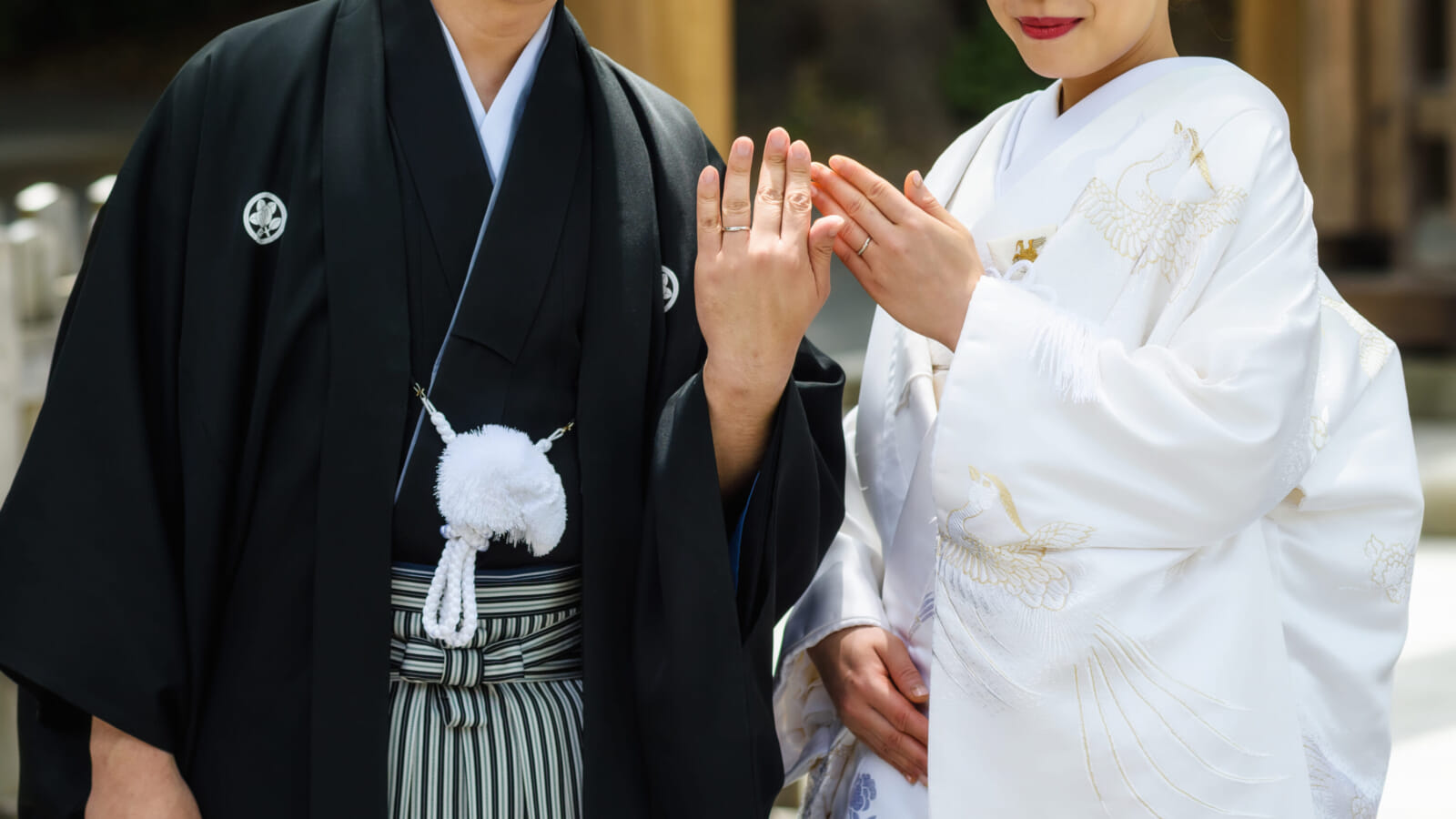
Kuro Montsuki is the highest-ranking formal kimono worn by men. This type of garment is reserved for weddings, award ceremonies and funerals. The base robe and haori jacket both have five kamon, or family crests. These crests are located on the chest, the center of the back and on the back of each sleeve.
Family crests have been passed down from generation to generation since ancient times, and feature motifs such as plants, animals and traditional patterns. They are visual representations of Japanese families.
The full Kuro Montsuki ensemble consists of a kimono, haori and striped hakama pants. For the hakama’s striped pattern, traditional thin stripes are considered more refined, while bolder stripes evoke a more youthful and trendier look.
Hakama were worn by samurai warriors. The pleated pants-like leg design proved to be ideal for riding horses. Since the Meiji and Taisho eras, however, they have also become popular for female students.
Kimono and haori are traditionally crafted with top-grade habutai silk, while the hakama is made from refined Sendai hira silk. A himo (cord) ties the haori together.
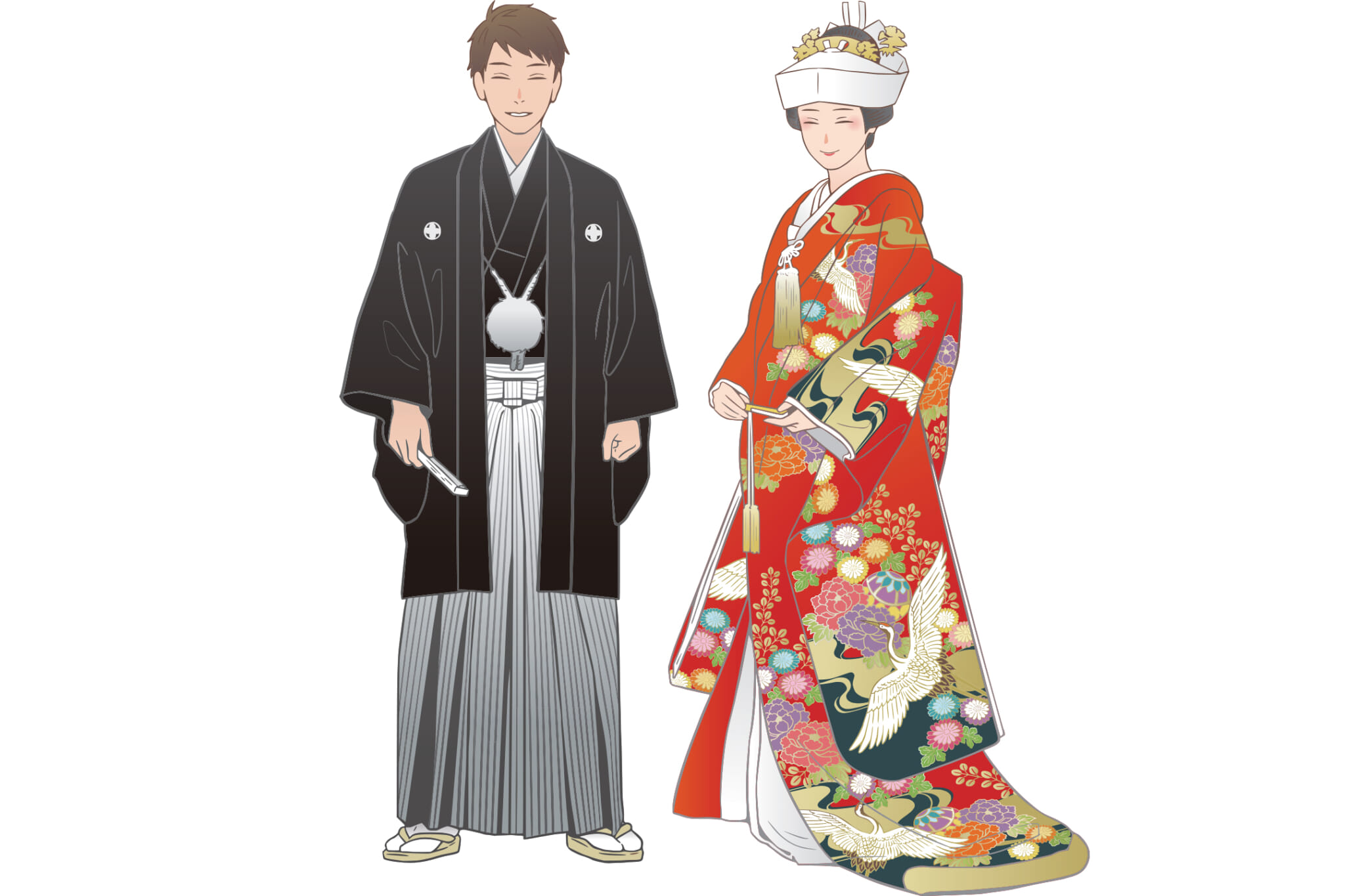
As the name suggests, Kuro Montsuki is mostly black, with just a touch of white and gray from the hakama and accessories. The mostly monochrome look gives it a formal and elegant presence.
Ginza Motoji, a luxury kimono atelier in Tokyo’s Ginza district, opened Japan’s first dedicated men’s kimono store in 2002. With its high level of formality, quality and craft skills, Kuro Montsuki prompts a hefty investment. A handmade, custom-tailored Kuro Montsuki from Ginza Motoji runs for around ¥660,000 for the kimono and haori.
Iro Montsuki
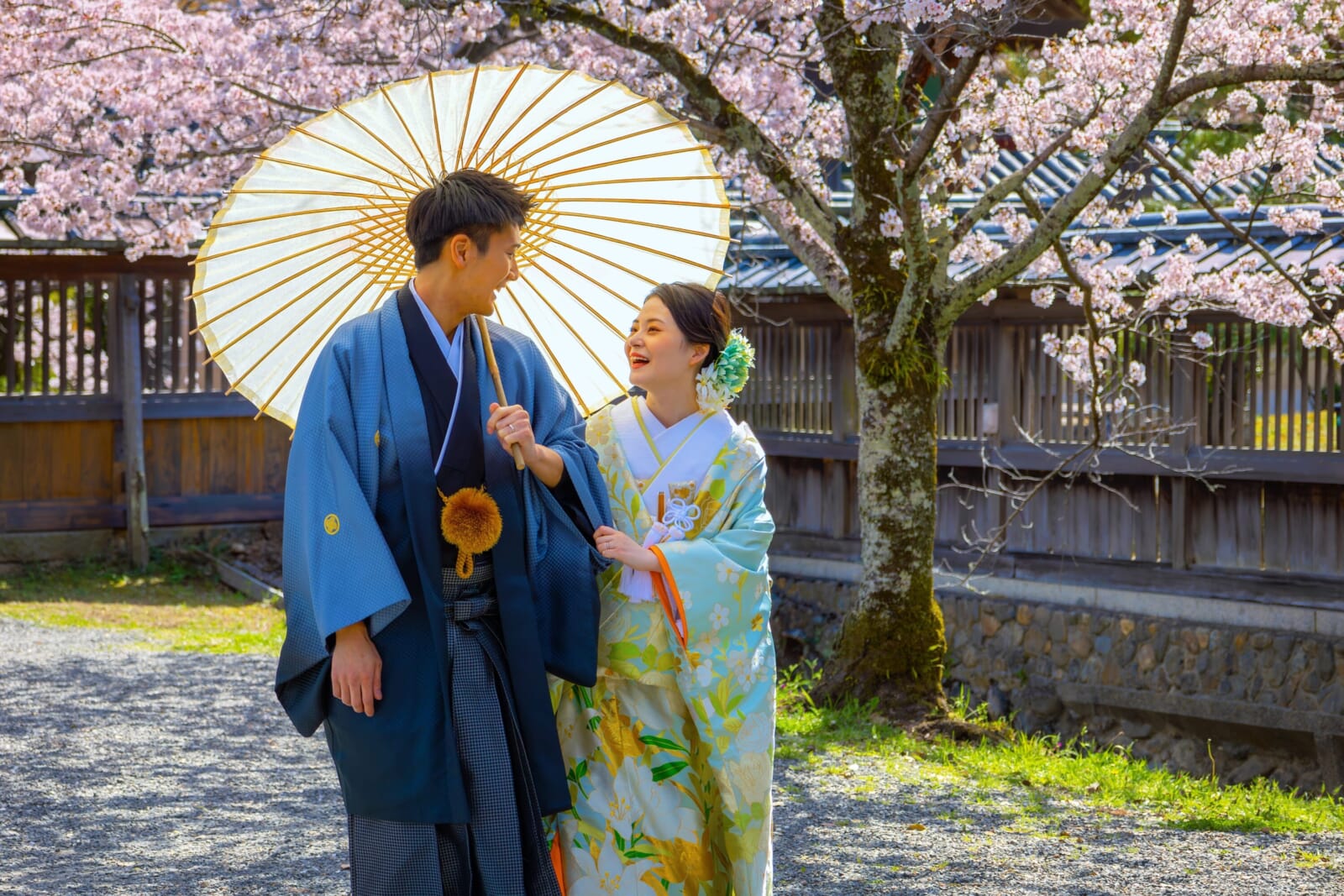
Iro Montsuki is the more colorful version of a Kuro Montsuki. It is slightly less formal and may include five, three or one kamon in its design.
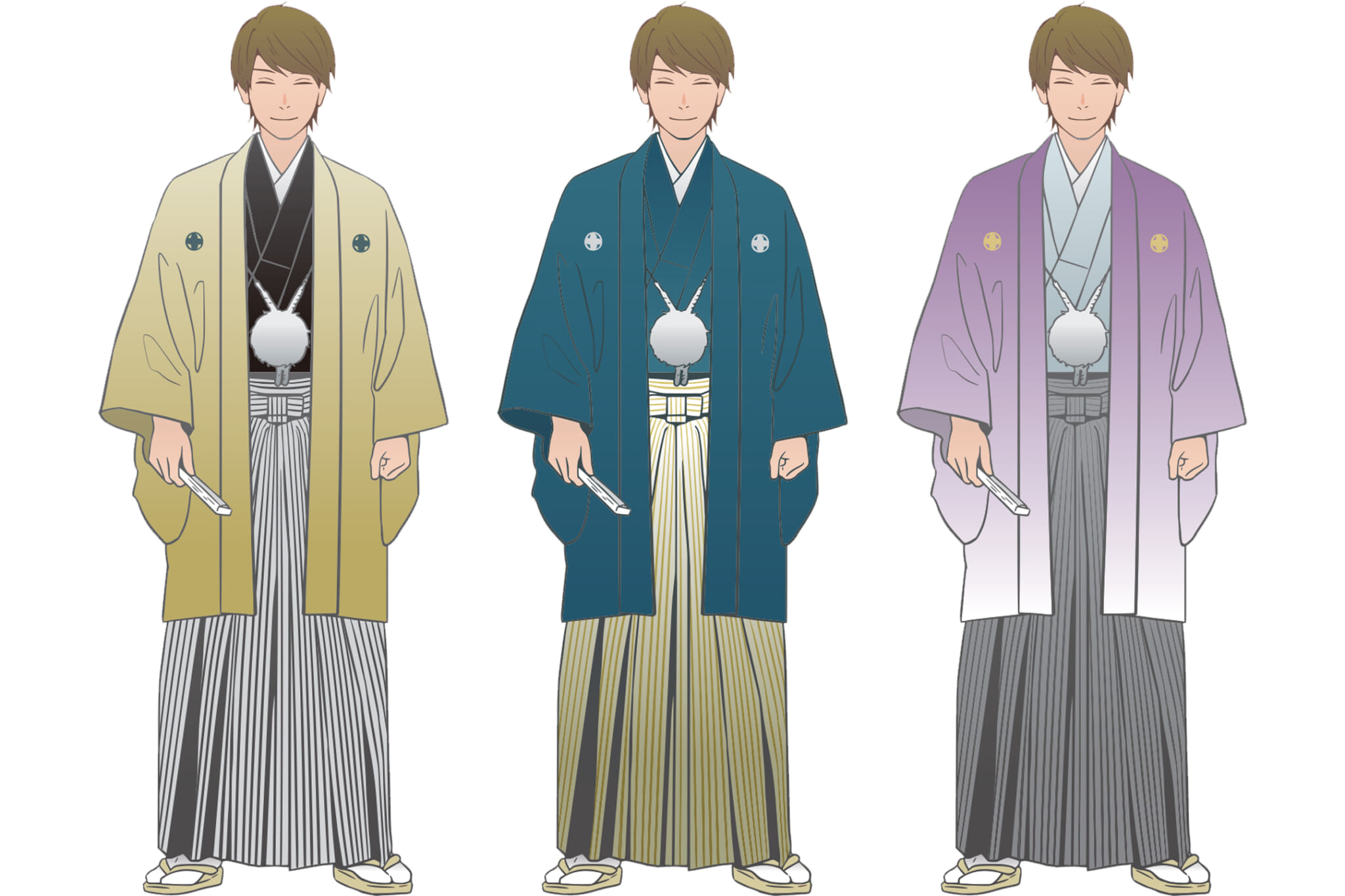
Other than the color, Iro Montsuki is practically the same as its kuro counterpart. The ensemble is perfect for ceremonies like Seijin no Hi (Coming of Age Day), but not usually suitable for funerals.
Omeshi and Tsumugi
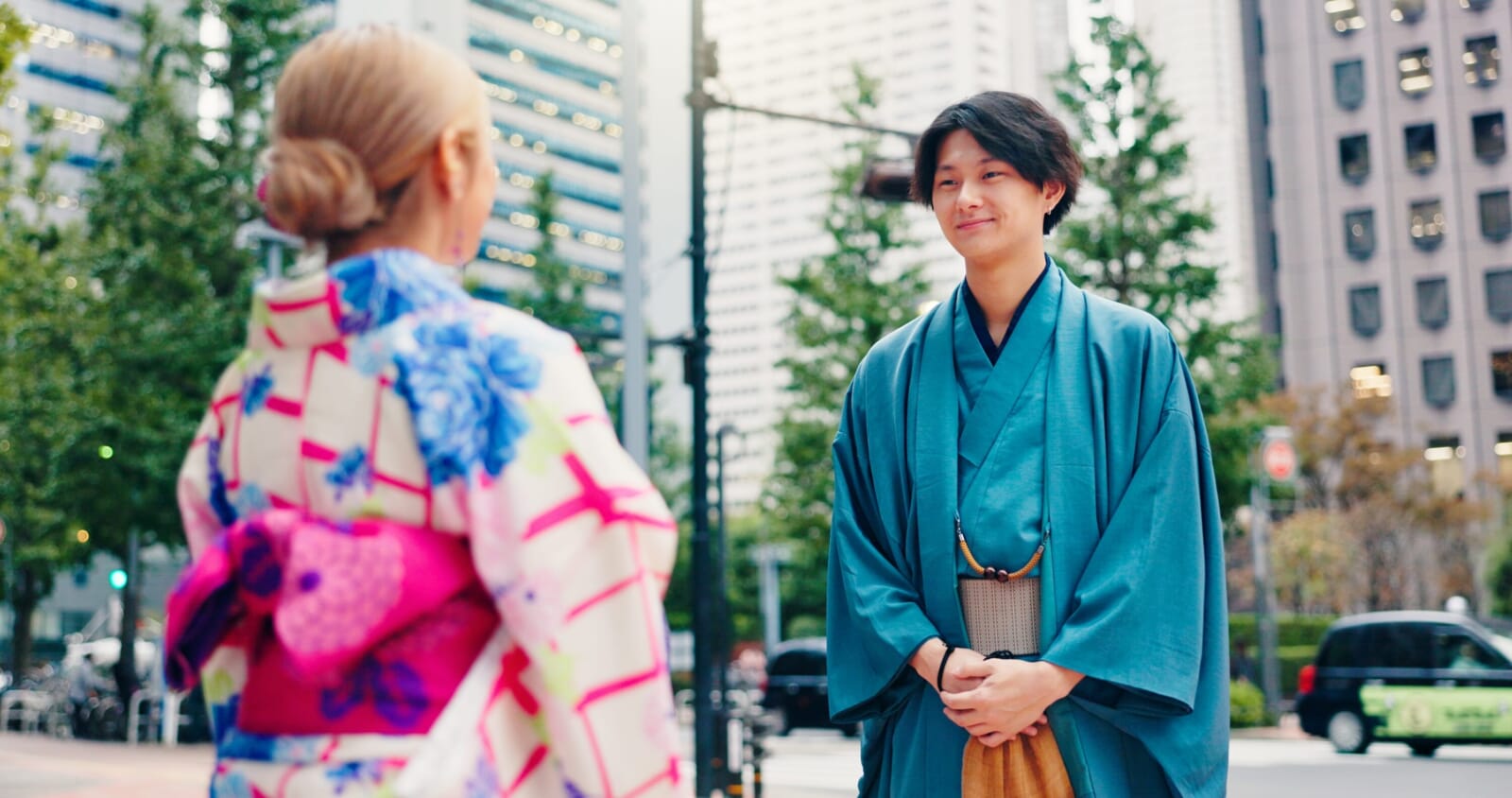
Omeshi and tsumugi are both classified as semiformal attire. For events such as wedding receptions, school ceremonies and parties, this kind of kimono will still give the essence of traditional sophistication with a bit less regalia.
Omeshi kimono are made out of silk crepe fabric, a textile with high-grade gloss and a silky touch. Tsumugi kimono are created with hand-spun silk fabric. Both types of kimono feature just one or three kamon, but omeshi is deemed slightly more formal than tsumugi. Haori and hakama still accompany the kimono to elevate the overall look into the semiformal category.
Nagagi and Kinagashi
A nagagi kimono coordination involves an omeshi or tsumugi kimono, but omits the hakama trousers. You can freely mix and match nagagi kimono with various haori to suit your own personal style. This combination is for casual events such as visiting a shrine, going out for a walk or simply just as an everyday fashion choice.
At the farthest end of the men’s kimono formality spectrum sits kinagashi. Excluding both the hakama and the haori, the kinagashi is the most casual men’s attire. This simpler getup is great for those looking to include some traditional flair while still being able to feel comfortable when taking on daily tasks.
Pairing Accessories
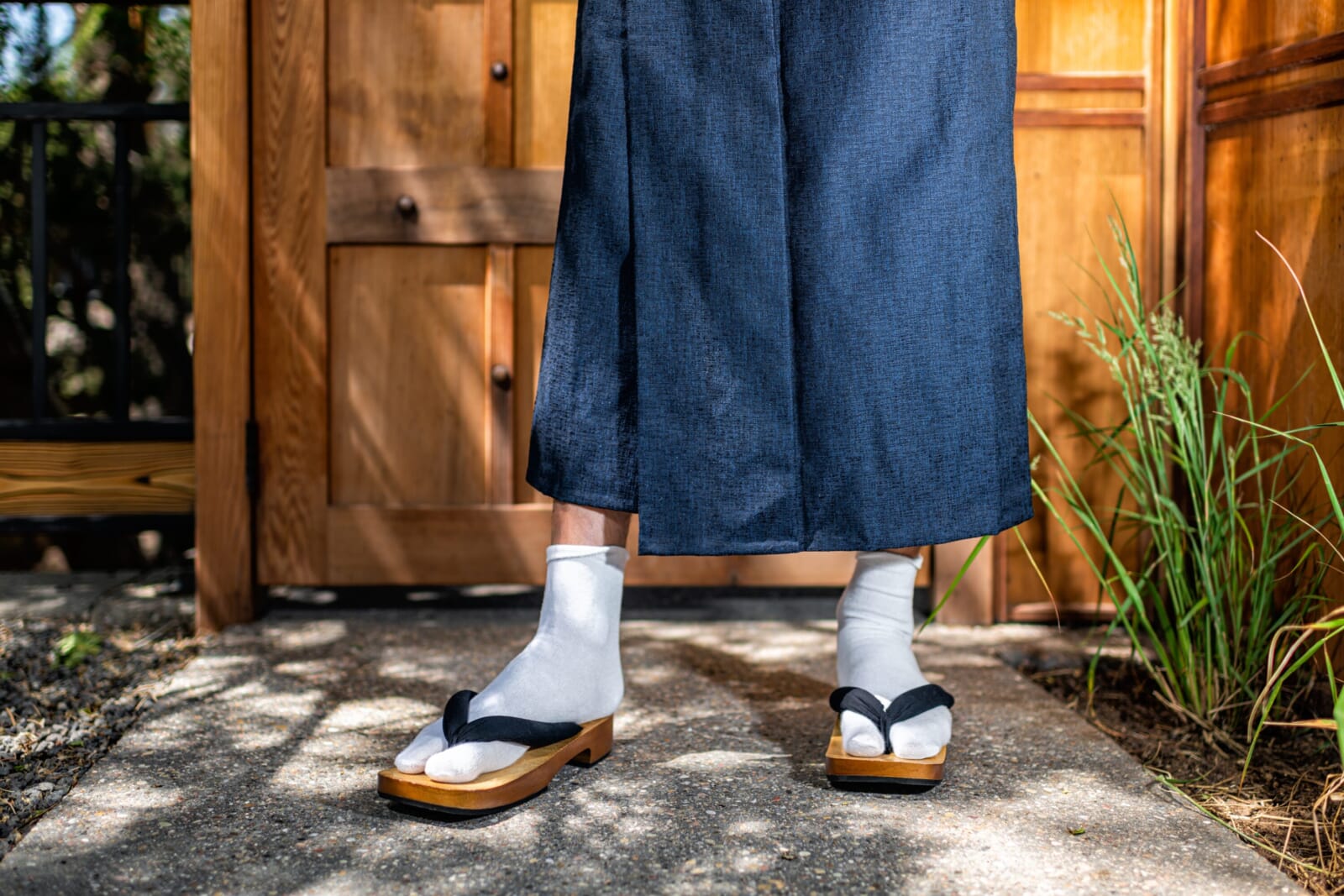
Men have a selection of accessories to pair with their kimono. It’s very common to keep a sensu (folding fan) or round uchiwa fan tucked into the obi sash for an extra touch of detail.
For footwear, men can typically choose from three types of sandals. Geta are wooden platform sandals, zori are flat cork-based sandals and setta are flat woven bamboo sandals. These sandals are worn with tabi split-toe socks or barefoot.