

Hogonji Temple Overview
Rising from the mist-wrapped waters of Lake Biwa, Hogonji Temple occupies one of Japan’s most dramatically situated sacred sites. Perched atop Chikubushima — a tiny, cliff-edged island just 2 kilometers in circumference — the temple has drawn pilgrims and seekers for over 1,300 years. Located in Nagahama, Shiga Prefecture, it is one of Japan’s most celebrated Benzaiten temples, alongside those at Enoshima and Miyajima.
The temple’s origins date to 724, when the monk Gyoki was dispatched to the island by Emperor Shomu following a divine dream in which Amaterasu, the sun goddess, revealed that Chikubushima was home to Benzaiten, the goddess of water, music and eloquence. By imperial command, Gyoki built the first hall and enshrined the deity there, beginning a tradition of worship that continues to this day.
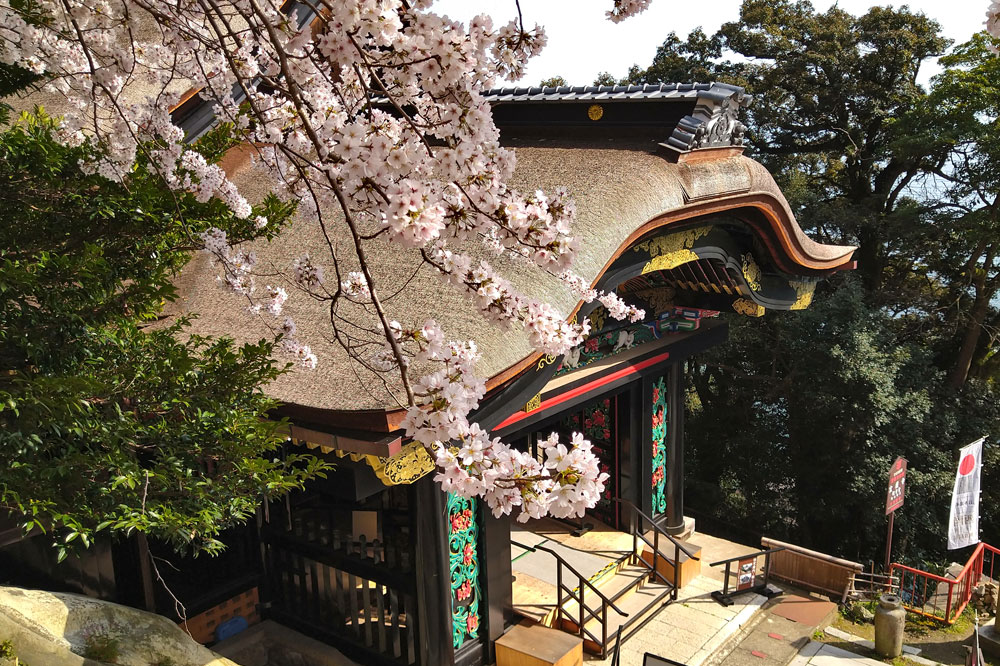
The temple is the 30th stop on the Saigoku Kannon Pilgrimage, a famous circuit of 33 Buddhist temples across the Kansai region. Among its most celebrated features is the Karamon Gate, a National Treasure decorated with vivid Momoyama-period carvings of peonies, phoenixes and rabbits. Said to be the only surviving architectural remnant of Toyotomi Hideyoshi’s Osaka Castle, the gate was relocated here by Hideyoshi’s son, Hideyori, in 1603. The covered Funa-roka corridor, built using planks from Hideyoshi’s own throne ship, the Nihon-maru, connects the temple to the adjacent Tsukubusuma Shrine and is designated an Important Cultural Property.
To reach the main hall, visitors climb 165 steep stone steps known as the “prayer stairs,” long used by pilgrims who ascended while chanting. At the top, sweeping views of Lake Biwa await.
Best Times To Visit Hogonji Temple
Hogonji Temple is open year-round, but spring and autumn offer the most rewarding visits. In spring (late March through April), the island’s conifer forests are offset by cherry blossoms, and the lake views are at their most serene. Autumn (October through November) brings vivid foliage that reflects beautifully off the lake’s surface. Summer can be warm and busy, while winter sees fewer visitors and a quietly contemplative atmosphere — though boat schedules are reduced during this period, so planning ahead is essential.