

Tateyama Kurobe Alpine Route Overview
The Tateyama Kurobe Alpine Route is one of the world’s most spectacular high-altitude mountain sightseeing routes, traversing the 3,000-meter-class peaks of the Northern Alps between Toyama and Nagano. Completed in 1971, the 37.2-kilometer route connects Tateyama Station in Toyama prefecture on the west with Ogizawa Station in Nagano prefecture on the east — and private vehicles are not permitted between the two endpoints. Instead, visitors travel by a series of six unique transport modes, including cable cars, highland buses, a ropeway and electric buses that run through mountain tunnels.
The route’s crown jewel is Murodo, the highest point at 2,450 meters above sea level. From spring through early summer, the road approaching Murodo cuts through snow walls that can tower up to 20 meters high — a sight found in very few places in the world. Farther along, the Kurobe Dam stands as Japan’s tallest dam at 186 meters, and its water discharge from late June to mid-October is a dramatic spectacle. The pylon-free Tateyama Ropeway, which spans 1.7 kilometers across a valley prone to avalanches, offers unobstructed panoramic views of the surrounding peaks and, in autumn, a dazzling carpet of fall foliage.
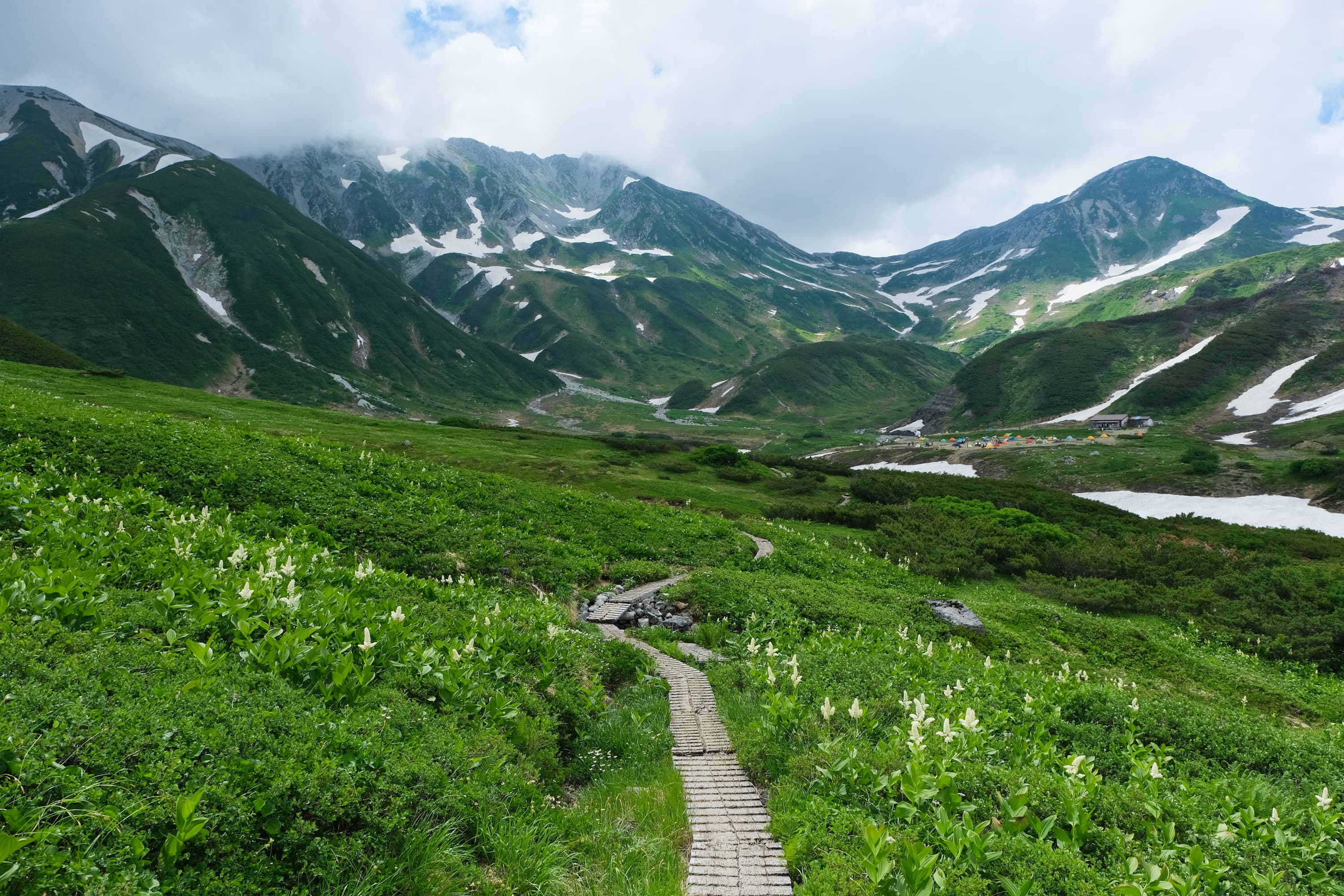
Best Times To Visit Tateyama Kurobe Alpine Route
The route transforms dramatically with each season, and the best time to visit depends on what you want to see.
Spring (mid-April to early June) is the most iconic period, when the famous snow corridor is at its most dramatic. The walls peak in late April and gradually shrink through June. This is also the busiest window — expect long queues and book well in advance, particularly around Golden Week.
Summer (July to early September) brings milder temperatures and lush alpine greenery against patches of remaining snow, making it ideal for hiking around Murodo, Midagahara and Bijodaira.
Autumn (mid-September to late October) is arguably the most visually stunning season, as the mountains are draped in vivid red and gold foliage. Weekends during this period book out quickly, so advance reservations are essential.
Late autumn (November) offers fresh early-winter snowfall and a quieter atmosphere before the route closes for the year on November 30.