

Overview of Korankei Gorge
Tucked into the mountains of Asuke, a small historic town within Toyota city, Korankei Gorge is widely regarded as the finest spot for autumn foliage in the Chubu region. The gorge follows the Tomoe River as it winds along the base of the 254-meter Mount Iimori, and in November, over 4,000 maple trees — comprising 11 distinct varieties — erupt in shades of crimson, amber, and gold. The name “Korankei” references the fragrant mountain breeze that drifts through the valley, and the landscape lives up to it year-round: serene and forested in spring and summer, spectacular in autumn and quietly beautiful under winter snow.
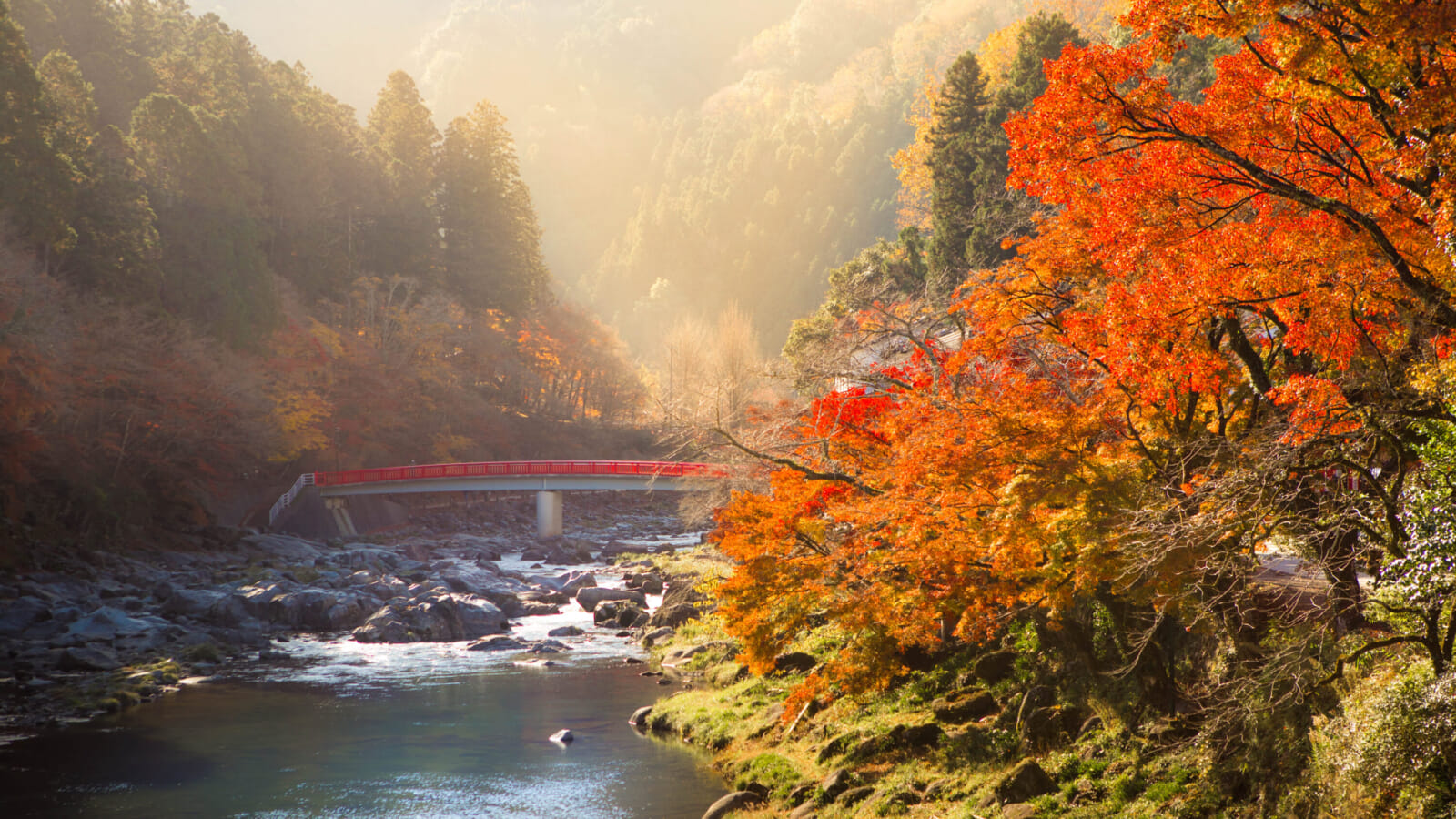
The gorge’s celebrated maple groves have a very deliberate origin. In 1634, Sanei, the 11th head priest of nearby Kojakuji Temple, began planting maple and cedar trees along the temple approach to beautify the surroundings. Locals gradually took up the practice, expanding the plantings through the Taisho and early Showa eras. Today the results are extraordinary. The most photographed spot in the valley is the vermillion Taigetsukyo Bridge, which arches over the Tomoe River and frames the foliage-covered hillside behind it. A maple tunnel along the riverside path leading toward Kojakuji — a Soto-sect Buddhist temple established in 1427 — is another highlight, as is the Goshiki Momiji, a single maple tree that simultaneously displays five different leaf colors at peak season.
Beyond the natural scenery, Korankei rewards those who take the time to explore the surrounding area. The Sanshu Asuke Yashiki Village, a 10-minute walk from the gorge, is a living museum preserving old mountain-village buildings where visitors can try traditional crafts such as indigo dyeing and loom weaving. The nearby Asuke townscape, designated in 2011 as an Important Preservation District for Groups of Traditional Buildings, offers well-preserved Edo-period merchant streetscapes and a glimpse into the region’s history as a post town on the old Ina Kaido road.
Best Times To Visit Korankei Gorge
November is by far the most popular time to visit, when the Korankei Maple Festival runs throughout the entire month. Peak foliage typically falls in mid-to-late November. During the festival, food stalls line the riverside, and the mountain is illuminated nightly from sunset until 21:00, casting the maples in a warm glow that reflects off the river — a genuinely memorable sight. Weekends and public holidays during November are extremely crowded; arriving early on a weekday is strongly advisable.
Spring is the second-best season. In late March to early April, the hillside of Mount Iimori is carpeted with katakuri — dogtooth violets that bloom in delicate purple — and fresh new greenery emerges along the riverbanks. Summer offers cool shade and pleasant riverside walks. Korankei is open year-round and free to enter at all times.