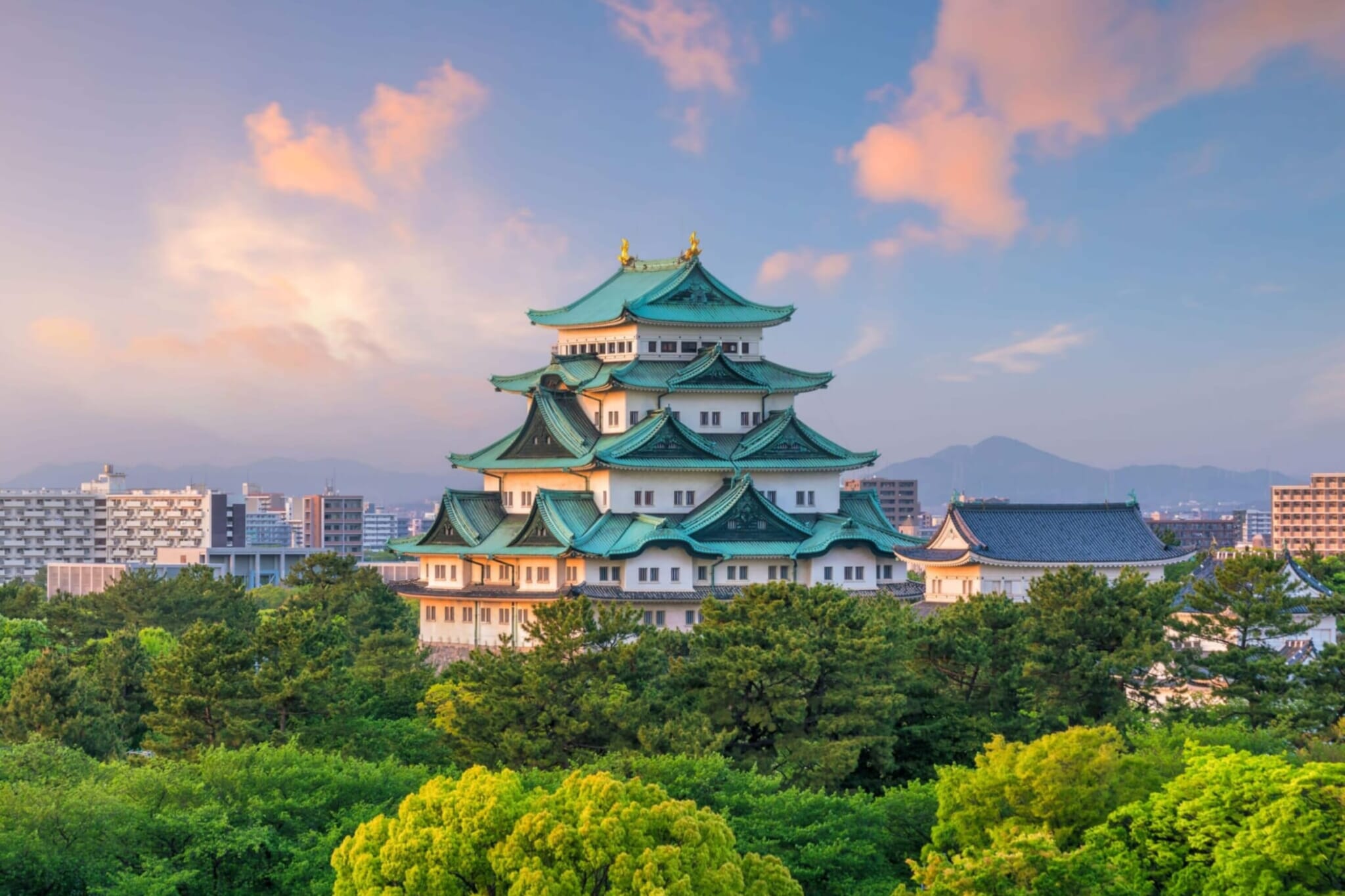
Overview of Nagoya Castle
Few sites in Japan carry the historical weight of Nagoya Castle. Built on the orders of Tokugawa Ieyasu — the warlord who unified Japan and founded the Edo shogunate — construction began in 1610, with the castle and its Hommaru Palace completed by 1615. It was designated Japan’s first National Treasure castle, a testament to both its scale and its architectural ambition.
The castle was built to serve as the residence of Ieyasu’s ninth son, Tokugawa Yoshinao, and became the seat of the Owari branch of the Tokugawa family — one of the three clans from which future shoguns could be chosen. At its peak, Nagoya Castle was among the grandest fortresses in the entire country. Its most iconic feature, the pair of golden shachihoko — mythical tiger-fish ornaments — has crowned the roofline for centuries and remains the symbol of Nagoya to this day.
The original castle was devastated in US firebombing raids in May 1945, and the main tower keep was rebuilt in ferro-concrete in 1959. That reconstruction has since been closed to visitors due to earthquake safety concerns, with plans underway for a full wooden rebuild expected to be completed around 2032. In the meantime, the main draw for visitors is the Hommaru Palace, which was authentically reconstructed using traditional materials and techniques and fully reopened in 2018. Inside, the palace’s sliding doors and screens are decorated with stunning works by painters of the Kano school, and the rooms reflect the refined aesthetic of Edo-period castle life. Entry to the palace is included in the standard castle admission.
Free English-language guided tours are offered by the Aichi Goodwill Guides Network (AGGN) daily at 12:30 from the East Gate. The surrounding Kinshachi Yokocho dining area, established in 2018, is a great spot to try Nagoya specialties like miso katsu and hitsumabushi before or after a visit.
Best Times To Visit Nagoya Castle
Spring is the standout season. Late March to early April brings cherry blossoms to the castle grounds, with the castle tower as a backdrop for hanami — it’s one of Nagoya’s most popular blossom-viewing spots, and the Nagoya Castle Cherry Blossom Festival is held annually during this period. Autumn (October to November) is another beautiful time to visit, with the foliage turning across the surrounding moat and gardens. The castle also hosts a summer evening festival in August and New Year celebrations in early January, both popular with locals. Summer is hot and humid, so morning visits are recommended if traveling in July or August.