

About Todaiji Temple
Todaiji Temple (東大寺, “Great Eastern Temple”) is a UNESCO World Heritage Site, the headquarters of the Kegon school of Buddhism and the single most-visited attraction in Nara. The temple’s main attraction is the undoubtedly the Daibutsuden (Great Buddha Hall), which houses a colossal bronze statue of Vairocana Buddha, commonly known as the Great Buddha of Nara. Standing 14.7 meters tall and weighing around 500 tons, this magnificent statue is one of the largest bronze Buddha figures in the world.
Todaiji’s origins trace back to a small temple called Kinshosenji, founded in 738 CE by Emperor Shomu in memory of his infant son. After a brutal stretch of famine, smallpox and political upheaval through the 730s, Shomu issued an edict in 743 calling for the construction of a colossal bronze Buddha image — an act of national prayer. The daibutsu (giant Buddha) was completed in 749 and consecrated in 752 in a ceremony attended by ten thousand monks and four thousand dancers. According to temple records, more than 2.6 million people contributed to the project in some form, with 350,000 working directly on the statue and hall.
For most of the 20th century, the Daibutsuden Hall housing the giant Buddha was widely cited as the largest wooden building in the world. Modern engineered-timber buildings have since surpassed it in raw size, but it remains one of the largest traditional wooden structures ever built — and easily the most spiritually significant.
The temple grew so politically powerful in the decades that followed its building that the imperial capital was eventually moved away from Nara in 784, partly to reduce its influence on government affairs. Todaiji has burned down twice in major fires — in 1180 during the Genpei War and again in 1567. The current Daibutsuden Hall dates to a 1709 reconstruction, with steel framing added during a major restoration between 1974 and 1980. The rebuilt hall is roughly two-thirds the footprint of the 8th-century original, which gives a sense of how staggering the original must have been.
Beyond the Great Buddha Hall, the temple grounds feature several other important structures including the Nandaimon Gate with its impressive guardian statues, the Hokkedo Hall and the temple museum displaying valuable Buddhist art and artifacts. Visitors often encounter Nara’s famous friendly deer roaming freely throughout the temple grounds and surrounding park, adding to the mystical atmosphere of this sacred site.
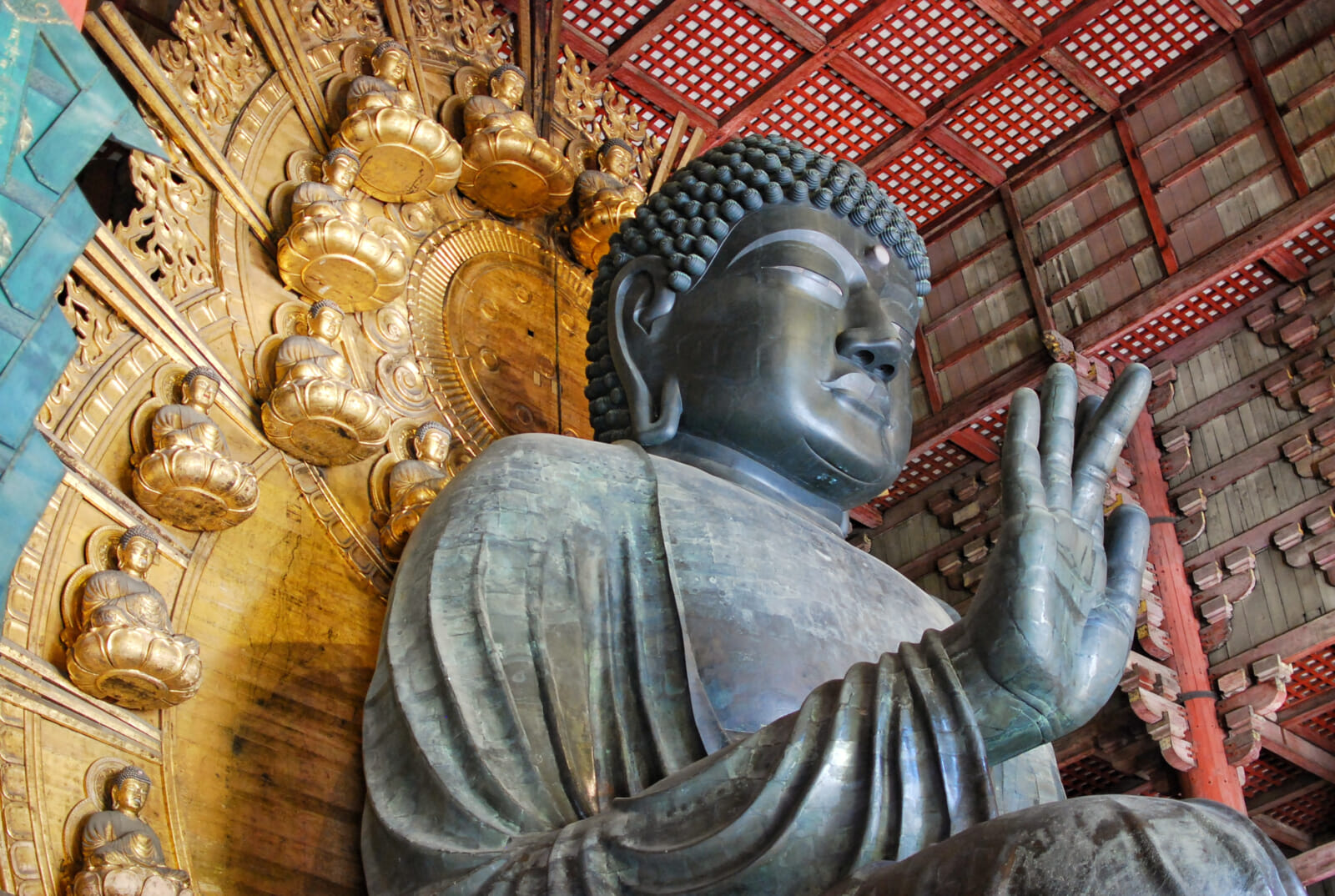
Todaiji’s Great Buddha Hall
What To See at Todaiji
The Great Buddha and the Daibutsuden Hall
The Daibutsuden (“Great Buddha Hall”) is the centerpiece of any visit. The seated bronze figure inside represents Vairocana Buddha — the cosmic Buddha of the Kegon school. The Buddha’s hand alone is the size of a fully grown adult. Two enormous Bodhisattva statues flank the Daibutsu, and a wooden Shitenno guardian stands behind it, almost theatrical in scale.
Plan to spend about 30 to 40 minutes inside the hall. Photography is permitted (drones and smoking are not). The hall can get extremely crowded with school groups in the spring and autumn, so an early morning entry is recommended for the best viewing experience.
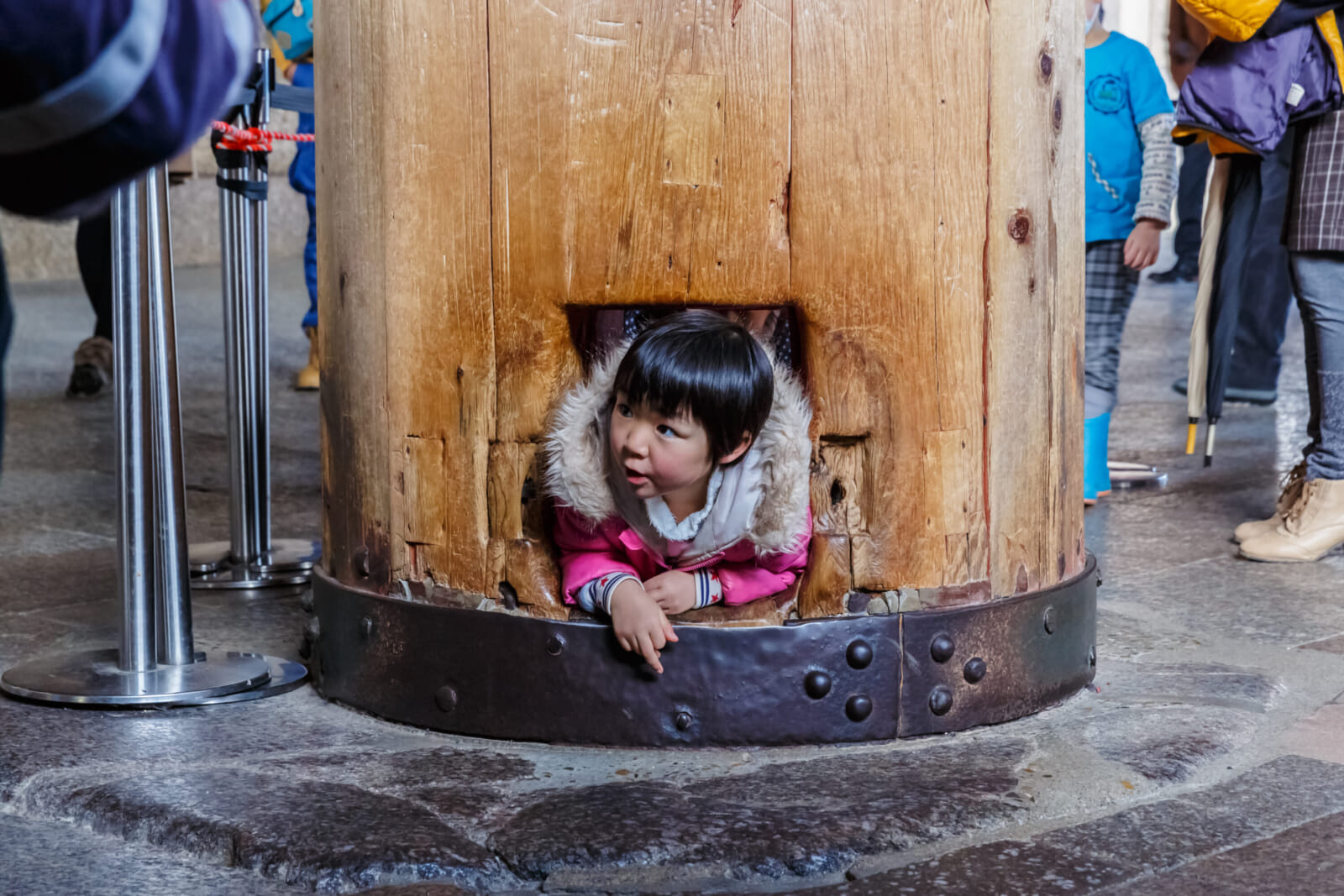
The Pillar with the Hole
Toward the back of the Daibutsuden is one of Todaiji’s most beloved traditions: a wooden pillar with a square hole carved through its base, said to be the same size as the Great Buddha’s nostril. Crawling through is supposed to grant enlightenment in your next life. Children manage easily; adults are advised to commit to the attempt only if confident — getting stuck mid-pillar is a Nara classic.
If the line is long (and it usually is), it’s perfectly fine to skip. Watching others go through is most of the entertainment anyway.
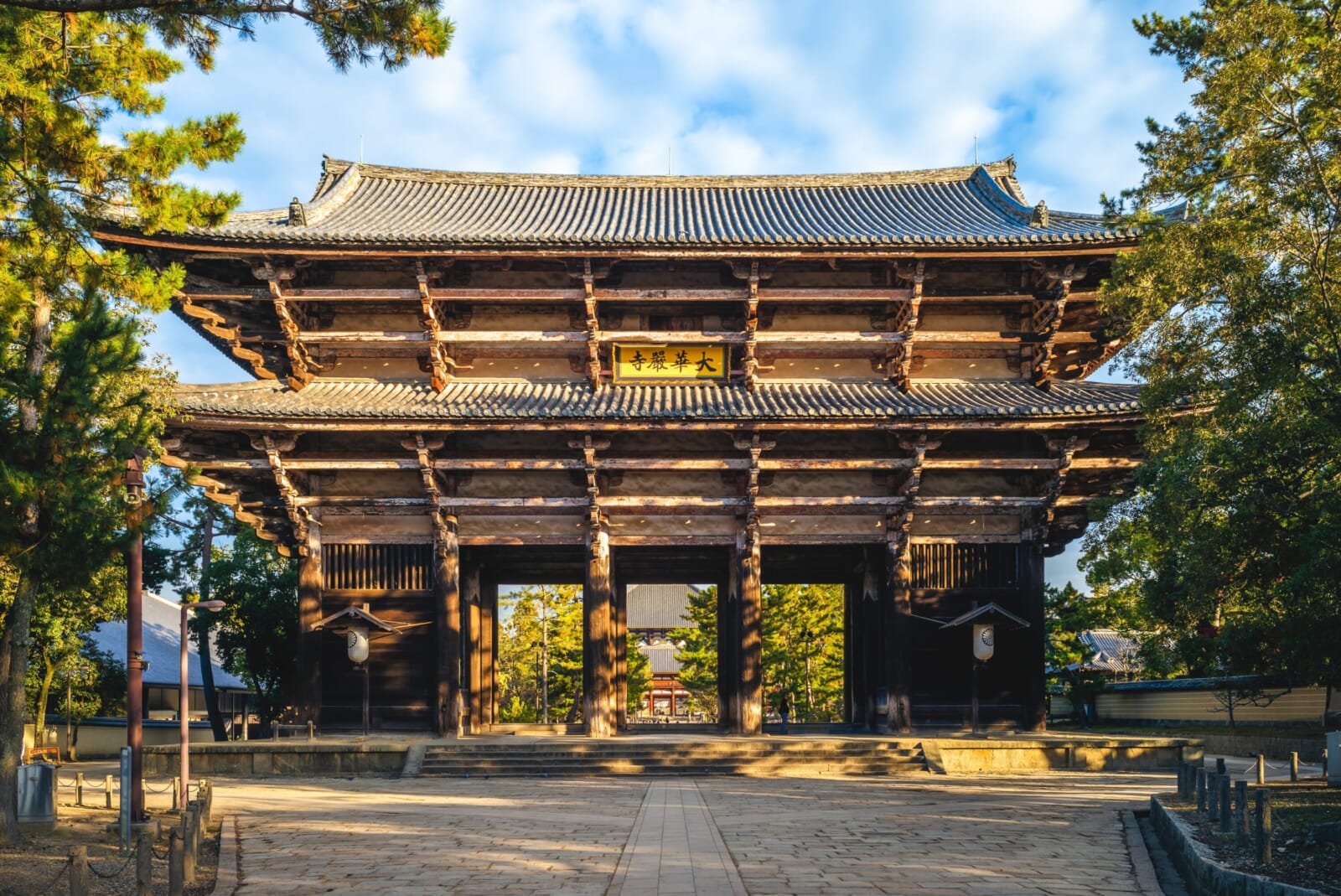
Nandaimon Gate and the Nio Guardians
The Nandaimon — the Great South Gate — is the dramatic entrance to the temple complex. Reconstructed around 1203 an architectural style imported from Song-dynasty China, it stands roughly 25 meters tall and is the largest temple gate in Japan. The two muscular wooden statues inside are the Nio Guardian Kings, carved by the master sculptors Unkei and Kaikei in just over two months in 1203. They’re widely considered among the finest works of medieval Japanese sculpture, and both are designated National Treasures along with the gate itself. When visiting, take a moment to look up at the gate’s ceiling, where the wooden bracket structure is visible — it’s an architectural feat in itself.
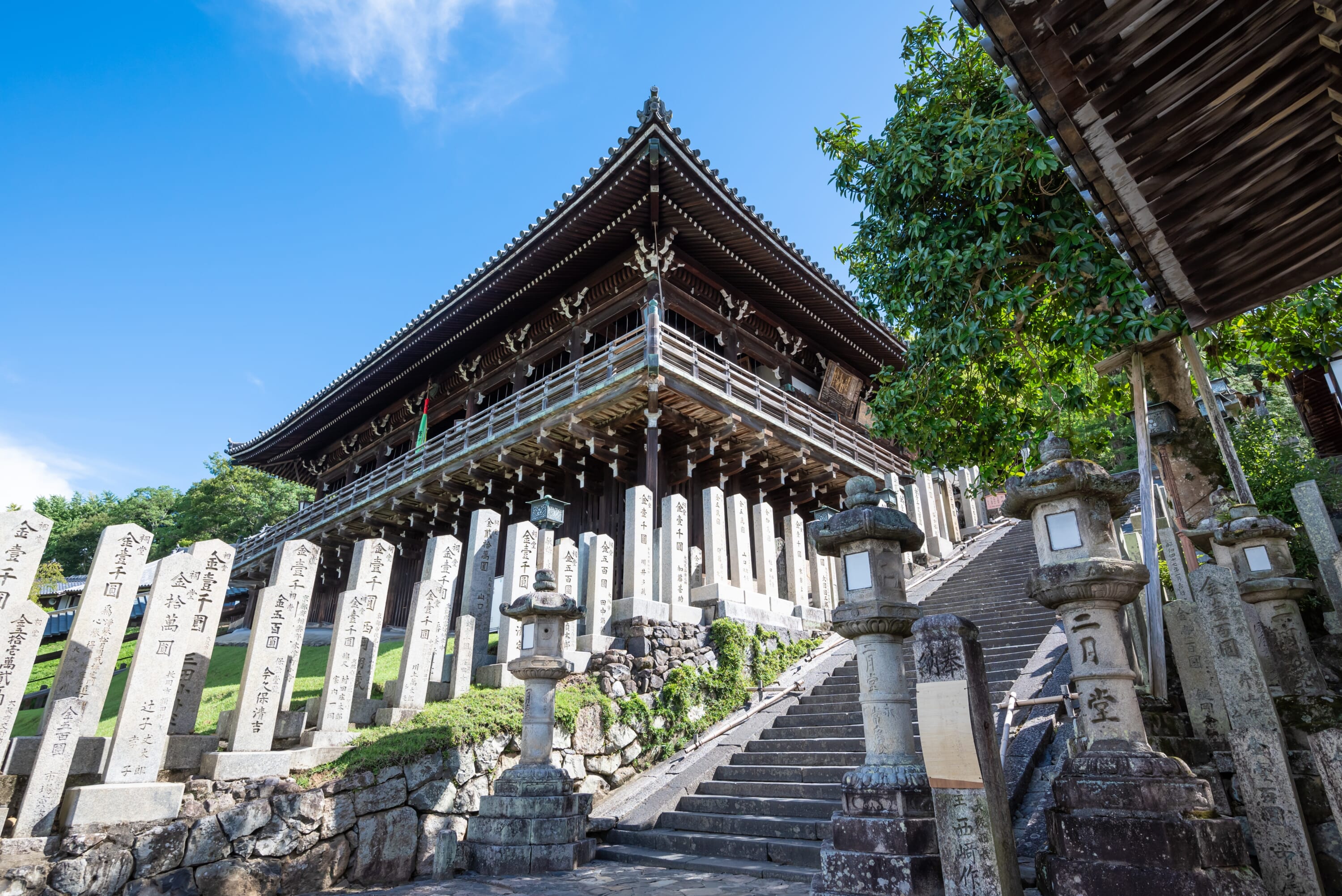
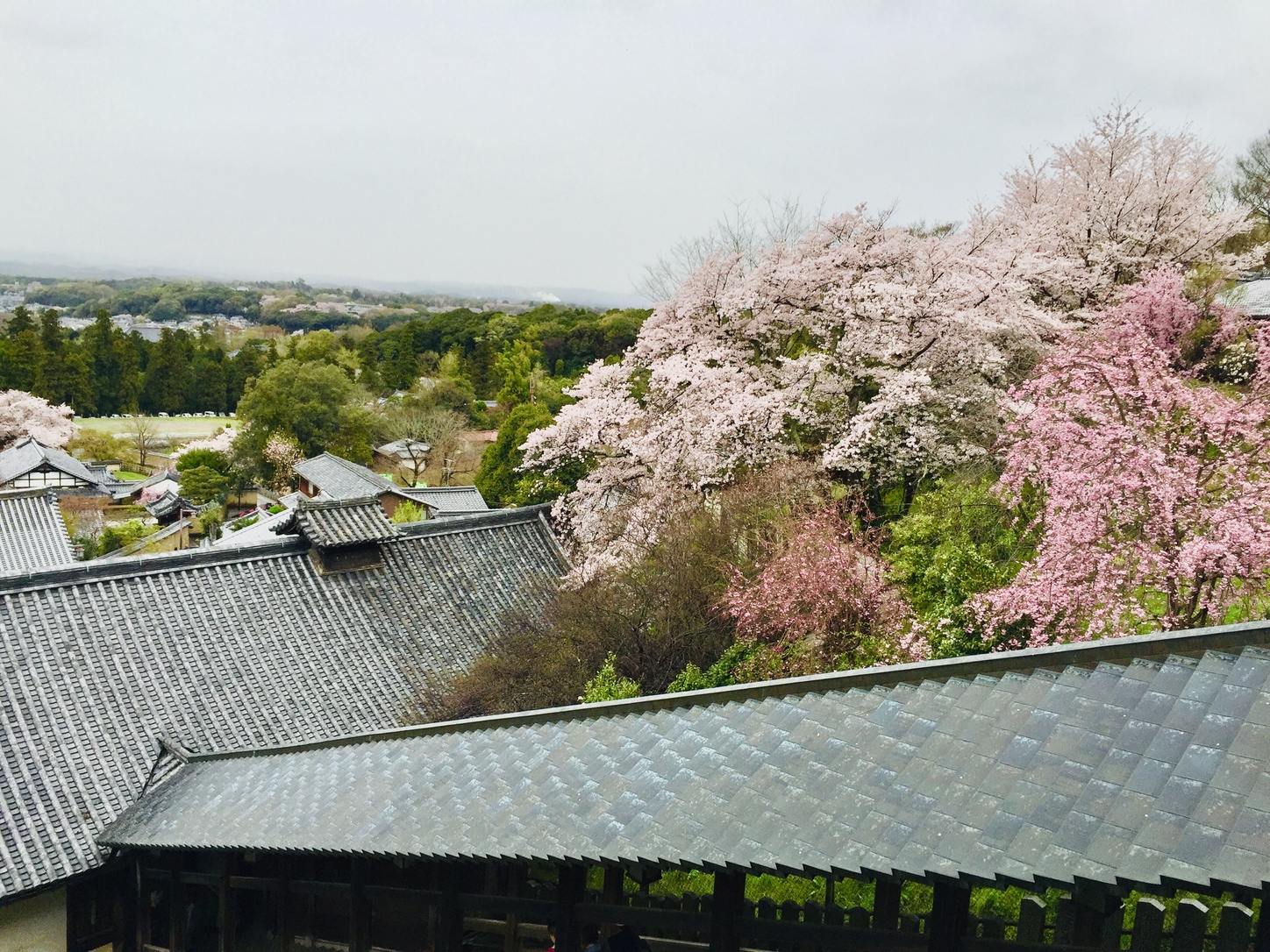
Nigatsudo Hall (February Hall)
Up the stone steps on the hillside east of the Daibutsuden is Nigatsudo, the “February Hall.” This is where the famous Omizutori ceremony takes place each March. Even outside festival season, Nigatsudo is worth the climb for the view — the wooden viewing platform looks out over the Daibutsuden’s enormous roof and across Nara to the surrounding mountains. It’s one of the best sunset spots in the city, and free to visit at any time.
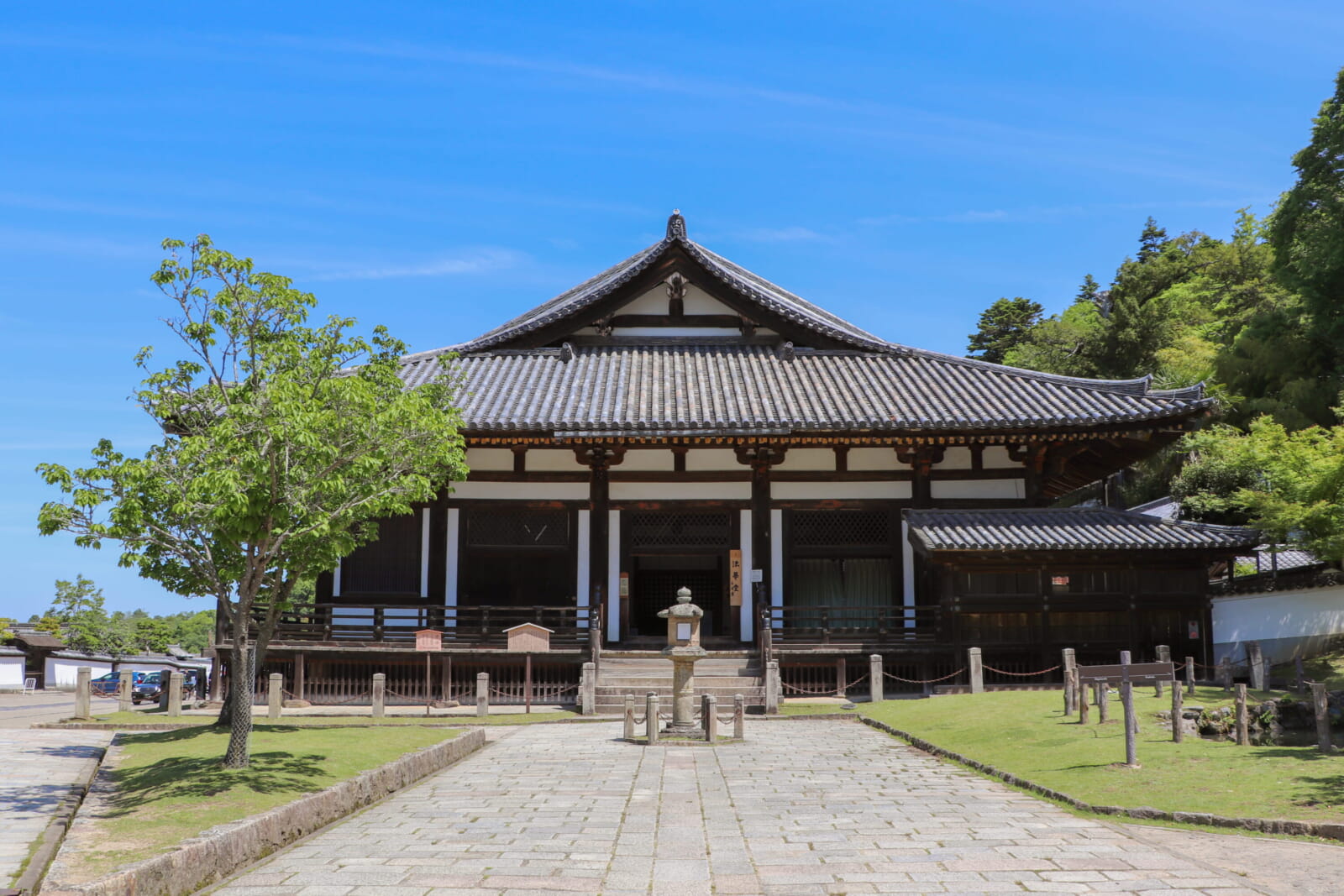
Hokkedo (Sangatsudo)
Just south of Nigatsudo is Hokkedo, also called Sangatsudo, “March Hall.” This is the oldest building in the entire Todaiji complex — a Nara-period structure from around 740 that survived every fire that destroyed the rest of the temple. Inside is a remarkable group of National Treasure sculptures, including a striking standing figure of Fukukenjaku Kannon. This spot can be easily missed by visitors heading from the Daibutsuden back to the deer, but is absolutely worth checking out.
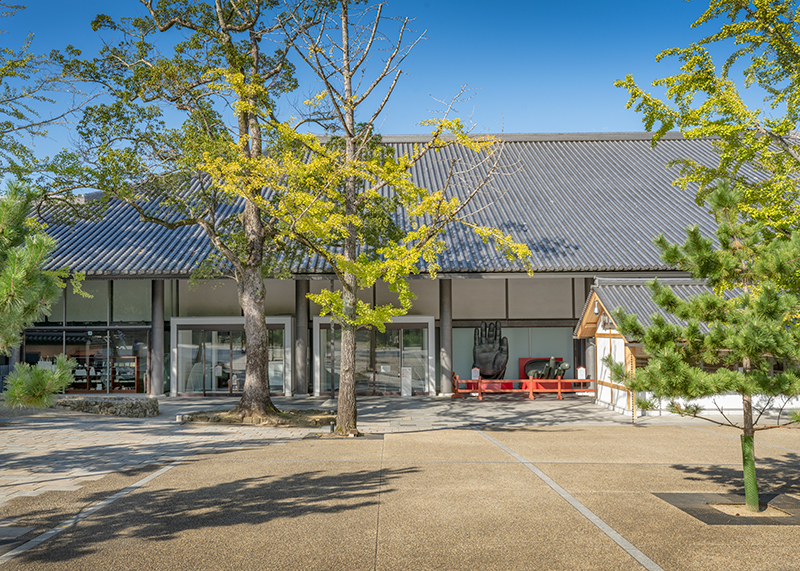
The Todaiji Museum
Opened in 2011 near the Nandaimon Gate, the museum displays rotating exhibitions of Buddhist art and artifacts from the temple’s collection — many of them too fragile to display in the open halls. A combined ticket with the Daibutsuden saves a few hundred yen versus separate admission.
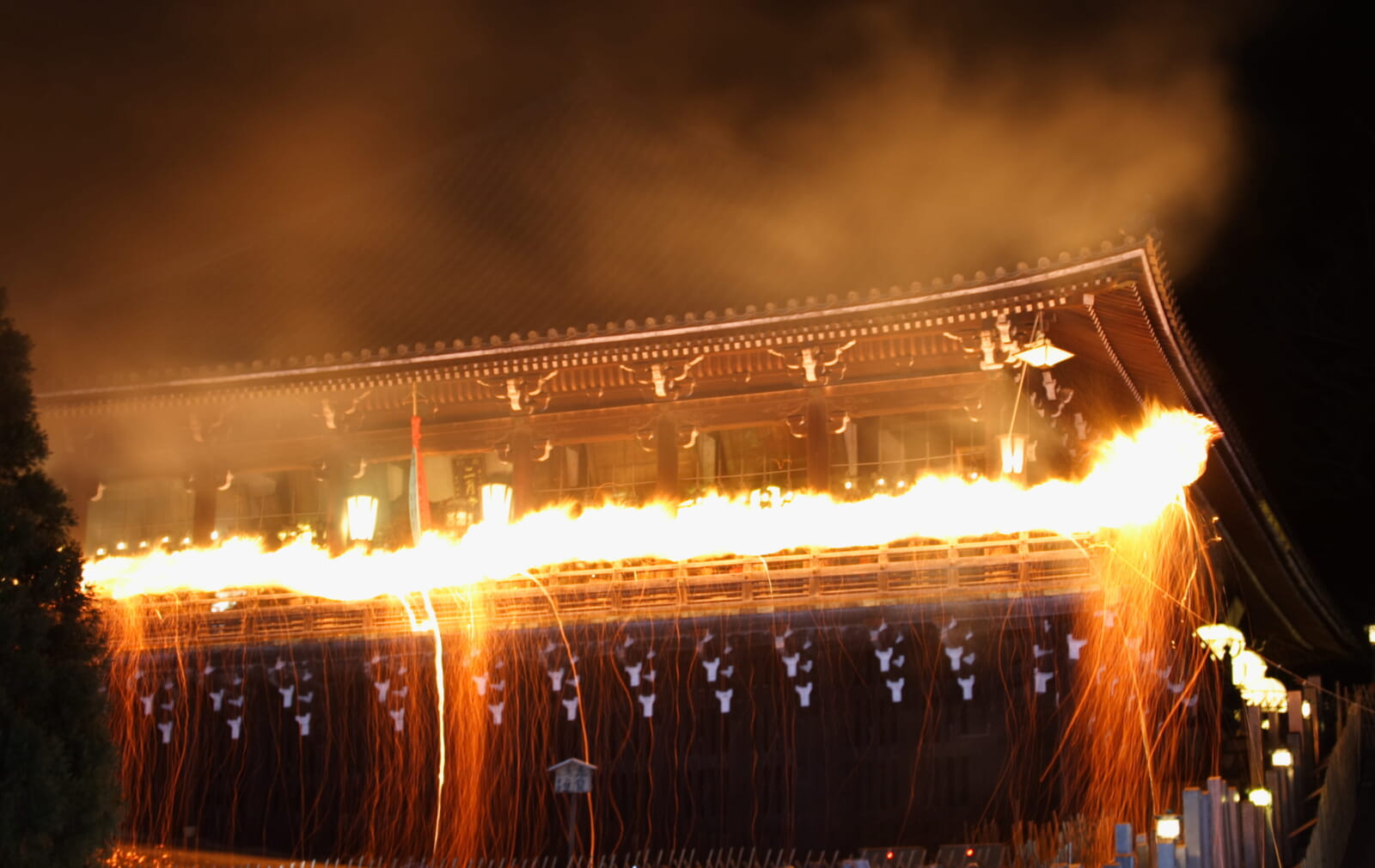
todaiji Omizutori fire festival
Festivals at Todaiji Temple
The single most distinctive time to visit is during Omizutori (March 1–14), the climax of the Shuni-e Buddhist ceremony at Nigatsudo. Each evening during the festival, monks parade enormous burning torches along the wooden balcony of Nigatsudo, scattering embers into the crowd below — a tradition that has run unbroken since the year 752, making it one of the oldest continuous religious ceremonies in Japan.
In addition to the famous Omizutori in March, Todaiji hosts several other significant ceremonies worth planning around:
Daibutsu Otaimatsu (August 7) — A summer ritual where monks ascend the Daibutsu to clean it, attended by thousands of supporting worshippers.
Manto Kuyo-e (August 15) — A lantern-lighting ceremony where the area in front of the Daibutsuden is filled with hundreds of small candle lanterns. The doors of the hall are opened so the Buddha’s face can be seen from outside — one of the only nights of the year this is possible. Free to attend.
New Year’s (January 1, after midnight) — The Daibutsuden’s central window is opened so visitors can see the Buddha’s face from outside the hall. Also one of the only nights this happens.
Best Times To Visit Todaiji Temple
The temple is rewarding year-round, but timing matters more than season for the actual experience.
Early morning is the single best decision a Todaiji visitor can make. The Daibutsuden opens at 7:30 in summer and 8:00 in winter — well before the day’s first tour buses arrive. You can have the hall almost entirely to yourself for the first 30 minutes, which transforms a sightseeing stop into something closer to what the space was actually built for.
Spring (late March to early April) brings cherry blossoms throughout Nara Park, framing the temple grounds in pink and drawing significant crowds.
Autumn (late October to late November) is arguably even more striking — the maples around Nigatsudo are particularly good — and slightly less crowded than peak sakura.
Winter is quietest, with occasional snow on the Daibutsuden roof making for unusual photographs.
Summer is hot, humid and crowded with school trips; visit at opening time or skip if you can.