
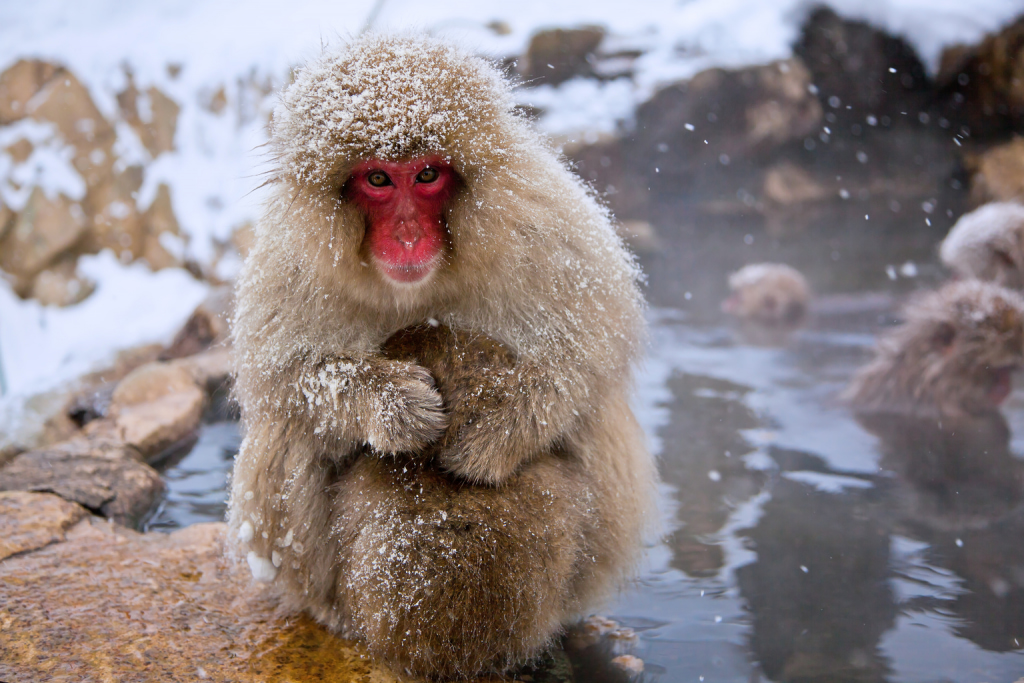
A Park Where Wild Monkeys Roam
In a steaming valley deep in the Nagano mountains, a troop of wild Japanese macaques does something no other monkeys on earth do: they take hot spring baths. Jigokudani Monkey Park — known internationally as the Snow Monkey Park, and locally as Jigokudani Yaen Koen (地獄谷野猿公苑) — is the only place in the world where this behavior occurs naturally, and where visitors can observe it up close without barriers or cages. The park sits within Joshinetsu Kogen National Park in northern Nagano Prefecture, in a narrow valley along the Yokoyu River. The name “Jigokudani” translates as “Hell’s Valley,” a reference to the steam vents and boiling springs that rise through the snow each winter. It’s a fitting name for a landscape that locks itself under deep snow for nearly a third of the year — and the same harsh climate is precisely what drives the monkeys into the water.
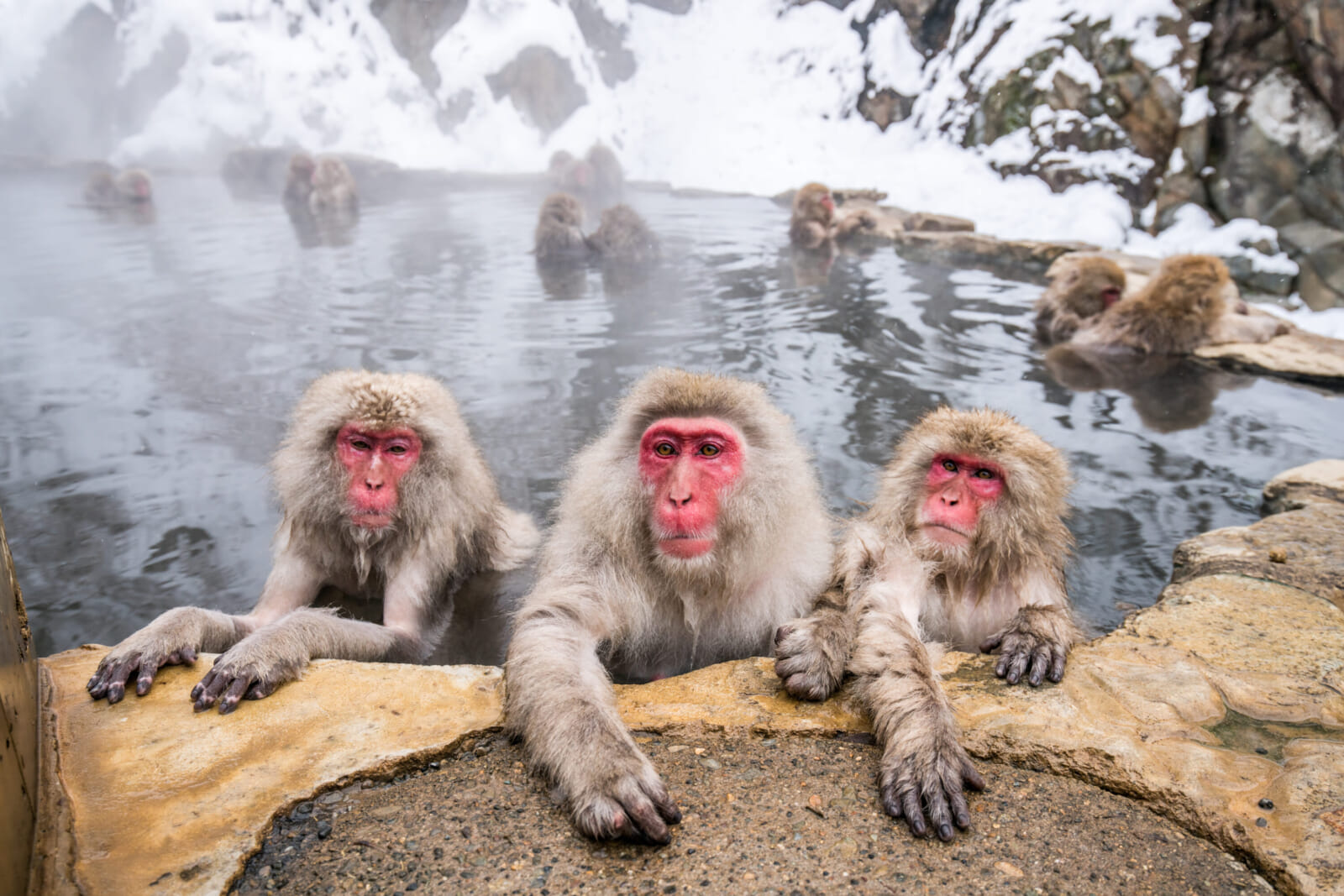
Japan macaques bathing in Jigokudani Yaen-Koen
A Brief History of the Bathing Monkeys
The macaques weren’t always bathers. Through the 1950s, the troop ranged through the surrounding forests and increasingly raided farmland in the valley below, putting them in conflict with local farmers. A nature researcher named Sogo Hara, alongside the owner of a nearby ryokan, began luring the monkeys away from the farms by feeding them near the inn’s outdoor hot spring bath. One winter, a young female macaque is said to have climbed in. The rest of the troop followed.
The Jigokudani Monkey Park was officially established in 1964 as a conservation area where the monkeys could be observed in their natural environment. Park staff have fed the troop daily ever since — which is why the monkeys reliably appear at the park’s man-made bathing pool throughout the year, rather than retreating entirely into the surrounding mountains. They remain wild animals, free to come and go.
What To Expect at the Park
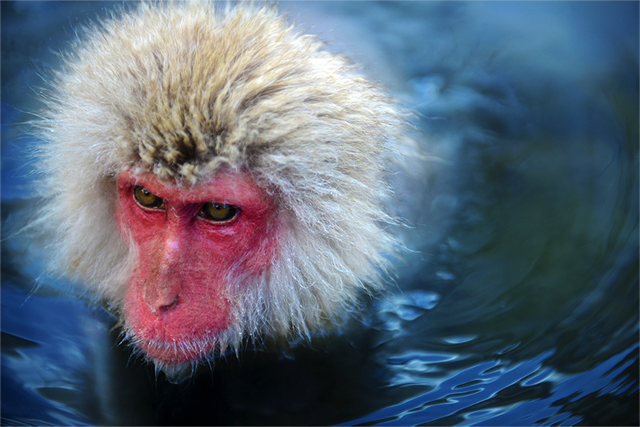
The park itself is small and centered on a single man-made bathing pool fed by the surrounding hot springs. There are no fences between visitors and monkeys. The macaques walk past, around and occasionally directly between people, and behave as if visitors aren’t there at all.
A few rules to keep in mind:
- Don’t feed the monkeys. Park staff handle all feeding, and outside food disrupts the troop.
- Don’t touch them, even if a monkey approaches you closely.
- Avoid direct eye contact, which macaques can read as a threat.
- Keep voices low and movements calm.
- Don’t bring food visible in your hands or open bags — they will notice.
Plan to spend 1 to 2 hours at the park itself, plus the roundtrip walk. A small information center near the entrance has restrooms, vending machines and a shop; there is no food service inside the park, though Enza Café near the trailhead is a popular stop on the way back.
Best Times To Visit Jigokudani Snow Monkey Park
Winter, particularly from mid-December through late February, is the most iconic season. Heavy snow blankets the valley, the contrast between the freezing air and the warm pool is at its most dramatic, and the monkeys spend longer stretches soaking. This is the postcard image — and accordingly, the busiest time of year, when the park can see hundreds of visitors a day.
That said, every season at Jigokudani has its rewards. Spring brings cherry blossoms along the trail and the first newborn monkeys clinging to their mothers. Autumn frames the valley in red and gold maple foliage. Summer is the quietest season, with smaller crowds — though it’s also when the monkeys are least likely to bathe, since they don’t need the warmth and prefer to stay cool in the surrounding forest.
Mornings tend to be best year-round: the monkeys are more active, the light is softer for photographs and the trail is less crowded. Before traveling, it’s worth checking the park’s live webcam and daily blog, which post real-time updates on monkey activity at the pool.
Photography tips
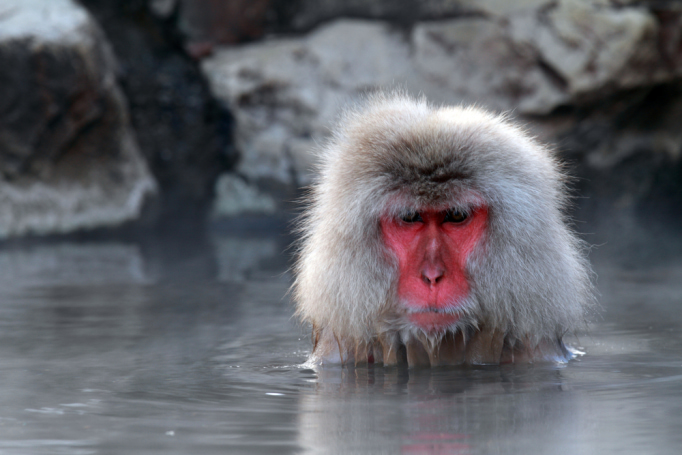
Jigokudani is one of Japan’s most photographed wildlife sites for good reason — but conditions can be tricky at times. A few practical pointers:
- Bring a zoom lens. A 70–200mm range covers most useful shots; the bathing pool is small enough that you don’t need extreme reach, but a wider lens forces you to crowd the monkeys.
- Protect your gear from steam. The pool throws off thick clouds of vapor that fog cold lenses instantly. A microfiber cloth and patience help.
- Mornings are best. Light is softer, the monkeys are more active, and you’ll have an easier time without the midday tour groups.
- Shoot at the bathing pool early in your visit and explore the rest of the park after — peak monkey activity at the pool is unpredictable.
- Cold weather kills batteries fast. Carry a spare in an inside pocket.
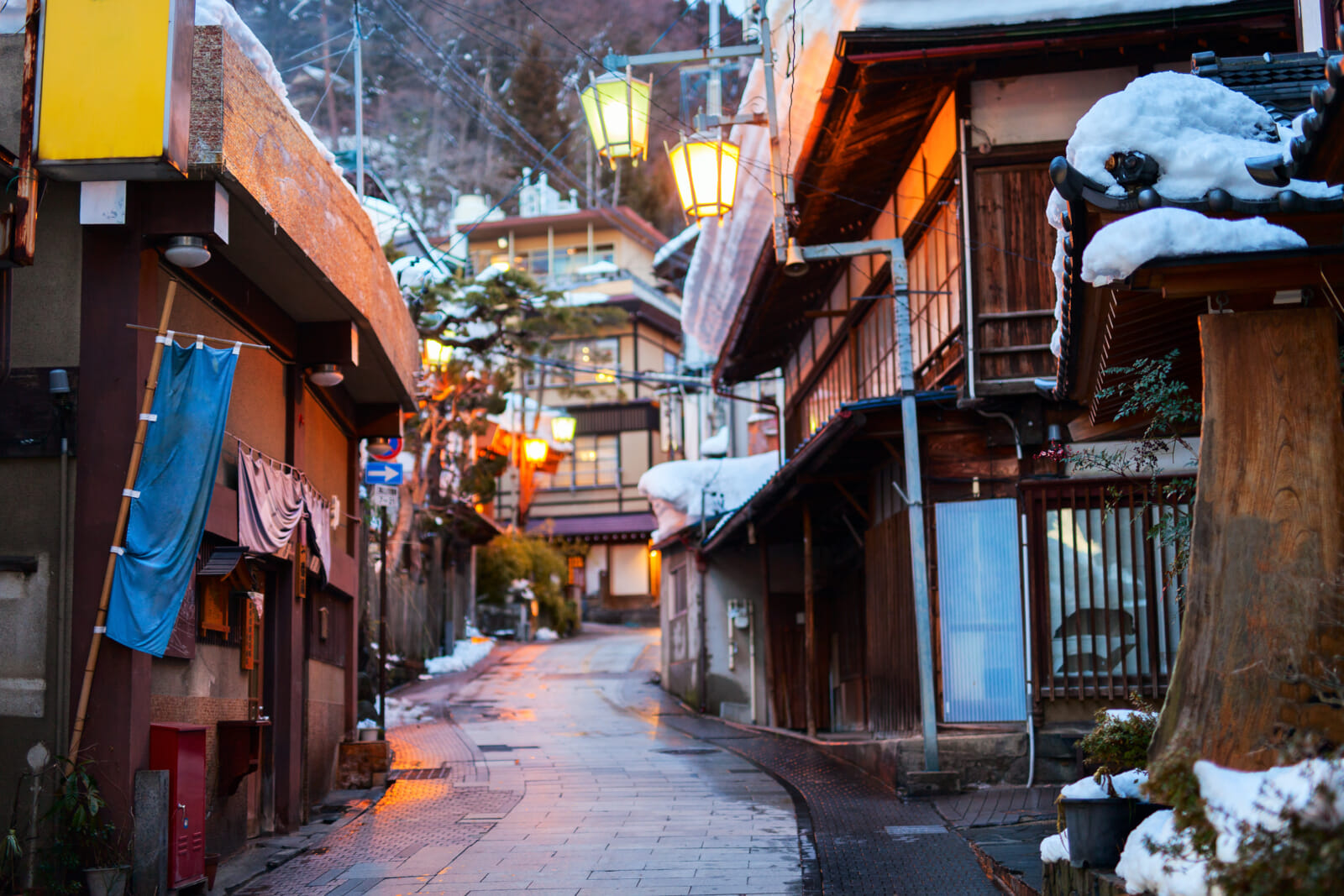
shibu onsen street after a winter snowfall, nagano japan
Where To Stay Near the Snow Monkey Park
Most visitors base themselves in one of three nearby hot spring towns:
- Shibu Onsen — a historic onsen village known for its nine public bathhouses and centuries-old wooden ryokan. The most atmospheric overnight option, and a 10-minute bus ride to the park.
- Yudanaka Onsen — slightly more modern, more accommodation choices, and the main rail hub for the area.
- Kanbayashi Onsen — the closest village to the park trailhead, quieter and smaller, with several boutique ryokan within walking distance of the trail.
For travelers wanting more variety, Nagano City offers a wider range of hotels and combines well with a visit to Zenkoji Temple, one of the most important Buddhist temples in Japan.
Combining your visit
Yamanouchi sits within easy reach of several of central Japan’s most appealing winter destinations. Shiga Kogen, Japan’s largest interconnected ski resort, is 30 minutes from the park. Nozawa Onsen is roughly an hour west. Zenkoji Temple in Nagano City pairs well as a half-day stop on the way in or out. Many visitors structure a 2–3 day itinerary that combines the monkeys, an onsen ryokan stay and either a ski day or a temple visit.