Many of Japan’s major cities have surprisingly dark histories. Nagoya, often voted the most boring place in Japan, was once the base of the legendary warlord Oda “Demon King” Nobunaga. Tokyo, the tech capital of the world, is built atop the decapitated head of a god of wrath. Kanazawa grew from a stronghold of peasant Buddhist soldiers. And as for Yokohama, Japan’s second-largest city and known for its Chinatown, international character and conference centers? That unassuming, laid-back port city was once a brutal town of vice, blood and gun smoke. These are the Wild West beginnings of Yokohama:
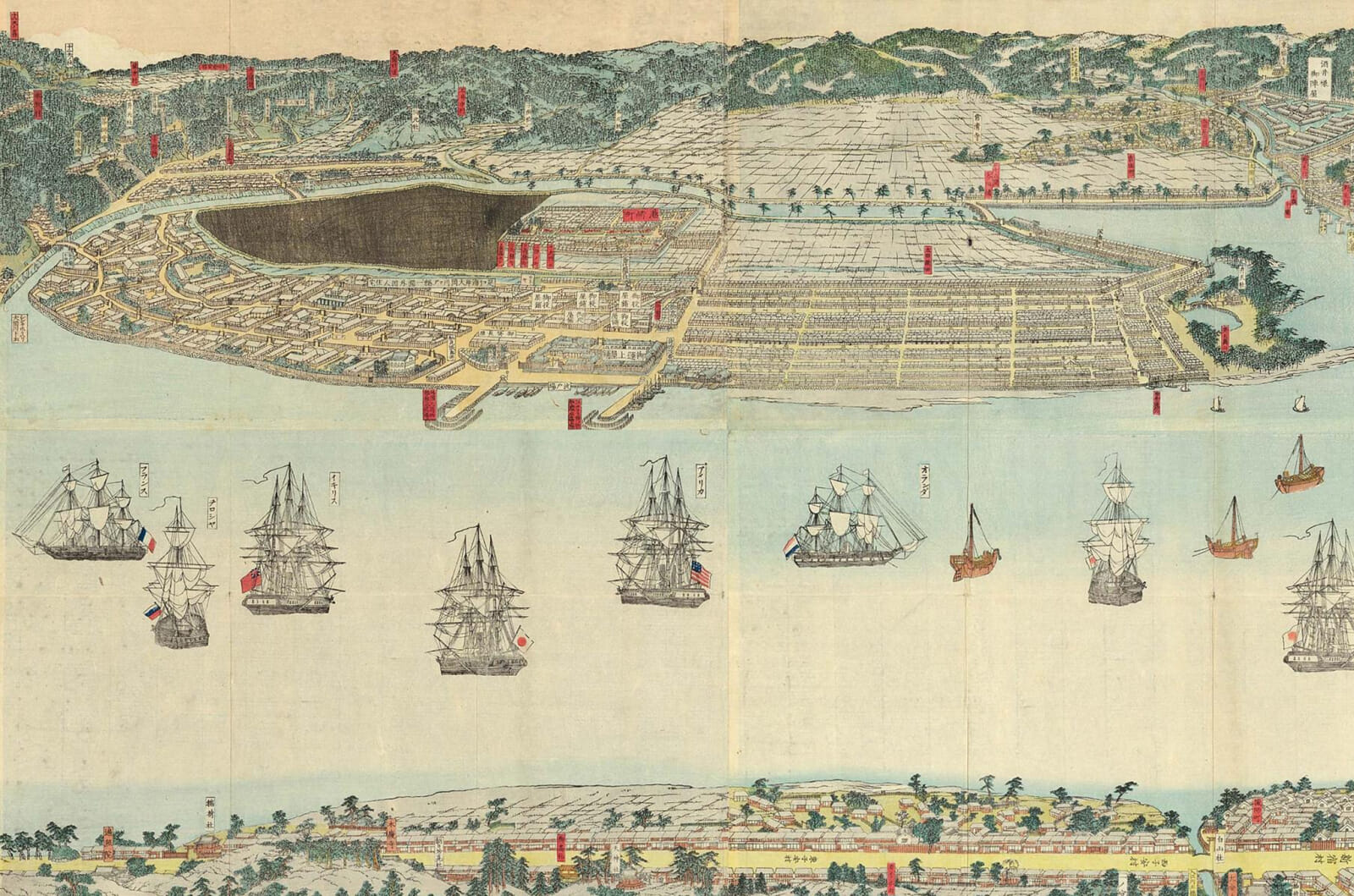
Map of Yokohama in 1860 | “Go-kaiko Yokohama no zenzu” by Utagawa Sadahide (c. 1859)
A City Built on Fear
Yokohama was created in a paralyzing atmosphere of fear and anxiety. Since the early 17th century, the country had been almost entirely shut off from the outside world under the sakoku isolationist policy. But in July 1853, US Commodore Matthew C. Perry arrived in Japan, positioning his gunships just within firing range of the capital and intimidating the government of Edo (modern-day Tokyo) into negotiating with the Americans.
Afraid of a potential war, Japan signed a bunch of treaties to open its ports to the world, including the one in Kanagawa, then a post town. However, some officials worried that the port was too close to Edo, so they proposed a new location farther south. The site was a little fishing village known as Yokohama, and it was to be rebuilt into an international port town … and also a ghetto.
Fearing drunken, violent sailors, Japanese authorities wanted to contain outlanders in a foreign quarter located around what is today Yokohama’s Kannai neighborhood. It had to be full of everything that foreigners could ever want, including “negotiated female affection.”
Brothel owners from around Japan were sweet-talked and strong-armed into building Yokohama’s red-light district with their own money. However, when the time came to populate the district with prostitutes, none volunteered. Many cried and ran, terrified of the “savage” foreigners. Ultimately, 30 women were chosen by lottery for the grand opening of the port of Yokohama in June 1859. Their palanquins had to be tied shut with rope so they wouldn’t escape on the way there.
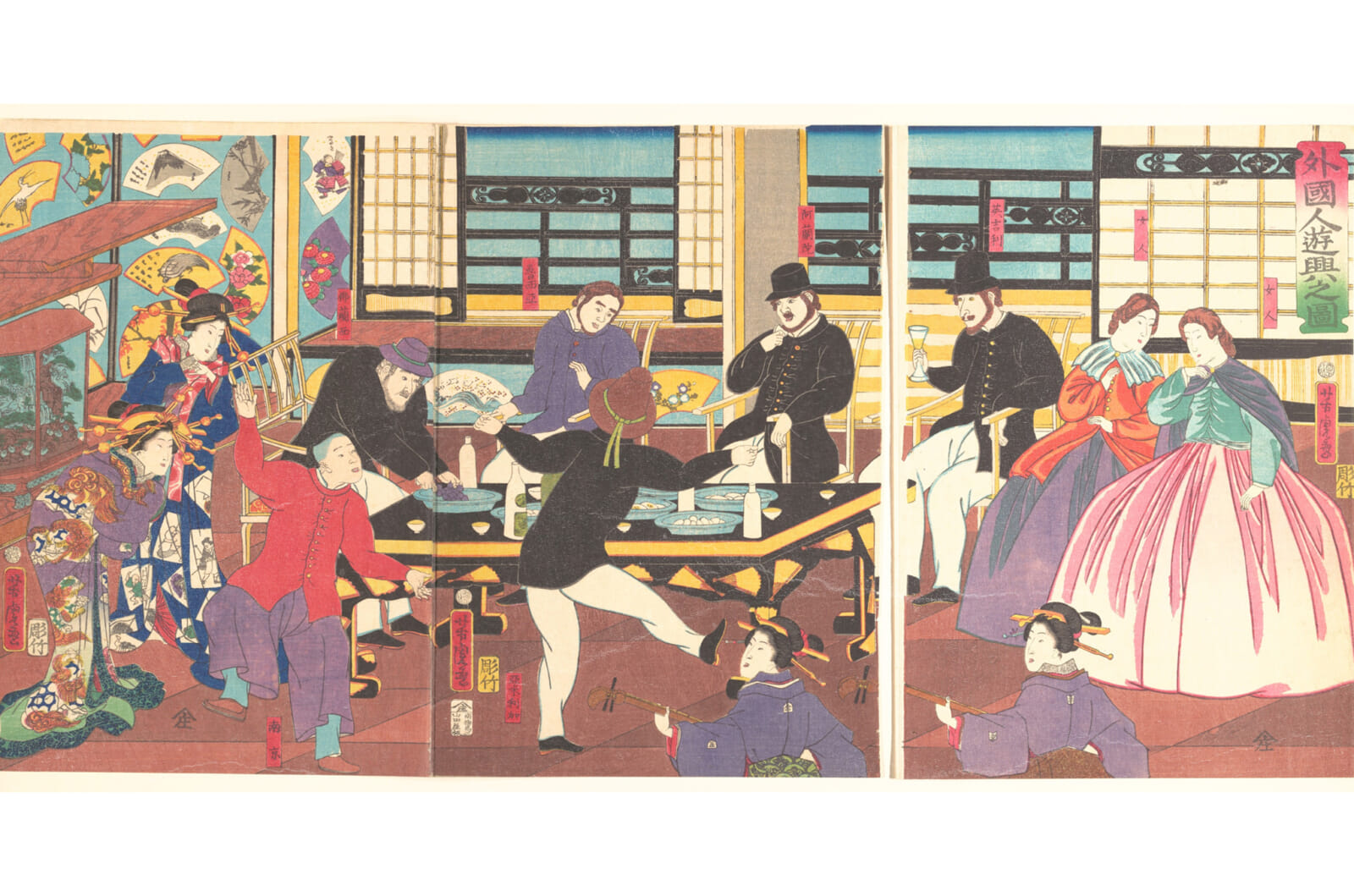
“Foreigners Enjoying a Party” by Utagawa Yoshitora (c. 1861) | Met Museum
The Violent Delights of Blood Town
One part of newly opened Yokohama quickly gained a reputation for vice and viciousness. Located along Honmura Road, which today is the Minami-Mon Silk Road bordering modern Yokohama’s Chinatown, it was an entertainment district within the foreign quarter full of taverns, grog shops, brothels and the occasional puddle of blood and loose teeth. The frequent brawls between sailors and merchants on the Route de Homoura, as foreign sources mistakenly called it, eventually earned this area the more descriptive name of “Blood Town” (or “Bloodtown”).
While Japanese citizens in Yokohama were living quiet lives trying to earn money from the new open-border policy, the foreigners in their private corner of the city that was exempt from Japanese law — because of the unequal treaties — were going absolutely feral. The atmosphere in the foreign quarter was very much like that in American boomtowns during the Wild West gold rush days. One account says that, at night, you could “walk over the bodies of drunken sailors lying in the middle of the pavements.”
Those who could afford it wouldn’t go around Yokohama without private security. Eventually, foreign garrisons were stationed in or nearby the city between 1863 and 1875 in order to protect expats. While there were many instances of sailors and merchants acting like civilized human beings in Yokohama in the 19th century, those stories were easily overshadowed by those of foreigners who brought their rifles and horses to Japan.
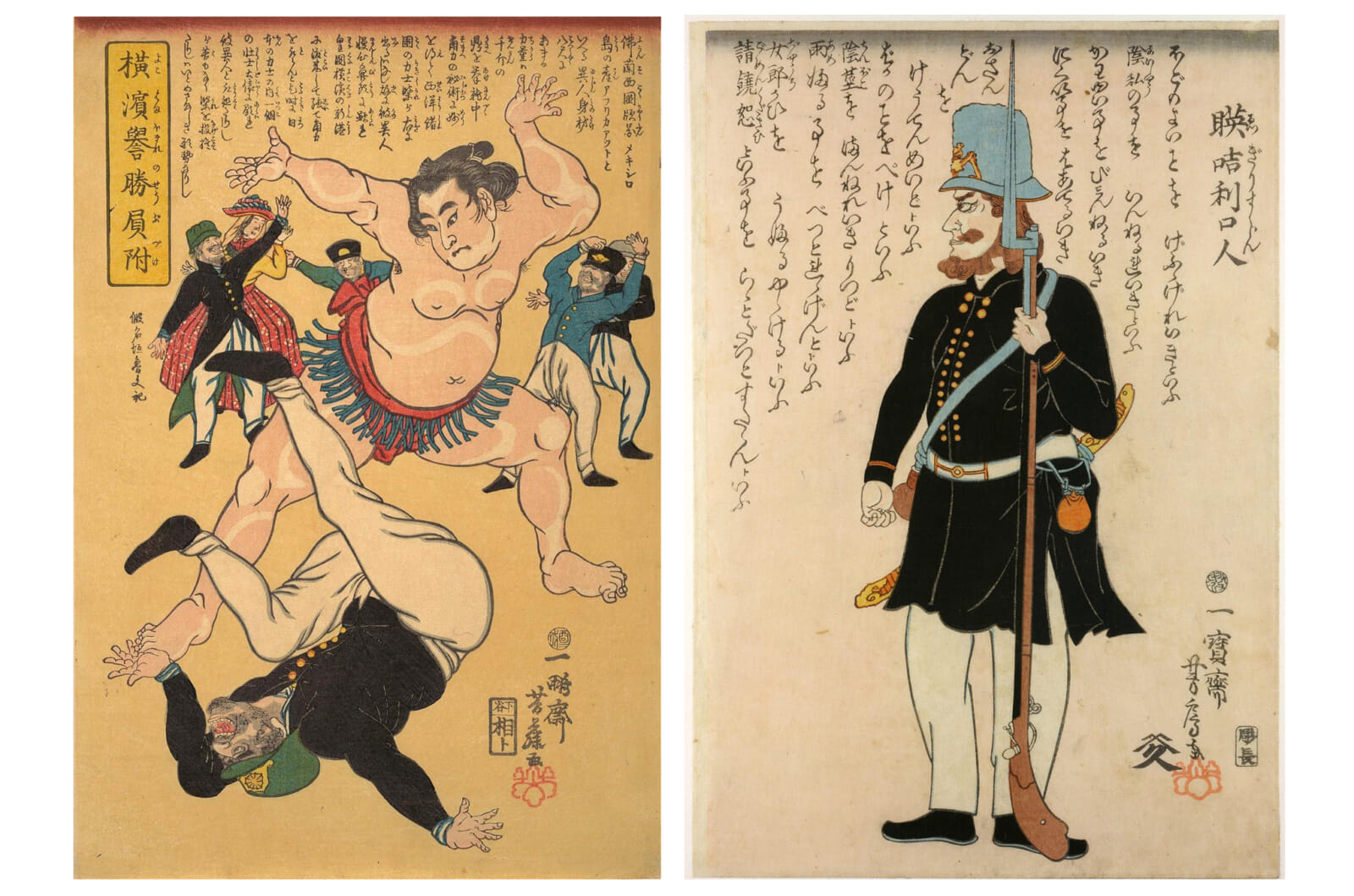
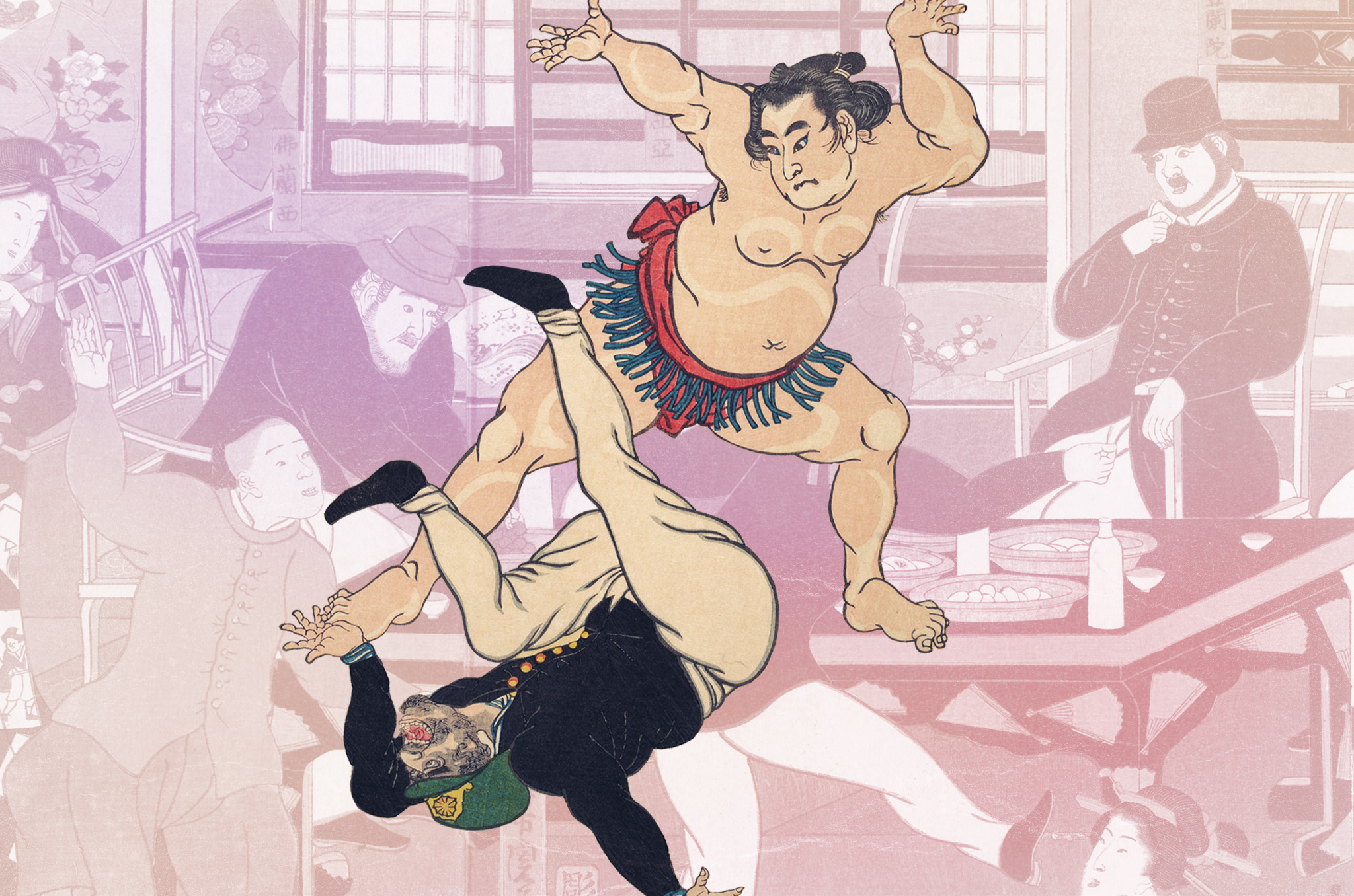
Printed pictures of Yokohama, known as “Yokohama-e,” showed the tensions of the time. Left: A sumo wrestler throws down a foreigner, depicting anti-foreigner sentiment (by Ipposai Yoshifuji c. 1861 | Met Museum). Right: A British man in uniform holds a rifle (by Utagawa Yoshifusa c. 1860 | British Museum)
Yokohama’s Frightful Symphony of Gunpowder and Hoofbeats
Once gambling, drinking, women and various unwholesome combinations of all three lost their allure, the foreign residents of Yokohama liked to entertain themselves with horses and firearms, sometimes at the same time. There are eyewitness reports of people riding wildly through Yokohama on horseback and shooting pistols into the air, for reasons known only to God, them and presumably their bartender. Other stories include impromptu firearm target practice conducted wherever the mood struck the (oft-drunk) marksmen, and steeplechase races through the town and its surrounding area.
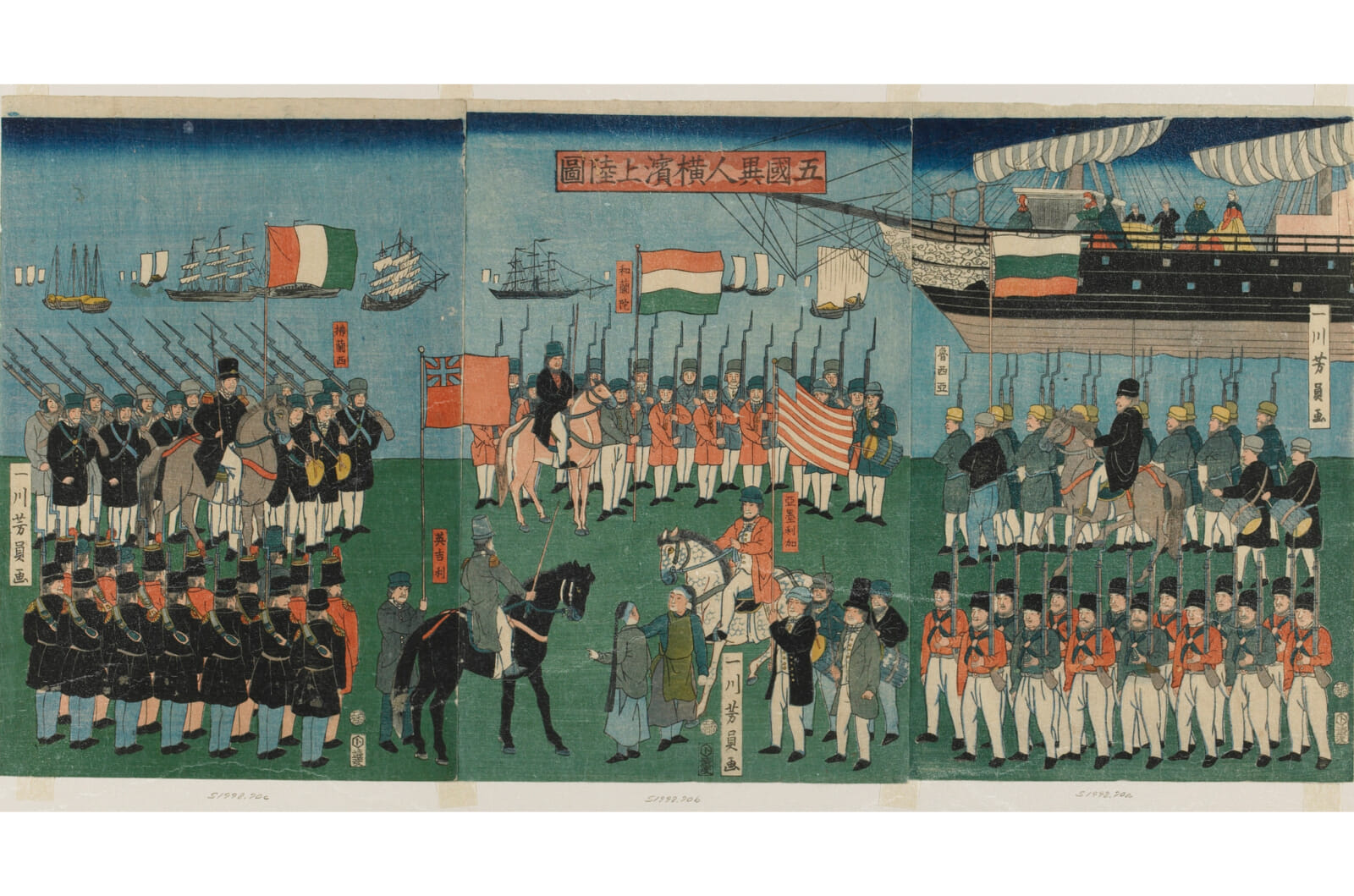
Firearms pictured in “Landing of Foreigners of the Five Nations in Yokohama” by Utagawa Yoshikazu (c. 1861) | Smithsonian
Although it was technically forbidden for foreigners to venture outside Yokohama, this rule was primarily about stopping them from going to Edo and inconveniencing shogunate officials. If any foreigner traveled in the opposite direction, it was often overlooked but rarely forgotten — especially by those whose lands were trampled by horses and dogs. In one instance, residents of Blood Town imported hounds from Shanghai and went on a wild hunt for whatever. Boar, deer, foxes — anything was on the table and nothing was in their way as they devastated the countryside, ruining crops and rice paddies.
This, thankfully, all turned out to be a budding city’s growing pains. Through determination, tougher law enforcement and surviving natural disasters, Yokohama was reborn as a thriving metropolis. Today, Japan’s second-largest city barely has any traces left of its wild youth. However, if you’re looking for a fun, boozy night out on the town, Yokohama’s Noge district — located not far from where Blood Town once stood — can more than accommodate you.