At a press conference on Monday, Japan’s Chief Cabinet Secretary Minoru Kihara was asked about claims made in a Chinese newspaper that questioned Japan’s sovereignty over the southern island prefecture of Okinawa. “What is the government’s stance and response?” asked the journalist. Kihara responded by not responding. It was unnecessary to speak about it, he said, “as there is no doubt Okinawa is our nation’s territory.” He added that Japan will continue to refute claims that contradict facts.
Media in China Question Japan’s Sovereignty Over Okinawa
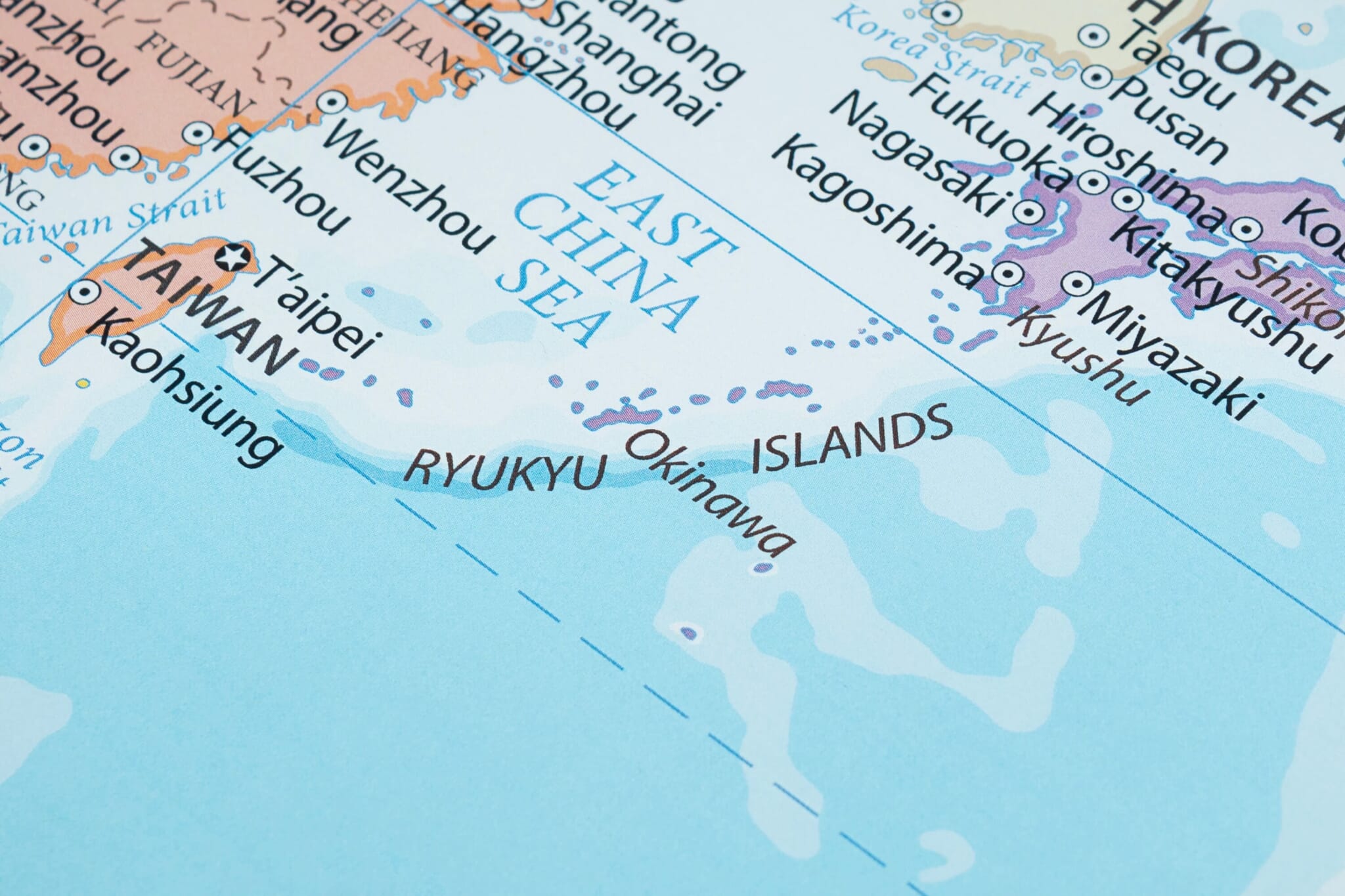
Earlier this month, the state-run Global Times in China ran an option piece calling for further studies to be done on the Ryukyu island chain, arguing that “historical and legal disputes over the sovereignty of the islands “have never ceased.” It added that, “The geopolitical position, strategic choices and future trajectory of the Ryukyu Islands not only determine their own fate but also profoundly affect the security concerns of neighboring countries and regions.”
For centuries, the Ryukyu Islands were in a dual suzerainty relationship, paying tribute to both China and the Japanese domain of Satsuma, before being fully annexed by Japan in 1879 and reorganized as Okinawa Prefecture. The prefecture currently hosts approximately 70% of US military bases in Japan, despite making up only about 0.6% of the country’s landmass. These bases are seen as vital components of the “first island chain,” a strategic geostrategic concept designed to contain China.
Japan-China Relations Continue To Deteriorate
Relations between China and Japan have continued to deteriorate in recent weeks following Sanae Takaichi’s comment about Taiwan earlier this month. The Japanese prime minister asserted that a Chinese naval blockade on Taiwan would likely constitute a “survival-threatening situation” that could force Japan to respond. China reacted furiously, summoning Tokyo’s ambassador and advising its citizens against traveling to Japan. The fallout has also affected the entertainment industry, with several Japanese artists forced to cancel their shows in China.