Anyone who lives in Japan long enough eventually learns that Japanese obaasan (grandmothers) are some of the most powerful lifeforms on the planet. Between their apparent immortality, imperviousness to extreme weather, and the amazing ability to skip any line — mainly by ignoring it — obaasan are a force to be reckoned with. This has been the case for nearly half a millennium, as evidenced by the female warrior Akai Teruko, who in her 70s gained more battlefield glory than some samurai did in their lifetimes. This is the story of “the strongest woman of Japan’s Warring States period.”
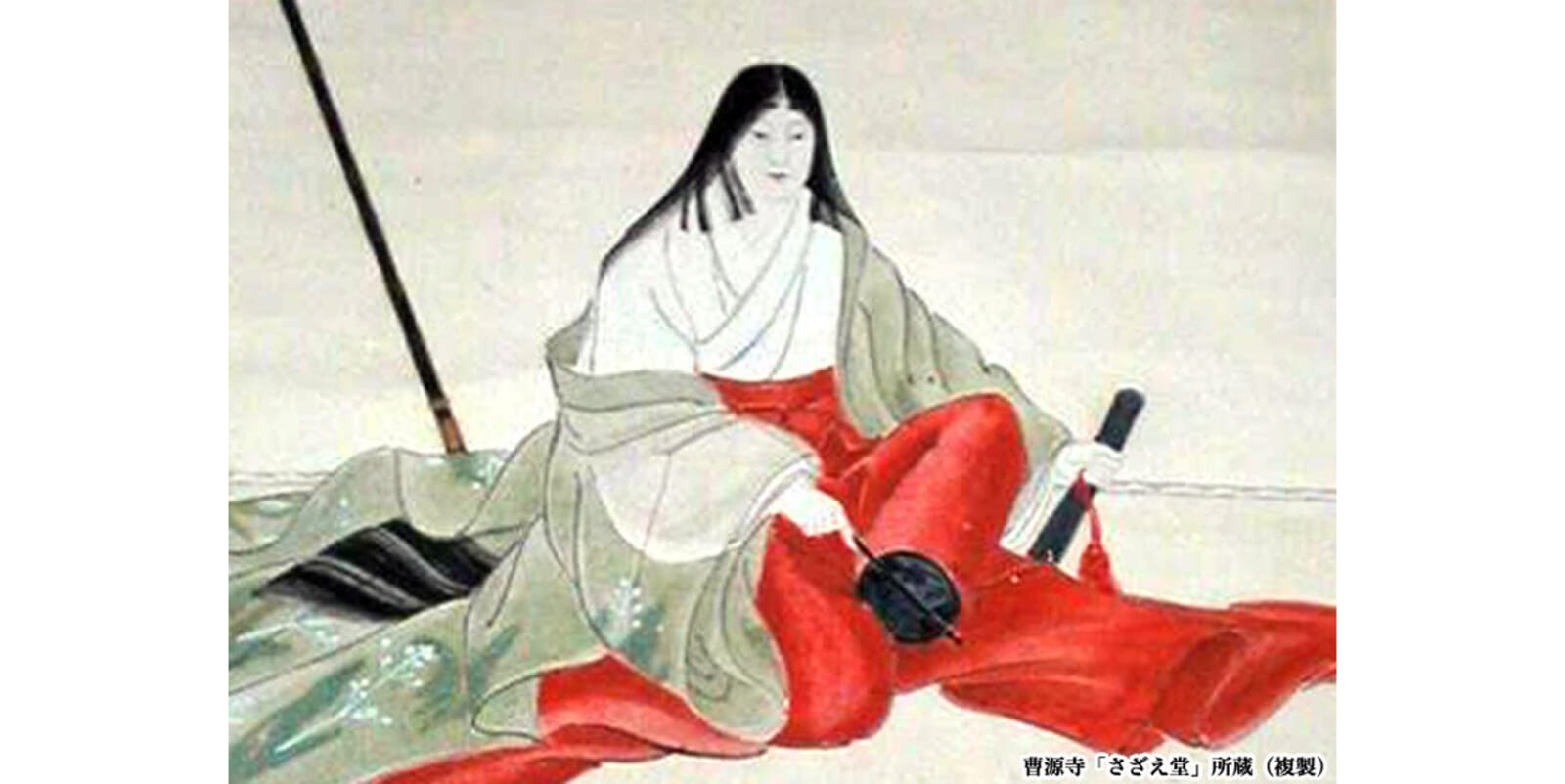
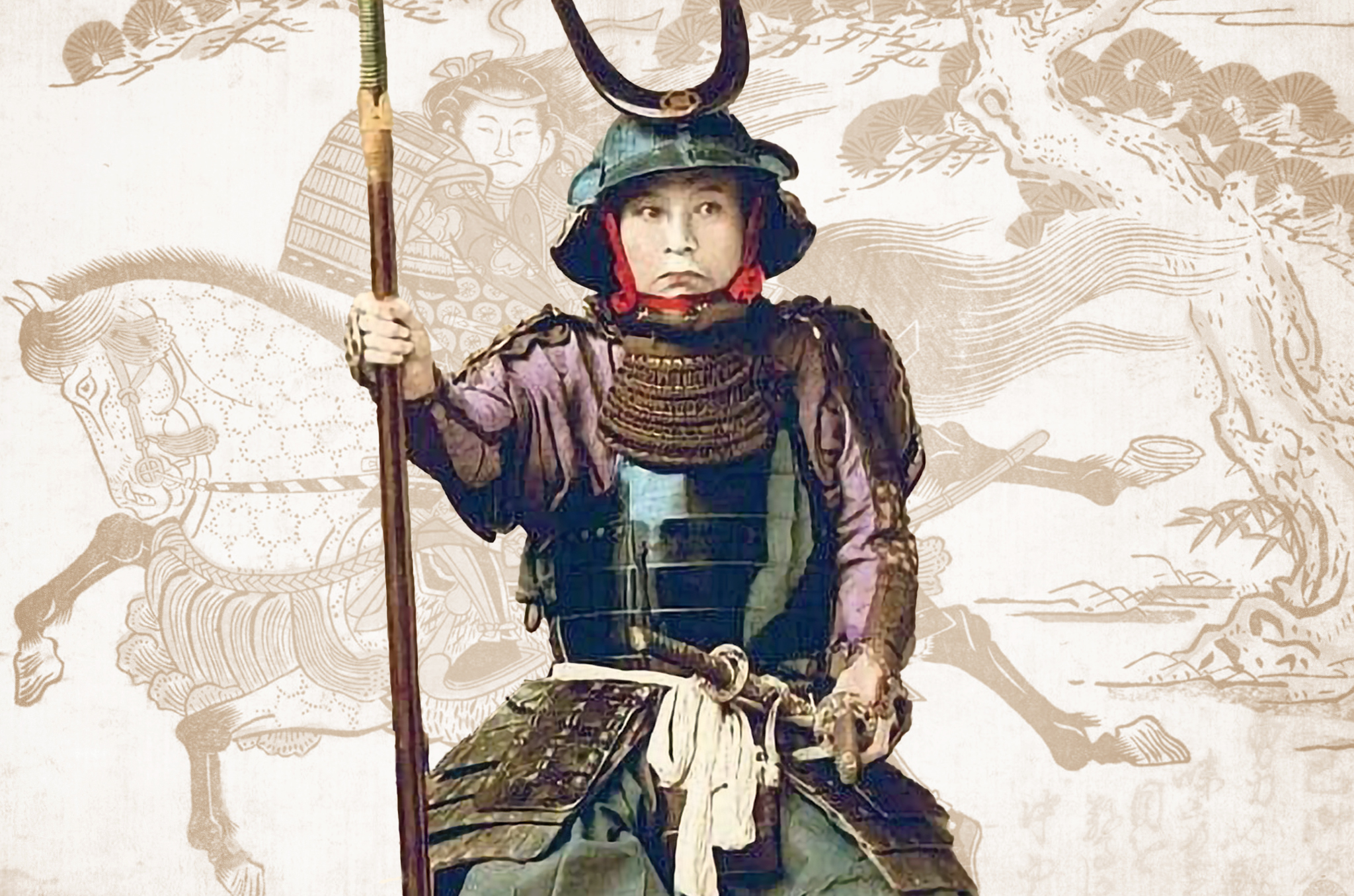
The only known depiction of Akai Teruko | Image: myouinniteruko.com
Seven Decades of Prep Work
After the collapse of the imperial and military governments in the mid-15th century, local samurai carved out their own semi-independent kingdoms throughout the country. In modern-day Gunma Prefecture, one of the most prestigious warlord families was the Akai clan, rulers of Tatebayashi Castle. Teruko was born there in 1514 as the only child of Akai Terumitsu, who had his daughter trained in the art of politics, strategy, and martial arts. She reportedly excelled in the ko-naginata, a short-blade version of a Japanese glaive-type weapon popular with female warriors and warrior monks.
This wasn’t totally out of the ordinary given that Teruko was the sole Akai heir during the tumultuous Sengoku (Warring States) period. But, in hindsight, it almost feels like her dad giving Teruko the tools she’d later need to write her name in the annals of history with other people’s blood. Further supporting the theory of Terumitsu’s clairvoyance is the legend that he chose the site of his castle after a visit from a fox spirit. The man clearly had friends in high places.
Teruko eventually married Yura Narishige, lord of Kanayama Castle (and she didn’t even need to crossdress to do it!), and the couple had many children together, including Yura Kunishige, Nagao Akinaga, and a daughter who would later give birth to Kaihime, once known as “the most beautiful woman in eastern Japan.” Apparently, Teruko’s DNA had a tendency for superlatives, as her enemies would soon find out.
The Strongest Woman of the Sengoku Period
Narishige died in 1578 and, as was the custom, Teruko took Buddhist vows, together with the name “Myoin-ni,” but she bucked tradition by not removing herself totally from public life. Worrying that her heir, Kunishige, lacked his father’s cunning and her head for politics, she decided to rule the Yura from the shadows, and was vindicated in 1584 when Kunishige and his brother were taken hostage by the Later Hojo clan who used the genius tactic of… inviting them to Odawara Castle and not letting them leave. Their demands? Hand over Kanayama Castle. Teruko had a different idea.
At age 71, she rallied three thousand troops and started getting her home ready for the Hojo using everything she learned from books and her late husband’s military campaigns. She had defensive trenches dug around the castle. She ordered the construction of hidden doorways and secret paths for night ambushes. She gathered provisions, created emergency water reservoirs, devised battle plans that took advantage of the local terrain, and even used psychological warfare by flying the banner of the powerful Nitta clan.
The Nitta were related to the history of Kanayama and flying their banner was a powerful symbol of strength for Teruko’s troops. But it was also a deep historical cut because it was Nitta Yoshisada who sacked Kamakura and caused the mass suicide of the 870 original Hojo members in 1333. The Later Hojo weren’t actually related to the 14th-century Hojo but took on their name to give themselves extra prestige and Teruko brilliantly used it against them.
With all this, the warring septuagenarian was able to hold off the enemy for 15 months in what came to be known as the Siege of Kanayama Castle. During this time, she’d stand on the ramparts every day in full battle armor, giving rousing speeches, and even leading secret raids in the night to bring down the invading army’s morale. Wait a minute. Secret nun ruler of a powerful family with incompetent children who was known for her oratory skills? Are we totally sure that Myoin-ni wasn’t the reincarnation of the Nun Shogun?
Silver Hair, Silver Tongue
Myoin-ni was able to negotiate the support of the Satake and Sano clans, but even with their help, she knew she could not defend Kanayama Castle indefinitely. In the end, using only her diplomatic skills, not backed up by any major warlord whatsoever, she managed to secure the release of her sons without any forced suicides on her side. It was nothing short of a miracle. She did have to give up her castle but she wasn’t done making deals.
When Toyotomi Hideyoshi started unifying Japan in her neck of the woods in 1590, Myoin-ni initially opposed him but quickly figured out he was the right horse to back and so she pledged her loyalty to him with the help of Hideyoshi’s trusted general Maeda Toshiie. She even led hundreds of soldiers to aid in Hideyoshi’s Siege of Matsuida Castle at age 76. Toshiie was so impressed with her battle prowess and diplomatic skills, he addressed her as “Great Matriarch of the Nitta” and would not shut up to his boss about her.
Despite briefly standing against him (something that had cost bigger warlords their lands and titles), Myoin-ni was ultimately recognized by Toyotomi Hideyoshi for her 15-month-long defense of Kanayama and given new property in Ushiku, allowing her lineage to survive. She died peacefully in her new home in 1594 at age 81. To this day, though, the armor-clad likeness of Teruko/Myoin-ni still makes appearances during the Tatebayashi Hina Matsuri (Doll Festival) in Gunma. The people there love their Battle Obaasan.